
21st Sep 2026 07:24
THIS ANNOUNCEMENT CONTAINS INSIDE INFORMATION AS STIPULATED UNDER THE UK VERSION OF THE MARKET ABUSE REGULATION NO 596/2014 WHICH IS PART OF ENGLISH LAW BY VIRTUE OF THE EUROPEAN (WITHDRAWAL) ACT 2018, AS AMENDED. ON PUBLICATION OF THIS ANNOUNCEMENT VIA A REGULATORY INFORMATION SERVICE, THIS INFORMATION IS CONSIDERED TO BE IN THE PUBLIC DOMAIN.
21 September 2026
Great Southern Copper plc
(“GSC” or the “Company”)
Tests Confirm Excellent Cu and Ag Metallurgy Recovery and Concentrate Results for
Composite Samples of Mostaza High-Grade Mineralisation
Recoveries exceed 90% for Cu and 85% for Ag producing a concentrate grading 27% Cu and 1,414g/t Ag
Great Southern Copper plc (LSE: GSCU), the company focused on copper-gold-silver exploration in Chile, is pleased to announce results for its preliminary metallurgical test-work on high-grade samples of the Mostaza Cu-Ag deposit completed by Chile-based metallurgical firm Aminpro, specialists in mineral processing for copper, gold and silver. The Mostaza deposit is located at the Cerro Negro prospect, part of the Company’s Especularita project.
Highlights:
Metallurgical tests on two samples of high-grade mineralisation from the Mostaza deposit (grading 5.09% Cu and 279g/t Ag) achieved high recoveries exceeding 90% for copper (“Cu”) and 85% for silver (“Ag”) resulting in a final concentrate with grades averaging 27% Cu and 1,414 g/t Ag which equates very well to known copper mines in ChileRecoveries for Cu and Ag may be further improved with optimisation of grinding and regrinding conditionsMineralogy tests confirm chalcocite is the dominant copper species explaining the high Mostaza copper grades since chalcocite comprises nearly 80% copper compared with 34.5% for chalcopyriteFurther test-work is now planned for drill-core samples across a broader range of Cu-Ag gradesGSC holds rights to own 100% of the Cerro Negro prospect which is part of the Especularita ProjectProspect located at low elevation with excellent access to infrastructure and mining services and along trend of major copper deposits including Los Pelambres, Altar and El Pachon
Sam Garrett, Chief Executive Officer of Great Southern Copper, said: "GSC’s Mostaza copper-silver discovery keeps delivering. These outstanding results represent the next important step in the deposit’s progress to a potential resource, and ultimately, development.
“This first metallurgical test programme on the high-grade mineralisation from Mostaza has indicated that a conventional flotation recovery process could be highly effective in concentrating the prospective ore into a copper-silver concentrate product. The tests achieved recoveries of over 90% for copper and 85% for silver, producing concentrate grades averaging 27% Cu and 1,414g/t Ag.
“We are particularly encouraged that there is scope to improve recoveries further by optimising grinding and regrinding conditions in the metallurgical process which would add to what is already a very positive first result.
“We are very confident in moving to the next stage of test-work on drill-core composites testing a wider range of copper-silver grades. This work will comprise as part of the Phase IV drilling programme which we anticipate to commence within the next month.”
Mostaza mine, Cerro Negro prospect:
In 2025, GSC discovered high-grade Cu-Ag mineralisation beneath the historical Mostaza mine at the Cerro Negro prospect in Chile1. On-going exploration, including three phases of diamond and RC drilling for 6,658 metres (“m”), is establishing that the Cu-Ag mineralisation, with associated Pb-Zn, is related to a porphyry-epithermal system – an observation consistent with the prospects location at the eastern margin of the La Colorada lithocap, which is the Company’s principal geological indicator for porphyry copper style mineralisation within its Especularita Project.
The Cerro Negro prospect, including the historical Mostaza mine, is located at low altitude within the Cretaceous-aged coastal metallogenic belt of northern Chile that includes large-scale copper mines and development projects including Carmen de Andacollo and El Espino (Figure 1). Significantly, the project is also located within a northwest-southeast trending structural lineament that links Especularita with notable large-scale porphyry Cu-Au mines and projects, including Los Pelambres, Altar-Piuquenes and El Pachon (Figure 1).
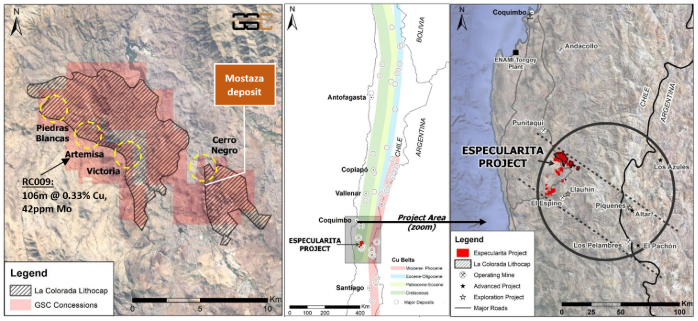
Figure 1: GSC’s Especularita project is located at low altitude within the coastal metallogenic belt of northern Chile and within 50km radius of over 85Mt of contained copper metal defined in mines and advanced projects.
Sampling of composites for test-work:
Santiago-based Aminpro Chile SpA was selected to receive, blend and prepare the Mostaza composite samples as well as carry out the designed metallurgical test-work, while SGS Mineralogy, also of Santiago, was selected for the quantitative mineralogy test-work. The design and supervision of the sighter test programme was conducted by Santiago-based consulting metallurgist Mr. Jerry Perkins [FAusIMM(CPmet)].
For the metallurgical test, a high copper grade “chalcocite” composite sample was prepared from composites made up from the assay reject materials of three high-grade drill intervals; M-5c, M-15a and M-16a (Table 1), while leaving sufficient material from each so that they could later be tested individually.
The grades of the 3 composites ranged from 4.7% to 5.5% Cu and 340g/t to 450g/t Ag (Table 1).
Composite | Drill Hole | From (m) | To (m) | Interval (m) | Mass (kg) | Cu (%) | Ag (g/t) |
M-5c | DD005 | 43.00 | 52.00 | 9.0 | 10.0 | 4.8 | 420 |
M-15a | DD015 | 41.15 | 51.05 | 9.9 | 9.9 | 5.5 | 450 |
M-16a | DD016 | 89.00 | 96.50 | 7.5 | 7.0 | 4.7 | 340 |
Table 1: Summary details of three composite samples prepared from coarse assay reject material of the Mostaza diamond drill holes.
Metallurgical test-work and results (Aminpro Chile SpA):
Based on the mineralogy (SGS test-work results) and current process knowledge and practices, it was decided to test;
Head grade assay analysis,Conventional sulphide rougher flotation test at a similar grind size to the mineralogical work results,Coarse agitation leaching with sulphuric acid and salt at elevated temperatures,
according to the experimental flowsheet summarised in Figure 2 below.
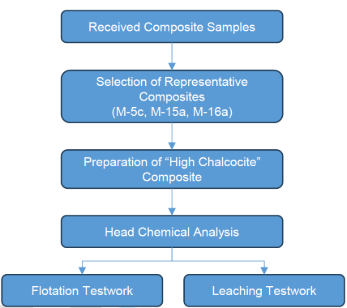
Figure 2: Experimental flowsheet for metallurgical test-work (Aminpro Chile SpA). Source: Aminpro report.
Head grade analysis:
Head chemical analysis of the high-grade “chalcocite” composite returned grades of 5.09% Cu and 279 g/t Ag. Copper speciation showed that cyanide-soluble copper was the predominant fraction (3.85%), followed by residual (0.97%) and acid-soluble copper (0.15%). Iron, arsenic and sulphur contents were 0.68%, 0.27% and 1.72%, respectively.
Flotation testwork:
Prior to the flotation test, a grinding kinetics test was first conducted to establish the grinding time required to produce a nominal pulp size fraction of P80 of 180 μm (>80% sample passing 180 μm mesh) for flotation testing. The procedure consisted of grinding subsamples for different time intervals, followed by particle size analysis using a Ro-Tap sieve shaker. The required grinding time was determined by interpolation of the experimental P80 values.
Based on the grinding kinetics results, the target particle size of P80 = 180 μm corresponded to a grinding time of 19.64 minutes, which was subsequently adopted for all flotation tests.
Batch rougher flotation tests were then conducted to evaluate the flotation performance of the high-grade “chalcocite” composite sample. A corresponding test on a duplicate sample of the composite was also conducted to verify the repeatability of the selected operating conditions.
Representative portions of the composite were ground to the target particle size of P80 = 180 μm prior to flotation. The ground pulp was adjusted to 33 wt% solids and floated at its natural pH of 9.1. A standard regime for copper flotation in Chile was employed using reagents consisting of AP3894 (Thiocarbamate – 10g/t) added during grinding, followed by PAX/SIPX (20 g/t) and MIBC (15 g/t) added during conditioning. Conditioning was carried out for 1 minute before flotation.
Rougher flotation was performed over a total flotation time of 30 minutes, with concentrate fractions collected after 1, 3, 10 and 30 minutes to evaluate flotation kinetics. At the completion of each test, all concentrate fractions and the final tailings were filtered, dried, weighed, and submitted for chemical analysis. Assays included sequential copper (Cu Seq), iron (Fe), sulphur (S), silver (Ag) and arsenic (As) to establish metallurgical performance and complete mass balances.
Results obtained for the tests include the particle size distributions of the flotation feed and final tailings, size-by-size chemical characterisation, and the principal metallurgical performance indicators, including mass recovery, concentrate grades and metal recoveries.
The results of the test recoveries and concentrate grades are summarised in Table 2 and Table 3 below:

Table 2: Flotation recovery results for Mostaza high-grade composite sample and duplicate.

Table 3: Concentrate grades for flotation tests of high-grade Mostaza composite sample and duplicate.
This non-optimised, standard flotation regime recovered 90+ % of the copper and 87% of the silver into a high grade copper-silver concentrate. Metallurgically, the flotation of the two samples was almost identical demonstrating slightly higher recoveries at a higher mass pull (duplicate sample), but with correspondingly lower grades.
An analysis of the elemental recovery by particle size by Aminpro indicated that higher recoveries may be achieved with a finer grind, or alternatively by coarse particle scavenging and regrind.
Silver floated more slowly than copper and did not quite achieve the same recoveries. The metal is present in tennantite and tetrahedrite, and in native form and also finely divided in and around chalcocite. However, silver recoveries were also encouragingly high.
Leaching testwork:
Whilst precious metals (silver in the Mostaza case) are not economically recoverable by acid leaching of copper ores, as a scoping test for the high grade composite, it was decided to carry out a bottle roll test on sample crushed to minus 2mm and look for an indication of useful copper leaching at this relatively fine size. Heap leaching is widely applied for low grade and non-chalcopyrite ores in Chile, where oxidised and transition copper ores are generally agglomerated and leached using sulphuric acid, sometimes with additions of other reagents, typically chlorides. Copper leaching occurs as a result of ferric-ferrous reactions within the heap, indicating that iron is needed in the process.
The more successful heap leach trials in Chile are conducted using elevated temperatures, so this test was carried out at 40oC and 30% solids over a period of seven days. The pH was adjusted to 1.5 with sulphuric acid, and approximately 450kg/t of salt (sodium chloride) were added and ferrous sulphate to 5g/litre. Samples were taken at various times each day to monitor the progress of copper dissolution and to maintain the required conditions using additional reagents as necessary.
Copper leaching in the test occurred rapidly over the first day with 30% extraction, however it reached a plateau after 3 days and only very small additional amounts were dissolved. The ultimate copper recovery to solution was just under 50% (a significantly lower result than achieved with the flotation test) - whilst an Aminpro model first order kinetic model predicted a maximum extraction of 47% (Figure 3).
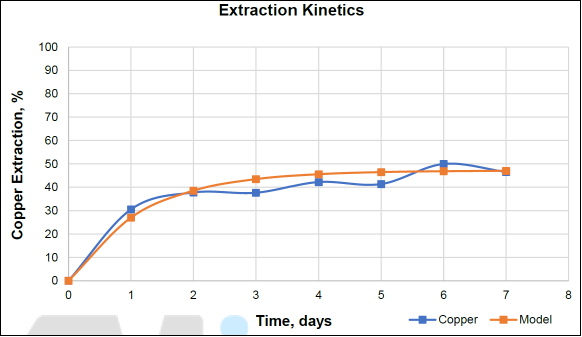
Figure 3: Cumulative copper extraction as a function of leaching time. Source: Aminpro report.
Quantitative mineralogy test-work and results (SGS Mineralogy):
The recommended mineralogy test-work programme for SGS comprised quantitative scanning electron microscopy to identify textural associations and liberation characteristics of the contained minerals. This would then provide information for potential beneficiation processes. SGS analysed the samples using their Tescan Tima platform.
Chalcocite (Cu2S) was confirmed to be by far the dominant copper mineral (78 – 83% of total copper deportment) in the three samples (Table 4) with minor (1 – 5%) levels of bornite (Cu5FeS4). There was virtually no chalcopyrite and very little pyrite in the tested samples. Tennantite (Cu12As4S13), an arsenic-rich copper mineral with up to 20% As, and minor tetrahedrite (Cu12Sb4S13) were identified as the principal copper sulphosalts (10.5 – 17.5% of total copper) carrying arsenic, antimony and silver.
By comparison to copper, scan results indicate that silver association is highly variable throughout the three high grade composite samples, occurring associated with copper sulphides and sulfosalts, plus with silicate and phyllosilicate minerals and as free silver.
Gangue minerals in the ore samples were variable and dominated by quartz, muscovite and orthoclase.
Sample | Composite M-5b | Composite M-5c | Composite M-15a |
|
|
|
|
Chalcopyrite | 0.00 | 0.02 | 0.00 |
Chalcocite | 1.70 | 3.70 | 5.13 |
Bornite | 0.02 | 0.15 | 0.31 |
Covellite | 0.01 | 0.01 | 0.01 |
Enargite | 0.00 | 0.02 | 0.04 |
Tennantite | 0.25 | 0.79 | 0.64 |
Tetrahedrite | 0.05 | 0.04 | 0.02 |
Others | 0.00 | 0.00 | 0.00 |
|
|
|
|
Total | 2.04 | 4.74 | 6.15 |
|
|
|
|
Sample | Composite M-5b | Composite M-5c | Composite M-15a |
|
|
|
|
Chalcopyrite | 0.12 | 0.43 | 0.04 |
Chalcocite | 83.29 | 78.14 | 83.37 |
Bornite | 0.99 | 3.16 | 5.04 |
Covellite | 0.46 | 0.27 | 0.14 |
Enargite | 0.04 | 0.48 | 0.72 |
Tennantite | 12.42 | 16.62 | 10.43 |
Tetrahedrite | 2.68 | 0.89 | 0.26 |
Others | 0.00 | 0.00 | 0.00 |
|
|
|
|
Total | 100.00 | 100.00 | 100.00 |
Table 4: Summary of copper species deportment identified from scanning electron microscopy of Mostaza high grade composite samples. Source: SGS report.
Next Steps:
The Phase IV drill programme is due to start within the next month and will include the next phase of metallurgic test-work.
This sighter testwork utilised sample material from coarse rejects so as not to dilute the core inventory. Given the highly encouraging results, future testwork will necessarily be conducted on core samples to satisfy JORC compliant economic studies and will test a broader range of Cu-Ag grades. Dedicated metallurgical drill holes may be required to satisfy on-going metallurgical studies.
In addition, Aminpro identified that optimisation of grinding and regrinding conditions warrants further investigation as these areas may further improve copper and silver recoveries.
References:
RNS 5182Y (26 February 2026): Cerro Negro Assays return 20m of 3.3% Cu and 270g/t Ag
Engage with the GSC management team directly by asking questions, watching video summaries and seeing what other shareholders have to say. Navigate to our Interactive Investor hub here: https://gscplc.com/
Enquiries:
Great Southern Copper plc | https://gscplc.com/link/exdxJe |
Sam Garrett, Chief Executive Officer | +44 (0) 20 7138 3204 |
|
|
SI Capital Limited |
|
Nick Emerson | +44 (0) 1483 413500 |
|
|
BlytheRay |
|
Megan Ray / James Mulligan | +44 (0) 20 7138 3204 |
Subscribe to our news alert service: https://gscplc.com/auth/signup
Notes for Editors:
About Great Southern Copper
Great Southern Copper PLC is a UK-listed mineral exploration company focused on the discovery of copper-gold-silver deposits in Chile. The Company has the option to acquire mining rights to 100% of Especularita project in the under-explored coastal belt of Chile that is prospective for large scale copper-gold-silver deposits. Chile is a globally significant mining jurisdiction being the world’s largest producer and exporter of copper.
The Especularita Project is located in the coastal metallogenic belt of Chile which hosts significant copper mines and deposits, including Teck’s Carmen de Andacollo copper mine, and boasts excellent access to infrastructure such as roads, power and ports. Significant historical small-scale and artisanal workings for both copper and gold are readily evident in the exploration project area. The coastal belt offers deposit type optionality for copper including porphyry and IOCG style deposits as well as newly recognised intrusive-related copper and gold deposits.
Great Southern Copper is strategically positioned to support the global market for copper – a critical battery metal in the clean energy transition around the world. The Company is actively engaged in exploration and evaluation work programmes targeting both large tonnage, low to medium grade Cu-Au as well as high-grade Cu-Ag-Au deposits.
Further information on the Company is available on the Company’s website: https://gscplc.com
Competent Person Statement
The information in this announcement that relates to exploration results is based on and fairly represents information reviewed or compiled by Mr Sam Garrett, a Competent Person who is a Member of the Australian Institute of Geoscientists and a Fellow of the Society of Economic Geologists. Mr Perkins is a qualified metallurgist with over 50 years of experience and has sufficient experience that is relevant to the styles of mineralisation and types of deposit under consideration and to the activity being undertaken to qualify as a Competent Person as defined in the 2012 Edition of the "Australasian Code for Reporting of Exploration Results, Mineral Resources and Ore Reserves". Mr Perkins has provided his prior written consent to the inclusion in this announcement of the matters based on information in the form and context in which it appears.
This announcement includes information that relates to Exploration Results prepared and first disclosed under the JORC Code (2012) and extracted from the Company’s previous LSE announcements as noted, and the Company’s Prospectus dated 20 December 2021. Copies of these announcements are available from the LSE Announcements page of the Company’s website: www.gscplc.com.
The Company confirms that it is not aware of any new information or data that materially affects the information included within the Prospectus dated 20 December 2021.
Forward Looking and Cautionary Statements
Some statements in this announcement regarding estimates or future events are forward-looking statements. They include indications of, and guidance on, future earnings, cash flow, costs and financial performance. Forward-looking statements include, but are not limited to, statements preceded by words such as “planned”, “expected”, “projected”, “estimated”, “may”, “scheduled”, “intends”, “anticipates”, “believes”, “potential”, "predict", "foresee", "proposed", "aim", "target", "opportunity", “could”, “nominal”, “conceptual” and similar expressions. Forward-looking statements, opinions and estimates included in this report are based on assumptions and contingencies which are subject to change without notice, as are statements about market and industry trends, which are based on interpretations of current market conditions. Forward-looking statements are provided as a general guide only and should not be relied on as a guarantee of future performance. Forward-looking statements may be affected by a range of variables that could cause actual results to differ from estimated or anticipated results and may cause the Company’s actual performance and financial results in future periods to materially differ from any projections of future performance or results expressed or implied by such forward-looking statements. So, there can be no assurance that actual outcomes will not materially differ from these forward-looking statements.
Related Shares:
Great Sth Copp