
30th Apr 2026 07:00

30 April 2026
South32 Limited
(Incorporated in Australia under the Corporations Act 2001 (Cth))
(ACN 093 732 597)
ASX / LSE / JSE Share Code: S32; ADR: SOUHY
ISIN: AU000000S320
south32.net
HERMOSA PROJECT UPDATE
Conference call at 9.00am Australian Western Standard Time, details overleaf.
South32 Limited (ASX / LSE / JSE: S32; ADR: SOUHY) (South32) provides an update on the Taylor zinc-lead-silver project (Taylor), the first development at our Hermosa project in Arizona, United States.
South32 Chief Executive Officer, Graham Kerr said: "Our investment in Hermosa has established a regional-scale project with the potential to produce critical minerals over several decades, with Taylor as the first stage.
"Our updated assessment of project execution has reaffirmed Taylor's potential to deliver our shareholders attractive returns from its long-life, low-cost production of zinc, silver and lead.
"Taylor's initial operating life has been extended by 5 years to ~33 years1since final investment approval, driven by successful infill drilling programs. The deposit remains open in several directions, providing further growth potential, with life extensions beyond the mine plan of operations subject to future regulatory approvals.
"At the adjacent Peake deposit, continued exploration success has underpinned a 32% increase in its Mineral Resource estimate to 33Mt2, supporting our expectation that Peake will become a source of future copper production and mine life extension within the Taylor development.
"Recently completed study work for the co-located Clark deposit has confirmed the opportunity for additional Taylor orebody access from Clark's decline infrastructure, improving operational flexibility and unlocking value across the life of mine. This approach will enable first production ahead of shaft commissioning and increase ore handling capacity by approximately 25%, providing potential to increase production above current design capacity.
"First production is expected in H2 FY28 and nameplate capacity by FY31, reflecting our revised expectation for shaft construction, due to contractor performance and productivity challenges. While targeted measures have been implemented to improve shaft construction productivity, our latest assessment has determined that these measures will only partially mitigate the impact of contractor underperformance.
"Our expected growth capital expenditure for Taylor has been updated to ~US$3,300M3. This includes scope changes with the addition of decline access, revised shaft construction costs, materially higher inflation, industry-wide increases in key input costs such as steel, piping, concrete and electrical, and United States tariffs.
"Based on our updated assumptions, Taylor continues to demonstrate its quality, with expected steady-state EBITDA of ~US$650M per annum4 and a net present value of ~US$3,100M5.
"Demonstrating the significant leverage to prices this long-life, high-quality project will deliver for years to come, these returns increase further to steady-state EBITDA of ~US$800M per annum4 and a net present value of ~US$4,500M, at spot commodity prices5."
1 The information in this announcement that refers to Production Target and forecast financial information is based on Proved (41Mt, 32%) and Probable (58Mt, 44%) Ore Reserves and Measured (1.1Mt, 1%), Indicated (4.2Mt, 3%), Inferred (13Mt, 10%) Mineral Resources and Exploration Target (13Mt, 10%) for the Taylor deposit. The Ore Reserves, Mineral Resources and Exploration Target underpinning the Production Target, included in this announcement, have been prepared by Competent Persons and reported in accordance with the JORC Code (2012). All material assumptions on which the Production Target and forecast financial information is based are provided in Annexure 2 of this announcement. There is low level of geological confidence associated with Inferred Mineral Resources and there is no certainty that further exploration work will result in the determination of Indicated Mineral Resources or that the Production Target will be realised. The potential quantity and grade of the Exploration Target is conceptual in nature. In respect of Exploration Target used in the Production Target, there has been insufficient exploration to determine a Mineral Resource and there is no certainty that further exploration work will result in the determination of Mineral Resources or that the Production Target itself will be realised. The stated Production Target is based on South32's current expectations of future results or events and should not be solely relied upon by investors when making investment decisions. Further evaluation work and appropriate studies are required to establish sufficient confidence that this Production Target will be met. South32 confirms that inclusion of 20% of tonnage (10% Inferred Mineral Resources and 10% Exploration Target) is not the determining factor of the project viability and the project forecasts a positive financial performance when using 80% tonnage (32% Proved and 44% Probable Ore Reserves and 1% Measured and 3% Indicated Mineral Resources). South32 is satisfied, therefore, that the use of Inferred Mineral Resources and Exploration Target in the Production Target and forecast financial information reporting is reasonable.
2 The information in this announcement that relates to Mineral Resource estimate for Peake represents an estimate as at 30 April 2026 and is based on information compiled by Patrick Garretson. Mr Garretson is a full-time employee of Terra Resources Consulting Group LLC. Mr Garretson is a member of the Australasian Institute of Mining and Metallurgy and has sufficient experience relevant to the style of mineralisation and type of deposit under consideration and to the activities being undertaken, to qualify as a Competent Person as defined in the 2012 Edition of the Australasian Code for Reporting of Exploration Results, Mineral Resources and Ore Reserves (the JORC Code). Mr Garretson consents to the inclusion in this announcement of the matters based on their information in the form and context in which it appears. Refer to Annexure 2 for further details.
3 Growth capital expenditure incurred since 1 January 2024 to 31 March 2026 and remaining growth capital expenditure to be invested from 1 April 2026 to H2 FY28 (real as at 1 July 2026).
4 Average EBITDA and EBITDA margin calculated over the steady state production years (FY31-FY59).
5 Based on a valuation date of 1 July 2026.
------------------------------------------------------------------------------------------------------------------------------------------
Conference call
South32 will hold a conference call at 9.00am Australian Western Standard Time (11.00am Australian Eastern Standard Time) on 30 April 2026 to provide an update of the Hermosa project including Q&A, the details of which are as follows:
Conference ID
Please pre-register for this call at link.
Website
A replay of the conference call will be made available on the South32 website.
------------------------------------------------------------------------------------------------------------------------------------------
Taylor project update
In February 2026, we advised that an assessment of Taylor project milestones and capital expenditure would be completed in the June 2026 half year. The recent receipt of updated pricing for the remaining surface and underground construction packages, has enabled us to advance key estimates for capital expenditure and schedule. Along with these updates, we have increased our Ore Reserve and Mineral Resource estimates for Taylor following successful infill drilling.
The assessment has reaffirmed Taylor's potential to deliver attractive returns as a large‑scale, long‑life, low-cost producer of zinc, silver and lead. Taylor is expected to operate as a highly productive underground mine and a conventional process plant with a nameplate capacity of 4.3Mtpa. Work completed since final investment approval in February 2024 has also supported an extension of Taylor's mine life and confirmed potential for future copper production from the adjacent Peake deposit.
Following completion of the exploration decline for the co-located Clark deposit in the December 2025 quarter, we assessed the feasibility of providing additional access to the Taylor orebody via the Clark exploration decline. This work highlighted significant benefits from an integrated underground development standpoint, including the potential to access the Taylor orebody ahead of full shaft commissioning, and an increase in ore handling capacity of approximately 25%. Over the next 12-months, we will assess surface infrastructure de-bottlenecking options, which combined with additional ore handling capacity, have the potential to increase production above current design rates.
First ore mined from Taylor via the Clark decline is expected in mid-FY28, with first production expected in H2 FY28. First production from the shafts is now expected from H1 FY29, reflecting recently revised timing for shaft completion. This revised schedule is inclusive of targeted measures that have been implemented to improve shaft construction productivity, including strengthening contractor leadership, engaging specialist performance advisors, and bringing critical scope under direct owner management. While these measures have improved performance in shaft sinking rates, our latest assessment has determined that these measures will only partially mitigate the impact of contractor underperformance. As a result, we are now planning for a more gradual ramp up to nameplate capacity, with full capacity expected in FY31 (previously FY30).
Expected growth capital expenditure for Taylor has been increased by ~US$1,100M, compared to final investment approval, to ~US$3,300M (from 1 January 2024), reflecting a change in scope with the addition of decline infrastructure (~US$100M), revised shaft construction costs (~US$450M), materially higher inflation, industry-wide increases in key inputs including steel, piping, concrete and electrical components, and United States tariff impacts (~US$500M).
Key outcomes of the project update include:
· 52% increase in the Taylor Ore Reserve to 99Mt, supported by successful infill drilling programs. |
· 10% increase in the Taylor Mineral Resource to 169Mt, which remains open at depth and laterally. |
· 32% increase in the Peake Mineral Resource to 33Mt, with ongoing drilling to test the potential for a continuous mineralised system connecting Peake and Taylor Deeps. |
· An increase in Taylor's initial operating life from ~28 years to ~33 years, with life extensions beyond the mine plan of operations subject to future regulatory approvals. |
· 17% increase in life of mine production to 10.4Mt ZnEq6 (3.7Mt zinc, 4.6Mt lead, 247Moz silver). |
· Annual average steady-state production of 346kt ZnEq (123kt zinc, 155kt lead, 8.2Moz silver). |
· Growth capital expenditure revised to ~US$3,300M, with ~US$2,100M to be spent over Q4 FY26 to H2 FY28. |
· Sustaining capital expenditure revised to average ~US$50M per annum, including spend on the decline and underground infrastructure over FY28 to FY30. |
· Operating unit costs revised to ~US$100/t, reflecting general inflation and higher assumed energy costs. |
6 Payable zinc equivalent (ZnEq) was calculated by aggregating revenues from payable zinc, lead and silver, and dividing the total revenue by the price of zinc. Our long-term price assumptions for zinc (~US$3,390/t), lead (~US$2,200/t) and silver (~US$50/oz) have been used to calculate payable zinc equivalent production.
Summary financial outcomes
Key estimated financial outcomes from the project update are summarised below. Unless stated otherwise, currency is in US dollars (real) and units are metric.
Table 1: Estimated project update outcomes - Taylor stage one
|
|
| Unit | Projectupdate(a) | Feasibility study(b) |
Production | Nameplate processing capacity | Mtpa | ~4.3 | ~4.3 | |
Initial operating life | Years | ~33 | ~28 | ||
First production | FY | H2 FY28 | H2 FY27 | ||
Mined ore grades (average) | %, g/t | 3.7% Zn, 4.1% Pb, 76 g/t Ag | 3.9% Zn, 4.3% Pb, 78 g/t Ag | ||
Annual payable zinc production (average/steady state) | kt | ~111 / ~123 | ~114 / ~132 | ||
Annual payable lead production (average/steady state) | kt | ~141 / ~155 | ~142 / ~163 | ||
Annual payable silver production (average/steady state) | Moz | ~7.5 / ~8.2 | ~7.4 / ~8.5 | ||
Annual payable ZnEq production (average/steady state) | kt | ~314 / ~346 | ~318 / ~364(d) | ||
Operating costs | Operating unit costs (average per tonne ore processed) | US$/t | ~100 | ~86 | |
Capital expenditure | Pre-production growth capital expenditure | US$M | ~3,300(c) | ~2,160 | |
Sustaining capital expenditure (annual average) | US$M | ~50 | ~36 | ||
a) Project update reflects values in real terms as at 1 July 2026.
b) Feasibility study reflects values in real terms as at 1 January 2024.
c) Includes actual expenditure incurred since 1 January 2024 to 31 March 2026 and forecast expenditure from 1 April 2026 to H2 FY28 (real as at 1 July 2026).
d) Zinc equivalent values from the feasibility study have been restated to reflect South32's updated long-term commodity price assumptions.
Table 2: Estimated project update returns - Taylor stage one
|
| Unit | Project update(a) | Spot case(b) |
Financial | Annual average EBITDA (steady state) | US$M | ~650 | ~800 |
Average EBITDA margin (steady state) | % | ~58% | ~64% | |
Annual average net cash flow (post tax, steady state) | US$M | ~500 | ~650 | |
Post tax NPV (real, 7.0% discount rate)7 | US$M | ~3,100 | ~4,500 | |
Post tax IRR (nominal)7 | % | ~19% | ~22% | |
Commodity price assumptions | Zinc | US$/t | ~3,390 (from FY34)(c) | ~3,470 |
Lead | US$/t | ~2,200 (from FY34)(c) | ~1,940 | |
Silver | US$/oz | ~50 (from FY34)(c) | ~77 |
a) Project update reflects values in real terms as at 1 July 2026.
b) Reflects spot prices as at April 2026.
c) Commodity prices assumed for FY28 to FY33 are within the ranges: Zinc ~US$3,250/t to ~US$3,400/t, Lead ~US$2,000/t to ~US$2,200/t, Silver ~US$50/oz to ~US$70/oz.
7 Based on a valuation date of 1 July 2026.
Hermosa project overview
Hermosa is a regional-scale project located in Santa Cruz, Arizona, 100% owned by South32. It comprises multiple deposits with the potential to produce critical minerals for several decades, with the large-scale, long-life Taylor zinc-lead-silver project as the first development. Hermosa also includes the Peake copper deposit located south of Taylor, the Clark battery-grade manganese deposit, and an extensive, highly prospective land package with the potential for further polymetallic and copper mineralisation.
Taylor was approved for development in February 2024 and is being constructed as a modern, highly efficient underground mine and conventional process plant with a nameplate capacity of 4.3Mtpa. Taylor is now expected to deliver 10.4Mt of ZnEq production (3.7Mt zinc, 4.6Mt lead, 247Moz silver) over an extended initial operating life of ~33 years, with life extensions beyond the mine plan of operations subject to future regulatory approvals. There is significant opportunity for life extension from Taylor, with the deposit remaining open in several directions, and the adjacent Peake copper deposit. The development of Taylor will also establish significant shared infrastructure, including water management, permanent power and non-processing infrastructure, that is expected to unlock value for future growth phases at Hermosa.
Hermosa was the first mining project added to the US Government's FAST‑41 process, recognising its potential to strengthen the domestic supply of critical minerals in the US. Federal permitting under FAST-41 is progressing to schedule, based on the existing mine plan of operations, with a Final Record of Decision and notice to proceed on-track for H1 FY27. All State approvals required to construct Taylor have been received.
Taylor Mineral Resource
The Taylor deposit is a carbonate replacement style zinc-lead-silver massive sulphide deposit. It is hosted in Permian carbonates of the Pennsylvanian Naco Group of south-eastern Arizona. The Taylor deposit comprises the upper Taylor sulphide (Taylor Mains) and lower Taylor deeps (Taylor Deeps) domains that have a general northerly dip of 30° and are separated by a low angle thrust fault.
The deposit has an approximate strike length of 2,500m and a width of 1,900m. Mineralisation extends 1,200m from near-surface and is open in several directions, offering the potential for further growth. Recent exploration drilling at Taylor has been focused on infill programs, with extensional drill targets identified and prioritised for future exploration programs.
Taylor's Mineral Resource estimate is reported in accordance with the 2012 Edition of the 'Australasian Code for Reporting of Exploration Results, Mineral Resources and Ore Reserves' (JORC Code). We have today announced a 10% increase in the Mineral Resource estimate to 169Mt at 3.51% zinc, 3.88% lead and 76 g/t silver, compared to the previously disclosed Mineral Resource estimate as at 30 June 20258 (see Annexure 1 - Table 1 and Table 2). The increase is due to additional drilling.
Table 3: Mineral Resource estimate for the Taylor deposit as at 30 April 2026
Ore Type | Measured Mineral Resources | Indicated Mineral Resources | Inferred Mineral Resources | Total Mineral Resources | |||||||||||||
| Mt | % Zn | % Pb | g/t Ag | Mt | % Zn | % Pb | g/t Ag | Mt | % Zn | % Pb | g/t Ag | Mt | % Zn | % Pb | g/t Ag | |
UG Sulphide(a) | 57 | 4.56 | 4.68 | 75 | 86 | 3.11 | 3.86 | 78 | 26 | 2.48 | 2.18 | 67 | 169 | 3.51 | 3.88 | 76 | |
Mt - Million dry metric tonnes, % Zn - percent zinc, % Pb - percent lead, g/t Ag - grams per tonne of silver.
a) Cut-off grade: Net Smelter Return (NSR) of US$90/dmt for UG Sulphide.
b) Metallurgical weighted recovery assumptions in Taylor Sulphide are 85-92% for zinc, 89-92% for lead, and 76-83% for silver.
c) All masses are reported as dry metric tonnes (dmt). All tonnes and grade information have been rounded to reflect relative uncertainty of the estimate, hence small differences may be present in the totals.
d) Mineral Resources are reported inclusive of Ore Reserves.
Competent Person's Statement
The information in this announcement that relates to Mineral Resources for the Taylor and Peake Deposit are presented on a 100% basis, represent an estimate as of 30 April 2026, and are based on information compiled by Patrick Garretson. Mr Garretson is a consultant employed by Terra Resources Consulting Group LLC and is a member of the Australasian Institute of Mining and Metallurgy. Mr Garretson has sufficient experience relevant to the style of mineralisation and type of deposit under consideration, and to the activities being undertaken, to qualify as a Competent Person as defined in the 2012 Edition of the 'Australasian Code for Reporting of Exploration Results, Mineral Resources and Ore Reserves'. The Competent Person consents to the inclusion in this announcement of the matters based on his information in the form and context in which it appears.
8 Information in this announcement that relates to Mineral Resource estimate for Taylor deposit was declared as part of South32's annual Resource and Reserve declaration in the FY25 Annual Report (www.south32.net) issued on 28 August 2025 and prepared by a Competent Person in accordance with the requirements of the JORC Code. South32 confirms that it is not aware of any new information or data that materially affects the information included in the original announcement. South32 confirms that the form and context in which the Competent Person's findings are presented have not been materially modified from the original announcement.
Taylor Ore Reserve
Taylor's Ore Reserve estimate is reported in accordance with the JORC Code.
Following final investment approval, 95 infill drill holes have been completed at Taylor to enhance orebody definition and enable further efficiency gains. This work has supported a significant 52% increase in the Ore Reserve estimate to 99Mt at 3.95% zinc, 4.50% lead and 77 g/t silver, compared to the previously disclosed estimate as at 30 June 20259 (see Annexure 1 - Table 3 and Table 4). The Ore Reserve underpins approximately 25 years of Taylor's initial operating life of ~33 years, providing strong orebody definition.
Table 4: Ore Reserve estimate for Taylor deposit as at 30 April 2026
Ore Type | Proved Ore Reserves | Probable Ore Reserves | Total Ore Reserves | Reserve life | |||||||||
| Mt | % Zn | % Pb | g/tAg | Mt | % Zn | % Pb | g/tAg | Mt | % Zn | % Pb | g/tAg | Years |
UG Sulphide(a) | 41 | 5.02 | 5.12 | 79 | 58 | 3.19 | 4.05 | 76 | 99 | 3.95 | 4.50 | 77 | 25 |
Mt - Million dry metric tonnes, % Zn - percent zinc, % Pb - percent lead, g/t Ag - grams per tonne of silver.
a) Cut-off grade: NSR of US$90/dmt.
b) Metallurgical weighted recovery assumptions in Taylor Sulphide are 85-92% for zinc, 89-92% for lead, and 76-83% for silver.
c) All masses are reported as dry metric tonnes (dmt). All tonnes and grade information have been rounded to reflect relative uncertainty of the estimate, hence small differences may be present in the totals.
Competent Person's Statement
The information in this announcement that relates to Ore Reserves for the Taylor deposit is presented on a 100% basis, represents an estimate as of 30 April 2026, and is based on information compiled by Kevin McCoy. Mr McCoy is a full-time employee of South32 and is a member of the Australasian Institute of Mining and Metallurgy. Mr McCoy has sufficient experience relevant to the style of mineralisation and type of deposit under consideration, and to the activities being undertaken, to qualify as a Competent Person as defined in the 2012 Edition of the 'Australasian Code for Reporting of Exploration Results, Mineral Resources and Ore Reserves'. The Competent Person consents to the inclusion in this announcement of the matters based on his information in the form and context in which it appears.
9 Information in this announcement that relates to Ore Reserve estimates for the Taylor deposit was declared as part of South32's annual Resource and Reserve declaration in the FY25 Annual Report (www.south32.net) issued on 28 August 2025 and prepared by a Competent Person in accordance with the requirements of the JORC Code. South32 confirms that it is not aware of any new information or data that materially affects the information included in the original announcement. All material assumptions and technical parameters underpinning the estimate in the relevant announcement continue to apply and have not materially changed. South32 confirms that the form and context in which the Competent Person's findings are presented have not been materially modified from the original announcement.
Peake Mineral Resource
Peake is a copper-lead-zinc-silver deposit located south of the Taylor deposit, at a depth of approximately 1,300m-1,500m. Since our reporting of an initial Mineral Resource estimate as at 30 June 2023, subsequent diamond drilling has returned high-grade copper and polymetallic intercepts that support the interpretation of a potentially continuous mineralised system connecting Peake and Taylor Deeps.
We have today announced a 32% increase in the Mineral Resource estimate for Peake to 33Mt at 1.78% CuEq10 (0.87% Cu, 0.28% Zn, 0.32% Pb and 36g/t Ag), compared to the previously published 30 June 2025 estimate11 (see Annexure 1 - Table 5 and Table 6). This reflects successful extensional and infill drilling to the south and southwest of the existing high-grade mineralised domain. The deposit remains open, with further drilling planned to test the extent of mineralisation.
We are continuing to assess the potential to integrate Peake within the Taylor development. Under this scenario, the Peake orebody would be accessed utilising the shaft infrastructure established for Taylor. The Taylor process plant has been designed with flexibility to allow for the addition of a low-cost copper circuit, enabling production of copper and other base and precious metals from Peake and Taylor Deeps.
With high-grade Taylor zinc-lead-silver mining zones expected to underpin production during the first several years, a future development of Peake could add copper production in the medium to longer-term in a combined development with Taylor, extending overall mine life. Further updates on Peake will be provided as work progresses.
Table 5: Mineral Resource estimate for the Peake deposit as at 30 April 2026
Ore Type | MeasuredMineral Resources | IndicatedMineral Resources | Inferred Mineral Resources | TotalMineral Resources | ||||||||||||||||||
| Mt | % Cu | % Zn | % Pb | g/t Ag | Mt | % Cu | % Zn | % Pb | g/t Ag | Mt | % Cu | % Zn | % Pb | g/t Ag | Mt | % Cu | % Zn | % Pb | g/t Ag | ||
UG Sulphide(a) | - | - | - | - | - | - | - | - | - | - | 33 | 0.87 | 0.28 | 0.32 | 36 | 33 | 0.87 | 0.28 | 0.32 | 36 | ||
Mt - Million dry metric tonnes, % Zn - percent zinc, % Pb - percent lead, g/t Ag - grams per tonne of silver.
a) Cut-off grade: Net Smelter Return (NSR) of US$90/dmt for UG Sulphide.
b) Total metallurgical recovery assumptions are 73% for copper, 75% for Zn, 85% for Pb, and 52% for Ag in Pb Concentrate and 30% for Ag in Cu Concentrate.
10 CuEq (%) = Cu (%) + 0.3577 * Zn (%) + 0.2421 * Pb (%) + 0.0203 * Ag (g/t). The copper equivalent (CuEq %) was calculated using South32's internal price forecasts and laboratory tests completed to derive metallurgical recovery. The price is commercially sensitive and is not disclosed. Average payable metallurgical recovery assumptions are 75% for Zn, 85% for Pb, 82% for Ag and 73% for Cu.
11 Information in this announcement that relates to Mineral Resource estimate for the Peake deposit was declared as part of South32's annual Resource and Reserve declaration in the FY25 Annual Report (www.south32.net) issued on 28 August 2025 and prepared by Competent Persons in accordance with the requirements of the JORC Code. South32 confirms that it is not aware of any new information or data that materially affects the information included in the original announcement. South32 confirms that the form and context in which the Competent Persons' findings are presented have not been materially modified from the original announcement.
Taylor construction
Non-process infrastructure
The first of two dry stack tailings storage facilities (TSF) has already been established as part of our voluntary remediation program completed in CY20. The second TSF will be constructed on federal land in CY29, following federal approvals under FAST-41.
All required dewatering infrastructure for Taylor, Peake and Clark, including two water treatment plants and associated dewatering wells, has been successfully commissioned, with flow rates lower than expected.
A permanent 138kV transmission line to the local grid will provide all site power, with discussions ongoing with local providers to potentially secure 100% renewable energy. Construction of the transmission line will enable a transition from temporary, self-generated natural gas power to cost-efficient, long-term supply. Construction on private lands is underway, with construction of the remaining approximately seven miles on federal land scheduled to commence in H1 FY27, following federal approvals under FAST-41.
Mine infrastructure
Integrated underground access and mine development
An exploration decline for the Clark battery-grade manganese deposit was completed in the December 2025 quarter, on-schedule and on-budget, benefitting from favourable ground conditions. Following completion, we assessed the feasibility of providing additional access to the Taylor orebody via the Clark exploration decline. This work has highlighted significant benefits from an integrated underground development standpoint, including the potential to access the Taylor orebody ahead of full shaft commissioning, and an increase in ore handling capacity of approximately 25%. First ore from decline access is expected in mid-FY28. Over the next 12-months, we will assess surface infrastructure de-bottlenecking options, which combined with additional ore handling capacity, have the potential to increase production above current design rates.
Underground infrastructure and shafts
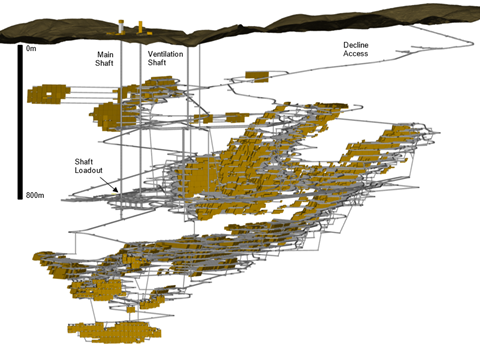
In addition to decline access, we are constructing dual shafts for underground mining operations. Ore will be mined in an optimised sequence across four independent mining areas, crushed underground and hoisted to the surface for processing.
Sinking of the ventilation and main shafts commenced during FY25. The ventilation shaft has reached a depth of approximately 618 metres (~75% complete) as at April 2026, with lateral development and construction of the first underground mining level from the ventilation shaft completed in the March 2026 quarter. Shaft sinking and construction productivity on the ventilation shaft has been impacted by challenges related to contractor performance and engineering and procurement delays. While targeted measures to address shaft sinking productivity have improved performance, our latest assessment has determined that these measures will only partially mitigate the impact of contractor underperformance. As a result, construction of the ventilation shaft is expected to be completed in H2 FY27 (previously H1 FY27).
The main shaft has reached a depth of approximately 478 metres (~53% complete) as at April 2026. Despite some carry-over delays from ventilation shaft activity, main shaft sinking rates have benefitted from improvement measures implemented on the ventilation shaft. Sinking of the main shaft is now expected to be completed in H1 FY28, with additional underground infrastructure to be installed following shaft sinking.
Figure 1: Taylor mine plan
Process infrastructure
The process plant is designed as a sulphide ore flotation circuit producing separate zinc and lead concentrates, with silver by-product credits, and has a nameplate capacity of 4.3Mtpa.
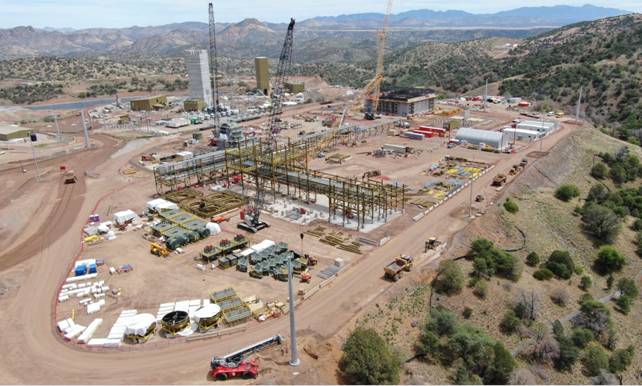
Following final investment approval, construction of process infrastructure has reached several key milestones, with the flotation circuit and process plant tracking to plan. The process plant is expected to be commissioned in H1 FY28, coinciding with completion of the decline access, with first production expected in H2 FY28, and nameplate capacity from FY31.
Figure 2: Hermosa surface infrastructure as at April 2026
Taylor production profile
The production profile for Taylor is shown in Figure 3 below. First ore is expected in mid-FY28, first production in H2 FY28 and full capacity from FY31.
Taylor's initial operating life has been extended by approximately 5 years to ~33 years, with life extensions beyond the mine plan of operations subject to future regulatory approvals. Total production has increased by approximately 17% to 10.4Mt ZnEq (3.7Mt of zinc, 4.6Mt of lead and 247Moz of silver).
Annual average production over the steady-state years (FY31 to FY59) is expected to be approximately 123kt of zinc, 155kt of lead and 8.2Moz of silver, for 346kt ZnEq (previously 132kt of zinc, 163kt of lead and 8.5Moz of silver, for 364kt ZnEq), with the value uplift from additional ore processed over the initial operating life more than offsetting slightly lower average metal grades.
Figure 3: Ore processed and payable ZnEq production
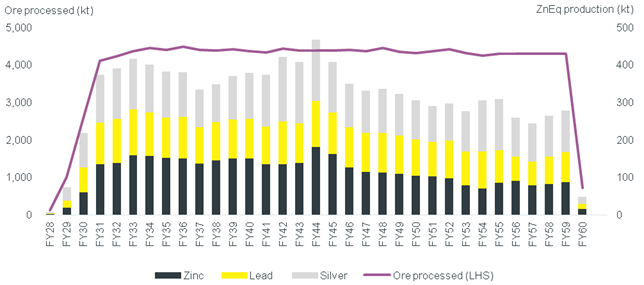
Table 6: Project update production vs. FS production
Item | Unit | Project update | Feasibility study |
Initial operating life | Years | ~33 | ~28 |
Total payable zinc production | Mt | ~3.7 | ~3.2 |
Total payable lead production | Mt | ~4.6 | ~4.0 |
Total payable silver production | Moz | ~247 | ~208 |
Total payable ZnEq production | Mt | ~10.4 | ~8.9(a) |
a) Zinc equivalent values from the feasibility study have been restated to reflect South32's updated long-term commodity price assumptions.
Taylor capital expenditure estimate
The project update was undertaken with approximately 80% of Taylor's growth capital expenditure now invested, contracted or subject to final pricing.
Taylor's expected growth capital expenditure has been revised to ~US$3,300M (real), with ~US$2,100M remaining to be invested over Q4 FY26 to H2 FY28. This update reflects a change in scope with construction costs to establish decline access (~US$100M), revised shaft construction costs (~US$450M), and materially higher inflation, industry-wide cost increases in key input costs such as steel, piping, concrete and electrical components, and United States tariff impacts (~US$500M).
Following our final investment approval, external factors including geopolitical tensions and higher tariffs in the United States, have driven materially higher inflation and escalation in key input costs. Compared to our feasibility study estimate, installed prices for steel, piping and concrete have more than doubled. While steel requirements have been optimised and reduced by approximately 30% following detailed engineering, the uncontrollable pricing impacts have driven higher than expected capital costs. This has been reflected in recently priced surface infrastructure and underground development work packages.
Looking ahead, the capital risk profile is significantly lower with, the majority of work packages now contracted or subject to final pricing, remaining shaft development delivered under unit rate contracts, and detailed engineering further advanced.
Sustaining capital expenditure is expected to average approximately US$50M per annum over the life of the mine, including spend on the decline and underground infrastructure across FY28 to FY30. Annual average sustaining capital during steady state years is largely unchanged at approximately US$37M.
Figure 4: Capital expenditure (US$M, real) (from 1 January 2024)(a)
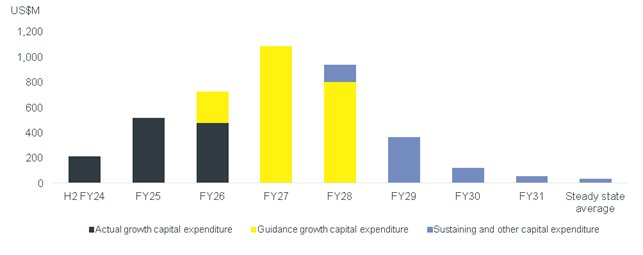
a) Sustaining capital expenditure in FY28 to FY30 includes spend on the decline and underground infrastructure. This amount is included in in the life of mine sustaining capital expenditure.
Taylor project summary
Our Taylor project update has reaffirmed its potential to deliver attractive returns as a large‑scale, long‑life, low-cost producer of zinc, silver and lead. Key estimated economic outcomes from the project update are summarised below. Unless stated otherwise, currency is in US dollars (real) and units are metric.
Table 7: Estimated Taylor financial returns - stage one
| Unit | Project update(a) | Spot case(b) |
Zinc revenue(c) | US$M | ~10,800 | ~11,150 |
Lead revenue(c) | US$M | ~9,200 | ~8,050 |
Silver revenue(c) | US$M | ~12,600 | ~19,000 |
Total revenue(c) | US$M | ~32,600 | ~38,200 |
Total EBITDA | US$M | ~18,900 | ~24,200 |
Total net cash flow | US$M | ~12,200 | ~16,350 |
Annual average EBITDA (steady state) | US$M | ~650 | ~800 |
Average EBITDA margin (steady state) | % | ~58% | ~64% |
Annual average net cash flow (post tax, steady state) | US$M | ~500 | ~650 |
Post tax NPV (real, 7.0% discount rate)12 | US$M | ~3,100 | ~4,500 |
Post tax IRR (nominal)12 | % | ~19% | ~22% |
a) Project update reflects values in real terms as at 1 July 2026.
b) As at April 2026.
c) Revenue is net of treatment and refining charges and penalties.
12 Based on a valuation date of 1 July 2026.
Clark battery-grade manganese deposit
Clark is currently the only advanced project in the US with a clear pathway to produce battery-grade manganese for the domestic electric vehicle market from locally sourced ore. Recognising Clark's strategic importance, we have received two grants from the US Government, with a US$20M grant from the US Department of War used to part fund construction of the exploration decline, and a US$166M grant from the US Department of Energy to support the potential development of a future commercial-scale manganese production facility.
In FY23, we completed a selection phase pre-feasibility study (PFS-S) for Clark, confirming the potential to produce ~185ktpa of high-purity manganese sulphate monohydrate (HPMSM), together with zinc and silver by-products, over an operating life of up to ~70 years13.
Following the PFS-S, we undertook pilot-scale production of HPMSM, with samples provided to potential customers for initial qualification. An exploration decline to access the Clark orebody was completed on-schedule and on-budget in the December 2025 quarter. This has enabled collection of the first bulk ore sample and will provide the feedstock for an integrated test plant (ITP). The ITP is expected to complete in FY27 and will inform flowsheet and engineering design, while supporting further customer qualification.
Regional exploration
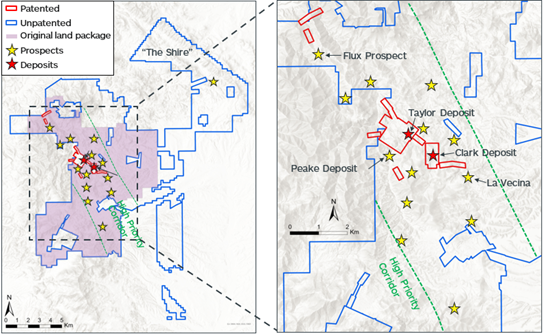
Hermosa hosts a highly prospective regional land package which offers the potential for further polymetallic and copper resource growth. Since our initial acquisition, we have more than doubled our land tenure in the most prospective areas. We have used quantitative approaches utilising data analysis, geophysics, soil sampling and mapping to identify a highly prospective corridor with over 15 prospects identified for future drill testing.
Within this corridor, the Flux prospect is located approximately 5km from Taylor. The Flux prospect is located down-dip of a historic mining area, where initial drilling has returned high-grade polymetallic intersections from shallow depths, highlighting the potential for Taylor-like mineralisation.
Looking ahead, our exploration strategy will focus on prioritising, permitting and drilling exploration prospects in this highly prospective corridor.
Figure 5: Hermosa land package and high priority corridor
13 The information in this announcement that refers to the Production Target for Clark is based on Indicated (69%) and Inferred (31%) Mineral Resources and was originally disclosed in "Hermosa Project Update" dated 9 May 2023. The Mineral Resources underpinning the Production Target is based on Mineral Resources disclosed in South32's Annual Report published on 28 August 2025 and is available to view on www.south32.net. South32 confirms that all the material assumptions underpinning the Clark Production Target as set out in the ASX announcement dated 9 May 2023 continue to apply and have not materially changed. There is low level of geological confidence associated with Inferred Mineral Resources and there is no certainty that further exploration work will result in the determination of Indicated Mineral Resources or that the Production Target will be realised. The stated Production Target for Clark is based on South32's current expectations of future results or events and should not be solely relied upon by investors when making investment decisions. Further evaluation work and appropriate studies are required to establish sufficient confidence that this Production Target will be met. South32 confirms that inclusion of 31% of Inferred Mineral Resources is not the determining factor of the project viability and the project forecasts a positive financial performance when using 69% Indicated Mineral Resources. South32 is satisfied, therefore, that the use of Inferred Mineral Resources in the Production Target for Clark is reasonable.
Update on estimates of Mineral Resources, Ore Reserves, and Exploration Target for the Taylor deposit
The estimates of Mineral Resources and Ore Reserves are reported in accordance with the Australasian Code for Reporting of Exploration Results, Mineral Resources and Ore Reserves, 2012 (JORC Code) and the Australian Securities Exchange Listing Rules. The breakdown of the total estimates of Mineral Resources and Ore Reserves into the specific JORC Code categories is contained in the Annexure 1 tables. This announcement summarises the information contained in the JORC Code Table 1 which is included in Annexure 2.
Estimate of Mineral Resources for Taylor
Geology and geological interpretation
The Taylor deposit within the Hermosa project is a Carbonate Replacement Deposit (CRD) style zinc-lead-silver massive sulphide deposit located in south-eastern Arizona in the US (Annexure 2 - Figure 1). It is hosted in Permian carbonates of the Pennsylvanian Naco Group within the Concha, Scherrer, and Epitaph lithological units and the Jurassic Hardshell Volcanic sequence (Annexure 2 - Figure 4).
The Taylor deposit comprises the upper Taylor sulphide and lower Taylor deeps domains that have a general northerly dip of 30° and are separated by a low angle thrust fault. Mineralisation within the stacked profile of the thrusted host stratigraphy extends 1,200m from near-surface and is open at depth. Mineralisation is modelled for an approximate strike length of 2,500m and width of 1,900m (Annexure 2 - Figure 5 and Figure 6).
Drilling techniques
The Mineral Resource estimate is based on data from 740 surface diamond drill holes (Annexure 2 - Figure 8) of HQ (95.6mm) or NQ (75.3mm) diameter. Since August 2018, holes have been drilled between 60° and 75° dip to maximise the angle at which mineralisation is intersected. Oriented drilling was introduced in October 2018 to incorporate structural measurements into geological modelling for stratigraphy and fault interpretation. In September 2020, acoustic televiewer data capture was implemented for downhole imagery for most drilling to improve orientation and geotechnical understanding. From September 2021 onwards, the acoustic televiewer was the sole drill core orientation method applied. Structural measurements from oriented drilling are incorporated in geological modelling to assist with fault interpretation.
All diamond core holes were used for geology, geometallurgy and geotechnical purposes. The drill half cores were sampled at either 1.5m intervals or terminated at litho-structural boundaries. Samples were submitted for preparation at an external ISO-17025 certified laboratory, Australian Laboratory Services (ALS). Preparation was completed by the ALS laboratory in Tucson, Arizona, US and then chemical analyses was completed in Vancouver, Canada. Preparation involved crushing to 2mm, a rotary split to 250g and pulverisation to 85% passing 75µm from which a 0.25g pulp was measured for assay. The mineralised intersections were verified by geologists throughout each drilling program and reviewed independently against core photos by an alternate geologist prior to geological interpretation.
Sample analysis method
Samples of 0.25g from 1kg pulps were processed at ALS Vancouver using a combination of inductively coupled plasma - mass spectrometry ICP-MS four-acid 48 element assay and the addition of overlimit packages. A range of certified reference materials (CRM) were routinely submitted to monitor assay accuracy, with low failure rates within expected ranges for this deposit style, demonstrating reliable laboratory accuracy.
External third-party laboratory pulp duplicate and CRM checks indicate no significant bias for the primary assay laboratory. Results of field duplicates, laboratory pulp duplicates, and certified blanks were all within acceptable range for resource modelling.
Estimation methodology
Resource estimation was performed by ordinary kriging interpolation for four elements of economic interest (Zn, Pb, Ag, Cu), three potentially deleterious elements (As, Mn, Sb) and two estimation elements (Ca, S) used for environmental reporting. Search estimation criteria were consistent with geostatistical models developed for each estimation domain according to the appropriate geological controls. Validation includes statistical analysis, swath plots and visual inspection.
Specific gravity measurements from drill cores were used as the basis for estimating dry bulk density in tonnage calculations for both mineralised and non-mineralised material.
Mineral Resource classification
Mineral Resource classification criteria are based on the level of data informing both the geological model and grade estimation. Grade estimation confidence is overlain on the geological modelling classification criteria whereby kriging variance is matched to block estimation conditions - that relates to the number and distance of data informing the estimate in relation to semivariogram models for Zn, Pb and Ag. Measured Resources are interpolated from data within a range equivalent to a likely drill spacing of 30m to 50m. Indicated Resources are estimated from data spacing within approximately 180m, 120m and 15m in the maximum, intermediate and short-range grade continuity directions respectively. Inferred Resources are constrained by the reporting of estimates to within demonstrated grade and geological continuity ranges, and generally to a maximum of 250m beyond data.
Mining and metallurgical methods and parameters
Reasonable prospects for eventual economic extraction have been determined through assessment of the Mineral Resource at a scoping study level for processes, ranging from stope optimisation and mine scheduling through to mineral processing and detailed financial modelling. Underground mining factors and assumptions for longhole stoping on a sub- or full-level basis with subsequent paste backfill are made based on industry benchmark mining production and project related studies, and calibrated against South32's Cannington zinc, lead and silver mine production.
Cut-off grade
The Taylor deposit of the Hermosa project is a polymetallic deposit which uses an equivalent net smelter return (NSR) value as a grade descriptor. Input parameters for the NSR calculation are based on South32's long-term forecasts for zinc, lead and silver pricing, haulage, treatment, shipping, handling and refining charges. Metallurgical recovery assumptions differ for geological domains and vary from 85% to 92% for zinc, 89% to 92% for lead, and 76% to 83% for silver. NSR considers the remaining gross value of the in-situ revenue generating elements once processing recoveries, royalties, concentrate transport, refining costs and other deductions have been considered.
A dollar equivalent cut-off of NSR US$90/dmt (dry metric tonne) forms the basis of assessment for reasonable prospects for eventual economic extraction, supported by scoping level studies.
Estimate of Ore Reserves for Taylor
The declared Ore Reserves are based on the updated Mineral Resource estimate as at 30 April 2026.
Material and economic assumptions
The Taylor project is currently in the construction phase. Sufficient studies have been undertaken to enable Mineral Resources to be converted to Ore Reserves on the basis of detailed cost estimates and benchmarking of similar South32 operations. The run-of-mine (ROM) ore will be beneficiated on site before being transported by road to the port in Guaymas, Sonora in Mexico or Corpus Christi, Texas in the US.
Capital costs are based on the expected development of the mine, supported by contractor bids and engineering procurement activities. The costs are accounted for in the valuation model. Operating costs are estimated primarily using first principles and as part of the internal budgeting process. Transport charges are based on estimates at the time of reporting. Other economic assumptions used for valuation reflect South32's view on demand, supply, volume forecasts, and competitor analysis and are commercially sensitive.
Ore Reserve classification
Proved Ore Reserves are derived from the Measured Mineral Resource and Probable Ore Reserves are derived from Indicated Mineral Resource estimate. Internal dilution, defined as blocks with NSR value less than processing operating cost, within Ore Reserve stope boundaries represents 17% of the Ore Reserve by mass and less than 1% of NSR value and is considered to have the same level of confidence as the reported Mineral Resource.
The Mineral Resource inside each stope is considered for Ore Reserve if the Measured and Indicated Mineral Resources within the stope return positive economic value (more than US$90/dmt) considering other material as waste. Stopes within the life of operation plan are excluded from the Ore Reserve if they are considered uneconomic, or where there is uncertainty in the modifying factors.
Mining method and assumptions
The mine design for Taylor is a dual shaft underground mine with decline access, employing longhole open stoping with paste backfill. The mine development schedule has been aligned to a federal permitting process under FAST-41, which enables earlier access to multiple mining areas and an efficient ramp up to nameplate processing capacity of 4.3Mtpa.
Ore will be mined in an optimised sequence concurrently across four independent mining areas, crushed underground and hoisted to the surface for processing. The mine design contemplates two vertical shafts, for access, ore hoisting, ventilation and cooling. The primary haulage and material handling level is expected to be located at a depth of approximately 800m. The mine design incorporates battery electric load-haul-dump vehicles, drilling and ancillary fleets, resulting in improved efficiency, reduced diesel consumption and greenhouse gas (GHG) emissions. We have embedded flexibility in the mine design to utilise an all-electric underground fleet to reduce operational GHG emissions as these options become commercially available. The operation will be largely resourced with a local owner-operator workforce. Construction has commenced for an integrated remote operations centre (iROC) located in Nogales, Arizona. The iROC will monitor and control mining, processing, maintenance and engineering to ensure the integration of activities and optimise the entire value chain.
Mining dilution was derived from extensive geotechnical modelling. Anticipated slough was applied to the stope shapes based on rock mass properties, in-situ stress, stope dimensions and extraction sequencing. Average waste and backfill dilution were calculated and applied to each stope. Stope optimisation was performed using Deswik-SO and material below cut-off grade was allowed to be included in the development of the stope shapes. The mining recovery factor is based on the stope dimension and ranges from 95% to 96%.
Processing method and assumptions
The process plant design is based on a sulphide ore flotation circuit to produce separate zinc and lead concentrates, with silver by-product credits. The flowsheet adheres to conventional principles with an underground primary crusher, crushed ore bins, comminution circuit, sequential flotation circuit, thickening and filtration. Tailings are filtered and either dry-stacked or converted to paste capable of being returned underground. Approximately half of the planned tailings will be sent underground as paste fill, reducing the surface environmental footprint. Pre-flotation cleaning steps have been included in the plant design to prevent talc from affecting flotation performance and concentrate quality. Jameson cell technology has been selected to enhance recoveries and deliver power efficiencies. Once filtered, concentrate would be loaded directly into specialised bulk containers.
Test work has confirmed the key processing assumptions, with average design process recoveries of 90% for zinc and 91% for lead, and target concentrate grades of 54% for zinc and 70% for lead. Silver primarily reports to the lead concentrate, with a design process recovery of 81%. Additionally, silver reports to the zinc concentrate with a design process recovery of 9%. The zinc concentrate will be considered a clean, mid-grade product, and the lead concentrate considered a clean, high-grade product with mid-range silver content.
Cut-off grade
The Taylor deposit uses an equivalent NSR value as a grade descriptor. NSR considers the remaining gross value of the in-situ revenue generating elements once processing recoveries, royalties, concentrate transport, refining costs and other deductions have been considered. The elements of economic interest used for cut-off determination include silver, lead and zinc. The cut-off grade strategy employed at Taylor is to optimise the NPV of the operation. A variable cut-off grade was considered in the creation of mineable stope shapes. Early mining area designed stope shapes greater than US$100/tonne. Mid-mine life areas designed with US$95/tonne. Late mining areas designed with US$80/tonne. After the mine was designed, all stopes with an NSR less than US$90/tonne were excluded from the mine plan. All input assumptions are included in Annexure 1 of this announcement.
Estimation methodology
The estimates for Proved and Probable Ore Reserves are defined based on Measured and Indicated Mineral Resources. Stopes containing less than 50% Measured and Indicated Resource, or where Measured and Indicated Resource grade does not meet or exceed cut-off, are not included. Mine shapes not meeting the above requirements are removed from the schedule. The resulting Reserve plan is rescheduled and economically evaluated.
Material modifying factors
The reported Ore Reserves are those that are mined from underground using current mining industry methods and practices. Early ore is contained on claim. All ore is within South32 mining tenements. The Ore Reserves are scheduled to be extracted within compliance of permits currently in progress.
Estimate of Exploration Target for Taylor
While exploration activity to date has predominantly focused on improving resource definition to support the development of Taylor, work has also aimed at developing an unconstrained, spatial view of the Exploration Target at Taylor. The geological model interpreted from the results to date indicates the potential for continued mineralisation down dip and along strike in the favourable carbonate units. As a result of the improved understanding of the Taylor sulphide deposit, an update to the Exploration Target has been completed.
The Hermosa project has sufficient distribution of drill data to support evaluation of the size and quality of Exploration Targets. Tables of individual drill hole results to support the Taylor sulphide Exploration Targets have been previously reported in several company disclosures from time to time and is available to view at www.south32.net.
Deterministic estimates of maximum-case, mid-case, and minimum-case potential volumes and grades within geological models were completed considering a range of continuity assumptions and mineralisation extents consistent with available data. These estimates were created using radial basis function (RBF) numeric models following the same grade domain cut-offs as the Mineral Resource Estimate using Leapfrog Geo 3D Modeling software. The Exploration Target volumes were further improved by geologic trends and manual line work to expand volumes along geologic contacts where drilling is too sparse for implicit modelling. The volumes were clipped to the Mineral Resource boundary to avoid double counting of tonnes. The Exploration Target reported in Annexure 1 - Tables 7 and 8 is exclusive of the Mineral Resource reported. The estimates were input into a Monte Carlo style Crystal Ball probabilistic model to derive a statistically reasonable distribution of outcomes to create a low and high case for Exploration Target range reporting. The Exploration Target range is reported from 5Mt to 45Mt with grades ranging from 3.51% to 1.63% for Zn, 3.88% to 2.02% for Pb, and 76 to 43g/t for Ag.
The potential quantity and grade represented in defining Exploration Targets is conceptual in nature. There has been insufficient exploration to define a Mineral Resource, and it is uncertain if further exploration will result in the determination of a Mineral Resource. Future exploration drilling is planned to follow up the reported Exploration Target. An exploration program starting in FY28 will begin to test the Exploration Target. Drill holes will have a planned depth ranging from 600m to 1,600m, depending on location. These drill holes are intended to test extensions of the favourable carbonate/volcanic contact down dip and along strike from open-ended mineralisation and reduce geological uncertainty in future Exploration Target modelling. Hermosa Exploration is also currently assessing additional geophysical inversion modelling to refine targeting and improve subsurface imaging, including ambient noise tomography (ANT) and magnetotellurics (MT).
Competent Person's Statement
The information in this announcement that relates to the Exploration Target for the Taylor deposit is presented on a 100% basis, represents an estimate as of 30 April 2026, and is based on information compiled by Robert Wilson. Mr Wilson is a full-time employee of South32 and is a member of the Australasian Institute of Mining and Metallurgy. Mr Wilson has sufficient experience relevant to the style of mineralisation and type of deposit under consideration, and to the activities being undertaken, to qualify as a Competent Person as defined in the 2012 Edition of the 'Australasian Code for Reporting of Exploration Results, Mineral Resources and Ore Reserves'. The Competent Person consents to the inclusion in this announcement of the matters based on his information in the form and context in which it appears.
Additional information is contained in Annexure 1 and 2.
Forward-looking statements
This release contains forward-looking statements, including statements about trends in commodity prices and currency exchange rates; demand for commodities; production forecasts; plans, strategies and objectives of management; capital costs and scheduling; operating costs; anticipated productive lives of projects, mines and facilities; and provisions and contingent liabilities. These forward-looking statements reflect expectations at the date of this release, however they are not guarantees or predictions of future performance. They involve known and unknown risks, uncertainties and other factors, many of which are beyond our control, and which may cause actual results to differ materially from those expressed in the statements contained in this release. Readers are cautioned not to put undue reliance on forward-looking statements. Except as required by applicable laws or regulations, the South32 Group does not undertake to publicly update or review any forward-looking statements, whether as a result of new information or future events. Past performance cannot be relied on as a guide to future performance. South32 cautions against reliance on any forward-looking statements or guidance.
About us
Our purpose is to make a difference by developing natural resources, improving people's lives now and for generations to come. We are trusted by our owners and partners to realise the potential of their resources. We produce minerals and metals critical to the world's energy transition from operations across the Americas, Australia and Southern Africa and we are discovering and responsibly developing our next generation of mines. We aspire to leave a positive legacy and build meaningful relationships with our partners and communities to create brighter futures together.
Investor Relations | Media Relations |
Ben BakerT +61 8 9324 9363M +61 403 763 086E [email protected] | Jamie Macdonald T +61 8 9324 9000M +61 408 925 140E [email protected] |
Further information on South32 can be found at www.south32.net.
This announcement contains inside information.
Approved for release to the market by Graham Kerr, Chief Executive Officer
JSE Sponsor: The Standard Bank of South Africa Limited
30 April 2026
Annexure 1: Taylor, Peake Mineral Resource, Ore Reserve and Exploration Target
Table 1: Mineral Resource estimate for the Taylor deposit as at 30 April 2026
Ore Type | Measured Mineral Resources | Indicated Mineral Resources | Inferred Mineral Resources | Total Mineral Resources | |||||||||||||
| Mt | % Zn | % Pb | g/t Ag | Mt | % Zn | % Pb | g/t Ag | Mt | % Zn | % Pb | g/t Ag | Mt | % Zn | % Pb | g/t Ag | |
UG Sulphide(a) | 57 | 4.56 | 4.68 | 75 | 86 | 3.11 | 3.86 | 78 | 26 | 2.48 | 2.18 | 67 | 169 | 3.51 | 3.88 | 76 | |
Mt - Million dry metric tonnes, % Zn - percent zinc, % Pb - percent lead, g/t Ag - grams per tonne of silver.
a) Cut-off grade: Net Smelter Return (NSR) of US$90/dmt for UG Sulphide.
b) Metallurgical recovery assumptions in Taylor Sulphide are 85-92% for zinc; 89-92% for lead, and 76-83% for silver.
c) All masses are reported as dry metric tonnes (dmt). All tonnes and grade information have been rounded to reflect relative uncertainty of the estimate, hence small differences may be present in the totals.
d) Mineral Resources are reported inclusive of Ore Reserves.
Table 2: Mineral Resource estimate for the Taylor deposit as at 30 June 2025
Ore Type | Measured Mineral Resources | Indicated Mineral Resources | Inferred Mineral Resources | Total Mineral Resources | |||||||||||||
| Mt | % Zn | % Pb | g/t Ag | Mt | % Zn | % Pb | g/t Ag | Mt | % Zn | % Pb | g/t Ag | Mt | % Zn | % Pb | g/t Ag | |
UG Sulphide(a) | 41 | 4.22 | 4.25 | 67 | 83 | 3.38 | 3.91 | 76 | 28 | 2.96 | 2.97 | 93 | 153 | 3.53 | 3.83 | 77 | |
Mt - Million dry metric tonnes, % Zn - percent zinc, % Pb - percent lead, g/t Ag - grams per tonne of silver.
a) Cut-off grade: NSR of US$80/dmt for UG Sulphide.
b) Metallurgical weighted recovery assumptions in Taylor Sulphide are 90% for zinc; 91% for lead, and 81% for silver.
c) All masses are reported as dry metric tonnes (dmt). All tonnes and grade information have been rounded to reflect relative uncertainty of the estimate, hence small differences may be present in the totals.
d) Mineral Resources are reported inclusive of Ore Reserves.
Table 3: Ore Reserve estimate for Taylor deposit as at 30 April 2026
Ore Type | Proved Ore Reserves | Probable Ore Reserves | Total Ore Reserves | Reserve life | ||||||||||
| Mt | % Zn | % Pb | g/tAg | Mt | % Zn | % Pb | g/tAg | Mt | % Zn | % Pb | g/tAg | Years | |
UG Sulphide(a) | 41 | 5.02 | 5.12 | 79 | 58 | 3.19 | 4.05 | 76 | 99 | 3.95 | 4.50 | 77 | 25 | |
Mt - Million dry metric tonnes, % Zn - percent zinc, % Pb - percent lead, g/t Ag - grams per tonne of silver.
a) Cut-off grade: NSR of US$90/dmt.
b) Metallurgical recovery assumptions in Taylor Sulphide are 85-92% for zinc; 89-92% for lead, and 76-83% for silver.
c) All masses are reported as dry metric tonnes (dmt). All tonnes and grade information have been rounded to reflect relative uncertainty of the estimate, hence small differences may be present in the totals.
Table 4: Ore Reserve estimate for Taylor deposit as at 30 June 2025
Ore Type | Proved Ore Reserves | Probable Ore Reserves | Total Ore Reserves | Reserve life | ||||||||||
| Mt | % Zn | % Pb | g/tAg | Mt | % Zn | % Pb | g/tAg | Mt | % Zn | % Pb | g/tAg | Years | |
UG Sulphide(a) | - | - | - | - | 65 | 4.35 | 4.90 | 82 | 65 | 4.35 | 4.90 | 82 | 19 | |
Mt - Million dry metric tonnes, % Zn - percent zinc, % Pb - percent lead, g/t Ag - grams per tonne of silver.
a) Cut-off grade: NSR of US$90/dmt.
b) Metallurgical weighted recovery assumptions in Taylor Sulphide are 90% for zinc; 91% for lead, and 81% for silver.
c) All masses are reported as dry metric tonnes (dmt). All tonnes and grade information have been rounded to reflect relative uncertainty of the estimate, hence small differences may be present in the totals.
Table 5: Mineral Resource estimate for the Peake deposit as at 30 April 2026
Ore Type | MeasuredMineral Resources | IndicatedMineral Resources | Inferred Mineral Resources | TotalMineral Resources | ||||||||||||||||||
| Mt | % Cu | % Zn | % Pb | g/t Ag | Mt | % Cu | % Zn | % Pb | g/t Ag | Mt | % Cu | % Zn | % Pb | g/t Ag | Mt | % Cu | % Zn | % Pb | g/t Ag | ||
UG Sulphide(a) | - | - | - | - | - | - | - | - | - | - | 33 | 0.87 | 0.28 | 0.32 | 36 | 33 | 0.87 | 0.28 | 0.32 | 36 | ||
Mt - Million dry metric tonnes, % Zn - percent zinc, % Pb - percent lead, g/t Ag - grams per tonne of silver.
a) Cut-off grade: NSR of US$90/dmt for UG Sulphide.
b) Total metallurgical recovery assumptions are 73% for copper, 75% for Zn, 85% for Pb, and 52% for Ag in Pb Concentrate and 30% for Ag in Cu Concentrate.
Table 6: Mineral Resource estimate for the Peake deposit as at 30 June 2025
Ore Type | MeasuredMineral Resources | IndicatedMineral Resources | Inferred Mineral Resources | TotalMineral Resources | ||||||||||||||||||
| Mt | % Cu | % Zn | % Pb | g/t Ag | Mt | % Cu | % Zn | % Pb | g/t Ag | Mt | % Cu | % Zn | % Pb | g/t Ag | Mt | % Cu | % Zn | % Pb | g/t Ag | ||
UG Sulphide(a) | - | - | - | - | - | - | - | - | - | - | 25 | 0.79 | 0.45 | 0.47 | 42 | 25 | 0.79 | 0.45 | 0.47 | 42 | ||
Mt - Million dry metric tonnes, % Zn - percent zinc, % Pb - percent lead, g/t Ag - grams per tonne of silver.
a) Cut-off grade: NSR of US$80/dmt for UG Sulphide.
b) Total metallurgical recovery assumptions are 73% for copper, 75% for Zn, 85% for Pb, and 52% for Ag in Pb Concentrate and 30% Ag in Cu Concentrate.
Table 7: Ranges for the Exploration Target for Taylor sulphide mineralisation (as at 30 April 2026)
Low Case | Mid Case | High Case | ||||||||||||
| Mt | % Zn | % Pb | g/tAg | Mt | % Zn | % Pb | g/tAg | Mt | % Zn | % Pb | g/tAg | ||
Taylor Sulphide(a) | 5 | 3.51 | 3.88 | 76 | 25 | 3.62 | 4.61 | 71 | 45 | 1.63 | 2.02 | 43 | ||
Mt - Million dry metric tonnes, % Zn - percent zinc, % Pb - percent lead, g/t Ag - grams per tonne of silver.
a) Cut-off grade: NSR of US$90/dmt for UG Sulphide.
b) Total metallurgical recovery assumptions are 85-92% for zinc, 89-92% for lead, and 76-83% for silver.
Table 8: Ranges for the Exploration Target for Taylor sulphide mineralisation (as at 31 January 2024)
Low Case | Mid Case | High Case | ||||||||||||
| Mt | % Zn | % Pb | g/tAg | Mt | % Zn | % Pb | g/tAg | Mt | % Zn | % Pb | g/tAg | ||
Taylor Sulphide(a) | - | - | - | - | 33 | 3.60 | 3.69 | 72 | 64 | 3.58 | 3.57 | 73 | ||
Mt - Million dry metric tonnes, % Zn - percent zinc, % Pb - percent lead, g/t Ag - grams per tonne of silver.
a) Cut-off grade: NSR of US$80/dmt for UG Sulphide.
b) Total metallurgical recovery assumptions are 90% for zinc, 91% for lead, and 81% for silver.
Annexure 2: JORC Table 1
The following table provides a summary of important assessment and reporting criteria used at the Hermosa project for the reporting of the Taylor deposit Mineral Resource and Ore Reserve in accordance with the Table 1 checklist in The Australasian Code for the Reporting of Exploration Results, Mineral Resources and Ore Reserves (The JORC Code, 2012 Edition) on an 'if not, why not' basis.
Section 1: Sampling Techniques and Data
(Criteria in this section apply to all succeeding sections.)
Criteria |
|
| Commentary |
Sampling techniques | · The FY26 Taylor Mineral Resource Estimate is based on a database comprising of 740 drill holes, including 166 historical reverse circulation (RC/RCD) and 574 diamond core (DD) drill holes of primarily HQ and NQ sizes. · In total, this database features approximately 634,100m of drilling. 227 holes totalling approximately 51,653m are excluded from the database where twinned holes were drilled or where the quality of drilling was compromised due to deficiencies in logging, survey, lack of assays, or quality assurance/control. · 70 drill holes were used to refine the geological model but were not used in estimation. · A heterogeneity study was undertaken in FY24 to determine sample representativity with recommendations to improve duplicate performance including increasing sub-sample and pulverising volumes. · Sampling is predominantly at 1.5m intervals on a half-core basis. · Core is competent to locally vuggy and sample representativity is monitored using half core field duplicates submitted at a rate of approximately 1:40 samples. Field duplicates located within mineralisation envelopes demonstrate an 80% performance to within 30% of original sample splits. · Core assembly, interval mark-up, recovery estimation (over the 3m drill string) and photography are all activities that occur prior to sampling and follow documented procedures. · Sample size reduction during preparation involves crushing and splitting of PQ (122.6mm), HQ (95.6mm) or NQ (75.3mm) half-cores. · All 1.5m half core samples are crushed to 70% passing two-millimetre mesh and reduced to 1kg. 1kg sample is pulverised to 85% passing 75µm. Samples of 0.25g from pulps are processed at ALS (Australian Laboratory Services) Vancouver using a combination of inductively coupled plasma - mass spectrometry ICP-MS (ME-MS61) four-acid 48 element assay and addition of overlimit packages of OG62 for Ag, Pb, Zn, Mn, S-IR07 for sulphur, VOL50 for high grade Zn, VOL70 for high grade Pb, and ME-ICP81 for higher grade Mn. | ||
Drilling techniques | · Data used for reporting results is based on logging and sampling of PQ, HQ, and NQ diamond core. Triple and split-tube drilling methods are employed in situations where ground conditions require such coring mechanisms to improve core recovery. · From mid-August 2018 until September 2021, all drill cores were oriented using the Boart Longyear 'Trucore' system. In Q3 FY20, acoustic televiewer data capture was implemented for downhole imagery for most drilling to improve orientation and geotechnical understanding. From September 2021, the acoustic televiewer was the sole drill core orientation method applied. Structural measurements from oriented drilling are incorporated in geological modelling to assist with fault interpretation. | ||
Drill sample recovery | · Core recovery is determined by summation of measurement of individual core pieces within each 3m drill string during the logging process. · Core recovery is recorded for all diamond drill holes. Recovery on a hole basis exceeds 90%. · Poor core recovery can occur when drilling through the oxide material and in major structural zones. To maximise core recovery, drillers vary speed, pressure, and composition of drilling muds, reduce PQ to HQ to NQ core size and use triple tube and '3 series' drill bits. · When core recovery is compared to Cu, Zn, Pb, and Ag grades for either a whole data set or within individual lithology, there is no discernible relationship between core recovery and grade. · Correlation analysis suggests there is no relationship between core recovery and depth from surface except where structure is a consideration. In isolated cases, lower recovery is observed at intersections of the carbonates with a major thrust structure, or when locally natural karstic voids have been encountered alongside shallow historic workings. | ||
Logging | · The entire length of core is photographed and logged for lithology, alteration, structure, rock quality designation (RQD) and mineralisation. · Logging is both quantitative and qualitative, of which there are several examples including estimation of mineralisation percentages and association of preliminary interpretative assumptions with observations. · All logging is peer reviewed against core photos. The context of current geological interpretation and information from surrounding drill holes are used when updating geological model. · Geologic and geotechnical logging is recorded on a tablet with inbuilt Quality Assurance and Quality Control (QA/QC) processes to minimise entry errors before synchronising with the site database. · Logging is completed to an appropriate level to support assessment of mineral resource estimates and exploration results. | ||
Sub-sampling techniques and sample preparation | · Sawn half core samples are taken on predominantly 1.5m intervals for the entire drill hole after logging. Mineralisation is highly visual. Sampling is also terminated atlitho-structural and mineralogical boundaries to reduce the potential for boundary/dilution effects on a local scale. · Sample lengths vary between 0.6m and 3m. The selection of the sub-sample size is not supported by sampling studies. · All sample preparation is performed offsite at Australian Laboratory Services (ALS), an ISO 17025 certified laboratory. Samples submitted to ALS are generally four to six kilograms in weight. · Sample size reduction during preparation involves crushing of PQ (122.6mm), HQ (95.6mm) or NQ (75.3mm) half or whole core, splitting of the crushed fraction, pulverisation, and splitting of the sample for analysis. · Core samples are crushed and rotary split in preparation for pulverisation. Depending on the processing facility, splits are completed via riffle or rotary. Splits are used for pulp samples. · Samples are crushed to 70% passing two-millimetre mesh. A 1kg split of crushed sub-sample is obtained via rotary or riffle splitter and pulverised to 85% passing 75µm. The 1kg pulp samples are taken for assay, and 0.25g splits are used for digestion. · ALS protocol requires five percent of samples to undergo a random granulometry QC test. Samples are placed on a 2mm sieve and processed completely to ensure the passing mesh criterion is maintained. Pulps undergo comparable tests with finer meshes. Results are uploaded to an online portal for review by the client. · The sub-sampling techniques and sample preparation procedures employed are adequate for generating reliable assay data necessary for the reporting of exploration results. · Precision in sample preparation is monitored with blind laboratory duplicates assayed at a rate of 1:50 submissions. · Coarse crush preparation duplicate pairs show that more than 85% of all Cu, Zn, Pb, and Ag pairs for sulphide mineralisation report within +/-30% of original samples. Performance significantly improves to 98.5% for all analytes in higher grade samples. With Cu and Zn reporting 100% pass rates. · Pulp duplicates for Ag pass at 83%, Cu at 90%, Pb at 87%, and Zn at 92% within +/-20% tolerances. For higher pulp grade samples, the performance improves to 99% or higher for all elements of concern. | ||
Quality of assay data and laboratory tests | · Historical descriptions of the analytical techniques conducted by ASARCO from 1950-1991 for 113 drill holes (15 drill holes are used in this mineral resource) from ASARCO AC (air circulation), RAB (rotary air blast), RC (reverse circulation) and DD (diamond drilling) are not available. As infill drilling continues near the original 113 drill holes, historical data is updated with modern techniques. · From 2006 to 2009, Arizona Mining Inc (AMI) used Skyline Laboratories sampling with ICP-AES with atomic absorption spectrometry (AAS) to test for copper, lead, zinc and manganese after a multi-acid digestion. Silver and gold fire assays were undertaken by Assayers Canada in Vancouver from a split of each pulp using a 30g charge that was reduced in weight on occasion for high manganese oxide samples. In 2006, 4,272 ASARCO pulp samples (90% of sampling except for the silver, where the re-analysis program represented 77% of the total silver assays) were re-analysed to validate the copper, lead, zinc and manganese assay results. · In 2010 to 2012, AMI changed to Inspectorate in Reno, Nevada laboratories for gravimetric fire assay of gold and silver, with repeat assays of silver values greater than 102g/t (3 ounces per US ton). · From 2014 to 2020, samples of 0.25g from pulps were processed at ALS Vancouver. ME-ICP61 analysis was used where the samples were totally digested using a four-acid method followed by analysis with a combination of Inductively Coupled Plasma - Mass Spectrometry (ICP-MS) and Inductively Coupled Plasma - Atomic Emission Spectroscopy (ICP-AES) determination for 33 elements. Overlimit values for Ag, Pb, Zn and Mn utilise OG-62 analysis. · In November 2020, the analytical method improved with ME-MS61 for the four-acid 48 element assay. Samples of 0.25g from 1kg pulps were processed at ALS Vancouver using a combination of inductively coupled plasma - mass spectrometry ICP-MS (ME-MS61) four-acid 48 element assay and addition of overlimit packages of OG62 for Cu, Ag, Pb, Zn, Mn, S-IR07 for sulphur, VOL50 for high grade Zn, VOL70 for high grade Pb, and ME-ICP81 for higher grade Mn. · Digestion batches comprising 36 samples plus four internal ALS control samples (one blank, two certified reference material (CRM), and one duplicate) are processed using four-acid digestion. Analysis is conducted in groups of three larger digestion batches. Instruments are calibrated for each batch before and after analysis. · The performance of ALS internal QA/QC samples is continuously monitored. In the event of a blank failure, the entire batch is re-processed from the crushing stage. If one CRM fails, data reviewers internal to ALS examine the location of the failure in the batch and determine how many samples around the failure should be re-analysed. If both CRMs fail, the entire batch is re-analysed. No material failures have been observed from the data. · Coarse and fine-grained certified silica blank material submissions, inserted at the beginning and end of every work order of approximately 200 samples, indicate a lack of systematic sample contamination in sample preparation and ICP solution carryover. Systematic contamination issues are not observed for the blanks. · A range of CRMs are submitted at a rate of 1:40 samples to monitor assay accuracy. All CRMs near mineralised intervals passed QA/QC. · The nature and quality of assaying and laboratory procedures are appropriate for supporting the disclosure of mineral resource estimates and exploration results. | ||
Verification of sampling and assaying | · Core photos of the entire hole are reviewed by modelling geologists to verify significant intersections and to finalise the geological interpretation of core logging. · In September of 2023, the database was migrated from a software as a service (SAAS) product (Plexer) to an internally hosted web application and database (acQuire) hosted on South32's Azure environment. Geological data is uploaded via the acQuire Arena web application by onsite geologists. Laboratory information management system (LIMS) data from the ALS laboratory is uploaded digitally using an import object that writes directly to the acQuire database. Uploaded results are reconciled after this import process utilising quality control (QC) objects within the acQuire 4 interface. · No adjustment to assay data has been undertaken. | ||
Location of data points | · Drill hole collar locations are surveyed using a GPS Real Time Kinematic (RTK) rover station correlating with the Hermosa project RTK base station and Global Navigation Satellite Systems with up to 1cm accuracy. · In August 2023, the downhole survey tool switched to the Reflex OMNIx42 multi-shot survey tool with Earth rate delta recorded, and surveys are rejected and reshot if the delta is above a set threshold. From mid-August 2018 to end-August 2023, surveys were undertaken with a 'TruShot' single shot tool. In August 2019, downhole survey incidence was increased from every 76m and at the bottom of the hole to every 30m and at the bottom of the hole. · The Hermosa project uses the Arizona State Plane (grid) Coordinate System, Arizona Central Zone, and International Feet. The datum is NAD83 with the vertical heights converted from the ellipsoidal heights to NAVD88 using GEOID12B. · All drill hole collar and downhole survey data was audited against source data. · Survey collars have been compared against a 1ft topographic aerial map. Discrepancies exceeding 1.8m were assessed against a current aerial flyover and the differences attributed to surface disturbance from construction development and/or road building. · Survey procedures and practices result in data location accuracy suitable for the information disclosed in this announcement. | ||
Data spacing and distribution | · Drill hole spacing ranges from 10m to 500m. The spacing supplies sufficient information for geological interpretation and mineral resource estimation. · Drill holes are composited to nominal 5ft (1.5m) downhole composites. | ||
Orientation of data in relation to geological structure | · Mineralisation varies in dip. 30°NW in the upper Taylor Sulphide 20°N and 30°N in the lower Taylor Deeps. · Drilling is oriented at a sufficiently high angle and close drill spacing to allow for accurate representation of grade and tonnage using three-dimensional modelling methods. · There is indication of sub-vertical structures, conduits for or offsetting mineralisation, which have been accounted for at a regional scale through the integration of mapping and drilling data. Angled, oriented core drilling introduced from October 2018 is designed to improve understanding of the relevance of structures to mineralisation as well as the implementation of acoustic televiewer capture in 2020. | ||
Sample security | · Samples are tracked and reconciled through a sample numbering and dispatch system from site to the ALS sample distribution and preparation facility in Tucson or other ALS preparation facilities as needed. The ALS LIMS assay management system provides an additional layer of sample tracking from the point of sample receipt. Movement of samples from site to the Tucson distribution and preparation facility is currently conducted through contracted transport. Distribution to other preparation facilities and Vancouver is managed by ALS dedicated transport. · Assays are reconciled and results are processed in a secure database (acQuire) which has password and user level security. · Core is stored in secured onsite storage prior to processing. After sampling, the remaining core, returned sample rejects and pulps are stored at a purpose-built facility that has secured access. · All sampling, assaying and reporting of results are managed with procedures that provide adequate sample security. | ||
Audits or reviews | · The FY26 Mineral Resource was externally audited by an independent consultant. The audit concluded that the information used in the resource estimation is managed to industry standard. · The ALS laboratory sample preparation and analysis procedures were audited by internal South32 Geoscientists during the drilling campaign with no significant issues identified. Outcomes of the audit were communicated to ALS and recommendations implemented. · Recent changes to improve duplicate performance by increasing the size of sub-sample splits and pulverising volumes have been implemented. | ||
Section 2: Reporting of Exploration Results
(Criteria listed in the preceding section also apply to this section.)
Criteria |
|
| Commentary |
Mineral tenement and land tenure status | · The Hermosa project mineral tenure (Annexure 2 - Figure 1 and Figure 2) is secured by 30 patented mining claims totalling 228 hectares that have full surface and mineral rights owned fee simple. These claims are retained in perpetuity by annual real property tax payments to Santa Cruz County in Arizona and have been verified to be in good standing until 31 December 2026. · The patented land is surrounded by 2,505 unpatented lode mining claims totalling 19,225 hectares. These claims are retained through payment of federal annual maintenance fees to the Bureau of Land Management (BLM) and filing record of payment with the Santa Cruz County Recorder. Payments for these claims have been made for the period up to their annual renewal on or before 1 September 2026. · Title to the mineral rights is vested in South32's wholly owned subsidiary South32 Hermosa Inc. No approval is required in addition to the payment of fees for the claims. · AMI purchased the project from ASARCO, but no legacy royalties, fees or other obligations are due to ASARCO or its related claimants (i.e. any previous royalty holders under ASARCO royalty agreements). At present, four separate royalty obligations apply to the Hermosa project (Annexure 2 - Figure 3): o Ozama River Corporation: A 2% NSR royalty payable by AMI to Ozama River Corporation (Ozama) for the future sale of all production minerals from certain identified claims. o Osisko Gold Royalties Ltd.: A 1% NSR royalty to Osisko Gold Royalties Ltd. (Osisko) on all sulphide ores of lead and zinc (and any copper, silver or gold recovered from the concentrate from such ores) in, under, or upon the surface or subsurface of the Hermosa project. o Bronco Creek Exploration, Inc.: A 2% NSR Allis Holdings Arizona. o LLC: A 1.5% NSR royalty on all production minerals extracted from three patented mining claims consisting of approximately 60.94 acres (24.66 hectares). · In addition to the 30 patented mining claims with the surface and mineral rights owned fee simple, South32 Hermosa Inc. also owns other fee simple properties totalling 1,609 hectares which are not patented mining claims, and which are a mix of residential and vacant properties. | ||
Exploration done by other parties | · ASARCO LLC (ASARCO) acquired the property in 1939 and completed intermittent drill programs between 1940 and 1991. ASARCO initially targeted silver and lead mineralisation near historical workings of the late 19th century. ASARCO identified silver-lead-zinc bearing manganese oxides in the manto zone of the overlying Clark deposit between 1946 and 1953. · Follow up rotary air hammer drilling, geophysical surveying, detailed geological, and metallurgical studies on the manganese oxide manto mineralisation between the mid-1960's and continuing to 1991 defined a heap leach amenable, low-grade manganese and silver resource reported in 1968, updated in 1975, 1979 and 1984. · In March 2006, AMI purchased the ASARCO property and completed a re-assay of pulps and preliminary SO2 leach tests on the manto mineralisation to report a Preliminary Economic Assessment (PEA) in February 2007. Drilling of RC and diamond holes between 2006 and 2012 focused on the Clark deposit (235 holes) and early definition of the of the Taylor deposit sulphide mineralisation (16 holes), first intersected in 2010. Data collected from the AMI 2006 campaign is the earliest information contributing to estimation of the Taylor deposit Mineral Resource. AMI drill programs between 2014 and August 2018 (217 diamond holes) focused on delineating Taylor deposit sulphide mineralisation, for which Mineral Resource estimates were reported in compliance to NI 43-101 (Foreign Estimate) in November 2016 and January 2018. | ||
Geology | · The regional geology is set within Lower-Permian carbonates, underlain by Cambrian sediments and Proterozoic granodiorites. The carbonates are unconformably overlain by Triassic to late-Cretaceous volcanic rocks (Annexure 2 - Figure 4). The regional structure and stratigraphy are a result of late-Precambrian to early Paleozoic rifting, subsequent widespread sedimentary aerial, and shallow marine deposition through the Paleozoic Era, followed by Mesozoic volcanism and late batholitic intrusions of the Laramide Orogeny. Mineral deposits associated with the Laramide Orogeny tend to align along regional NW and NE structural trends. · Cretaceous-age intermediate and felsic volcanic and intrusive rocks cover much of the Hermosa project area and host low-grade disseminated silver mineralisation, epithermal veins and silicified breccia zones that have been the source of historic silver and lead production. · Mineralisation styles in the immediate vicinity of the Hermosa project include the carbonate replacement deposit (CRD) style zinc-lead-silver base metal sulphides of the Taylor deposit and the lateral skarn-style copper-zinc-lead-silver Peake deposit, and an overlying manganese-zinc-silver oxide manto deposit of the Clark deposit (Annexure 2 - Figure 5, Figure 6, and Figure 7). · The Taylor deposit comprises the overlying Taylor Sulphide and Taylor Deeps domains separated by a thrust fault. · The north-bounding edge of the thrusted carbonate rock is marked by a thrust fault where it ramps up over the Jurassic/Triassic 'Older Volcanics' and 'Hardshell Volcanics'. This interpreted pre-mineralising structure that created the thickened sequence of carbonates also appears to be a key mineralising conduit. The thrust creates a repetition of the carbonate formations below the Taylor Sulphide domain, which hosts the Taylor Deeps mineralisation. · The Taylor Deeps mineralisation dips 10°N to 30°N, is approximately 100m thick, and primarily localised near the upper contact of the Concha Formation and unconformably overlying Older Volcanics. Some of the higher-grade mineralisation is also accumulated along a westerly plunging lineation intersection where the Concha Formation contacts the Lower Thrust. Mineralisation has not been closed off down-dip or along strike. | ||
Drill hole information | · The Taylor deposit drill hole information, including tabulations of drill hole positions and lengths, is stored within project data files created for this estimate on a secure server. · Hole depths vary between 15m and 2075m and have been collared across the patented land block (Annexure 2 - Figure 8). | ||
Data aggregation methods | · Data is not aggregated other than length-weighted compositing for grade estimation. | ||
Relationship between mineralisation widths and intercept lengths | · Vertical (90-85 degrees dip) and angled drilling is used in the creation of the geology model. For vertical holes, where they intersect the low to moderately dipping (30 degree) stratigraphy, the intersection length can be up to 15% longer than true width. · Since August 2018, drilling has been intentionally angled between 60 and 85 degrees to maximise the angle at which mineralisation is intersected. · The mineralisation is modelled in 3D to appropriately account for sectional bias or apparent thickness issues which may result from 2D interpretations. | ||
Diagrams | · Relevant maps and sections are included with this announcement. | ||
Balanced reporting | · Exploration results are not specifically reported as part of this disclosure. | ||
Other substantive exploration data | · Aside from drilling, the geological model is compiled from local and regional mapping, geochemistry sampling and analysis and geophysical surveys. Metallurgical test work, specific gravity sampling and preliminary geotechnical logging have contributed to evaluating the potential for reasonable economic extraction at a scoping study level. | ||
Further work | · Planned elements of the resource development strategy include extensional and infill drilling, all oriented and logged for detailed structural and geotechnical analysis, sample representivity determination, comprehensive specific gravity sampling and moisture analysis, further geophysical, geochemical and geotechnical analysis, and structural and paragenesis studies. | ||
Section 3: Estimation and Reporting of Mineral Resources
(Criteria listed in section 1, and where relevant in section 2, also apply to this section.)
Criteria |
|
| Commentary |
Database integrity | · Drill hole data is stored in an internally hosted database hosted on South32's Azure environment. Collar, survey, sample dispatch data and analytical results are uploaded from csv files as they become available. The upload process includes validation checks for consistency and anomalous values. · Digital logging was implemented in October 2018 and continued with an internally hosted web application whereby this data is generated as csv files for upload and validation. · All logging is peer reviewed by experienced geologists against core photos and in the context of surrounding geological interpretation as part of update of the geological model. | ||
Site visits | · The Competent Person has reviewed the Taylor deposit Mineral Resource Estimates and visited the site regularly as a full-time employee of the company prior to recent retirement. · The site visit objectives are to understand all inputs and processes contributing to the FY26 Mineral Resources including core drilling, changes in core logging procedures, digital core logging, database audits and resampling programs to improve confidence in geological interpretation, density estimation and geometallurgical inputs. · The Competent Person discussed sample preparation and laboratory procedures with ALS representatives to ensure that these procedures are applied. · The findings of site visits indicate the data and procedures are of sufficient quality for Mineral Resource estimation and reporting. Review and required improvement are continuously discussed and required changes are implemented. | ||
Geological interpretation | · 'Mineralisation domains' are created within bounding lithologies using indicator modelling methods of the cumulative in situ value of metal content. The metal content descriptor, "Metval" and "Oxval", is calculated by summing the multiplication of economic analyte grades for Mn, Zn, Pb, Cu and Ag, price, and recovery. Metval and Oxval cut-off ranges for mineralisation domains ranged from US$7-50 for the different litho-structural domains. Material above the Metval and Oxval cut-off is modelled utilising the indicator numerical model function in Leapfrog Geo™ to create volumes. · Indicator models are guided using geologic trends based on modeled lithologic contacts and structures within a post mineralisation fault block model. Constraints on these domains include known bounding structures, stratigraphy, and manually digitised limits on the extents of mineralisation. In addition to drill hole data, historic underground mine plans and mapping and surface geologic mapping is used to help extend geologic features to the topography. The purpose of these domains is to provide mineralised volumes within the larger lithologic boundaries, and to ensure relevant geological controls and constraints are considered. Indicator cut-offs are selected to create continuous volumes consistent with the overall modelling approach for a CRD-style of mineralisation. · Mineralised domains are evaluated against multiple indicator scenarios for parameters such as inherent dilution, exclusion, and volumetric changes to balance these parameters with understood continuity of mineralisation from site geological staff interpretation. · Alternate geological interpretations have not been used, however, the model is evolving as new data is collected. | ||
Dimensions | · The mineralising system is yet to be fully drilled in multiple directions. The Taylor sulphide mineralisation is constrained up-dip where it transitions to oxide mineralisation, representing a single contiguous mineralised system. Taylor is open in multiple directions. · The north-bounding edge of the thrusted carbonate rock is marked by a thrust fault where it ramps up over the Jurassic/Triassic 'Older Volcanics' and 'Hardshell Volcanics'. This interpreted pre-mineral structure that duplicated and thickened the sequence of carbonates also appears to be a key conduit for mineralisation. · The Taylor Sulphide Deposit has an approximate strike length of 2,500m and width of 1,900m. The stacked profile of the thrusted host stratigraphy extends 1,200m from near-surface and is open in several directions (Annexure 2 - Figure 6, Figure 7 and Figure 8). | ||
Estimation and modelling techniques | · Geologic modelling and grade estimations use Leapfrog Geo™ and Maptek Vulcan, respectively. · Elemental estimation includes Zn, Pb, Ag and Cu. As, Sb, Na, K, Bi, Mn and Mg are estimated as potential deleterious analytes and Fe, Ca, S and Mg are estimated as tonnage inputs. · The specific gravity is also estimated using a restricted search guided by geologic trends. · Estimation and modelling techniques reflect the interpreted structural and lithological controls on mineralisation apparent in the core and data. These align with the current understanding of the formation of CRD-style mineralisation. Key assumptions include: o The relative importance of structure and lithology in either facilitating or constraining the deposition of mineralisation; o Geological domaining according to these controls; and o All boundaries are considered 'hard'. · Search orientations are aligned with mineralised structures and lithological contacts using locally varying anisotropy to assign directions on a block-by-block basis. Search distances and variography parameters are interpolated into 'parent' blocks of 9m by 9m by 4.5m from 3D geological wireframes taken from the geological model. · Assay data is composited to a nominal interval of 1.5m within mineralisation domains for the purpose of exploratory data analysis to derive estimation parameters for ordinary kriging. · To manage the risk of local grade overestimation, high-grade outliers in the drill holes are capped prior to compositing. Cap values are determined using log probability plots for each domain. Selected thresholds are typically above the 99.5 percentile where the distribution or sample support deteriorates and to minimise the co-efficient of variation. No bottom caps are applied. · The outputs of geostatistical analysis, including variography and quantitative kriging neighborhood analysis (QKNA), are used to optimise grade estimation parameters. This includes search distances, sample selection criteria, and block dimension. A parent block size of 9m by 9m by 4.5m is selected, relative to a data spacing of between 25m and 150m but typically approximately 50m within the core of mineralisation allows for mining study selectivity within the minimum selective mining unit (SMU) dimension. · Sub-cells to a 1.5m minimum are built along the contacts of the estimation domains to reduce the volume variance between wireframe models and the orthogonal block model. · The dimensions of the anisotropic search ellipses for each estimation pass are matched to the ranges of the first and second structures of the variograms per domain using ranges of the overall structure of grade continuity for the zinc variogram models. The search ellipse ranges vary between estimation domains but remain the same for all elements within individual domains. While related elements (Pb-Ag, Pb-Zn, Ag-Zn) are not co-kriged, their correlated nature is validated to be preserved in block estimates. · Minimum and maximum sample criteria, an octant search strategy and a restriction of samples used from each drill hole are applied to help reduce local grade bias. A second search pass, set at the entire range of the zinc variogram, is used to estimate lower confidence areas of the model. · Kriging tests with visual and statistical validation of results indicate the appropriateness of an initial top cap applied, which is then adjusted up or down to counter any introduced global bias. The degree of grade smoothing between data and block values is analysed through comparison of mean differences, histograms, q-q plots, and swath plots. · Classification criteria constrain the reporting of estimates to within demonstrated grade and geological continuity ranges. As all estimation passes rely on at least two holes to inform the estimate, there is no extrapolation from single holes in any classified material. · The appropriateness of estimation techniques contributes to the high confidence estimation outcome achieved in areas of data spacing within the full ranges of grade continuity. · The grade estimations are compared against previous estimates and reviewed locally for differences in data/interpretation, as well as globally using graded tonnage plots and waterfall analysis. · The Mineral Resource is reported for Zn, Pb and Ag, without any assumptions relating to recovery of by-products. | ||
Moisture | · Based on logging observations and pre- and post-dried sample weights tested by ALS on assay samples from July 2019 to February 2022 on over 50,000m, moisture content of the core is minimal. A dry bulk density is assumed for estimation and reporting purposes. | ||
Cut-off parameters | · NSR reporting cut-off values are based on relevant project study operational costs and pricing scenarios. Application of a nominal lower limit of breakeven economics from these costs is considered to have reasonable prospects for eventual economic extraction under current economic modelling. · The calculations for each block are used to determine resource block cut-off according to variability of physical costs such as logistics, treatment and refining costs, and economic factors such as metal pricing. · The NSR cut-off values for reporting the FY26 Taylor Sulphide Deposit Mineral Resource is US$90/dmt for material considered extractable by underground open-stope methods. · The input parameters for the NSR calculation include South32 long-term forecasts for manganese, zinc, lead, copper and silver pricing, haulage, treatment, shipping, handling, and refining charges. · NSR considers the remaining gross value of the in situ revenue generating elements once processing recoveries, royalties, concentrate transport, refining costs and other deductions have been considered. | ||
Mining factors or assumptions | · Underground mining factors and assumptions are based on feasibility level project studies and are calibrated against South32's Cannington zinc, lead, and silver mine production. Longhole stopes on a sub- or full-level basis with subsequent paste backfill is the assumed mining method. · Reasonable prospects for eventual economic extraction are determined through assessment of the model at scoping, feasibility study/pre-feasibility study levels using processes ranging from stope optimisation and mine scheduling through to detailed financial modelling. | ||
Metallurgical factors or assumptions | · The NSR block value incorporates metallurgical recovery based on test work for composite and individual mineralisation domains. · Total metallurgical recovery assumptions for sulphide are domain dependent and as follows: Zn (85%-92%), Pb (89%-92%) and Ag (76%-83%). | ||
Environmental factors or assumptions | · Feasibility level environmental assumptions, including waste and process residue disposal options, are factored into physical and financial modelling used to evaluate reasonable prospects for eventual economic extraction. | ||
Bulk density | · Dry bulk density is estimated for mineralisation domains where data density is sufficient to estimate zinc on the first pass. Zinc variograms and first pass search criteria are applied to density measurements. The current database records 26,394 specific gravity (SG) measurements. · SG was originally calculated beyond the range of the first pass using Zn, Pb, Ag, Fe, Ca and Mg using a regression formula. Measurements from previous campaigns, small numbers of which were taken from sulphide and oxide mineralisation in carbonates, are excluded from the analysis as assaying did not include the full complement of elements used for the regression formulae. · A final pass of assigned average density values is applied to fill blocks on the outskirts that did not have grade in them. · Historically, SG measurements were taken from an approximate 20cm representative section of competent core within a 1.5m sample interval. Since May 2021, to improve the SG regression analysis the SG measurements are broken out with an associated assay interval greater than 60cm. The measurement technique uses the core weight in air and weight immersed in water to determine a specific gravity. Routine calibration of scales and duplicate measurements are undertaken for quality control. · The core is not oven dried or coated to prevent water ingress prior to immersion unless porosity is noted in the sample, in which case the core was coated in plastic film. · Lithology outside of mineralisation domains have an average bulk density assigned by rock type. | ||
Classification | · Mineral Resource classification criteria are based on the level of data informing the geological model and grade estimation. · Classification is achieved by manual selection of blocks within a triangulation designated by the Competent Person. The triangulation is a smoothed version of a model calculation field. · The calculation used to guide the Competent Person in creation of the triangulation overlays grade estimation confidence indicators, such as kriging variance, on block estimation conditions that relate to the number and distance of data informing the estimate in relation to semivariogram models for Mn, Zn, Pb, Cu and Ag. · Classification criteria are determined on an individual estimation domain basis: o Measured Mineral Resource classification approximates an area of high geological modelling confidence that has block grades for Mn, Zn, Pb and Ag informed by a high number of data sourced within first pass search radii. The block is also interpolated from data within a range equivalent to 'two-thirds' of the variogram range. o Indicated Mineral Resource classification meets similar conditions to that of the Measured, except data spacing criteria are expanded to ranges matching the final range in variography. Search ranges constraining this classification are typically around 150m for Sulphide. · Estimated blocks exceeding prior criteria are classified as an Inferred Mineral Resource up to about 250m from contributing data. · The FY19 through FY25 geological models were developed internally by South32. Estimation up to FY23 has been a collaboration with SRK and South32 geology staff, with internal South32 estimation starting in FY24. Peer review at various stage gates of the modelling and estimation process was conducted by South32. | ||
Audits or reviews | · The FY26 Mineral Resource estimate was reviewed by an Independent Consultant. The outcome suggests the model is appropriate for mine planning and reporting purposes. The recommendations will be attended to in the next resource update. | ||
Discussion of relative accuracy/confidence | · Geological modelling is at a level where there is a moderate to high degree of predictability of the position and quality of mineralisation where infill drilling is being conducted. Geostatistical analysis indicates a low nugget effect, and ranges of grade continuity are beyond drill spacing in Measured and Indicated areas of the deposit. · Measured Resources of the FY26 Taylor deposit Mineral Resource global estimate are expected to be within 15% accuracy for tonnes and grade when reconciled over any production quarter using mining assumptions matched to the determination of reasonable prospects for eventual economic extraction. Indicated Mineral Resource uncertainty should be limited to ±30% quarterly and ±15% on an annualised basis. Inferred Mineral Resources are expected to be converted to higher confidence classifications before extraction. · The Competent Person is satisfied that the accuracy and confidence of the Mineral Resource estimation is well established and reasonable for the deposit. | ||
Section 4: Estimation and Reporting of Ore Reserves
(Criteria listed in Section 1, and where relevant in Sections 2 and 3, also apply to this section.)
Criteria |
|
| Commentary |
Mineral Resource estimate for conversion to Ore Reserves | · The Ore Reserve estimation is based on 57Mt of Measured and 86Mt of Indicated Mineral Resources as at 30 April 2026. The Mineral Resource estimate has been updated and reported as part of this disclosure. · Mineral Resources are inclusive of Ore Reserves. | ||
Site visits | · The Competent Person is a full-time employee of South32 and works as the Manager of Project Strategy & Performance for Hermosa (site and Tucson office). The Competent Persons reviewed all input that has been used as modifying factors including understanding of legal and environmental assessment. | ||
Study status | · A feasibility study (FS) was completed for the Taylor deposit in 2023 in compliance with the AACE International Class 3 cost estimation standard. The study was reviewed in accordance with South32's internal processes to validate all inputs and outcome. · A technically achievable and economically viable mine plan was developed as part of the FS. · Additional work has been performed since FS, including detailed engineering as part of project execution. · All modifying factors have been reviewed based on the additional work and are included in this announcement. | ||
Cut-off parameters | · Taylor is a polymetallic deposit which uses an equivalent NSR as grade descriptor. NSR considers the remaining gross value of the in situ revenue generating elements once processing recoveries, royalties, concentrate transport, refining costs and other deductions have been considered. · The elements of economic interest used for cut-off determination include silver, lead and zinc. · The cut-off strategy employed at Taylor is to optimise the NPV of the operation. All material assumptions used to calculate NSR values are included in this announcement. · A variable NSR cut-off grade was used in the development of mineable stope shapes. Early mining areas, Zones ABCD, designed stope shapes with a minimum of US$100/tonne. Mid-mine life mining areas, Zone FG, designed stope shapes with a minimum of US$95/tonne. Late mining areas, Zones EHJ, designed stope shapes with a minimum of US$80/tonne. · After development design and scheduling was completed, all stopes with an NSR less than US$90/tonne were excluded from the mine plan. | ||
Mining factors or assumptions | · The mining method applied is longhole open stoping with paste backfill. This is the preferred mining method based on a combination of orebody geometry, productivity, cost, resource recovery and risk of surface subsidence. (Annexure 2 - Figure 9: Mine design). · Geotechnical recommendations based on deposit geology, geotechnical data, and numerical modelling have been used to develop the stope shape dimensions and preferred stope extraction sequence. · There are three areas of varying stope dimensions in the Taylor mine design. Above the Taylor thrust fault, stope dimensions are 27.4m high, 22.9m wide and between 15.2m and 36.6m long. Below the Taylor thrust level, spacing remains at 27.4m but stope widths are reduced to 19.8m in accordance with geotechnical modelling. Above the 1,122m elevation, stope dimensions have been reduced to 19.8m high by 10.7m wide where appropriate, to be more selective as the sulphide and oxide ore bodies overlap. · Mining dilution was derived from extensive geotechnical modelling. An in situ stress model was developed during the FS and was used to quantify anticipated slough based on rock mass properties, in situ stress, stope dimensions, and extraction sequencing. Internal ore dilution was ignored and average external waste and backfill dilution were calculated and applied to each stope. This methodology has remained unchanged since the previous declaration. · Stopes identified for the Ore Reserve estimation were created using Deswik-SO (Stope Optimizer) without a limit on waste that could be included in the stope shape. An analysis was completed on the stope shapes created and it was found that 17% of tonnes within the stope shapes have blocks with NSR grades less than US$20/tonne, representing a secondary cut-off. This material could be optimised in short-range mine planning and is considered as internal dilution within the reserve inventory. · The mining recovery factor is based on the stope dimension and ranges from 95% to 96%, with the greatest number of stopes having the 96% factor. The recovery factor was applied to all stope tonnes. · Inferred Mineral Resources were included in the development of the mine plan. Inferred Mineral Resources were considered as diluting material or waste. The total Inferred Resources considered in the mine plan constitutes 1% of the total tonnes. · Primary access to the orebody will be through one of two shafts. Ore passes, haulage levels and ventilation raises will be established to move material internally within the mine and to provide ventilation and cooling. Secondary access is achieved via continuing the existing decline from surface to both the 3,680L and 2,550L stations. · Underground mining equipment selected for use includes jumbo development drills, ground support drills, LHD underground loaders, haul trucks, and LH drills. This prime fleet is industry standard for this mining method. · Backfill of open voids will consist of waste rock or cemented paste backfill. Paste backfill will be produced in a surface backfill plant and distributed underground via a backfill reticulation system. · The proposed mining method with modifying factors applied supports a ramp up to the preferred mine plan of up to 4.3Mt per annum. | ||
Metallurgical factors or assumptions | · The Taylor process plant will consist of well-established processing techniques. Primary crushing will be conducted underground, and crushed ore will be hoisted to the surface. Grinding will be conducted by a primary AG mill, secondary vertical tower mill, and pebble crusher, to a size suitable for flotation. Sequential flotation will be followed by pressure filtration for concentrates and tailings. · Metallurgical test work has been conducted using samples which cover the orebody vertically and horizontally. Process design was developed based on the results from test work and has been reviewed by independent consultants. · Total metallurgical recovery assumptions differ between geological domains ranges from 85% to 92% for Zn, 89% to 92% for Pb, and 76% to 83% for Ag. · Lead is found to occur primarily as galena and zinc is found to occur primarily as sphalerite, with small amounts of non-sulphide zinc occurring in the geological domains close to surface. Galena and sphalerite are coarse grained and easily liberated for effective recovery by sequential flotation. · Manganese occurs in relatively high concentrations in gangue and can occur as an inclusion of sphalerite especially in the higher geological domains. This can cause manganese in zinc concentrate to exceed penalty limits for most smelters. No other deleterious elements are expected to exceed penalty limits for lead or zinc concentrates. · Metallurgical test work programs have included: o Comminution - crushing work index (CWi), rod work index (RWi), SAG power index (SPi), Bond ball mill work index (BWi), abrasion index (Ai), high-pressure grinding rolls (HPGR), SMC and JK drop weight tests, low-impact energy test (formerly crushing work index), MacPherson autogenous grindability test, and advance media competency tests (AMCT); o Flotation - rougher variability, rougher and cleaner kinetics, primary grind size variability, regrind size variability, conventional locked cycle tests, dilution cleaner and dilution locked cycle tests (Jameson cell amenability); o Preconcentration - heavy media separation followed by flotation on HMS concentrates and rejects and ore sorting; o Stockpile oxidation simulation; o Humidity cell testing; o Cyanide destruction; and o Solid-liquid separation testing. · Metallurgical test work has been conducted at discrete drill hole intervals to capture the full variability of the orebody as well as on composite samples. Samples were selected from all geological domains and cover the orebody vertically and horizontally. | ||
Environmental factors or assumptions | · The project consists of patented claims surrounded by the Coronado National Forest and unpatented claims located within the surrounding Coronado National Forest and managed by the United Sates Forest Service. · A permitting schedule has been developed for obtaining all critical state and federal approvals consistent with South32's Annual Declaration of Resources and Reserves in the Annual Report published on 28 August 2025. A further schedule consistent with this updated declaration will be developed in due course as planning efforts advance. · Waste rock generated from surface and underground excavations is delineated into potentially acid generating (PAG) or non-acid generating (NAG) rock. As often as practical, waste rock excavated underground will remain underground for use as backfill. All PAG material not being used as backfill will report to a lined facility. NAG material not being used as backfill will be placed in surface stockpiles or within the lined facilities, except for a limited amount that will be used for construction material. · The tailings storage facilities have been designed in accordance with South32's Dam Management Standard and are consistent with the International Council on Mining and Metals (ICMM) Tailings Governance Framework, in addition to the Australian National Committee on Large Dams (ANCOLD) guidelines. · Tailings from processing will be filtered and stored in purpose-built, lined, surface storage facilities or returned underground in the form of paste backfill. An existing tailings storage facility on patented claims will be used to store tailings from early operations. | ||
Infrastructure | · Current site activity is supported by and consists of office buildings, core processing facilities, existing tailings storage facility, water treatment plants, dewatering wells, ponds, road network and laydown yards. · Planned infrastructure currently in construction, or that will be installed to support future operations, will consist of: o Dual shafts; o Decline extension (of exploration decline); o Ventilation and refrigeration systems; o Process comminution, flotation and concentrate loadout; o Tailings filtration plant and tailings storage facilities; o Paste backfill plant; o Dewatering wells and pipelines; o Surface shops, fuel bays, wash bays and office buildings; o Powerlines and substations; o Surface stockpile bins; and o Underground maintenance shops and ore and waste storage. · A site layout plan and construction schedule support the above listed infrastructure. | ||
Costs | · The capital cost estimate is supported by sufficient engineering scope and definition for preparation of an AACE International Class 2 cost estimate. · The operating cost estimate was developed in accordance with industry standards and South32 project requirements. · Mining costs were calculated primarily from first principles and were substantiated by detailed labour rate calculations and vendor-provided equipment operating costs. Materials and consumables costs were escalated from the feasibility study's budgetary quotations by 6% and applied on a first principles basis. · Processing costs account for plant consumables and reagents, labour, power and maintenance materials and tailings storage facility costs. · General and administrative costs are based on current operating structures and have been optimised based on industry benchmarks and fit-for-purpose sizing. Permitting and environmental estimates are based on current permitting timelines. · Long-term commodity price forecasts for silver, lead and zinc, and foreign exchange rates, are based on South32 internal analysis. Long-term price protocol reflects South32's view of demand, supply, volume forecasts and competitor analysis. · Transportation charges have been estimated using information on trucking costs, rail costs, export locations, transload capabilities and transit time associated with moving concentrate from site to port to market. · Treatment and refining charges used for valuation are based on a long-term view of the refining costs and metal prices for zinc concentrate and an average consensus view for lead concentrate. · Applicable royalties and property fees have been applied using current private royalty agreements. | ||
Revenue factors | · The life of operation plan provides the mining and processing physicals such as volume, tonnes and grades, to support the valuation. · Revenue is calculated by applying forecast metal prices and foreign exchange rates to the scheduled payable metal. Metal payability is based on contracted payability terms typical for the lead and zinc concentrate markets. | ||
Market assessment | · The South32 price protocols reflect its view on demand and supply, including customer analysis, competitor analysis, identification of major market windows and volume forecasts. | ||
Economic | · Economic inputs are described in the cost, revenue, and metallurgical factors commentary. Key economic assumptions are assessed in ranging workshops with project and industry leaders to ensure base case assumptions are appropriate. · Sensitivity analyses have been completed on metal prices, metallurgical recoveries, mine operating costs, growth capital costs and use of Inferred Mineral Resources to understand the value drivers and impact on valuation. · Sensitivities were evaluated to assess the impact of changes in mineable tonnes and head grades, initial capital expenditure, project execution schedule, production ramp up period, steady-state production rate, metallurgical recoveries, mining and processing operating costs, refining costs, metal prices, and local and federal tax policy. | ||
Social | · South32 maintains relationships with stakeholders in its host communities through structured and meaningful engagement including community forums, industry involvement, employee participation, local procurement and local employment. · A community management plan has been developed in accordance with the South32 Social Performance Standard and includes baseline studies, community surveys, risk assessments, stakeholder identification, engagement plans, cultural heritage, a community investment plan and closure and rehabilitation. | ||
Other | · Hermosa has developed a comprehensive risk register and risk management system to address foreseeable risks that could impact the project and future operations. · An assessment of physical climate risks(a) in 2022 identified climate hazards of concern for Hermosa including extreme rainfall and flooding events, drought, increased wildfires and more extreme temperatures. However, the 2022 assessment did not identify any material change to Hermosa's risk profile as a result of considering the physical impacts of climate change. · No other material naturally occurring risks have been identified and the project is not subject to any material legal agreements or marketing arrangements. · The inclusion of Hermosa in the FAST-41 process is expected to make federal permitting more efficient and transparent, supporting the attainment of federal permits. The current, published date for a federal permitting decision is in July 2026 and the Mine Plan of Operation (notice to proceed) in September 2026. | ||
Classification | · Proved Ore Reserve is derived from Measured Mineral Resource and Probable Ore Reserves is derived from Indicated Mineral Resource. Internal dilution within Ore Reserve stope boundaries represents 17% of the Ore Reserve by mass and is considered to have the same level of confidence as the reported Mineral Resource. · Inferred Mineral Resources are used to define the economic mining limits but are excluded from the Ore Reserve estimate. The Taylor deposit is well understood through drilling as defined by the high percentage of Proved and Probable Ore Reserve. · Ore Reserves are classified and reported in accordance with the JORC Code guidelines. Modifying factors including stope size, stope geometry, geotechnical parameters, mining cost, processing cost, metallurgical recovery, transportation and refining costs and royalty fees have been applied accordingly. · The Ore Reserve classifications reflect the Competent Person's view of the deposit. | ||
Audits or reviews | · An independent audit was completed by an independent consulting firm. The following areas were identified to be considered in future Ore Reserve updates: o Create procedures and processes for variances prior to commencing production o Revisit recovery factors of small stope subshapes o Revise cut-off grade strategy in future planning processes to reflect changes in metal price and operating costs | ||
Discussion of relative accuracy/confidence | · Ore Reserve estimation techniques are robust and well understood. The estimates are global with local estimates plan to be achieved following grade control drilling during execution. · Ore Reserves are based on a set of stopes of sufficient value to maintain a stable reporting platform and positive NPV over an expected range of modifying factors. · Sensitivity analysis conducted on the feasibility evaluation considered external factors (variances to ROM head grade, foreign exchange, commodity prices, capital and operating costs, and mill recovery) and various internal factors. The resultant NPV is sensitive to commodity price. · Sufficient studies, reviews, and audits have been conducted both internally and externally to confirm the modifying factors used. · The Competent Person is comfortable that these estimates are tabulated in accordance with the JORC guidelines and are suitable for the reporting of Ore Reserves for the Taylor deposit. | ||
(a) South32's physical climate risk assessment methodology is presented in our Climate Change Action Plan 2022 which is available to view at www.south32.net.
Figure 1: Regional location plan
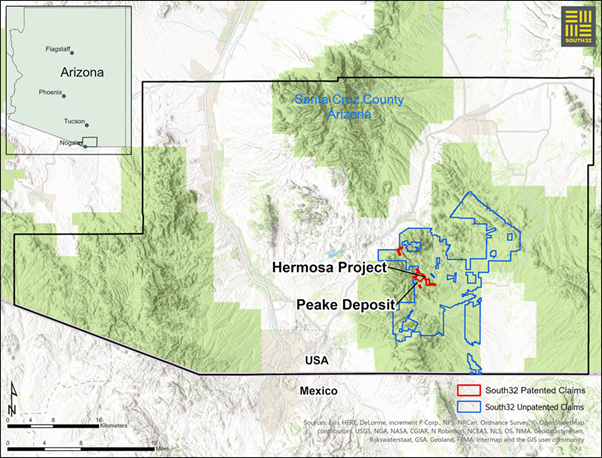
Figure 2: Hermosa project tenement map
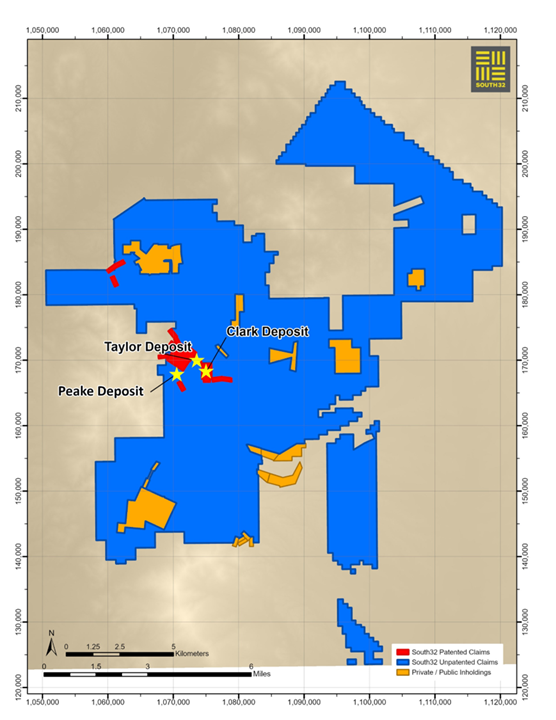
Figure 3: Patented and unpatented claim boundaries and royalties
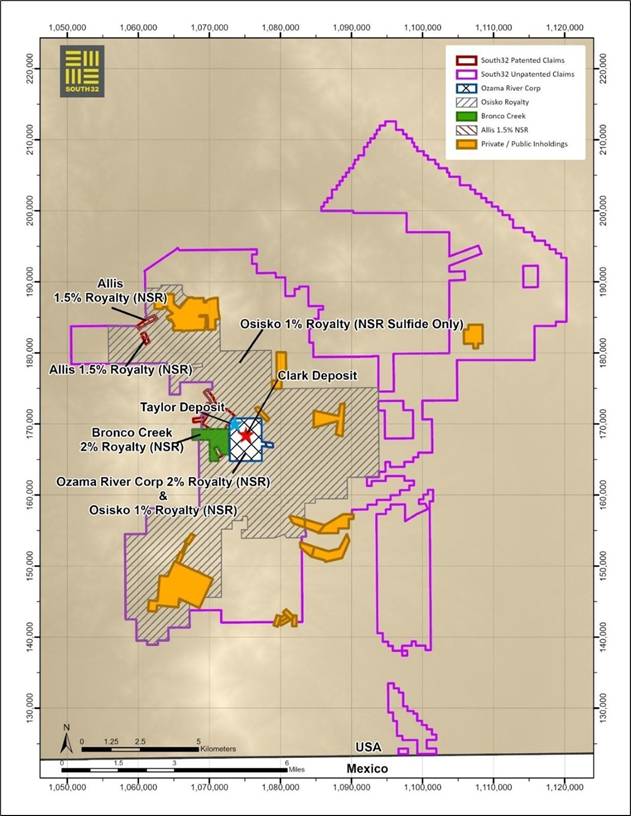
Figure 4: Hermosa project regional geology
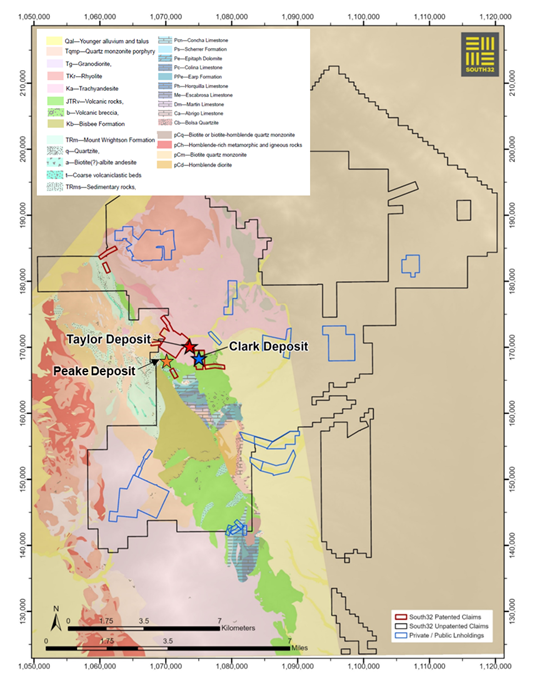
Figure 5: Plan view of mineralisation domains with drilling
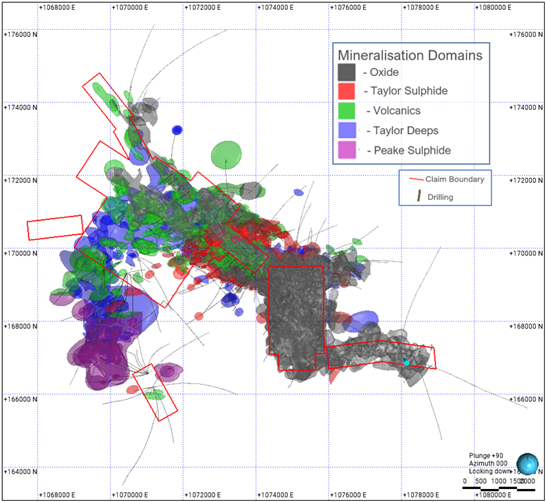
Figure 6: Oblique NE view of mineralisation domains and drilling
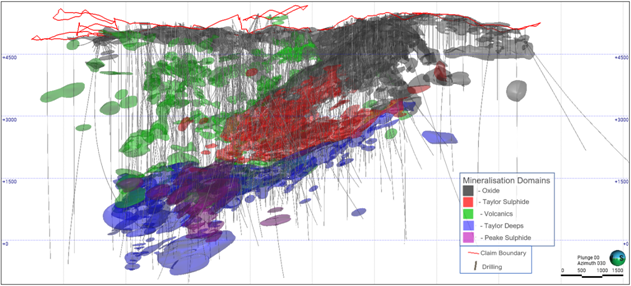
Figure 7: Cross section of geology and structure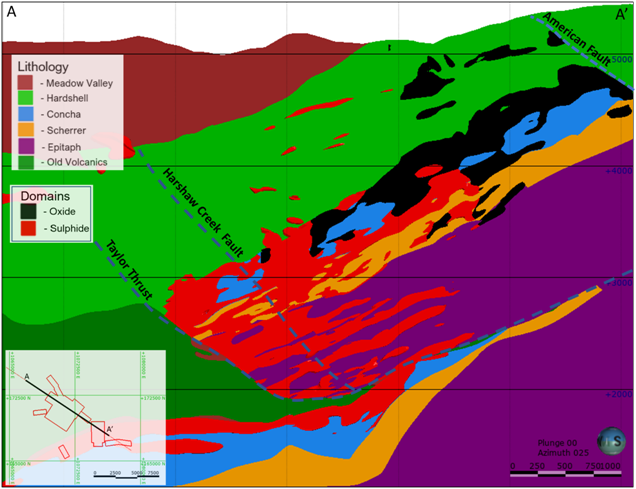
Figure 8: Plan view of drilling locations
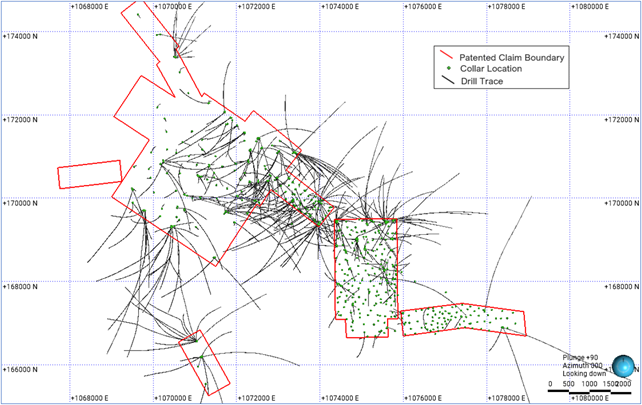
Figure 9: Taylor mine plan
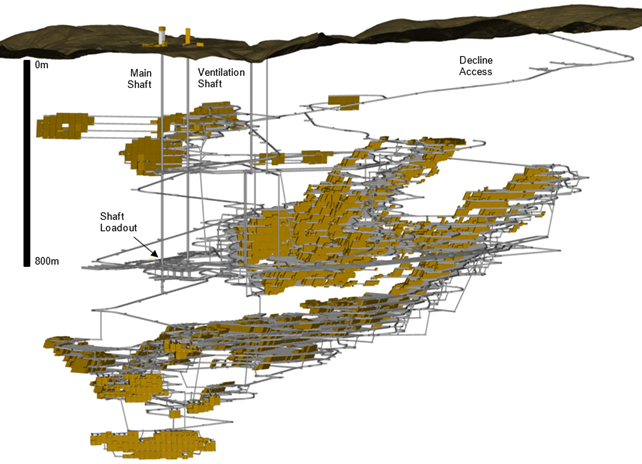
Related Shares:
South32 Limited