
5th Mar 2026 07:00
05 March 2026
Mineral Resources Increase by 60% and
Ore Reserves Increase by 55%
Resolute Mining Limited (Resolute, the Company or the Group) (ASX/LSE: RSG), is pleased to announce the Company's Annual Ore Reserve and Mineral Resource Statement at 31 December 2025.

Highlights
· Total Mineral Resources increased by 60% to 17.6 million gold (Au) ounces (Moz) with the acquisition of the Doropo and ABC projects (Côte d'Ivoire) and exploration success at Bantaco (Senegal) and La Debo (Côte d'Ivoire)
· Total Ore Reserves increased by 55% to 6.8 Moz Au with the addition of Ore Reserves at Doropo (Côte d'Ivoire) and Tomboronkoto (Senegal) offsetting mining depletion in Mali and Senegal
· Doropo Ore Reserves total 2.5 Moz Au following an updated Definitive Feasibility Study (DFS) completed in 2025 using a gold price assumption to $1,950/oz
· Doropo Mineral Resources of 4.4 Moz from 114 million tonnes at 1.2 g/t Au reported within a $3,000/oz Au pit shell
· Bantaco Mineral Resources increased to 365 koz Au (from 266 koz) following a total of 91,000m of RC drilling and 17,700m of diamond drilling during 2025
· ABC Project Mineral Resources total 2.2 Moz from 72 million tonnes at 0.9 g/t Au (reported at a 0.5 g/t Au cut-off grade, within 250m from surface)
· 2026 Group exploration budget of $15-25 million with a focus on expanding resources at the Doropo Project, the ABC Project and La Debo in Cote d'Ivoire, testing drill targets on the Laminia and Sangola permits in Senegal, deeper drilling at Syama North in Mali and restarting exploration activities in Guinea.
Note: Unless otherwise stated, all dollar figures are United States dollars ($).

Chris Eger, CEO and Managing Director, commented,
I am pleased to report that Ore Reserves and Mineral Resources across the Company's West African portfolio have increased significantly over the past year. This is driven by additional ounces from inorganic growth through the acquisition of the Doropo and ABC Gold Projects, as well as continued exploration success in Senegal and Côte d'Ivoire. The addition of 2.5 Moz of Ore Reserve at Doropo means that over 36% of the Group's reserves are now in Côte d'Ivoire, a favourable mining jurisdiction and a key pillar of the Company's organic growth plans.
Alongside Doropo and the ABC Gold Project, exploration success at the La Debo Gold Project in southern Côte d'Ivoire has resulted in over 643 koz Au of Mineral Resources. The combined total Mineral Resources in Côte d'Ivoire now stand at 7.2 Moz Au, representing approximately 41% of Resolute's total Mineral Resources. Resolute remains committed to extending the life of the Mako operation in Senegal, with 266 koz Au of Mineral Resources being outlined at Bantaco - a key potential satellite deposit along with Tomboronkoto - adding further confidence to the Mako Life Extension Project.
Resolute's commitment to exploration is stronger than ever. We are securing future growth by acquiring new permits in Côte d'Ivoire and actively pursuing further opportunities in Guinea. We anticipate providing additional updates on exploration activities across the Company's West African portfolio and look forward to keeping the market informed on our progress.
At 31 December 2025, Resolute's Group share of Ore Reserves increased to 5.9 Moz Au (2024: 3.6 Moz) and Mineral Resources increased to 15.1 Moz Au (2024: 9.1 Moz).
A detailed breakdown of the Company's Ore Reserves and Mineral Resources at 31 December 2025 representing the Syama (Mali) and Mako (Senegal) operations, Doropo (Cote d'Ivoire) development project and exploration projects is presented in the tables below. The 2025 Annual Ore Reserve Statement and the 2025 Annual Mineral Resource Statement are in Table 2 and 4 respectively.
All tonnes and grade information have been rounded to reflect relative uncertainty of the estimate; small differences may be present in the totals.
Ore Reserves
Total Ore Reserves as at 31 December 2025 on a 100% basis total 6.8 Moz Au after mining depletion, changes in modifying factors and the addition of Ore Reserves at Tomboronkoto and Doropo.
Resolute's asset ownership is 80% of Syama, 90% of Tabakoroni, 90% of Senegal assets and 90% of Cote d'Ivoire Ore Reserves. As such, the Company's fully attributable Ore Reserves position net of government interests, is 5.9Moz of gold - see Table 2.
Table 1: Ore Reserves (100% Basis)
| Proved |
| Probable |
| Total Reserves | ||||||
As atDecember 2025 | Tonnes (000s) | g/t Au | oz (000s) |
| Tonnes (000s) | g/t Au | oz (000s) |
| Tonnes (000s) | g/t Au | oz (000s) |
Mali | 808 | 1.5 | 39 | 49,315 | 2.4 | 3,847 | 50,123 | 2.4 | 3,885 | ||
Senegal | 3,896 | 0.9 | 118 | 9,076 | 1.2 | 348 | 12,972 | 1.1 | 467 | ||
Côte d'Ivoire | 1,400 | 1.6 | 73 | 57,700 | 1.3 | 2,424 | 59,100 | 1.3 | 2,497 | ||
Managed Ore Reserves | 6,105 | 1.2 | 230 | 116,091 | 1.8 | 6,619 | 122,196 | 1.7 | 6,849 | ||
Table 2: Ore Reserves Statement
Proved | Probable | Total
| Group Share | |||||||
Ore Reserves As at December 2025 | Tonnes (000s) | g/t Au | oz (000s) | Tonnes (000s) | g/t Au | oz (000s) | Tonnes (000s) | g/t Au | oz (000s) | oz (000s) |
Mali | 80% | |||||||||
Syama Underground | 0 | 0.0 | 0 | 18,661 | 2.3 | 1,368 | 18,661 | 2.3 | 1,368 | 1,094 |
Syama Stockpiles | 0 | 0.0 | 0 | 2,339 | 1.4 | 104 | 2,339 | 1.4 | 104 | 83 |
Sub Total (Sulphides) | 0 | 0.0 | 0 | 20,999 | 2.2 | 1,471 | 20,999 | 2.2 | 1,471 | 1,177 |
Syama Satellite Deposits | 0 | 0.0 | 0 | 22,404 | 2.2 | 1,591 | 22,404 | 2.2 | 1,591 | 1,273 |
Stockpiles (satellite deposits) | 0 | 0.0 | 0 | 883 | 0.6 | 18 | 883 | 0.6 | 18 | 15 |
Sub Total Satellite Deposits | 0 | 0.0 | 0 | 23,287 | 2.1 | 1,610 | 23,287 | 2.1 | 1,610 | 1,288 |
90% | ||||||||||
Tabakoroni Underground | 0 | 0.0 | 0 | 5,028 | 4.7 | 766 | 5,028 | 4.7 | 766 | 689 |
Tabakoroni Stockpiles | 808 | 1.5 | 39 | 0 | 0.0 | 0 | 808 | 1.5 | 39 | 35 |
Sub Total Tabakoroni | 808 | 1.5 | 39 | 5,028 | 4.7 | 766 | 5,836 | 4.3 | 805 | 724 |
Mali Total | 808 | 1.5 | 39 | 49,315 | 2.4 | 3,847 | 50,123 | 2.4 | 3,885 | 3,189 |
Senegal | 90% | |||||||||
Mako | 0 | 0.0 | 0 | 0 | 0.0 | 0 | 0 | 0.0 | 0 | 0 |
Mako Stockpiles | 3,896 | 0.9 | 118 | 0 | 0.0 | 0 | 3,896 | 0.9 | 118 | 106 |
Tomboronkoto | 0 | 0.0 | 0 | 9,076 | 1.2 | 348 | 9,076 | 1.2 | 348 | 314 |
Senegal Total | 3,896 | 0.9 | 118 | 9,076 | 1.2 | 348 | 12,972 | 1.1 | 467 | 420 |
Côte D'Ivoire |
|
|
|
|
|
|
|
|
| 90% |
Doropo | 1,400 | 1.6 | 73 | 57,700 | 1.3 | 2,424 | 59,100 | 1.3 | 2,497 | 2,247 |
Total Ore Reserves | 6,105 | 1.2 | 230 | 116,091 | 1.8 | 6,619 | 122,196 | 1.7 | 6,849 | 5,856 |
Notes:
1. Mineral Resources include Ore Reserves. Differences may occur due to rounding.
2. Syama Underground Reserves are reported above 1.8 g/t shut off and includes Syama South
3. Syama Satellite Sulphide Reserves are reported above 1.0 g/t cut-off.
4. Tabakoroni Underground Reserves are reported above 2.5 g/t cut-off.
5. Tomboronkoto Sulphide Reserves are reported above a 0.6 g/t cut off.
6. Tomboronkoto Oxide Reserves are reported above a 0.5 g/t cut off.
7. Doropo Reserves are reported above a 0.3 g/t to 0.5 g/t cut off depending on ore zone type and location
8. Mako Reserves are reported above a 0.7 g/t cut off
Mali
The Ore Reserves at the Syama Underground Mine decreased by 235 koz Au, in line with expectation, due to mining depletion and changes in modifying factors (reported at $2,300/oz gold price assumption). In 2026, the underground, being mined as a sub-level cave, is expected to mine 2.6 Mt at grades ranging between 2.4 - 2.5 g/t Au, providing a stable sulphide feed to the processing plant.
Stockpile Ore Reserves (both oxide and sulphide) decreased as material was processed. Sulphide stockpiles were depleted more than expected in 2025 as they were used to maintain processing throughput at the sulphide plant as less sulphide ore was mined in the sub-level cave due to disruption of explosive supplies. Oxide stockpiles decreased in line with expectation, as stockpile material continued to make up a major component of the mill feed in 2025 along with open pit material from Paysans and Tellem. Further oxide depletion is expected in 2026 ahead of the commissioning of the Syama Sulphide Conversion Project (SSCP) in H2 2026.
In 2025 there was no change in the Ore Reserves at Tabakoroni Underground as it was not mined or drilled.
The 1.6 Moz Au reserve of the Syama Satellite Deposits (primarily Syama North) increased by 83 koz from 2025 as a new pit optimization (at $2,300/oz gold price) was completed. The Syama North Ore Reserve underpins the SSCP and is key to the long-term future of the Syama operation.
Senegal
Ore Reserves at Mako decreased by 108 koz Au in line with mining depletion as open pit mining activities ended in June 2025 and stockpile processing commenced in H2 2025. As at the end of 2025, there remained 108 koz grading 0.9 g/t Au of Proven Ore Reserves. Processing of stockpile material will continue until the end of 2027.
Following internal technical studies, Ore Reserves have been declared for Tomboronkoto. The initial Ore Reserve of 348 koz oz at 1.2g/t Au is at a gold price assumption of $2,500/oz. As part of the Mako Life Extension Project (MLEP) further studies and optimisations of Tomboronkoto and Bantaco are expected and will be provided in 2026. Following additional exploration activities, Resolute Mining believes the MLEP has the potential to extend mining operations in Senegal by a further five to ten years.
Côte d'Ivoire
Resolute completed an updated Definitive Feasibility Study (DFS) on the Doropo Project after acquiring the project in 2025. The DFS supported an increased Ore Reserve of 2.5 Moz Au at the conservative gold price of $1,950/oz, underpinning a 13-year life of mine with an average annual gold production of approximately 170 koz. Resolute anticipates the contained gold ounces to grow at Doropo from optimisations at higher gold price assumptions and from further exploration activities within the granted mining permit.
Mineral Resources
Mineral Resources (inclusive of Ore Reserves) at 31 December 2025 on a 100% basis, contain 17.6 Moz of gold. The Company's fully attributable Mineral Resources position, net of government interests is 15 Moz of gold.
The large increases in Group Total Mineral Resources this year came from the acquisition of the Doropo and ABC projects in May 2025 which added 4.4 Moz Au and 2.2 Moz Au, respectively.
Table 3: Mineral Resources (100% Basis)
| Measured | Indicated | Inferred | Total Resources | |||||||||
As atDecember 2025 | Tonnes (000s) | g/t Au | oz (000s) | Tonnes (000s) | g/t Au | oz (000s) | Tonnes (000s) | g/t Au | oz (000s) | Tonnes (000s) | g/t Au | oz (000s) |
|
Mali | 29,227 | 2.9 | 2,683 | 48,398 | 3.1 | 4,751 | 31,291 | 1.7 | 1,668 | 108,916 | 2.6 | 9,101 |
|
Senegal | 3,947 | 0.9 | 120 | 16,894 | 1.3 | 687 | 6,869 | 1.0 | 224 | 27,709 | 1.2 | 1,031 |
|
Côte d'Ivoire | 1,550 | 1.6 | 78 | 95,200 | 1.2 | 3,601 | 106,999 | 1.2 | 3,483 | 203,749 | 1.2 | 7,162 |
|
Guinea | 0 | 0.0 | 0 | 0 | 0.0 | 0 | 6,625 | 0.9 | 343 | 6,625 | 0.9 | 343 |
|
Managed Mineral Resources | 34,724 | 2.6 | 2,881 | 160,492 | 1.8 | 9,038 | 151,784 | 1.2 | 5,718 | 347,000 | 1.6 | 17,637 |
|
Table 4: Mineral Resources Statement
Measured | Indicated | Inferred | Total | Group Share | |||||||||||
Mineral Resources As at December 2025 | Tonnes (000s) |
g/t Au | oz (000s) | Tonnes (000s) |
g/t Au | oz (000s) | Tonnes (000s) |
g/t Au | oz (000s) | Tonnes (000s) |
g/t Au | oz (000s) | oz (000s) | ||
Mali |
80% | ||||||||||||||
Syama Underground | 25,000 | 2.9 | 2,349 | 9,960 | 2.8 | 909 | 5,101 | 2.8 | 459 | 40,061 | 2.9 | 3,718 | 2,974 | ||
Stockpiles (sulphide) | 0 | 0.0 | 0 | 2,339 | 1.4 | 104 | 0 | 0.0 | 0 | 2,339 | 1.4 | 104 | 83 | ||
Sub Total (Sulphides) | 25,000 | 2.9 | 2,349 | 12,299 | 2.6 | 1,013 | 5,101 | 2.8 | 459 | 42,400 | 2.8 | 3,821 | 3,057 | ||
Syama Satellite Deposits | 3,412 | 2.7 | 294 | 30,038 | 3.0 | 2,927 | 7,500 | 2.7 | 659 | 40,950 | 2.9 | 3,881 | 3,104 | ||
Stockpiles (satellite deposits) | 0 | 0.0 | 0 | 883 | 0.6 | 18 | 46 | 1.1 | 2 | 929 | 0.7 | 20 | 16 | ||
Sub Total Satellite Deposits | 3,412 | 2.7 | 294 | 30,921 | 3.0 | 2,945 | 7,546 | 2.7 | 661 | 41,879 | 2.9 | 3,901 | 3,121 | ||
Old Tailings | 0 | 0.0 | 0 | 0 | 0.0 | 0 | 17,000 | 0.7 | 365 | 17,000 | 0.7 | 365 | 292 | ||
90% | |||||||||||||||
Tabakoroni Underground | 6 | 3.5 | 1 | 5,179 | 4.8 | 792 | 1,644 | 3.5 | 183 | 6,829 | 4.4 | 976 | 878 | ||
Tabakoroni Stockpiles | 808 | 1.5 | 39 | 0 | 0.0 | 0 | 0 | 0.0 | 0 | 808 | 1.5 | 39 | 35 | ||
Sub Total Tabakoroni | 814 | 1.5 | 39 | 5,179 | 4.8 | 792 | 1,644 | 3.5 | 183 | 7,637 | 4.1 | 1,014 | 913 | ||
Mali Total | 29,227 | 2.9 | 2,683 | 48,398 | 3.1 | 4,751 | 31,291 | 1.7 | 1,668 | 108,916 | 2.6 | 9,101 | 7,382 | ||
Senegal | 90% | ||||||||||||||
Mako | 51 | 0.9 | 2 | 2,059 | 1.4 | 96 | 209 | 0.8 | 6 | 2,319 | 1.4 | 103 | 93 | ||
Tomboronkoto | 0 | 0.0 | 0 | 9,224 | 1.3 | 393 | 1,248 | 1.3 | 51 | 10,471 | 1.3 | 444 | 400 | ||
Bantaco | 0 | 0.0 | 0 | 5,611 | 1.1 | 198 | 5,412 | 1 | 167 | 11,023 | 1.0 | 365 | 329 | ||
Mako Stockpiles | 3,896 | 0.9 | 118 | 0 | 0.0 | 0 | 0 | 0.0 | 0 | 3,896 | 0.9 | 118 | 106 | ||
Senegal Total | 3,947 | 0.9 | 120 | 16,894 | 1.3 | 687 | 6,869 | 1.0 | 224 | 27,709 | 1.2 | 1,031 | 927 | ||
Cote D'Ivoire |
|
|
|
|
|
|
|
|
|
|
|
| 90% | ||
Doropo | 1,550 | 1.6 | 78 | 95,200 | 1.2 | 3,601 | 17,440 | 1.2 | 680 | 114,190 | 1.2 | 4,359 | 3,923 | ||
ABC | 0 | 0.0 | 0 | 0 | 0.0 | 0 | 72,000 | 0.9 | 2,160 | 72,000 | 0.9 | 2,160 | 1,944 | ||
La Debo | 0 | 0.0 | 0 | 0 | 0.0 | 0 | 17,559 | 1.1 | 643 | 17,559 | 1.1 | 643 | 579 | ||
Cote D'Ivoire Total | 1,550 | 1.6 | 78 | 95,200 | 1.2 | 3,601 | 106,999 | 1.0 | 3,483 | 203,749 | 1.1 | 7,162 | 6,446 | ||
Guinea | 100% | ||||||||||||||
Mansala | 0 | 0.0 | 0 | 0 | 0.0 | 0 | 6,625 | 1.6 | 343 | 6,625 | 1.6 | 343 | 343 | ||
Total Mineral Resources | 34,724 | 2.6 | 2,881 | 160,492 | 1.8 | 9,038 | 151,784 | 1.2 | 5,718 | 347,000 | 1.6 | 17,637 | 15,099 | ||
Notes: 1. Mineral Resources include Ore Reserves. Differences may occur due to rounding 2. Syama Underground Resources quoted inside 1.5g/t Au MSO 3. Resources for Northern Pits are reported inside a US$2,950/oz optimised pit at a 0.7 g/t Au cut-off, and inside a 1.5 g/t Au MSO 4. Resources for the Cashew NE, Paysans and Tellem are reported above a cut-off of 1.0g/t Au 5. Resources for the Tabakoroni Underground are reported within an MSO shape generated at 1.75g/t Au 6. Mansala Resource is reported at a cut-off of 0.7 g/t Au within a $2,950/oz optimised shell 7. Mako Resources are reported above a cut off of 0.5g/t Au and within a $2,000/oz optimised shell 8. Bantaco Resources are reported above a cut off of 0.5g/t Au 9. Tomboronkoto Resources are reported above a cut-off of 0.5g/t Au within a US$2,950/oz optimised pit shell 10.Doropo Resources are reported inside a US$3,000/oz optimised pit at a cut-off of 0.3 g/t Au 11. ABC Resources are reported within 250m depth from surface at a cut-off of 0.5 g/t Au 12. Resources for La Debo are reported at a 0.5g/t Au cut-off
Mali The Mineral Resources at the Syama Underground mine decreased by approximately 680 koz Au due to mining depletion, an updated resource estimate and revised RPEEE (Reasonable Prospects for Eventual Economic Extraction) inputs.
The Syama North Mineral Resource decreased by c. 50 koz to 3.3 Moz Au on mining depletion and revised RPEEE inputs.
There were no changes to the Tabakoroni underground Mineral Resources.
Senegal The Mineral Resources at Mako, including stockpiles, decreased by approximately 130 koz Au in line with mining depletion. No further addition to Mineral Resources is expected as the open pit is completed and stockpiles are currently being processed.
Mineral Resources at Tomboronkoto increased in 2025 as they are reported at a lower cut-off grade of 0.5 g/t Au within a $2,950/oz Au optimised pit-shell. Tomboronkoto Mineral Resource increased to 444 koz (2024: 377 koz) at a grade of 1.3 g/t Au (2024: 1.7 g/t Au).
An intensive drilling program on the Bantaco Permit in Senegal led to the announcement of an initial Mineral Resource in July 2025 of 266 koz oz grading 1.0 g/t Au across the Bantaco West and South Prospects. Further drilling in H2 2025 led to an updated resource for both Bantaco West and South of 365 koz grading 1.0 g/t Au which is included in this statement.
Côte d'Ivoire Mineral Resource additions came from the acquisition of the Doropo and ABC projects as well as an initial Mineral Resource at La Debo.
In September 2025 an updated Mineral Resource Estimate for Doropo was released using a gold price assumption of $3,000/oz. The Updated Mineral Resource Estimate (MRE) of 4.4 Moz Au was a substantial 1 Moz Au increase from the previous MRE in 2023. Approximately 84% of the Mineral Resources are in the Measured and Indicated category. Resolute is confident of further growth of the Mineral Resources as current optimisations are based on conservative pit shell assumptions and the two largest prospects, Kilosegui and Souwa that contain approximately 2.3Moz Au of the MRE, remain open along strike and at depth.
Exploration on the ABC Project in 2026 will concentrate on expanding the existing Mineral Resource of 2.2 Moz Au at Kona North and South deposits. Drilling programs will be undertaken on the Kona on targets along strike to the north of the Kona deposits. A total of 2,000m of diamond drilling and 3,000m of RC drilling is planned to test the extensions of the mineralized envelope of the Mineral Resources. A Scoping Study to evaluate the existing Kona Mineral Resources is planned and is expected in H1 2026.
In November 2025, Resolute announced an initial Mineral Resource at the La Debo prospect of 17.6 Mt grading 1.14 g/t Au for 643 koz oz after drilling programs carried out during the year. In 2026, further exploration will take place at La Debo and will be focused on extending the high-grade mineralisation intersected at G3S. A Scoping Study to evaluate La Debo is planned and is expected in H2 2026.
Guinea In Guinea, the maiden Mineral Resource Estimate was published on 12 September 2024. The Mansala Resource is included in this statement with a total of 8.4 Mt grading 1.3 g/t Au for 357 koz, constrained by a $2,950/oz Au pit shell at a cut off of 0.7 g/t Au. As part of the acquisition consideration for the Doropo and ABC projects, Resolute will be transferring several permits in Guinea (including the one containing Mansala Resource) to AngloGold Ashanti. The process of this transfer is ongoing.
|
| ||||||||||||||
Competent Persons Statement
The information in this announcement that relates to data quality, geological interpretation and Mineral Resource estimation for the various projects unless specified in the list below is based on information compiled by Bruce Mowat, a Competent Person who is a Member of the Australian Institute of Geoscientists and a full-time employee of Resolute Corporate Services Pty Ltd, a wholly-owned subsidiary of Resolute Mining Limited. Mr Mowat has sufficient experience that is relevant to the styles of mineralisation and type of deposits under consideration and to the activity being undertaken as a Competent Person as defined in the 2012 Edition of the "Australasian Code for Reporting of Exploration Results, Mineral Resources and Ore Reserves" (JORC Code 2012). Mr Mowat consents to the inclusion in this announcement of the material compiled by him in the form and context in which it appears.
The information in this statement that relates to the Mineral Resources and Ore Reserves listed below is based on information and supporting documents prepared by the Competent Person identified. Each person specified in the list has sufficient experience which is relevant to the style of mineralisation and type of deposit under consideration and to the activity, which has been undertaken to qualify as a Competent Person as defined in the JORC Code 2012.
Mr Woodward, Mr Ndjibu and Mr Patani are full-time employees of Resolute Corporate Services Pty Ltd, a wholly-owned subsidiary of Resolute Mining Limited.
Activity | Competent Person | Membership Institution |
Syama Resource | James Woodward | Australasian Institute of Mining and Metallurgy |
Syama Reserve | Gito Patani | Australasian Institute of Mining and Metallurgy |
Syama North Resource | James Woodward | Australasian Institute of Mining and Metallurgy |
Syama North Reserve | Kitwa Ndjibu | Australasian Institute of Mining and Metallurgy |
Syama Tailings Facility | James Woodward | Australasian Institute of Mining and Metallurgy |
Tabakoroni UG Resource | Bruce Mowat | Australasian Institute of Geoscientists |
Tabakoroni UG Reserves | Gito Patani | Australasian Institute of Mining and Metallurgy |
Tellem Resource | Bruce Mowat | Australasian Institute of Geoscientists |
Tellem Reserves | Kitwa Ndjibu | Australasian Institute of Mining and Metallurgy |
Cashew Resource | Bruce Mowat | Australian Institute of Geoscientists |
Cashew Reserves | Kitwa Ndjibu | Australasian Institute of Mining and Metallurgy |
Paysans Resource | Bruce Mowat | Australian Institute of Geoscientists |
Paysans Reserves | Kitwa Ndjibu | Australasian Institute of Mining and Metallurgy |
Porphyry Zone Resource | Bruce Mowat | Australian Institute of Geoscientists |
Porphyry Zone Reserves | Kitwa Ndjibu | Australasian Institute of Mining and Metallurgy |
Mako Resources | Bruce Mowat | Australian Institute of Geoscientists |
Mako Reserves | Kitwa Ndjibu | Australasian Institute of Mining and Metallurgy |
Tomboronkoto Resource | James Woodward | Australasian Institute of Mining and Metallurgy |
Bantaco Resources | James Woodward | Australasian Institute of Mining and Metallurgy |
Doropo Resources | Bruce Mowat | Australian Institute of Geoscientists |
Doropo Reserves | Gito Patani | Australasian Institute of Mining and Metallurgy |
ABC Resources | Bruce Mowat | Australian Institute of Geoscientists |
La Debo Resources | James Woodward | Australasian Institute of Mining and Metallurgy |
Mansala Resource | Bruce Mowat | Australasian Institute of Geoscientists |
Authorised by Mr Chris Eger, Managing Director and Chief Executive Officer
Contact
Resolute Matthias O'Toole Howes, Corporate Development and Investor Relations Manager +44 203 3017 620
| Public Relations Jos Simson, Tavistock +44 207 920 3150
Corporate Brokers Jennifer Lee, Berenberg +44 20 3753 3040
Tom Rider, BMO Capital Markets +44 20 7236 1010
|
About Resolute
Resolute is an African-focused gold miner with more than 30 years of experience as an explorer, developer and operator. Throughout its history the Company has produced more than 9 million ounces of gold from ten gold mines. The Company is now entering a growth phase through the development of the Doropo project in Côte d'Ivoire which will supplement the existing production from the Syama mine in Mali and Mako mine in Senegal.
Through all its activities, sustainability is the core value at Resolute. This means that protecting the environment, providing a safe and productive working environment for employees, uplifting host communities, and practicing good corporate governance are non-negotiable priorities. Resolute's commitment to sustainability and good corporate citizenship has been cemented through its adoption of and adherence to the Responsible Gold Mining Principles (RGMPs). This framework, which sets out clear expectations for consumers, investors, and the gold supply chain as to what constitutes responsible gold mining, is an initiative of the World Gold Council of which Resolute has been a full member since 2017.
APPENDIX
Ore Reserves Comparison to 31 December 2024 Reserves and Resources comply with the Australasian Code for Reporting of Mineral Resources and Reserves (The JORC Code 2004 and JORC Code 2012). | |||||||||||
Dec-25 | Dec-24 | ||||||||||
Tonnes | Gold grade | Ounces | Group Share | Group Share | Tonnes | Gold grade | Ounces | Group Share | Group Share | ||
(000s) | (g/t) | (000s) | % | Ounces | (000s) | (g/t) | (000s) | % | Ounce s | ||
Ore Reserves | Proved | Proved | Comment on Changes | ||||||||
Mali | |||||||||||
Syama Stockpiles (Sulphide) | 0 | 0.0 | 0 | 80% | 0 | 754 | 1.5 | 37 | 80% | 29 | Movement in operating stockpiles |
Syama North | 0 | 0.0 | 0 | 80% | 0 | 66 | 1.8 | 4 | 80% | 3 | A21 Central pit |
Stockpiles (Oxide) | 0 | 0.0 | 0 | 80% | 0 | 653 | 1.3 | 27 | 80% | 22 | Movement in operating stockpiles |
Tabakoroni Stockpiles | 808 | 1.5 | 39 | 90% | 35 | 951 | 1.5 | 46 | 90% | 41 | Adjustments to operating stockpiles
|
Senegal | |||||||||||
Mako | 0 | 0.0 | 0 | 90% | 0 | 39 | 1.0 | 1 | 90% | 1 | COG change and mining depletion |
Mako Stockpiles | 3,896 | 0.9 | 118 | 90% | 106 | 5,547 | 0.9 | 165 | 90% | 149 | Movement in operating stockpiles |
Cote D'Ivoire | |||||||||||
Doropo | 1,400 | 1.6 | 73 | 90% | 66 | 0 | 0.0 | 0 | 90% | 0 | New Reserve; acquisition
|
Total Proved | 6105 | 1.2 | 230 |
| 207 | 8010 | 1.1 | 280 |
| 245 | |
Probable | Probable | Comment on Changes | |||||||||
Mali | |||||||||||
Syama Underground | 18,661 | 2.3 | 1,368 | 80% | 1,094 | 20,899 | 2.4 | 1,603 | 80% | 1,282 | Depletion from mining, updated resource model |
Syama Stockpiles (sulphide) | 2,339 | 1.4 | 104 | 80% | 83 | 1,786 | 1.3 | 76 | 80% | 61 | Movement in operating stockpiles |
Syama North | 22,183 | 2.2 | 1,580 | 80% | 1,264 | 21,184 | 2.2 | 1,497 | 80% | 1,198 | New pit optimisation (A21, Ba01N, Ba04, Alpha) against new resource model |
Stockpiles (Syama North) | 883 | 0.6 | 18 | 80% | 15 | 1,239 | 1.0 | 38 | 80% | 30 | Movement in operating stockpiles |
Paysans | 221 | 1.6 | 11 | 80% | 9 | 401 | 1.6 | 21 | 80% | 16 | New pit optimisation & design, |
Tellem | 0 | 0.0 | 0 | 80% | 0 | 244 | 1.6 | 13 | 80% | 10 | New pit optimisation & design, revised modifying factors |
Tabakoroni Open Pit | 0 | 0.0 | 0 | 90% | 0 | 0 | 0.0 | 0 | 90% | 0 | No change |
Tabakoroni Underground | 5,028 | 4.7 | 766 | 90% | 689 | 5,028 | 4.7 | 766 | 90% | 689 | No change |
Senegal | |||||||||||
Mako | 0 | 0.0 | 0 | 90% | 0 | 1,078 | 1.8 | 61 | 90% | 55 | Mining depletion and change in modifying factors |
Tomboronkoto | 9,076 | 1.19 | 348 | 90% | 314 | 0 | 0.0 | 0 | 90% | 0 | New Reserve: Internal Technical Study |
Cote D'Ivoire | |||||||||||
Doropo | 57,700 | 1.3 | 2,424 | 90% | 2,182 | 0.0 | 0.0 | 0 | 90% | 0 | New Reserve; acquisition |
Total Probable | 116,091 | 1.8 | 6,619 |
| 5,649 | 51,859 | 2.4 | 4,074 |
| 3,342 |
|
Total Reserves | 122,196 | 1.7 | 6,849 |
| 5,856 | 59,869 | 2.3 | 4,354 |
| 3,587 | |
Appendix Table 1: Ore Reserves Comparison - 31 December 2025 to 31 December 2024
Notes:
1. Mineral Resources include Ore Reserves. Differences may occur due to rounding. |
2. Syama Underground Reserves are reported above 1.8 g/t shut off and includes Syama South |
3. Syama Satellite Sulphide Reserves are reported above 1.0 g/t. |
4. Tabakoroni Underground Reserves are reported above 2.5 g/t. |
5. Tomboronkoto Sulphide Reserves are reported above 0.6 g/t cut off. |
6. Tomboronkoto Oxide Reserves are reported above 0.5 g/t cut off. |
7. Doropo Reserves are reported above 0.3 g/t to 0.5 g/t cut off depending on ore zone type and location. |
8. Mako Reserves are reported above 0.7 g/t cut off |
|
Mineral Resources Comparison To 31 December 2024
Mineral Resources | Dec-25 | Dec-24 | |||||||||
Tonnes | Gold grade | Ounces | Group Share | Group Share | Tonnes | Gold grade | Ounces | Group Share | Group Share |
Comment on Changes | |
(000s) | (g/t) | (000s) | % | Ounces | (000s) | (g/t) | (000s) | % | Ounces | ||
Measured | Measured | ||||||||||
Mali | |||||||||||
Syama Underground | 25,000 | 2.9 | 2,349 | 80% | 1,880 | 29,961 | 2.7 | 2,636 | 80% | 2,109 | New resource estimate and mining depletion |
Syama Stockpiles (Sulphide) | 0 | 0.0 | 0 | 80% | 0 | 754 | 1.5 | 37 | 80% | 29 | Movement in operating stockpiles |
Syama North | 2,381 | 3.1 | 234 | 80% | 187 | 2,400 | 3.1 | 236 | 80% | 189 | New resource estimate and mining depletion |
Stockpiles (Oxide) | 0 | 0.0 | 0 | 80% | 0 | 1,221 | 1.8 | 69 | 80% | 55 | Movement in operating stockpiles |
Cashew NE | 1,031 | 1.8 | 60 | 80% | 48 | 1,031 | 1.8 | 60 | 80% | 48 | No change |
Tabakoroni Open Pit | 0 | 0.0 | 0 | 90% | 0 | 0 | 0.0 | 0 | 90% | 0 | Mining depletion |
Tabakoroni Underground | 6 | 3.5 | 1 | 90% | 1 | 6 | 3.5 | 1 | 90% | 1 | Unchanged |
Tabakoroni Stockpiles | 808 | 1.5 | 39 | 90% | 35 | 975 | 1.0 | 31 | 90% | 28 | Movement in operating stockpiles |
Porphyry Zone (Splay) | 0 | 0.0 | 0 | 90% | 0 | 191 | 2.0 | 12 | 90% | 11 | Mining depletion |
Senegal | |||||||||||
Mako | 51 | 0.9 | 2 | 90% | 1 | 53 | 0.9 | 2 | 90% | 1 | Mining depletion |
Mako Stockpiles | 3,896 | 0.9 | 118 | 90% | 106 | 5,547 | 0.9 | 165 | 90% | 149 | Movement in operating stockpiles |
Cote D'Ivoire | |||||||||||
Doropo | 1,550 | 1.6 | 78 | 90% | 70 | 0 | 0.0 | 0 | 90% | 0 | New resource; acquisition
|
Total Measured | 34,724 | 2.6 | 2,881 | 2,328 | 42,139 | 2.4 | 3,249 | 2,620 | |||
Indicated | Indicated | ||||||||||
Mali | |||||||||||
Syama Underground | 9,960 | 2.8 | 909 | 80% | 727 | 16,926 | 2.4 | 1,302 | 80% | 1,041 | New resource estimate and mining depletion |
Syama Stockpiles (Sulphide) | 2,339 | 1.4 | 104 | 80% | 83 | 1,786 | 1.3 | 76 | 80% | 61 | Movement in operating stockpiles |
Syama North | 25,307 | 3.2 | 2,630 | 80% | 2,104 | 25,670 | 3.2 | 2,669 | 80% | 2,135 | New resource estimate and mining depletion |
Stockpiles (Oxide) | 883 | 0.6 | 18 | 80% | 15 | 1,239 | 1.0 | 38 | 80% | 30 | Movement in operating stockpiles |
Paysans | 3,437 | 1.8 | 199 | 80% | 159 | 3,437 | 1.8 | 199 | 80% | 159 | No change |
Tellem | 1,294 | 2.4 | 98 | 80% | 79 | 1,294 | 2.4 | 98 | 80% | 79 | No change |
Tabakoroni Open Pit | 0 | 0.0 | 0 | 90% | 0 | 151 | 4.5 | 22 | 90% | 20 | Depleted |
Tabakoroni Underground | 5,179 | 4.8 | 792 | 90% | 713 | 5,179 | 4.8 | 792 | 90% | 713 | No change |
Senegal |
|
| |||||||||
Mako | 2,059 | 1.4 | 96 | 90% | 86 | 3,308 | 1.7 | 178 | 90% | 160 | Mining depletion |
Tomboronkoto | 9,224 | 1.3 | 393 | 90% | 354 | 6,168 | 1.7 | 334 | 90% | 301 | Change to reporting COG` |
Bantaco | 5,611 | 1.1 | 198 | 90% | 178 | 0 | 0.0 | 0 | 90% | 0 | New Resource; exploration success
|
Cote D'Ivoire | |||||||||||
Doropo | 95,200 | 1.2 | 3,601 | 90% | 3,241 | 0 | 0.0 | 0 | 90% | 0 | New resource; acquisition |
Total Indicated | 160,492 | 1.8 | 9,038 | 7,739 | 65,158 | 2.7 | 5,708 | 4,699 | |||
| Inferred | Inferred | Comment on Changes | ||||||||
Mali | |||||||||||
Syama Underground | 5,101 | 2.8 | 459 | 80% | 367 | 5,101 | 2.8 | 459 | 80% | 367 | No change |
Syama North | 4,219 | 3.3 | 452 | 80% | 362 | 4,346 | 3.3 | 464 | 80% | 371 | Mining depletion |
Stockpiles (Syama North) | 46 | 1.1 | 2 | 80% | 1 | 46 | 1.1 | 2 | 80% | 1 | No change |
Paysans | 1,765 | 1.7 | 98 | 80% | 78 | 1,765 | 1.7 | 98 | 80% | 78 | No change |
Tellem | 1,516 | 2.2 | 109 | 80% | 88 | 1,516 | 2.2 | 109 | 80% | 88 | No change |
Tabakoroni Underground | 1,644 | 3.5 | 183 | 90% | 164 | 1,644 | 3.5 | 183 | 90% | 164 | No change |
Tailings Storage Facility | 0 | 0.0 | 0 | 90% | 0 | 0 | 0.0 | 0 | 90% | 0 | No change |
Senegal | |||||||||||
Mako | 209 | 0.8 | 6 | 90% | 5 | 300 | 0.9 | 8 | 90% | 7 | Mining depletion |
Tomboronkoto | 1,248 | 1.3 | 51 | 90% | 46 | 880 | 1.5 | 43 | 90% | 39 | Change to reporting COG |
Bantaco | 5,412 | 1.0 | 167 | 90% | 151 | 0 | 0 | 0 | 90% | 0 | New Resource; exploration success |
Cote D'Ivoire | |||||||||||
Doropo | 17,440 | 1.2 | 680 | 90% | 612 | 0 | 0.0 | 0 | 90% | 0 | New resource; acquisition |
ABC | 72,000 | 0.9 | 2,160 | 90% | 1,944 | 0 | 0.0 | 0 | 90% | 0 | New resource; acquisition |
La Debo | 17,559 | 1.1 | 643 | 90% | 579 | 0 | 0.0 | 0 | 90% | 0 | New resource; exploration success |
Guinea | |||||||||||
Mansala | 6,625 | 1.6 | 343 | 100% | 343 | 6,625 | 1.6 | 343 | 100% | 343 | No change |
Total Inferred | 151,784 | 1.2 | 5,718 |
| 5,032 | 39,223 | 1.6 | 2,074 |
| 1,751 | |
Total Resources | 347,000 | 1.6 | 17,637 |
| 15,099 | 146,520 | 2.3 | 11,031 |
| 9,070 | |
Appendix Table 2: Mineral Resources Comparison - 31 December 2025 to 31 December 2024
Notes: |
1. Mineral Resources include Ore Reserves. Differences may occur due to rounding. |
2. Syama Underground Resources quoted inside 1.5g/t MSO |
3. Resources for Northern Pits are reported inside a $2,950/oz optimised pit at a 0.7 g/t Au cut-off, and inside a 1.5 g/t Au MSO |
4. Resources for the Cashew NE, Paysans and Tellem are reported above a cut-off of 1.0g/t |
5. Resources for the Tabakoroni Underground are reported within an MSO shape generated at 1.75g/t . |
6. Mansala Resource is reported at a cut-off of 0.7 g/t Au within a $2,950/oz optimised shell |
7. Mako Resources are reported above a cut off of 0.5g/t and within a $2,000/oz optimised shell |
8. Bantaco Resources are reported above a cut off of 0.5g/t |
9. Tomboronkoto Resources are reported above a cut-off of 0.5g/t Au within a $2,950/oz optimised pit shell. |
10. Doropo Resources are reported inside a $3,000/oz optimised pit at a cut-off of 0.3 g/t Au. |
11. ABC Resources are reported within 250m depth from surface at a cut-off of 0.5 g/t Au. |
12. Resources for La Debo are reported at a 0.5g/t cut-off. |
JORC Code, 2012 Edition - Table 1 Report Syama Gold Mine
Section 1 Sampling Techniques and Data
COMMENTARY | ||
Sampling techniques |
· Nature and quality of sampling (e.g. cut channels, random chips, or specific specialised industry standard measurement tools appropriate to the minerals under investigation, such as down hole gamma sondes, or handheld XRF instruments, etc.). These examples should not be taken as limiting the broad meaning of sampling. · Include reference to measures taken to ensure sample representivity and the appropriate calibration of any measurement tools or systems used. · Aspects of the determination of mineralisation that are Material to the Public Report. · In cases where 'industry standard' work has been done this would be relatively simple (e.g. 'reverse circulation drilling was used to obtain 1 m samples from which 3 kg was pulverised to produce a 30 g charge for fire assay'). In other cases, more explanation may be required, such as where there is coarse gold that has inherent sampling problems. Unusual commodities or mineralisation types (e.g. submarine nodules) may warrant disclosure of detailed information. |
The mineral resource estimate was based on data collected from reverse circulation (RC) and diamond core (DD) drill holes completed by Resolute Mining Limited (2003-2023), Randgold Resources Ltd (1996-2000) and BHP (1987-1996). Diamond core was sampled at 1m intervals and cut in half, to provide a 2-4kg sample, which was sent to the laboratory for crushing, splitting and pulverising, to provide a 30g charge for analysis. RC samples were collected on 1m intervals via a cyclone by riffle split (dry), or by scoop (wet), to obtain a 2-4kg sample which was sent to the laboratory for crushing, splitting and pulverising to provide a 30g charge for analysis. Resolute sampling and sample preparation protocols are industry standard and are deemed appropriate by the Competent Person. The Randgold and BHP diamond core and RC samples were taken on 1m intervals. Due to the historical nature of the data sampling protocols are not known. |
Drilling techniques |
· Drill type (e.g. core, reverse circulation, open-hole hammer, rotary air blast, auger, Bangka, sonic, etc.) and details (e.g. core diameter, triple or standard tube, depth of diamond tails, face-sampling bit or other type, whether core is oriented and if so, by what method, etc.). |
Drill types used include diamond core of HQ and NQ sizes. Core is oriented at 3m down hole intervals using a Reflex Act II RD Orientation Tool and more recently using a Reflex north seeking gyro instrument. |
Drill sample recovery |
· Method of recording and assessing core and chip sample recoveries and results assessed. · Measures taken to maximise sample recovery and ensure representative nature of the samples. · Whether a relationship exists between sample recovery and grade and whether sample bias may have occurred due to preferential loss/gain of fine/coarse material. |
Drill core interval recoveries are measured from core block to core block using a tape measure. Appropriate measures are taken to maximise sample recovery and ensure representative nature of the samples. No apparent relationship between sample recovery and grade. |
Logging |
· Whether core and chip samples have been geologically and geotechnically logged to a level of detail to support appropriate Mineral Resource estimation, mining studies and metallurgical studies. · Whether logging is qualitative or quantitative in nature. · Core (or costean, channel, etc.) photography. · The total length and percentage of the relevant intersections logged. |
Drill holes were geologically logged by geologists for colour, grainsize, lithology, minerals, alteration and weathering on geologically domained intervals. Geotechnical and structure orientation data was measured and logged for all diamond core intervals. Diamond core was photographed (wet and dry). Holes were logged in their entirety (100%) and this logging was considered reliable and appropriate. |
Sub-sampling techniques and sample preparation |
· If core, whether cut or sawn and whether quarter, half or all core taken. · If non-core, whether riffled, tube sampled, rotary split, etc. and whether sampled wet or dry. · For all sample types, the nature, quality and appropriateness of the sample preparation technique. · Quality control procedures adopted for all sub-sampling stages to maximise representivity of samples. · Measures taken to ensure that the sampling is representative of the in-situ material collected, including for instance results for field duplicate/second-half sampling. Whether sample sizes are appropriate to the grain size of the material being sampled. |
Diamond core were sampled at 1m intervals and cut in half to obtain a 2-4kg sample. Reverse circulation samples were collected on 1m intervals by riffle split (dry) or by scoop (wet) to obtain a 2-4kg sample. Sample preparation for diamond core and RC samples includes oven drying, crushing to 10mm and splitting, pulverising to 85% passing -75um. These preparation techniques are deemed to be appropriate to the material and element being sampled. Drill core coarse duplicates were split by the laboratory after crushing at a rate of 1:20 samples. Reverse circulation field duplicates were collected by the company at a rate of 1:20 samples. Resolute sampling, sample preparation and quality control protocols are of industry standard and all attempts were made to ensure an unbiased representative sample was collected. The methods applied in this process were deemed appropriate by the Competent Person. Sub-sampling techniques and sample preparation completed by previous owners is not known. |
Quality of assay data and laboratory tests |
· The nature, quality and appropriateness of the assaying and laboratory procedures used and whether the technique is considered partial or total. · For geophysical tools, spectrometers, handheld XRF instruments, etc., the parameters used in determining the analysis including instrument make and model, reading times, calibrations factors applied and their derivation, etc. Nature of quality control procedures adopted (e.g. standards, blanks, duplicates, external laboratory checks) and whether acceptable levels of accuracy (i.e. lack of bias) and precision have been established. |
All Resolute samples were analysed for gold by 30g fire assay fusion with AAS instrument finish. The analysis was performed by ALS Bamako, ALS Ouagadougou, or SGS Morila. The analytical method was appropriate for the style of mineralisation. No geophysical tools were used to determine elemental concentrations. Quality control (QC) procedures included the use of certified standards and blanks (1:20), non- certified sand blanks (1:20), diamond core coarse duplicates (1:20) and reverse circulation field duplicates (1:20). Laboratory quality control data, including laboratory standards, blanks, duplicates, repeats and grind size results were also captured into the digital database. Analysis of the QC sample assay results indicates that an acceptable level of accuracy and precision has been achieved. The assay techniques used by Randgold and BHP include fire assay fusion with AAS instrument finish and aqua regia with AAS. The majority of the samples were analysed at the onsite Syama laboratory. Due to the historical nature of the Randgold and BHP data the assay procedures are not known for all samples. |
Verification of sampling and assaying |
· The verification of significant intersections by either independent or alternative company personnel. · The use of twinned holes. · Documentation of primary data, data entry procedures, data verification, data storage (physical and electronic) protocols. Discuss any adjustment to assay data. |
Verification of significant intersections have been completed by company personnel and the competent person. No drill holes within the resource area were twinned. Drill holes were logged onto paper templates or Excel templates with lookup codes, validated and then compiled into a relational SQL 2012 database using DataShed data management software. The database has a variety of verification protocols which are used to validate the data entry. The drill hole database is backed up daily to the head office server. Assay result files were reported by the laboratory in PDF and CSV format and imported directly into the SQL database without adjustment or modification. Resolute has conducted extensive reviews, data validation and data verification on the historic data collected by the previous owners, Randgold and BHP. |
Location of data points |
· Accuracy and quality of surveys used to locate drill holes (collar and down-hole surveys), trenches, mine workings and other locations used in Mineral Resource estimation. · Specification of the grid system used. · Quality and adequacy of topographic control. |
Collar coordinates were picked up in UTM (WGS84) by staff surveyors using an RTK DGPS with an expected accuracy of ?0.05m; elevations were height above EGM96 geoid. Down hole surveys were collected using single shot and multi shot magnetic survey tools including Reflex EZTrac and EZShot instruments. A time-dependent declination was applied to the magnetic readings to determine UTM azimuth. Diamond drilling completed in 2017 and 2018 has utilised a Reflex EZ Gyro downhole survey instrument to provide more frequent data points and reduced magnetic interference. Coordinates and azimuth are reported in UTM WGS84 Zone 29 North in this release. Coordinates were translated to local mine grid where appropriate. Local topographic control is via satellite photography and drone UAV Aerial Survey. |
Data spacing and distribution |
· Data spacing for reporting of Exploration Results. · Whether the data spacing and distribution is sufficient to establish the degree of geological and grade continuity appropriate for the Mineral Resource and Ore Reserve estimation procedure(s) and classifications applied. · Whether sample compositing has been applied. |
The drill hole spacing was sufficient to demonstrate geological and grade continuity appropriate for Mineral Resource estimation and classification in accordance with the 2012 JORC Code. The appropriateness of the drill spacing was reviewed by the geological technical team, both on site and within the Resolute group. This was also reviewed by the Competent Person. RC and diamond core samples were collected on 1m intervals; no sample compositing is applied during sampling. |
Orientation of data in relation to geological structure |
· Whether the orientation of sampling achieves unbiased sampling of possible structures and the extent to which this is known, considering the deposit type. · If the relationship between the drilling orientation and the orientation of key mineralised structures is considered to have introduced a sampling bias, this should be assessed and reported if material. |
Holes were drilled predominantly perpendicular to mineralised domains where possible. No orientation-based sampling bias has been identified in the data. |
Sample security |
· The measures taken to ensure sample security. |
Samples were collected from the drill site and stored on site. All samples were individually bagged and labelled with unique sample identifiers then securely dispatched to the laboratories. All aspects of sampling process were supervised and tracked by SOMISY personnel. |
Audits or reviews |
· The results of any audits or reviews of sampling techniques and data. |
External audits of procedures indicate protocols are within industry standards. |
Section 2 Reporting of Exploration Results
CRITERIA | JORC CODE EXPLANATION | COMMENTARY |
Mineral tenement and land tenure status |
· Type, reference name/number, location and ownership including agreements or material issues with third parties such as joint ventures, partnerships, overriding royalties, native title interests, historical sites, wilderness or national park and environmental settings. · The security of the tenure held at the time of reporting along with any known impediments to obtaining a licence to operate in the area. |
Drilling was conducted within the Malian Exploitation Concession Permit PE 93/003 which has an area of 200.6km2. Resolute Mining Limited has an 80% interest in the Syama project and the Exploitation Permit PE-93/003, on which it is based, through its Malian subsidiary, Sociêtê des Mines de Syama SA (SOMISY). The Malian Government holds a free carried 20% interest in SOMISY. The Permit is held in good standing. Malian mining law provides that all mineral resources are administered by DNGM (Direction Nationale de la Géologie et des Mines) or National Directorate of Geology and Mines under the Ministry of Mines, Energy and Hydrology. |
Exploration done by other parties |
· Acknowledgment and appraisal of exploration by other parties. |
The Syama deposit was originally discovered by a regional geochemical survey undertaken by the Direction National de Géologie et des Mines (DNGM) with assistance from the United Nations Development Program (UNDP) in 1985. There had also been a long history of artisanal activities on the hill where an outcropping chert horizon originally marked the present-day position of the open pit. BHP during 1987-1996 sampled pits, trenches, auger, RC and diamond drill holes across Syama prospects. Randgold Resources Ltd during 1996-2000 sampled pits, trenches, auger, RAB, RC and diamond drill holes across Syama prospects. |
Geology |
· Deposit type, geological setting and style of mineralisation. |
The Syama Project is found on the northern margin of the Achaean-Proterozoic Leo Shield which forms the southern half of the West African Craton. The project area straddles the boundary between the Kadiana-Madinani terrane and the Kadiolo terrane. The Kadiana-Madinani terrane is dominated by greywackes and a narrow belt of interbedded basalt and argillite. The Kadiolo terrane comprises polymictic conglomerate and sandstone that were sourced from the Kadiana-Madinani terrane and deposited in a late-to syntectonic basin. Prospects are centred on the NNE striking, west dipping, Syama-Bananso Fault Zone and Birimian volcano-sedimentary units of the Syama Formation. The major commodity being sought is gold. |
Drill hole Information |
· A summary of all information material to the understanding of the exploration results including a tabulation of the following information for all Material drill holes: o easting and northing of the drill hole collar. o elevation or RL (Reduced Level - elevation above sea level in metres) of the drill hole collar. o dip and azimuth of the hole. o down hole length and interception depth. o Whole length. · If the exclusion of this information is justified on the basis that the information is not Material and this exclusion does not detract from the understanding of the report, the Competent Person should clearly explain why this is the case. |
No new exploration results have been reported in this release. The listing of the entire drill hole database used to estimate the resource was not considered relevant for this release. |
Data aggregation methods |
· In reporting Exploration Results, weighting averaging techniques, maximum and/or minimum grade truncations (e.g. cutting of high grades) and cut-off grades are usually Material and should be stated. · Where aggregate intercepts incorporate short lengths of high-grade results and longer lengths of low-grade results, the procedure used for such aggregation should be stated and some typical examples of such aggregations should be shown in detail. · The assumptions used for any reporting of metal equivalent values should be clearly stated. |
No new exploration results have been reported in this release. Metal equivalent values are not used in reporting. |
Relationship between mineralisation widths and intercept lengths |
· These relationships are particularly important in the reporting of Exploration Results. · If the geometry of the mineralisation with respect to the drill hole angle is known, its nature should be reported. · If it is not known and only the down hole lengths are reported, there should be a clear statement to this effect (e.g. 'down hole length, true width not known'). | The mineralisation is steeply dipping at approximately 600 from the horizontal. Most of the drill holes are planned at local grid 0900 at a general inclination of -600 east to achieve as close to perpendicular to the ore zone as possible. At the angle of the drill holes and the dip of the ore zones, the reported intercepts will be slightly more than true width. |
Diagrams |
· Appropriate maps and sections (with scales) and tabulations of intercepts should be included for any significant discovery being reported. These should include, but not be limited to a plan view of drill hole collar locations and appropriate sectional views. |
Relevant maps, diagrams and tabulations are included in the body of text. |
Balanced reporting |
· Where comprehensive reporting of all Exploration Results is not practicable, representative reporting of both low and high grades and/or widths should be practiced to avoid misleading reporting of Exploration Results. |
Mineral Resources are being reported in this announcement. No new exploration results have been reported in this release. |
Other substantive exploration data |
· Other exploration data, if meaningful and material, should be reported including (but not limited to): geological observations; geophysical survey results; geochemical survey results; bulk samples - size and method of treatment; metallurgical test results; bulk density, groundwater, geotechnical and rock characteristics; potential deleterious or contaminating substances. |
No geophysical and geochemical data and any additional exploration information has been reported in this release, as they are not deemed relevant to the release. |
Further work |
· The nature and scale of planned further work (e.g. tests for lateral extensions or depth extensions or large-scale step-out drilling). · Diagrams clearly highlighting the areas of possible extensions, including the main geological interpretations and future drilling areas, provided this information is not commercially sensitive. |
Depth extension drilling is planned to test the down-dip potential of the Syama ore body at depth, and beneath the current limit of drilling. Grade control drilling will continue to provide close spaced information for mine planning |
Section 3 Estimation and Reporting of Mineral Resources
CRITERIA | JORC CODE EXPLANATION | COMMENTARY |
Database integrity |
· Measures taken to ensure that data has not been corrupted by, for example, transcription or keying errors, between its initial collection and its use for Mineral Resource estimation purposes. · Data validation procedures used. |
Data has been compiled into a relational SQL database; the setup of this database precludes the loading of data which does not meet the required validation protocols. The data is managed using DataShed© drill hole management software using SQL database techniques. Validation checks are conducted using SQL and DataShed© relational database standards. Data has also been checked against original hard copies for 100% of the data, and where possible, loaded from original data sources. Resolute completed the following basic validation checks on the data supplied prior to resource estimation: · Drill holes with overlapping sample intervals. · Sample intervals with no assay data. Duplicate records. · Assay grade ranges. · Collar coordinate ranges. · Valid hole orientation data.
There are no significant issues identified with the data. |
Site visits |
· Comment on any site visits undertaken by the Competent Person and the outcome of those visits. · If no site visits have been undertaken indicate why this is the case. | The Competent Person visited site in September 2025. This included a visit to the underground mine, where all processes met the expectation of the CP |
Geological interpretation |
· Confidence in (or conversely, the uncertainty of) the geological interpretation of the mineral deposit. · Nature of the data used and of any assumptions made. · The effect, if any, of alternative interpretations on Mineral Resource estimation. · The use of geology in guiding and controlling Mineral Resource estimation. · The factors affecting continuity both of grade and geology. | The digital database used for the interpretation included logged intervals for the key stratigraphic zones of Syama. Detailed geological logs were available in hardcopy and digital and reviewed where necessary. Drill density (50m by 50m) for the majority of the Syama area allows for confident interpretation of the geology and mineralised domains. More recent grade control (gc) drilling (at 25m by 25m spacing) confirms the positions of mineralised zones. Geological and structural controls support modelled mineralised zones, which are constrained within geological units. Continuity of mineralisation is affected by proximity to structural conduits (allowing flow of mineralised fluids), stratigraphic position, lithology of key stratigraphic units and porosity of host lithologies. Wireframes used to constrain the estimation for Syama South and Nafolo are based on drill hole intercepts and geological boundaries. All wireframes at Syama South and Nafolo have been constructed to a 1g/t Au cut-off grade for shape consistency. The incorporation of an independent structural model (Steve King, 2019) gives limited options for large scale alternate interpretations. |
Dimensions |
· The extent and variability of the Mineral Resource expressed as length (along strike or otherwise), plan width, and depth below surface to the upper and lower limits of the Mineral Resource. |
The Syama area extends for approximately 1,500 metres in strike and the west dipping gold mineralised zone is between 100-200 metres in horizontal width, narrowing at its southern and northern limits. The Mineral Resource is limited in depth by drilling, which extends from surface to a maximum depth of approximately 800 metres vertically. |
Estimation and modelling techniques |
The nature and appropriateness of the estimation technique(s) applied and key assumptions, including treatment of extreme grade values, domaining, interpolation parameters and maximum distance of extrapolation from data points. If a computer assisted estimation method was chosen include a description of computer software and parameters used. · The availability of check estimates, previous estimates and/or mine production records and whether the Mineral Resource estimate takes appropriate account of such data. · The assumptions made regarding recovery of by-products. · Estimation of deleterious elements or other non-grade variables of economic significance (e.g. sulphur for acid mine drainage characterization). · In the case of block model interpolation, the block size in relation to the average sample spacing and the search employed. · In the case of block model interpolation, the block size in relation to the average sample spacing and the search employed. · Any assumptions behind modelling of selective mining units. · Any assumptions about correlation between variables. · Description of how the geological interpretation was used to control the resource estimates. · Discussion of basis for using or not using grade cutting or capping. · The process of validation, the checking process used, the comparison of model data to drill hole data, and use of reconciliation data if available. | Estimation was completed in Datamine Studio RM using Categorical Indicator (CI) approach to define the mineralised blocks followed by an Ordinary Kriged (OK) model to estimate the gold grade. Grades were estimated into parent block of 5mE by 12.5mN by 5mRL for Syama underground and 10mE by 25 mN by 10mRl for Syama South and Nafolo. Sub- celling down to 5mE by 12.5mN by 5mRL was employed for resolution of the mineralisation boundary at Nafolo. The categorical model used a cut-off of 1 g/t gold once the mineralised blocks have been identified another categorical model within this mineralisation is carried out at a cut-off of 2 g/t to identify higher grade zones. A 5mE by 12.5mN by 5mRL block size was employed during the categorical process used to delineate mineralised regions. After this process, the model was reblocked up to 5mE by 25mN by 10mRL for Nafolo while retaining the smaller size blocks as subcells at mineralisation boundaries. The resource model included estimates for sulphide sulphur and organic carbon which assist with metallurgical characterisation. The sulphide sulphur is estimated via a categorical indicator approach with a cut-off grade of 1% to identify the higher grade blocks and then an OK estimation was carried out within these blocks. Organic carbon was just estimated without boundaries into the block model. There are reduced assays at depth of these two elements so there is some smoothing at depth. Kriging neighbourhood analysis was performed to optimise the block size, sample numbers and discretisation levels with the goal of minimising conditional bias in the gold grade estimates. A larger blocks size for Nafolo and Syama South was chosen based on this analysis than was employed in the previous resource estimate and the wider drill spacing. A total of three search passes was used, with the first search pass set to the range of the variogram for each element. A minimum of 10 and a maximum of 30 samples were used. The search stayed the same for the second pass but was increased by a factor of 2 for the third and final pass. The minimum number of samples was reduced to 8 for the second pass and 6 for the third pass. Semi-soft boundaries were used between the higher grade and lower grade domains and between the lower grade domain and the waste domain for Syama Main. Two samples either side of the mineralisation boundary were used in the OK estimation. Hard boundaries were utilised for the domains at Nafolo, Syama South and all of the domains for sulphide sulphur. Un-estimated blocks (less than 1% for gold) were assigned the domain average grades. No deleterious elements were found in the ore. No selective mining units have been assumed. No assumptions have been made regarding the correlation of variables although it is noted that a broad positive correlation exists between gold and sulphur. Estimation searches have been orientated to respect the orientation of the Syama Formation which hosts the mineralisation. Top cuts were applied to reduce the variability of the data and to remove the outliers. The estimated block model grades were visually validated against the input drillhole data and comparisons were carried out against the drillhole data and by northing and elevation slices. Global comparison between the input data and the block grades for each variable is considered acceptable (±10%). Comparison with previous Mineral Resources was carried out.
|
Moisture |
· Whether the tonnages are estimated on a dry basis or with natural moisture, and the method of determination of the moisture content. |
All tonnages are estimated on a dry basis. |
Cut-off parameters |
· The basis of the adopted cut-off grade(s) or quality parameters applied. |
Mineral Resources were reported within a shape generated using a MSO (Mineable Shape Optimiser) at 1.5g/t cut-off grade, using parameters based on the current Sub-Level Caving (SLC) mining method. |
Mining factors or assumptions |
· Assumptions made regarding possible mining methods, minimum mining dimensions and internal (or, if applicable, external) mining dilution. It is always necessary as part of the process of determining reasonable prospects for eventual economic extraction to consider potential mining methods, but the assumptions made regarding mining methods and parameters when estimating Mineral Resources may not always be rigorous. Where this is the case, this should be reported with an explanation of the basis of the mining assumptions made. |
The current mining method for underground exploitation is SLC. The resource model extends from 1,250 mRL to 600 mRL. Open pit mining methods were used by Resolute to 1,120 mRL. Material testing conducted on samples of underground ore confirmed that properties such as metallurgical factors, structural trends and geological continuity remain the same as observed in the fresh rock portion of the open pit. This Mineral Resource does not account for mining recovery. |
Metallurgical factors or assumptions |
· The basis for assumptions or predictions regarding metallurgical amenability. It is always necessary as part of the process of determining reasonable prospects for eventual economic extraction to consider potential metallurgical methods, but the assumptions regarding metallurgical treatment processes and parameters made when reporting Mineral Resources may not always be rigorous. Where this is the case, this should be reported with an explanation of the basis of the metallurgical assumptions made. |
Resolute has conducted metallurgical testwork on variability samples taken from within the proposed underground ore zone. A testwork program was supervised by consultants MineLogix Pty Ltd based on analytical testwork completed at ALS Metallurgy Laboratory. The program included comminution, flotation, roasting and leaching assessments. The planned processing flowsheet involves crushing, milling, flotation and roasting, followed by CIL recovery of the calcine product. The Syama sulphide processing facility has been in operation in its current form since 2007. The various testwork programs did not identify any contrasting metallurgical behaviour from samples within the underground ore zone and the performance of the underground ore typically matches that observed for open pit ore. |
Environmental factors or assumptions | · · Assumptions made regarding possible waste and process residue disposal options. It is always necessary as part of the process of determining reasonable prospects for eventual economic extraction to consider the potential environmental impacts of the mining and processing operation. While at this stage the determination of potential environmental impacts, particularly for a green fields project, may not always be well advanced, the status of early consideration of these potential environmental impacts should be reported. Where these aspects have not been considered this should be reported with an explanation of the environmental assumptions made. |
It is a requirement of Decree No.03-594/P-RM of 31 December 2003 of Malian law that an Environmental and Social Impact Study (Étude d'Impact Environmental et Social - EIES) must be undertaken to update the potential environmental and social impacts of the mine's redevelopment. The EIES for the Syama Gold Mine was approved in November 2007 and an Environment Permit (07-0054/MEA - SG) was issued by the Ministry of Environment and Sanitation on the 22 November 2007. The Ministry of Environment conduct timely reviews of the Syama Gold Mine to ensure that the Company maintains compliance with the EIES guidelines. At Syama there are three key practices for disposal of wastes and residues namely, stacking of waste rock from open pit mining; storage of tailings from mineral processes; and "tall-stack dispersion" of sulphur dioxide from the roasting of gold bearing concentrate. All waste disposal practices are in accordance with the guidelines in the EIES. The Environmental and Social Impact Study - "Société des Mines de Syama, Syama Gold Mine, Mali, dated 2007 indicated there was minimal potential for acid mine drainage from waste rock due to the elevated carbonate content which buffers a potential acid generation. Resolute maintains a plan for progressive rehabilitation of waste rock landforms as part of ongoing mine development and waste rock dumping. The landform of tailings impoundments does not have a net acid generating potential. The largest volume is flotation tailings where the sulphide minerals have already been removed from |
Bulk density | ? Whether assumed or determined. If assumed, the basis for the assumptions. If determined, the method used, whether wet or dry, the frequency of the measurements, the nature, size and representativeness of the samples. · The bulk density for bulk material must have been measured by methods that adequately account for void spaces (vugs, porosity, etc), moisture and differences between rock and alteration zones within the deposit. · Discuss assumptions for bulk density estimates used in the evaluation process of the different materials. | Site personnel have completed numerous bulk density comparative estimates on HQ drill core to assess variability using the Archimedes method of dry weight versus weight in water. This method was used for 96% of the bulk density measurements. Other tests were completed by SGS using the pycnometer method. Based on the data collected the following SG estimates were applied to the model: · Syama Formation 2.82 · Sikoro Formation 2.75 · Banmbere Conglomerate 2.75
|
Classification | ? The basis for the classification of the Mineral Resources into varying confidence categories. ? Whether appropriate account has been taken of all relevant factors (i.e. relative confidence in tonnage/grade estimations, reliability of input data, confidence in continuity of geology and metal values, quality, quantity and distribution of the data). · ? Whether the result appropriately reflects the Competent Person's view of the deposit. | The Measured Mineral Resource classification is based on good confidence in the geology and gold grade continuity with less than 25 m x 25 m spaced drillhole density in the central part of the deposit directly below the current pit. The Indicated Mineral Resource classification is based on good confidence in the geology and gold grade continuity with less than 75 m x 75 m spaced drillhole density in the central part of the deposit. The Inferred Mineral Resource classification is applied to extensions of mineralised zones on the margins of the deposit where drill spacing is more than 100 m x 100 m and the extents of mineralisation at depth. The Nafolo orebody to the south of Syama which is tested by wider drill spacing has also been classified as Inferred. The validation of the block model has confirmed satisfactory correlation of the input data to the estimated grades and reproduction of data trends. The Mineral Resource estimate appropriately reflects the view of the Competent Persons.
The validation of the block model has confirmed satisfactory correlation of the input data to the estimated grades and reproduction of data trends.
The Mineral Resource estimate appropriately reflects the view of the Competent Persons. |
Audits or reviews |
· The results of any audits or reviews of Mineral Resource estimates. |
The Mineral Resource has been audited internally and in conjunction with resource consultants at Snowden Optiro Pty Ltd. There has been no external review of the Mineral Resource estimate. |
Discussion of relative accuracy/ confidence |
? Where appropriate a statement of the relative accuracy and confidence level in the Mineral Resource estimate using an approach or procedure deemed appropriate by the Competent Person. For example, the application of statistical or geostatistical procedures to quantify the relative accuracy of the resource within stated confidence limits, or, if such an approach is not deemed appropriate, a qualitative discussion of the factors that could affect the relative accuracy and confidence of the estimate. ? The statement should specify whether it relates to global or local estimates, and, if local, state the relevant tonnages, which should be relevant to technical and economic evaluation. Documentation should include assumptions made and the procedures used. · These statements of relative accuracy and confidence of the estimate should be compared with production data, where available. |
The relative accuracy of the Mineral Resource estimate is reflected in the reporting of Indicated and Inferred resource categories as defined by 2012 JORC Code guidelines. The geostatistical techniques applied to the estimate of underground resources at Syama are deemed appropriate to the estimation of Sub Level Caving (SLC) mining method and hence applicable for reserve estimation. The estimation has been compared to Syama production history, and reconciles within 10%. |
Section 4 Estimation and Reporting of Ore Reserves
CRITERIA |
JORC CODE EXPLANATION |
COMMENTARY |
Mineral Resource estimate for conversion to Ore Reserves |
? Description of the Mineral Resource estimate used as a basis for the conversion to an Ore Reserve. ? Clear statement as to whether the Mineral Resources are reported additional to, or inclusive of, the Ore Reserve. |
The Syama 1225 Mineral Resource is the basis for the estimation of Syama Ore Reserves. The Mineral Resources are reported inclusive of Ore Reserves. |
Site visits |
? Comment on any site visits undertaken by the Competent Person and the outcome of those visits. ? If no site visits have been undertaken indicate why this is the case. | The Competent Person, Mr. Gito Patani, is a full-time employee of Resolute Mining Ltd and a Member of the Australasian Institute of Mining and Metallurgy. He started with the company in 2021 and conducts site visit to the project area on a regular basis and weekly contact with site teams was maintained throughout teams meetings |
Study status |
? The type and level of study undertaken to enable Mineral Resources to be converted to Ore Reserves. ? The Code requires that a study to at least Pre-Feasibility Study level has been undertaken to convert Mineral Resources to Ore Reserves. Such studies will have been carried out and will have determined a mine plan that is technically achievable and economically viable, and that material Modifying Factors have been considered. |
Pre-Feasibility and Feasibility studies were previously conducted for Syama. The Syama UG mine is a going concern. The Ore Reserves are derived from LOM plan maintained for the ongoing scheduling and management of Syama UG operations. |
Cut-off parameters |
? The basis of the cut-off grade(s) or quality parameters applied. | The LOM plan for Syama is designed based on constant shut-off grade with dilution and recovery estimation undertaken in cave flow modelling. The shut-off grade strategy used for cave flow modelling is based on COG calculation for various years from Fy25 financial model. The COG is estimated using: a gold price of USD 2,300/oz, a metallurgical recovery of 78%, an ad valorem royalty rate of 10.5%. |
Mining factors or assumptions |
? The method and assumptions used as reported in the Pre-Feasibility or Feasibility Study to convert the Mineral Resource to an Ore Reserve (i.e. either by application of appropriate factors by optimization or by preliminary or detailed design). ? The choice, nature and appropriateness of the selected mining method(s) and other mining parameters including associated design issues such as pre-strip, access, etc. ? The assumptions made regarding geotechnical parameters (e.g. pit slopes, stope sizes, etc.), grade control and pre-production drilling. ? The major assumptions made and Mineral Resource model used for pit and stope optimization (if appropriate). ? The mining dilution factors used. ? The mining recovery factors used. ? Any minimum mining widths used. ? The manner in which Inferred Mineral Resources are utilized in mining studies and the sensitivity of the outcome to their inclusion. ? The infrastructure requirements of the selected mining methods. |
Most of mining at Syama UG is planned to be undertaken by Sub-Level Caving (SLC) mining methods. Geotechnical studies have concluded that the deposit is amenable to SLC, and that caving is likely to be induced at hydraulic radius of between 12 and 17m. Observed progress from mining to date supports these conclusions. Resolute undertakes a program of grade control drilling at Syama UG to progressively upgrade its geological confidence at Syama and enable further detailed mine planning. The Ore Reserve was estimated using the block model prepared for estimating the 2024 Mineral Resource. The Syama LOM plan is prepared -from the Mineral Resource block model- using mining industry standard computer aided design and scheduling software. Initially, production rings are designed to extract ore. Subsequently, lateral development and other infrastructure are designed to access production rings and enable safe and efficient ore extraction. Mining dilution and recovery are estimated for production rings using flow modelling software, PGCA. Dilution and recovery are inversely related at Syama. In general, the greater the recovery, the higher the level of dilution that will be experienced. The Syama LOM planning process balances recovery against dilution so the cash-flow is maximized. With respect to minimum mining widths, production areas at Syama are planned to ensure that minimum hydraulic radius is achieved so that caving is induced in the overlying ground. Inferred Mineral Resources are not included in the Syama UG mine planning. All material from Syama Underground for 2024 OR inventory is categorised as Probable; comprised mainly of Indicated material. All Inferred and Unclassified material is classified as waste and not included in ore reserves The infrastructure necessary to extract the Syama UG Ore Reserve is maintained by the company. |
Metallurgical factors or assumptions |
The metallurgical process proposed and the appropriateness of that process to the style of mineralization. Whether the metallurgical process is well-tested technology or novel in nature. The nature, amount and representativeness of metallurgical test work undertaken, the nature of the metallurgical domaining applied and the corresponding metallurgical recovery factors applied. Any assumptions or allowances made for deleterious elements. The existence of any bulk sample or pilot scale test work and the degree to which such samples are considered representative of the ore body as a whole. For minerals that are defined by a specification, has the ore reserve estimation been based on the appropriate mineralogy to meet the specifications? |
The Syama deposit is refractory due to locking of gold within the sulphides and variable amounts of reactive natural carbon which robs cyanide leach solutions of dissolved gold. Resolute has years of operating data processing Syama ore and metallurgical testwork data. Processing of the ore will be via the following stages: Crushing and grinding. Flotation to produce a sulphide rich concentrate. Concentrate thickening. Roasting, followed by calcine quench and wash. CIL.
Tailings disposal. |
Environmental | The status of studies of potential environmental impacts of the mining and processing operation. Details of waste rock characterization and the consideration of potential sites, status of design options considered and, where applicable, the status of approvals for process residue storage and waste dumps should be reported. |
The Syama Gold Mine operates in accordance with its' Environmental & Social Impact Study - "Société des Mines de Syama, Syama Gold Mine, Mali, dated 2007. Waste rock characterisation has been included in prior studies for this Environmental & Social Impact Study. Work is ongoing to optimise the mining operation and environmental management through the following : Drilling to investigate rock characteristics Mineralogical assay analysis of drill core Routine testing of rock material types for acid generating properties Developing a sequence, rate and design optimization for open-pit mine walls, ramps and the waste rock dump landform to meet the requirements of rock characteristics. The outcomes of this work are part of a continuous improvement program that contributes to the waste rock dump management plans, annual reporting and consultation-committee meetings with government and community representatives. Tailings storage for the life of mine is forecast to be impounded over the existing footprint area approved in the Environmental & Social Impact Study. Progressive raising of the tailings impoundments will occur to contain life-of-mine storage capacity. Routine progress on the monitoring is reported to government and at stakeholder meetings in concert with routine inspections by government representatives. The Syama Project is mature in its operating life with environmental management permitted by an Environmental Authority and supported by an Environmental Management Plan. No impediments are anticipated to the development of the underground mine. |
Infrastructure |
The existence of appropriate infrastructure: availability of land for plant development, power, water, transportation (particularly for bulk commodities), labour, accommodation; or the ease with which the infrastructure can be provided or accessed. |
The Syama Mine and the underground mine site are located near the two major towns of Kadiola and Sikasso. Kadiola, 55km southeast, is the regional capital while Sikasso, approximately 85 km to the northeast, is the second largest city in Mali and located close to the border with Burkina Faso. Access is via formed gravel road off the sealed Sikasso to Côte d'Ivoire highway through Kadiola, and then from Fourou to site. Most consumables and supplies use this route as it can be approached either from Côte d'Ivoire through the border post at Zegoua or alternatively from Burkina Faso and Togo through Sikasso. The road north through Bananso to Farakala, on the main highway from Bamako to Sikasso, provides an alternate and shorter route to Bamako. This road is generally impassable during the wet season when the low level "bridge" at Bananso is covered with water. Supporting infrastructure for the current operations has included upgrading of the 70km section of road from Kadiola to the site, refurbishment of administration buildings, plant site buildings and accommodation for housing expatriate and senior national staff. The underground operations will also use this infrastructure, with additional allowance made in the study for underground specific infrastructure on surface, such as primary ventilation fan installations, additional work shops and offices, and change rooms for underground workers. The site is serviced by two Internet and mobile telecommunications providers (Sotelma & Orange), in addition to a point to point satellite connection to Perth. The current operation has a peak continuous power demand of approximately 22MW with an installed power capacity of 27MW. Power is currently supplied from a diesel fired power station. Supply of power from the national grid is being considered in the near future and was incorporated into the underground study.. |
Costs | The derivation of, or assumptions made, regarding projected capital costs in the study. The methodology used to estimate operating costs. Allowances made for the content of deleterious elements. The derivation of assumptions made of metal or commodity price(s), for the principal minerals and co-products. The source of exchange rates used in the study. Derivation of transportation charges. The basis for forecasting or source of treatment and refining charges, penalties for failure to meet specification, etc. The allowances made for royalties payable, both Government and private. | Syama is a going concern with established mining, processing and administration operations with respect to cost estimates. As part of ongoing operations, capital and operating budgets are prepared from first principles and considering existing contractual agreements. Syama produces gold doré (without problematic deleterious elements) that is subsequently refined offsite. Refining costs are not material. Exchange rates used for planning purposes are from consensus forecasts provided by external corporate advisers. Ad valorem Government royalties of 10.5% are payable on gold production. |
Revenue factors |
The derivation of, or assumptions made regarding revenue factors including head grade, metal or commodity price(s) exchange rates, transportation and treatment charges, penalties, net smelter returns, etc. The derivation of assumptions made of metal or commodity price(s), for the principal metals, minerals and co-products. |
Syama's head grade is estimated by mine planning and flow modelling from the Mineral Resource Estimate. All revenue and cost estimates have been made in USD. The Ore Reserve is based on a planning gold price of US$2,500/oz. |
Market Assessment |
The demand, supply and stock situation for the particular commodity, consumption trends and factors likely to affect supply and demand into the future. A customer and competitor analysis along with the identification of likely market windows for the product. Price and volume forecasts and the basis for these forecasts. For industrial minerals the customer specification, testing and acceptance requirements prior to a supply contract. |
There is a transparent quoted market for the sale of gold. |
Economic |
The inputs to the economic analysis to produce the net present value (NPV) in the study, the source and confidence of these economic inputs including estimated inflation, discount rate, etc. NPV ranges and sensitivity to variations in the significant assumptions and inputs. |
The economic assessment of the project demonstrates robust economics. |
Social |
The status of agreements with key stakeholders and matters leading to social license to operate. |
Resolute assumed management of Société des Mines de Syama in May 2004. The recently completed open pit operated under the 1993 Permit Syama (No.PE-93/003) and the proposed underground will do the same. The selected posts requiring specific skills or experience will most likely be filled by expatriates. In addition to performing their job function, expatriate personnel will be expected to transfer knowledge and expertise to develop their Malian staff's capabilities. In the longer term it is anticipated that Malian nationals will fill most operating and management positions within the company. It is the intention to encourage economic development within the local community. Local contracts therefore, are let wherever possible and the company works actively with existing and emerging companies to achieve this aim. The Syama Mine Community Consultative Committee was established in February 2001 with representatives from local villages, the Malian Government and SOMISY. Since April 2004 the Committee has met regularly as a communication forum and to address community issues and assist with community project proposals. |
Other |
To the extent relevant, the impact of the following on the project and/or on the estimation and classification of the Ore Reserves: Any identified material naturally occurring risks. The status of material legal agreements and marketing arrangements. The status of governmental agreements and approvals critical to the viability of the project, such as mineral tenement status, and government and statutory approvals. There must be reasonable grounds to expect that all necessary Government approvals will be received within the timeframes anticipated in the Pre-Feasibility or Feasibility study. Highlight and discuss the materiality of any unresolved matter that is dependent on a third party on which extraction of the reserve is contingent. |
High seasonal rain fall events present a risk for the underground operations. All current government agreements and approvals are in good standing and no anticipated changes are expected. |
Classification |
The basis for the classification of the Ore Reserves into varying confidence categories. Whether the result appropriately reflects the Competent Person's view of the deposit. The proportion of Probable Ore Reserves that have been derived from Measured Mineral Resources (if any). |
All Measured and Indicated Resources were converted to Probable Reserves, given the sub-level caving method. |
Audits or reviews |
The results of any audits or reviews of Ore Reserve estimates. |
Snowden Mining Industry Consultants completed the Syama Underground Pre-Feasibility study in 2015 and later contributed to detailed designs incorporated in the Definitive Feasibility Study. Subsequent mining studies have been conducted in conjunction with various industry experts from external companies relevant to the areas of study. No other external audits of Ore Reserves were undertaken. |
Discussion of relative accuracy/ confidence |
Where appropriate a statement of the relative accuracy and confidence level in the Ore Reserve estimate using an approach or procedure deemed appropriate by the Competent Person. For example, the application of statistical or geostatistical procedures to quantify the relative accuracy of the reserve within stated confidence limits, or, if such an approach is not deemed appropriate, a qualitative discussion of the factors which could affect the relative accuracy and confidence of the estimate. The statement should specify whether it relates to global or local estimates, and, if local, state the relevant tonnages, which should be relevant to technical and economic evaluation. Documentation should include assumptions made and the procedures used. Accuracy and confidence discussions should extend to specific discussions of any applied Modifying Factors that may have a material impact on Ore Reserve viability, or for which there are remaining areas of uncertainty at the current study stage. It is recognized that this may not be possible or appropriate in all circumstances. These statements of relative accuracy and confidence of the estimate should be compared with production data, where available. |
Treatment costs and recoveries are based on the actual performance of processing underground ore and provide a high level of confidence. Resolute has extensive experience with a similar underground operation at the Company's Mt Wright mine in Australia. This experience was combined with industry average assumptions, where required, to provide a level of accuracy and confidence that falls within the required standard for a Definitive Feasibility Study and the subsequent Mining studies. All the parameters assumed and adopted including the financial modelling and analysis have been subject to internal peer review.
The Ore Reserve estimate is based on the Mineral Resource estimate. Consequently, the Ore Reserve estimate accuracy is dependent on the Mineral Resource estimate accuracy. |
Tabakoroni
Section 1 Sampling Techniques and Data
CRITERIA | JORC CODE EXPLANATION | COMMENTARY |
Sampling techniques |
? Nature and quality of sampling (e.g. cut channels, random chips, or specific specialised industry standard measurement tools appropriate to the minerals under investigation, such as down hole gamma sondes, or handheld XRF instruments, etc.). These examples should not be taken as limiting the broad meaning of sampling. ? Include reference to measures taken to ensure sample representivity and the appropriate calibration of any measurement tools or systems used. ? Aspects of the determination of mineralisation that are Material to the Public Report. ? In cases where 'industry standard' work has been done this would be relatively simple (e.g. 'reverse circulation drilling was used to obtain 1 m samples from which 3 kg was pulverised to produce a 30 g charge for fire assay'). In other cases more explanation may be required, such as where there is coarse gold that has inherent sampling problems. Unusual commodities or mineralisation types (e.g. submarine nodules) may warrant disclosure of detailed information. |
The samples were collected from reverse circulation (RC) and diamond core drill holes. RC samples were collected on 1m intervals by riffle split (dry) or by scoop (wet), to obtain a 1-3kg sample which was sent to the laboratory for crushing, splitting and pulverising to provide a 30g charge for analysis. Diamond core was sampled at 1m intervals and cut in half, to provide a 2-4kg sample, which was sent to the laboratory for crushing, splitting and pulverising to provide a 30g charge for analysis. Sampling and sample preparation protocols are industry standard and are deemed appropriate by the Competent Person. |
Drilling techniques |
? Drill type (e.g. core, reverse circulation, open-hole hammer, rotary air blast, auger, Bangka, sonic, etc.) and details (e.g. core diameter, triple or standard tube, depth of diamond tails, face-sampling bit or other type, whether core is oriented and if so, by what method, etc.). |
Drill types used include diamond core of PQ and HQ sizes and RC. Core is oriented at 3m down hole intervals using a Reflex Act II RD Orientation Tool. |
Drill sample recovery |
? Method of recording and assessing core and chip sample recoveries and results assessed. ? Measures taken to maximise sample recovery and ensure representative nature of the samples. ? Whether a relationship exists between sample recovery and grade and whether sample bias may have occurred due to preferential loss/gain of fine/coarse material. |
Drill core interval recoveries are measured from core block to core block using a tape measure. Appropriate measures are taken to maximise sample recovery and ensure the representative nature of the samples. No apparent relationship is noted between sample recovery and grade. |
Logging |
? Whether core and chip samples have been geologically and geotechnically logged to a level of detail to support appropriate Mineral Resource estimation, mining studies and metallurgical studies. ? Whether logging is qualitative or quantitative in nature. Core (or costean, channel, etc.) photography. ? The total length and percentage of the relevant intersections logged. |
Drill holes were geologically logged by geologists for colour, grainsize, lithology, minerals, alteration and weathering on geologically-domained intervals. Geotechnical and structure orientation data was measured and logged for all diamond core intervals. Diamond core was photographed (wet and dry). Holes were logged in their entirety (100%) and this logging was considered reliable and appropriate. |
Sub-sampling techniques and sample preparation |
? If core, whether cut or sawn and whether quarter, half or all core taken. ? If non-core, whether riffled, tube sampled, rotary split, etc. and whether sampled wet or dry. ? For all sample types, the nature, quality and appropriateness of the sample preparation technique. ? Quality control procedures adopted for all sub-sampling stages to maximise representivity of samples. Measures taken to ensure that the sampling is representative of the in-situ material collected, including for instance results for field duplicate/second-half sampling. ? Whether sample sizes are appropriate to the grain size of the material being |
Diamond core was sampled at 1m intervals and cut in half to obtain a 2-4kg sample. Reverse circulation samples were collected on 1m intervals by riffle split (dry) or by scoop (wet) to obtain a 1-3kg sample. Sample preparation for diamond core and RC samples includes oven drying, crushing to 10mm, splitting and pulverising to 85% passing -75µm. These preparation techniques are deemed to be appropriate to the material being sampled. Drill core coarse duplicates were split by the laboratory after crushing at a rate of 1:20 samples. Reverse circulation field duplicates were collected by the Company at a rate of 1:20 samples. Sampling, sample preparation and quality control protocols are of industry standard and all attempts were made to ensure an unbiased representative sample was collected. The methods applied in this process were deemed appropriate by the Competent Person.
|
Quality of assay data and laboratory tests |
? The nature, quality and appropriateness of the assaying and laboratory procedures used and whether the technique is considered partial or total. ? For geophysical tools, spectrometers, handheld XRF instruments, etc., the parameters used in determining the analysis including instrument make and model, reading times, calibrations factors applied and their derivation, etc. Nature of quality control procedures adopted (e.g. standards, blanks, duplicates, external laboratory checks) and whether acceptable levels of accuracy (i.e. lack of bias) and precision have been established. |
All samples were dispatched to ALS Bamako for gold analysis by 30g fire assay fusion with AAS instrument finish (method code Au-AA25). Over-range results were re-analysed and reported by 30g fire assay fusion with gravimetric finish (method code Au-GRA21). The analytical method was appropriate for the style of mineralisation. No geophysical tools were used to determine elemental concentrations. Quality control (QC) procedures included the use of certified standards (1:40), non-certified sand blanks (1:40), diamond core coarse duplicates (1:20) and reverse circulation field duplicates (1:20). Laboratory quality control data, including laboratory standards, blanks, duplicates, repeats, grind size results and sample weights were also captured into the digital database. Analysis of the QC sample assay results indicates that an acceptable level of accuracy and precision has been achieved. |
Verification of sampling and assaying |
? The verification of significant intersections by either independent or alternative company personnel. ? The use of twinned holes. ? Documentation of primary data, data entry procedures, data verification, data storage (physical and electronic) protocols. ? Discuss any adjustment to assay data. |
Verification of significant intersections have been completed by the Company personnel and the Competent Person. No drill holes within the resource area were twinned. Drill holes were logged into digital templates with lookup codes, validated and then compiled into a relational SQL 2012 database using DataShed data management software. The database has verification protocols which are used to validate the data entry. The drill hole database is backed up on a daily basis to the head office server. Assay result files were reported by the laboratory in PDF and CSV format and imported into the SQL database without adjustment or modification. |
Location of data points |
? Accuracy and quality of surveys used to locate drill holes (collar and down-hole surveys), trenches, mine workings and other locations used in Mineral Resource estimation. ? Specification of the grid system used. ? Quality and adequacy of topographic control. |
Collar coordinates were picked up in UTM (WGS84) by staff surveyors using an RTK DGPS with an expected accuracy of ±0.05m; elevations were height above EGM96 geoid. Down hole surveys were collected at intervals between 5m and 30m using either a Reflex EZ-Gyro north seeking instrument or a Reflex EZ-Trac magnetic instrument in single shot or multi shot mode. A time-dependent declination was applied to the magnetic readings to determine UTM azimuth. Coordinates and azimuths are reported in UTM WGS84 Zone 29 North. Coordinates were translated to local mine grid using 1 point and rotation. Local topographic control is via LIDAR surveys, satellite photography and drone UAV aerial survey. |
Data spacing and distribution |
? Data spacing for reporting of Exploration Results.
? Whether the data spacing and distribution is sufficient to establish the degree of geological and grade continuity appropriate for the Mineral Resource and Ore Reserve estimation procedure(s) and classifications applied.
? Whether sample compositing has been applied
|
Drill hole spacing was sufficient to demonstrate geological and grade continuity appropriate for a Mineral Resource and the classifications applied under the 2012 JORC Code.
The appropriateness of the drill spacing was reviewed by the geological technical team, both on site and head office. This was also reviewed by the Competent Person.
Samples were collected on 1m intervals; no sample compositing is applied during sampling. |
Orientation of data in relation to geological structure |
? Whether the orientation of sampling achieves unbiased sampling of possible structures and the extent to which this is known, considering the deposit type.
? If the relationship between the drilling orientation and the orientation of key mineralised structures is considered to have introduced a sampling bias, this should be assessed and reported if material. |
Holes were drilled predominantly perpendicular to mineralised domains where possible. No orientation-based sampling bias has been identified in the data. |
Sample security |
The measures taken to ensure sample security. |
Samples were collected from the drill site and stored on site. All samples were individually bagged and labelled with unique sample identifiers, then securely dispatched to the laboratories. All aspects of sampling and dispatch process were supervised and tracked by SOMIFI personnel. |
Audits or reviews |
The results of any audits or reviews of sampling techniques and data. |
External audits of procedures indicate protocols are within industry standards. |
Section 2 Reporting of Exploration Results
CRITERIA | JORC CODE EXPLANATION | COMMENTARY |
Mineral tenement and land tenure status |
? Type, reference name/number, location and ownership including agreements or material issues with third parties such as joint ventures, partnerships, overriding royalties, native title interests, historical sites, wilderness or national park and environmental settings. ? The security of the tenure held at the time of reporting along with any known impediments to obtaining a licence to operate in the area. |
Tabakoroni drilling was completed within the Finkolo-Tabakoroni Exploitation Licence PE 13/19. Resolute Mining Limited has an 85% interest in Exploitation Permit PE 13/19, through its Malian subsidiary, Sociêtê des Mines de Finkolo SA (SOMIFI). The Malian Government holds a free carried 10% interest in SOMIFI. The Permits are held in good standing. Malian mining law provides that all Mineral Resources are administered by DNGM (Direction Nationale de la Géologie et des Mines) or National Directorate of Geology and Mines under the Ministry of Mines, Energy and Hydrology. |
Exploration done by other parties |
? Acknowledgment and appraisal of exploration by other parties. |
Etruscan Resources Inc explored Tabakoroni during 2002-2003 by auger, aircore, RC and diamond drill hole tails. The Tabakoroni area was previously explored by BHP (1988-1990) and Barrick Gold (1990) by auger, pits, trenches, RAB and diamond core drilling. |
Geology |
? Deposit type, geological setting and style of mineralisation. |
The Tabakoroni deposit is hosted in upright tightly folded greenstone rocks of the Syama Formation, comprising interbedded basalt and sediment units, and an overlying complex sequence of deep marine and turbiditic sediments. The sequence overlying the basalts contains interbedded carbonaceous units (silts and shales) that are preferentially deformed, and which form the Tabakoroni Main Shear Zone (TMSZ) that lies along the approximate contact of the greenstone-sediment sequence. Gold mineralisation occurs within the TMSZ associated with quartz vein stockworks and stylolitic quartz reefs. |
Drill hole Information |
? A summary of all information material to the understanding of the exploration results including a tabulation of the following information for all Material drill holes: o easting and northing of the drill hole collar o elevation or RL (Reduced Level - elevation above sea level in metres) of the drill hole collar o dip and azimuth of the hole o down hole length and interception depth o Whole length. ? If the exclusion of this information is justified on the basis that the information is not Material and this exclusion does not detract from the understanding of the report, the Competent Person should clearly explain why this is the case. |
All information, including easting, northing, elevation, dip, azimuth, coordinate system, drill hole length, intercept length and depth are measured and recorded in UTM Zone 29 WGS84. The Syama belt is mostly located on the Tengrela 1/200,000 topo sheet (Sheet NC 29-XVIII). The Tabakoroni local grid has been tied to the UTM Zone 29 WGS84 co-ordinate system. Spectrum Survey and Mapping from Australia established survey control at Tabakoroni using AusPos online processing to obtain an accurate UTM Zone 29 (WGS84) and 'above geoid' RL for the origin of the survey control points. Accuracy of the survey measurements is considered to meet acceptable industry standards. Drill hole information has been tabulated for this release in the intercepts table of the accompanying text. For completeness the following information about the drill holes is provided: · Easting, Northing and RL of the drill hole collars are measured and recorded in UTM Zone 29 (WGS84). · Dip is the inclination of the drill hole from horizontal. A drill hole drilled at -60° is 60° from the horizontal. · Down hole length is the distance down the inclination of the hole and is measured as the distance from the horizontal to end of hole. · Intercept depth is the distance from the start of the hole down the inclination of the hole to the depth of interest or assayed interval of interest. |
Data aggregation methods |
? In reporting Exploration Results, weighting averaging techniques, maximum and/or minimum grade truncations (e.g. cutting of high grades) and cut-off grades are usually Material and should be stated. ? Where aggregate intercepts incorporate short lengths of high-grade results and longer lengths of low-grade results, the procedure used for such aggregation should be stated and some typical examples of such aggregations should be shown in detail. ? The assumptions used for any reporting of metal equivalent values should be clearly stated. |
No new exploration results have been reported in this release. Metal equivalent values are not used in reporting. |
Relationship between mineralisation widths and intercept lengths |
? These relationships are particularly important in the reporting of Exploration Results. ? If the geometry of the mineralisation with respect to the drill hole angle is known, its nature should be reported. ? If it is not known and only the down hole lengths are reported, there should be a clear statement to this effect (e.g. 'down hole length, true width not known'). |
The majority of the Tabakoroni mineralisation is vertical. There is one domain which dips at 45o to the west. The majority of the drill holes are planned at a general inclination of -60 degrees east and as close to perpendicular to the ore zone as possible. At the angle of the drill holes and the dip of the ore zones, the reported intercepts will be slightly more than true width. |
Diagrams |
? Appropriate maps and sections (with scales) and tabulations of intercepts should be included for any significant discovery being reported These should include, but not be limited to a plan view of drill hole collar locations and appropriate sectional views. |
Relevant maps, diagrams and tabulations are included in the body of text. |
Balanced reporting | ? Where comprehensive reporting of all Exploration Results is not practicable, representative reporting of both low and high grades and/or widths should be practiced to avoid misleading reporting of Exploration Results. |
Mineral Resources are being reported in this announcement. No new exploration results have been reported in this release. |
Other substantive exploration data |
? Other exploration data, if meaningful and material, should be reported including (but not limited to): geological observations; geophysical survey results; geochemical survey results; bulk samples - size and method of treatment; metallurgical test results; bulk density, groundwater, geotechnical and rock characteristics; potential deleterious or contaminating substances. |
No geophysical and geochemical data or any additional exploration information has been reported in this release, as they are not deemed relevant to the release. |
Further work |
? The nature and scale of planned further work (e.g. tests for lateral extensions or depth extensions or large-scale step-out drilling). ? Diagrams clearly highlighting the areas of possible extensions, including the main geological interpretations and future drilling areas, provided this information is not commercially sensitive. |
Depth extension drilling is planned to test the down-dip potential of the Tabakoroni ore body at depth, and beneath the current limit of drilling. |
Section 3 Estimation and Reporting of Mineral Resources
CRITERIA |
JORC CODE EXPLANATION |
COMMENTARY |
Database integrity |
? Measures taken to ensure that data has not been corrupted by, for example, transcription or keying errors, between its initial collection and its use for Mineral Resource estimation purposes. ? Data validation procedures used. |
Data has been compiled into a relational SQL database; the setup of this database precludes the loading of data which do not meet the required validation protocols. The data is managed using DataShed© drill hole management software using SQL database techniques. Validation checks are conducted using SQL and DataShed© relational database standards. Data has also been checked against original hard copies for 100% of the data, and where possible, loaded from original data sources. Resolute completed the following basic validation checks on the data supplied prior to resource estimation: ? Drill holes with overlapping sample intervals. ? Sample intervals with no assay data or duplicate records. ? Assay grade ranges. ? Collar coordinate ranges. ? Valid hole orientation data. There are no significant issues identified with the data. |
Site visits |
? Comment on any site visits undertaken by the Competent Person and the outcome of those visits. ? If no site visits have been undertaken indicate why this is the case. |
Mr Bruce Mowat, a full-time employee of Resolute Mining Ltd, has visited the site on multiple occasions. |
Geological interpretation |
? Confidence in (or conversely, the uncertainty of) the geological interpretation of the mineral deposit. ? Nature of the data used and of any assumptions made. ? The effect, if any, of alternative interpretations on Mineral Resource estimation. ? The use of geology in guiding and controlling Mineral Resource estimation. ? The factors affecting continuity both of grade and geology. |
The digital database used for the interpretation included logged intervals for the key stratigraphic zones of Tabakoroni. Detailed geological logs were available in hardcopy and digital and reviewed where necessary. There is a high level of confidence for the interpretation of the Tabakoroni Main Shear Zone (TMSZ) due to the close-spaced grade control drilling at surface and the confirmation of the position in the current oxide pits. Since an independent structural model was created there is high level of confidence in the geological interpretation of the minor lodes adjacent to the TMSZ. Wireframes used to constrain the estimation are based on drill hole intercepts and geological boundaries. All wireframes at Tabakoroni have been constructed to a 1g/t Au cut-off grade for shape consistency. The mineralisation in the TMSZ is generally quite consistent and drill intercepts clearly define the shape of the mineralised zones with limited options for large scale alternate interpretations. |
Dimensions |
? The extent and variability of the Mineral Resource expressed as length (along strike or otherwise), plan width, and depth below surface to the upper and lower limits of the Mineral Resource. |
The mineral resource at Tabakoroni comprises four individual domains. The main zone is the TMSZ, which extends for approximately 1,800 metres along strike; the sub-vertical dipping gold mineralised zone width varies between 1.5 and 15 metres, with an average thickness of 5 metres. The Mineral Resource is limited in depth by drilling, which extends from surface to a maximum depth of approximately 450 metres vertically.
There is a zone parallel to the TMSZ which is generally at depth and not as consistent; this is dominantly in the central part of the deposit. The northeast (NE) domain is a zone which is striking at 20° and is sub vertical in the north of the deposit. The southern lode is shallow westerly-dipping lodes in the southern and central portion of the deposit. The whole of the Tabakoroni deposit, including domains additional to the TMSZ, extends for 450 metres in the horizontal plane.
|
Estimation and modelling techniques |
? The nature and appropriateness of the estimation technique(s) applied and key assumptions, including treatment of extreme grade values, domaining, interpolation parameters and maximum distance of extrapolation from data points. If a computer assisted estimation method was chosen include a description of computer software and parameters used. ? The availability of check estimates, previous estimates and/or mine production records and whether the Mineral Resource estimate takes appropriate account of such data. ? The assumptions made regarding recovery of by- products. ? Estimation of deleterious elements or other non-grade variables of economic significance (e.g. sulphur for acid mine drainage characterization). ? In the case of block model interpolation, the block size in relation to the average sample spacing and the search employed. ? In the case of block model interpolation, the block size in relation to the average sample spacing and the search employed. ? Any assumptions behind modelling of selective mining units. ? Any assumptions about correlation between variables. ? Description of how the geological interpretation was used to control the resource estimates. ? Discussion of basis for using or not using grade cutting or capping. ? The process of validation, the checking process used, the comparison of model data to drill hole data, and use of reconciliation data if available. |
Estimation was completed in Datamine Studio RM using an Ordinary Kriged model to estimate the gold grade. Grades were estimated into parent block of 5 mE by 10 mN by 5 mRL with sub- celling down to 1mE by 2 mN by 1 mRL was employed for resolution of the mineralisation boundaries as defined by wireframes. The drill spacing at Tabakoroni varies from 12.5 by 12.5 metres for grade control to between 25 and 50 metres for the exploration holes. Drillhole sample data was flagged using domain codes generated from three-dimensional mineralisation domains. The grade control samples and exploration samples were composited to 1 metre intervals. Variogram orientations were largely controlled by the strike of the mineralisation and downhole variography. Variograms for estimation purposes were determined for each domain. Kriging neighbourhood analysis was performed to optimise the block size, sample numbers and discretisation levels with the goal of minimising conditional bias in the gold grade estimates. Mineralisation domains were treated as hard boundaries in the estimation process while oxidation surfaces were treated as soft boundaries for gold, sulphide sulphur and organic carbon. A hard boundary was utilised in the estimation of arsenic between fresh material and transitional material following a boundary analysis review. Three search passes were used, with the first search pass set to the range of the variogram for each element. A minimum of 8 and a maximum of 30 samples were used. The search stayed the same for the second pass but was increased by a factor of 2 for the third and final pass. The minimum number of samples was reduced to 6 for the second pass and 4 for the third pass. No deleterious elements were found in the ore. No selective mining units have been assumed. Top cuts were applied to reduce the variability of the data and to remove the outliers. The estimated block model grades were visually validated against the input drillhole data and comparisons were carried out against the drillhole data and by northing and elevation slices. Global comparison between the input data and the block grades for each variable is considered acceptable (±10%). Comparison with the mine production to date was carried out and was within an acceptable limit. |
Moisture |
? Whether the tonnages are estimated on a dry basis or with natural moisture, and the method of determination of the moisture content. |
All tonnages have been estimated on a dry basis. |
Cut-off parameters |
? The basis of the adopted cut-off grade(s) or quality parameters applied. |
Mineral Resources for open pit extraction have been reported at a 1 g/t Au grade cut-off and above a US$2000/oz optimised shell. The Mineral Resources for underground mining are undiluted and the mineralised blocks (within the mineralisation wireframes) have been reported within MSO wireframes created at 1.75 g/t Au cut-off grade |
Mining factors or assumptions |
· Assumptions made regarding possible mining methods, minimum mining dimensions and internal (or, if applicable, external) mining dilution. It is always necessary as part of the process of determining reasonable prospects for eventual economic extraction to consider potential mining methods, but the assumptions made regarding mining methods and parameters when estimating Mineral Resources may not always be rigorous. Where this is the case, this should be reported with an explanation of the basis of the mining assumptions made. |
A Pre-Feasibility study determined the mining method would be by long hole open stoping. No Mineral Resource margin (external) dilution has been modelled. A minimum stope dip of 30 degrees on the footwall was applied. More rigorous mining assumptions and parameters will be applied during the conversion to Ore Reserves. |
Metallurgical factors or assumptions |
? The basis for assumptions or predictions regarding metallurgical amenability. It is always necessary as part of the process of determining reasonable prospects for eventual economic extraction to consider potential metallurgical methods, but the assumptions regarding metallurgical treatment processes and parameters made when reporting Mineral Resources may not always be rigorous. Where this is the case, this should be reported with an explanation of the basis of the metallurgical assumptions made. |
No metallurgical factors or assumptions have been made during the resource estimation process as these will be addressed during the conversion to Ore Reserves. |
Environmental factors or assumptions |
· Assumptions made regarding possible waste and process residue disposal options. It is always necessary as part of the process of determining reasonable prospects for eventual economic extraction to consider the potential environmental impacts of the mining and processing operation. While at this stage the determination of potential environmental impacts, particularly for a green fields project, may not always be well advanced, the status of early consideration of these potential environmental impacts should be reported. Where these aspects have not been considered this should be reported with an explanation of the environmental assumptions made. |
It is a requirement of Decree No.03-594/P-RM of 31 December 2003 of Malian law that an Environmental and Social Impact Study (Étude d'Impact Environmental et Social - EIES) must be undertaken to update the potential environmental and social impacts of the mine's redevelopment. The EIES for the Syama Gold Mine (including Tabakoroni) was approved in November 2007 and an Environment Permit (07- 0054/MEA - SG) was issued by the Ministry of Environment and Sanitation on 22 November 2007. The Ministry of Environment conducts timely reviews of the Syama Gold Mine to ensure that Company maintains compliance with the EIES guidelines. At Syama and Tabakoroni, there are three key practices for disposal of wastes and residues namely, stacking of waste rock from open pit mining; storage of tailings from mineral processes; and "tall-stack dispersion" of sulphur dioxide from the roasting of gold bearing concentrate. All waste disposal practices are in accordance with the guidelines in the EIES. The Environmental and Social Impact Study - "Société des Mines de Syama, Syama Gold Mine, Mali", dated 2007 indicated there was minimal potential for acid mine drainage from waste rock due to the elevated carbonate content which buffers a potential acid generation. Resolute maintains a plan for progressive rehabilitation of waste rock landforms as part of ongoing mine development and waste rock dumping.
The landform of tailings impoundments does not have a net acid generating potential. The largest volume is flotation tailings where the sulphide minerals have already been removed from the host rock. Its mineralogy includes carbonates which further buffer any acid-formation potential from sulphides that may also be present. Cyanide levels in the leached-calcine tailings are typically less than 50 ppm in the weak acid dissociable form. Groundwater away from the tailings landform is intercepted by trenches and sump pumps. Sulphur dioxide is generated from the roasting of gold concentrate so that gold can be extracted and refined. Tall-Stack "dispersion" of the sulphur dioxide emission is monitored continuously. Prevailing weather and dissipation of the sulphur dioxide is modelled daily to predict the need to pause the |
Bulk density |
· Whether assumed or determined. If assumed, the basis for the assumptions. If determined, the method used, whether wet or dry, the frequency of the measurements, the nature, size and representativeness of the samples. · The bulk density for bulk material must have been measured by methods that adequately account for void spaces (vugs, porosity, etc), moisture and differences between rock and alteration zones within the deposit. · Discuss assumptions for bulk density estimates used in the evaluation process of the different materials. |
Site personnel have completed numerous bulk density comparative estimates on HQ drill core to assess variability using the Archimedes method of dry weight versus weight in water. This method was used for 76% of the bulk density measurements. The other 34% is by unknown method. On the basis of the data collected the following SG estimates were applied to the model by weathering type: · Oxide 2.12 t/m3 · Transitional 2.38 t/m3 · Fresh 2.72 t/m3 |
Classification |
? The basis for the classification of the Mineral Resources into varying confidence categories. ? Whether appropriate account has been taken of all relevant factors (i.e. relative confidence in tonnage/grade estimations, reliability of input data, confidence in continuity of geology and metal values, quality, quantity and distribution of the data). ? Whether the result appropriately reflects the Competent Person's view of the deposit. |
The Measured Mineral Resource classification is based on good confidence in the geology and gold grade continuity with 12.5 m x 12.5 m spaced drillhole density in the central part of the deposit. The Indicated Mineral Resource classification is based on good confidence in the geology and gold grade continuity with less than 50 m x 50 m spaced drillhole density in the central part of the deposit. The Inferred Mineral Resource classification is applied to extensions of mineralised zones on the margins of the deposit where drill spacing is more than 50 m x 50 m and the extents of mineralisation at depth. The validation of the block model has confirmed satisfactory correlation of the input data to the estimated grades and reproduction of data trends. The Mineral Resource estimate appropriately reflects the view of the Competent Persons. |
Audits or reviews |
? The results of any audits or reviews of Mineral Resource estimates. |
The Mineral Resource has been audited internally and in conjunction with resource consultants at Snowden Optiro Pty Ltd as part of the routine validation process. There has been an external review of the Mineral Resource estimation completed by Cube Consulting Pty Ltd in February 2022. |
Discussion of relative accuracy/ confidence |
? Where appropriate a statement of the relative accuracy and confidence level in the Mineral Resource estimate using an approach or procedure deemed appropriate by the Competent Person. For example, the application of statistical or geostatistical procedures to quantify the relative accuracy of the resource within stated confidence limits, or, if such an approach is not deemed appropriate, a qualitative discussion of the factors that could affect the relative accuracy and confidence of the estimate. ? The statement should specify whether it relates to global or local estimates, and, if local, state the relevant tonnages, which should be relevant to technical and economic evaluation. Documentation should include assumptions made and the procedures used. ? These statements of relative accuracy and confidence of the estimate should be compared with production data, where available. |
The relative accuracy of the Mineral Resource estimate is reflected in the reporting of Measured, Indicated and Inferred resource categories as defined by 2012 JORC Code guidelines. The estimate is considered to be relevant to an annual level of reporting of tonnage and grade. The estimation was compared with the production history at Tabakoroni and it is within 15%, which is within generally accepted limits for the relevant classifications. |
Section 4 Estimation and Reporting of Ore Reserves
CRITERIA |
JORC CODE EXPLANATION |
COMMENTARY |
Mineral Resource estimate for conversion to Ore Reserves |
? Description of the Mineral Resource estimate used as a basis for the conversion to an Ore Reserve. ? Clear statement as to whether the Mineral Resources are reported additional to, or inclusive of, the Ore Reserve. | The Ore Reserves are based on the Mineral Resource estimate detailed in the ASX release dated December 2021, prepared by Optiro Pty Ltd. The resource was reported above a 1.75 g/t gold grade cut-off, based on an equivalent gold price of US$2,000/oz and an underground mining method utilising long hole stoping mining methods with paste fill. Material below this cut-off is not included in the Mineral Resource. Ore Reserves are the material reported as a sub-set of the resource, that which can be extracted from the mine and processed with an economically acceptable outcome. The resource is depleted for open pit material already mined and future cut back planned for Taba North. Mineral Resources are reported inclusive of Ore Reserves. |
Site visits |
? Comment on any site visits undertaken by the Competent Person and the outcome of those visits. ? If no site visits have been undertaken indicate why this is the case. |
The Competent Person, Mr Gito Patani, is a full-time employee of Resolute Mining Ltd and a Member of the Australasian Institute of Mining and Metallurgy. Regular site visit to the project area was conducted during the year 2024 and weekly contact with site teams was maintained throughout the period. These site visits help to validate technical and operating assumptions used in the preparation of this ore reserves The site visit reviewed the project site and proposed portal location in the mined out Namakan Pit western wall, a review of current operations at both Syama and Tabakoroni, existing open pit infrastructure available for immediate underground use, a review of selected drill core and various meetings were held with site personnel and key stakeholders to the study. A pit wall failure exist in the eastern wall of the Namakan pit. This failure was monitored since the occurrence through the last couple of wet season and have stabilised at its natural angle of repose and does not pose further material risk to the proposed underground portal location |
Study status |
? The type and level of study undertaken to enable Mineral Resources to be converted to Ore Reserves. ? The Code requires that a study to at least Pre-Feasibility Study level has been undertaken to convert Mineral Resources to Ore Reserves. Such studies will have been carried out and will have determined a mine plan that is technically achievable and economically viable, and that material Modifying Factors have been considered. |
A Pre-Feasibility Study was completed on Tabakoroni Underground in late 2020. Tabakoroni open pit has been in continuous mining operation since August 2018. During this time the performance of the open pit has shown a positive reconciliation between mineral resources and gold production and delivered positive cashflows. Data from the current open pit operations which also applies to the intended underground operation, such as existing infrastructure and ore haulage cost, were used as part of the underground study. The open pit reconciliation data was not considered as it relates to oxide ore only and the underground will focus on fresh ore only. No underground operations have been undertaken at Tabakoroni yet. However, underground operations and processing of similar underground material have been undertaken for several years at the nearby Syama Mine where the Tabakoroni Underground ore will also be processed under the current toll treatment agreement, providing actual data to further support the Tabakoroni study assumptions. Primary contributors to the study were: · Optiro Pty Ltd - Mineral Resources · Solid Geology Pty Ltd - Structural Model · AMC Consultants - mining geotechnical study and portal review · Piteau - dewatering · Digby Wells - environmental and social impact assessment |
· Outotec - backfill, concentrate roasting, floatation plant · Osprey - security assessment · Practara - economic evaluation · ALS - metallurgical variability testing · Resolute Mining Ltd - mine design and scheduling, processing and overall study management | ||
Cut-off parameters |
? The basis of the cut-off grade(s) or quality parameters applied. |
A marginal cut-off grade (COG) of 2.5 g/t gold has been applied for Tabakoroni Underground. This is based on long hole open stoping with paste fill at a gold price of U$1,950/oz, metallurgical recovery of 78%, and includes royalties of 10.5%. Individual underground zones and levels were further tested to confirm each area achieves the required financial returns to offset the capital investment required to access that zone or level. Sub-economical areas were removed from the reserves. |
Mining factors or assumptions |
· The method and assumptions used as reported in the Pre-Feasibility or Feasibility Study to convert the Mineral Resource to an Ore Reserve (i.e. either by application of appropriate factors by optimization or by preliminary or detailed design). · The choice, nature and appropriateness of the selected mining method(s) and other mining parameters including associated design issues such as pre-strip, access, etc. · The assumptions made regarding geotechnical parameters (e.g. pit slopes, stope sizes, etc.), grade control and pre-production drilling. · The major assumptions made and Mineral Resource model used for pit and stope optimization (if appropriate). · The mining dilution factors used. · The mining recovery factors used. · Any minimum mining widths used. · The manner in which Inferred Mineral Resources are utilized in mining studies and the sensitivity of the outcome to their inclusion. · The infrastructure requirements of the selected mining methods. | The Tabakoroni mineralisation is mostly steeply dipping, between 80 to 90°, with an average width of 4m to 15m. Some mineralisation is located parallel to, and adjacent to the main Tabakoroni mineralisation. These shallower dipping zones are located predominantly in a competent basalt zone, ranging in dip between 40° and 80°, with an average width of 2m to 10m. Long hole open stoping is considered the most suitable mining method to extract the underground deposit. Long term support will be providing by backfilling the stopes with cemented paste in the main mineralised zone, create by adding binder to a large supply of highly weathered oxide waste already available on site from the previous open pit mines. Shallower dipping zones in the competent basalt zones will also use open stoping with pillars, where appropriate. Longitudinal sub-level caving and open stoping with rock fill were also reviewed but not considered appropriate methods. The mineralisation is too long and narrow to use sub-level caving and it would result in caving breaking through into the current open pit, increasing inrush risk for the underground. Paste fill was selected over waste fill as it provides a better cashflow with a top-down mining method, provides improved stability and in general there is a lack of suitable fresh rock to use as backfill material. It also improves the extraction of parallel mineralised zones which was not possible with open stopes and loose rock fill. The reported Ore Reserve estimates for Tabakoroni are based on Deswik.SO (Mineable Shape Optimiser / MSO) results, followed by detailed mine design in Deswik.CAD and activity-based task and resource scheduling in Deswik.Sched. Economic modelling was performed in consultation with an external financial consultant experienced in Malian mining economic modelling. Stope dilution is considered separately for hangingwall and footwall conditions as part of the MSO optimisation. Equivalent Linear Overbreak Slough (ELOS) is applied based on geotechnical domaining, resulting in 0.5 m dilution in competent (basalt) ground to 2.0 m in poor, highly structured zones. The average dilution considered is 0.5 to 1.0 m, applied individually to both hangingwall and footwall conditions. A global mine recovery of 90% was applied. Minimum Mining Width used was 3.0 m, but average stoping widths range between 4.5 m and 10.0 m. Level spacings are selected at 20 m vertical, floor to floor. Stope lengths of 10 m to 50 m are recommended based on the geotechnical modelling and chosen level spacing. The study conservatively limited stope lengths to 20 m, which will be further optimised during actual operations. For the shallower dipping stopes a minimum footwall dip of 40° was selected to ensure blasted material can be moved effectively to the drawpoint for loading during production. Costs are based on existing contract mining rates from the nearby Syama Operation with a contract proposal provided for the study to account for potential changes expected at Tabakoroni, contract haulage rates to the Syama process plant from the current Tabakoroni open pit operation, processing costs are based on the current Syama process plant and site costs which are understood with a high degree of accuracy from current operations. Equipment for the underground were selected considering the selected mining method, planned production rate, existing experience and equipment in operation at Syama Underground. Loading will be done by 21 tonne loaders from the development headings and stopes and hauled by 63 t trucks to surface via a decline. From surface stockpiles ore will be hauled to the process plant at Syama using the current open pit truck haulage fleet and waste will dumped directly onto the existing open pit waste dumps. The mine plan includes an insignificant amount of Inferred Resources, which is not material to the outcome of the Ore Reserves. Inferred Resources were considered when positioning life of mine infrastructure but does not materially influence the outcome of the current reserves. Existing open pit infrastructure and a dedicated haul road to Syama is available for immediate use by the underground operation. The only additional infrastructure consists of: · a power shed to house diesel generators for power generation. Existing diesel generators will be relocated from the current Syama operation as part of their power upgrades and the power shed is just for weather protection. · paste plant for paste fill generation · explosives magazine (open pit operations did minimal blasting and did not establish an explosive magazine) · underground primary ventilation fans · upgraded security control facilities · minor fit-out to the existing open pit offices and workshops to comply with underground requirements (change house, lamp room, etc) float circuit modifications to allow the existing Syama Oxide plant to process sulphide ore |
Metallurgical factors or assumptions |
? The metallurgical process proposed and the appropriateness of that process to the style of mineralization. ? Whether the metallurgical process is well-tested technology or novel in nature. ? The nature, amount and representativeness of metallurgical test work undertaken, the nature of the metallurgical domaining applied and the corresponding metallurgical recovery factors applied. ? Any assumptions or allowances made for deleterious elements. ? The existence of any bulk sample or pilot scale test work and the degree to which such samples are considered representative of the ore body as a whole. ? For minerals that are defined by a specification, has the ore reserve estimation been based on the appropriate mineralogy to meet the specifications? |
Metallurgical test work was conducted on multiple samples, representative of the spatial and mineralogical distribution of the deposit. The tests indicated that, similarly to the Syama ore, the Tabakoroni ore can be double refractory in nature due to locking of gold within the sulphides and organic carbon. Processing of the ore will be similar to that of the Syama sulphide circuit which has been in operation for several years and is well understood, consisting of the following stages: · Crushing and grinding utilising the existing oxide process plant infrastructure · Gravity gold recovery utilising the existing oxide gravity circuit · Flotation to produce a sulphide rich concentrate through a new flotation circuit, prior to blending with the current Syama concentrate circuit for further: · Concentrate thickening · Roasting, followed by calcine quench and wash · Carbon-in-leach (CIL) · Tailings disposal The oxide crushing and grinding circuit has an oxide capacity of 1.6 Mtpa, with a modelled sulphide throughput capacity of up to 1.0 Mtpa. The Syama roaster, CIL circuit and tailings storage facility has enough capacity to process the additional concentrate. A number of metallurgical test work programmes have been conducted on a range of Tabakoroni ore samples to date. The most recent variability test programme, conducted as part of the PFS, focussed on optimising the flowsheet to then assess the metallurgical performance of the various mineralised domains to be encountered. A total gold recovery of 78% has been assumed based on test results to date. This is in line with similar ore being processed at Syama.
|
Environmental |
? The status of studies of potential environmental impacts of the mining and processing operation. Details of waste rock characterization and the consideration of potential sites, status of design options considered and, where applicable, the status of approvals for process residue storage and waste dumps should be reported. | The Tabakoroni mining area and haul road to Syama are covered under current environmental approval and permitting. An active waste rock characterisation program has been put in place for Tabakoroni open pit operation. Underground waste will be co-disposed underground with paste fill where possible, with the remainder being stored on the current open pit waste dump under the current waste rock management protocols to prevent potentially acid forming waste rock from contaminating water sources. The current waste dump has much more space than is required by the underground operation. Ore Reserves from Tabakoroni will be processed at Syama and tailings storage will be in pit tailings area approved in the current ESIA. Routine progress on the monitoring is reported to government and at stakeholder meetings in concert with routine inspections by government representatives. Arsenic is naturally occurring in the Tabakoroni mineralisation. A groundwater characterisation programme was conducted as part of the ESIA submission and did not identify any adverse impacts on water being discharged to the environment. |
Infrastructure |
· The existence of appropriate infrastructure: availability of land for plant development, power, water, transportation (particularly for bulk commodities), labour, accommodation; or the ease with which the infrastructure can be provided, or accessed. |
All required mining infrastructure is already in place at the Tabakoroni open pit mine and processing and camp facilities at Syama Mine, except for the additions required specifically for the Tabakoroni underground, consisting of: · a power shed to house diesel generators for power generation. Existing diesel generators will be relocated from the current Syama operation as part of their power upgrades. · paste plant for paste fill generation · explosives magazine · upgraded security control facilities · minor fit-out to the existing open pit offices and workshops to comply with underground requirements, such as change rooms and lamp rooms · float circuit modifications to allow the existing Syama Oxide plant to process Tabakoroni sulphide ore Tabakoroni is linked to the Syama Mine through a purpose built 35 km haul road. The Syama Mine is located near the two major towns of Kadiola and Sikasso. Kadiola, 55km southeast, is the regional capital while Sikasso, approximately 85 km to the northeast, is the second largest city in Mali and located close to the border with Burkina Faso. Access is via formed gravel road off the sealed Sikasso to Côte d'Ivoire highway through Kadiola, and then from Fourou to site. Most consumables and supplies use this route as it can be approached either from Côte d'Ivoire through the border post at Zegoua or alternatively from Burkina Faso and Togo through Sikasso. The road north through Bananso to Farakala, on the main highway from Bamako to Sikasso, provides an alternate and shorter route to Bamako. This road is generally impassable during the wet season when the low level "bridge" at Bananso is covered with water. |
The 70km section of road from Kadiola to the site was upgraded for the Syama Mine. In addition to the current open pit infrastructure left behind by open pit operations at Tabakoroni, the Syama Mine provides access to administration buildings, plant site buildings and accommodation for housing expatriate and senior national staff. Tabakoroni site is serviced through a local telecommunications provider Orange. Provision is made in the study to allow have a dedicated link to Syama Mine, from where two Internet and mobile telecommunications providers (Sotelma & Orange) are available, in addition to a point to point satellite connection to Perth. | ||
Costs |
· The derivation of, or assumptions made, regarding projected capital costs in the study. · The methodology used to estimate operating costs. · Allowances made for the content of deleterious elements. · The derivation of assumptions made of metal or commodity price(s), for the principal minerals and co- products. · The source of exchange rates used in the study. · Derivation of transportation charges. · The basis for forecasting or source of treatment and refining charges, penalties for failure to meet specification, etc. · The allowances made for royalties payable, both Government and private. |
Cost estimates are based mostly on existing operations at Syama and Tabakoroni, with modifications where identified in the study. Current operations, and existing costs were used for: · ore haulage to Syama for processing under the current open pit haulage contract · owner-operated processing, general and administration costs are shared between the oxide plant and the sulphide plant at Syama, which processes the current Syama UG orebody. These costs are well understood, and minor changes were included based on Tabakoroni specific metallurgical variability test work results · power generation cost utilising the current Syama diesel generators · development and production rates are based on the current Syama mining contract schedule of rates, with updated quotes provided by the contractor as required for mining method changes expected at Tabakaroni · ground support consumables, fuel, explosives, bulk cement based on current Syama mining contract · mine closure costs (existing open pit component) · PFS level cost estimates were calculated for: · paste fill cost - based on locally supplied bulk cement prices and an independent paste fill study to determine consumption rate · environmental and mine closure costs specific to underground The oxide plant produces gold doré (without problematic deleterious elements) that is subsequently refined offsite. Refining costs are allowed for as per current Syama Mine, but are not material. Ad valorem Government royalties of 10.5% are payable on gold production. |
Revenue factors |
? The derivation of, or assumptions made regarding revenue factors including head grade, metal or commodity price(s) exchange rates, transportation and treatment charges, penalties, net smelter returns, etc. ? The derivation of assumptions made of metal or commodity price(s), for the principal metals, minerals and co-products. |
A gold price of US$1,950/oz formed the basis of the Ore Reserves. Gold price used for planning purposes is from consensus forecasts provided by external corporate advisers. No penalties are incurred, nor is any revenue received from co-products. |
Market assessment |
? The demand, supply and stock situation for the particular commodity, consumption trends and factors likely to affect supply and demand into the future. ? A customer and competitor analysis along with the identification of likely market windows for the product. ? Price and volume forecasts and the basis for these forecasts. ? For industrial minerals the customer specification, testing and acceptance requirements prior to a supply contract. |
The market for gold is robust with prevailing gold price being well above US$1,950/oz. Supply and demand are not considered material to the Ore Reserve calculations. |
Economic |
? The inputs to the economic analysis to produce the net present value (NPV) in the study, the source and confidence of these economic inputs including estimated inflation, discount rate, etc. ? NPV ranges and sensitivity to variations in the significant assumptions and inputs. |
The financial evaluation undertaken as part of the evaluation indicated a positive net present value (NPV) at a 7% annual discount rate. The following major economic inputs were used: · Costs as previous described · Gold price of US$1650/oz · Royalties of 6% · Effective tax rate of 25% (Corporate tax rate of 30% with 5% discount provided by the Malian government to Tabakoroni) · Discount rate of 7% per annum for real, post-tax cash flows. |
Social |
? The status of agreements with key stakeholders and matters leading to social license to operate. | Tabakoroni falls under the SOMIFI exploitation permit and is managed by SOMISY under Management and Toll Treatment agreements lodged with the Government of Mali. It is the intention to encourage economic development within the local community. During the operation of Tabakoroni open pit focus has been on improving farming and health care plus providing access to water; this will continue to remain a focus. The Syama Mine Community Consultative Committee, which includes representation from Tabakoroni and the villages adjacent to the Syama Satellites, was established in February 2001 with representatives from local villages, the Malian Government and SOMISY. Since April 2004 the Committee has met regularly as a communication forum and to address community issues and assist with community project proposals; it continues to meet on the first or second Tuesday of each month. Initial consultation as part of the underground updates to the ESIA indicated no major concerns with the underground operation. |
Other |
? To the extent relevant, the impact of the following on the project and/or on the estimation and classification of the Ore Reserves: ? Any identified material naturally occurring risks. ? The status of material legal agreements and marketing arrangements. ? The status of governmental agreements and approvals critical to the viability of the project, such as mineral tenement status, and government and statutory approvals. There must be reasonable grounds to expect that all necessary Government approvals will be received within the timeframes anticipated in the Pre-Feasibility or Feasibility study. Highlight and discuss the materiality of any unresolved matter that is dependent on a third party on which extraction of the reserve is contingent. |
All current government agreements and approvals are in good standing and no anticipated changes are expected. Political instability is a potential risk in Mali, but the owner has many years operating experience in this environment through the current Syama and Tabakoroni operations. The current Malian government is supportive of mining operations and the current Syama and Tabakoroni operations are in good standing with the authorities. There are no current unresolved matters affecting this project. |
Classification |
? The basis for the classification of the Ore Reserves into varying confidence categories. ? Whether the result appropriately reflects the Competent Person's view of the deposit. ? The proportion of Probable Ore Reserves that have been derived from Measured Mineral Resources (if any). |
Proved and Probable Ore Reserves were declared based on the Measured and Indicated Mineral Resources. The Ore Reserve estimate appropriately reflects the Competent Person's view of the deposit. None of the Measured Mineral Resource was converted to Proven Ore Reserves. The Measured Resource component is located below the previous open pit and forms part of the crown pillar to be extracted at the end of the underground mine life. Due to the inherent risk of extracting the crown pillar at a much later stage in the mine's life, it is appropriate in the Competent Person's opinion to classify this material as Probable Ore Reserves and not Proved Ore Reserves. |
Audits or reviews |
? The results of any audits or reviews of Ore Reserve estimates. |
Major parts of the study were completed by external, independent contributors and were internally reviewed by each contributor prior to submission to Resolute. These inputs were then further reviewed by Resolute Corporate and Site operational teams prior to inclusion in the PFS. The combined PFS and Ore Reserves output was then internally reviewed, but no external review of the combine PFS and Ore Reserves has been conducted yet. |
Discussion of relative accuracy/ confidence |
? Where appropriate a statement of the relative accuracy and confidence level in the Ore Reserve estimate using an approach or procedure deemed appropriate by the Competent Person. For example, the application of statistical or geostatistical procedures to quantify the relative accuracy of the reserve within stated confidence limits, or, if such an approach is not deemed appropriate, a qualitative discussion of the factors which could affect the relative accuracy and confidence of the estimate. ? The statement should specify whether it relates to global or local estimates, and, if local, state the relevant tonnages, which should be relevant to technical and economic evaluation. Documentation should include assumptions made and the procedures used. ? Accuracy and confidence discussions should extend to specific discussions of any applied Modifying Factors that may have a material impact on Ore Reserve viability, or for which there are remaining areas of uncertainty at the current study stage. ? It is recognized that this may not be possible or appropriate in all circumstances. These statements of relative accuracy and confidence of the estimate should be compared with production data, where available. |
The relative accuracy and confidence of the Ore Reserve estimate is inherent in the Ore Reserve Classification. The mine design and schedule were prepared to a PFS level of accuracy. Conservative mining modifying factors were used to account for potential variations in ground and geotechnical conditions. The open pit operations had a slight positive reconciliation, but this was not considered material to the underground project as the open pit operations only focused on oxide material, and the underground will be focusing on fresh, sulphide ore. Reconciliation procedures will be implemented as part of the underground operation and will be considered in future Ore Reserve updates. Costs are at PFS level of confidence or better due to existing capital infrastructure and open pit operations at Tabakoroni, and existing underground operations and processing at Syama, which will be re-used for the Tabakoroni underground project. Metallurgical results are in line with Syama parameters for similar ore, and are consistent between various test programmes, providing confidence in the assumptions used for the study. |
Syama North
Section 1: Sampling Techniques and Data
Criteria | JORC Code Explanation | Commentary |
Sampling techniques | · Nature and quality of sampling (e.g. cut channels, random chips, or specific specialised industry standard measurement tools appropriate to the minerals under investigation, such as down hole gamma sondes, or handheld XRF instruments, etc.). These examples should not be taken as limiting the broad meaning of sampling. · Include reference to measures taken to ensure sample representivity and the appropriate calibration of any measurement tools or systems used. · Aspects of the determination of mineralisation that are Material to the Public Report. · In cases where 'industry standard' work has been done this would be relatively simple (e.g. 'reverse circulation drilling was used to obtain 1 m samples from which 3 kg was pulverised to produce a 30 g charge for fire assay'). In other cases, more explanation may be required, such as where there is coarse gold that has inherent sampling problems. Unusual commodities or mineralisation types (e.g. submarine nodules) may warrant disclosure of detailed information. | The samples were collected from reverse circulation (RC) and diamond drill holes. RC samples were collected on 1m intervals by riffle split (dry) or by scoop (wet), to obtain a 1-3kg sample which was sent to the laboratory for crushing, splitting and pulverising to provide a 30g charge for analysis. Following splitting adjacent to the bottom-of-hole orientation line, the right-hand side of the core is sampled in 1m intervals Sampling and sample preparation protocols are industry standard and are deemed appropriate by the Competent Person. |
Drilling techniques | · Drill type (e.g. core, reverse circulation, open-hole hammer, rotary air blast, auger, Bangka, sonic, etc.) and details (e.g. core diameter, triple or standard tube, depth of diamond tails, face-sampling bit or other type, whether core is oriented and if so, by what method, etc.). | Drill types used include reverse circulation with face sampling bit and core drilling using PQ and HQ sized bits. A digital core orientation system is used to define the bottom of the hole which is transferred to the drilled core.. |
Drill sample recovery | · Method of recording and assessing core and chip sample recoveries and results assessed. · Measures taken to maximise sample recovery and ensure representative nature of the samples. · Whether a relationship exists between sample recovery and grade and whether sample bias may have occurred due to preferential loss/gain of fine/coarse Material. | Appropriate measures are taken to maximise sample recovery and ensure the representative nature of the samples. No apparent relationship is noted between sample recovery and grade. |
Logging | · Whether core and chip samples have been geologically and geotechnically logged to a level of detail to support appropriate Mineral Resource estimation, mining studies and metallurgical studies. · Whether logging is qualitative or quantitative in nature. Core (or costean, channel, etc.) photography. · The total length and percentage of the relevant intersections logged. | Drill holes were geologically logged by geologists for colour, grainsize, lithology, minerals, alteration and weathering on geologically-domained intervals. Holes were logged in their entirety (100%) and this logging was considered reliable and appropriate. |
Sub-sampling techniques and sample preparation | · If core, whether cut or sawn and whether quarter, half or all core taken. · If non-core, whether riffled, tube sampled, rotary split, etc. and whether sampled wet or dry. · For all sample types, the nature, quality and appropriateness of the sample preparation technique. · Quality control procedures adopted for all sub-sampling stages to maximise representivity of samples. · Measures taken to ensure that the sampling is representative of the in-situ Material collected, including for instance results for field duplicate/second-half sampling. · Whether sample sizes are appropriate to the grain size of the Material being sampled. | Reverse circulation samples were collected on 1m intervals by riffle split (dry) or by scoop (wet) to obtain a 1-3kg sample. Core samples were sawn using a diamond saw blade with half of the core sent for analysis. Sample preparation includes oven drying, crushing to 10mm, splitting and pulverising to 85% passing -75µm. These preparation techniques are deemed to be appropriate to the Material being sampled. Reverse circulation and core field duplicates were collected by the company at a rate of 1:20 samples. Sampling, sample preparation and quality control protocols are of industry standard and all attempts were made to ensure an unbiased representative sample was collected. The methods applied in this process were deemed appropriate by the Competent Person. |
Quality of assay data and laboratory tests | · The nature, quality and appropriateness of the assaying and laboratory procedures used and whether the technique is considered partial or total. · For geophysical tools, spectrometers, handheld XRF instruments, etc., the parameters used in determining the analysis including instrument make and model, reading times, calibrations factors applied and their derivation, etc. · Nature of quality control procedures adopted (e.g. standards, blanks, duplicates, external laboratory checks) and whether acceptable levels of accuracy (i.e. lack of bias) and precision have been established. | All samples were dispatched to ALS Bamako for preparation then on to ALS Ouagadougou for gold analysis by 30g fire assay fusion with AAS instrument finish (method code Au-AA25). Over-range results were re-analysed and reported by 30g fire assay fusion with gravimetric finish (method code Au-GRA21). The analytical method was appropriate for the style of mineralisation. No geophysical tools were used to determine elemental concentrations. Quality control (QC) procedures included the use of certified standards (1:40), non-certified sand blanks (1:40) and reverse circulation/core field duplicates (1:20). Laboratory quality control data, including laboratory standards, blanks, duplicates, repeats, grind size results and sample weights were also captured into the digital database. Analysis of the QC sample assay results indicates that an acceptable level of accuracy and precision has been achieved. |
Verification of sampling and assaying | · The verification of significant intersections by either independent or alternative company personnel. · The use of twinned holes. · Documentation of primary data, data entry procedures, data verification, data storage (physical and electronic) protocols. · Discuss any adjustment to assay data. | Verification of significant intersections have been completed by company personnel and the Competent Person. No drill holes within the resource area were twinned. Drill holes were logged into digital templates with lookup codes, validated and then compiled into a relational SQL 2012 database using DataShed data management software. The database has verification protocols which are used to validate the data entry. The drill hole database is backed up on a daily basis to the head office server. Assay result files were reported by the laboratory in PDF and CSV format and imported into the SQL database without adjustment or modification. |
Location of data points | · Accuracy and quality of surveys used to locate drill holes (collar and down-hole surveys), trenches, mine workings and other locations used in Mineral Resource estimation. · Specification of the grid system used. · Quality and adequacy of topographic control. | Collar coordinates were picked up in UTM (WGS84) by staff surveyors using an RTK DGPS with an expected accuracy of +/-0.05m; elevations were height above EGM96 geoid. Down hole surveys were collected at 10m intervals using a Reflex EZ-Gyro north seeking instrument. Coordinates and azimuths are reported in UTM WGS84 Zone 29 North. Tabakoroni drill holes were translated to local mine grid coordinates using 1 point and rotation. Local topographic control is via LIDAR surveys, satellite photography and drone UAV aerial survey. |
Data spacing and distribution | · Data spacing for reporting of Exploration Results. · Whether the data-spacing and distribution is sufficient to establish the degree of geological and grade continuity appropriate for the Mineral Resource and Ore Reserve estimation procedure(s) and classifications applied. · Whether sample compositing has been applied. | Drill hole spacing was sufficient to demonstrate geological and grade continuity appropriate for a Mineral Resource and the classifications applied under the 2012 JORC Code. The appropriateness of the drill spacing was reviewed by the geological technical team, both on site and head office. This was also reviewed by the Competent Person. Samples were collected on 1m intervals; no sample compositing is applied during sampling. |
Orientation of data in relation to geological structure | · Whether the orientation of sampling achieves unbiased sampling of possible structures and the extent to which this is known, considering the deposit type. · If the relationship between the drilling orientation and the orientation of key mineralised structures is considered to have introduced a sampling bias, this should be assessed and reported if Material. | Holes were drilled predominantly perpendicular to mineralised domains where possible. No orientation-based sampling bias has been identified in the data. |
Sample security | · The measures taken to ensure sample security. | Samples were collected from the drill site and stored on site. All samples were individually bagged and labelled with unique sample identifiers, then securely dispatched to the laboratories. All aspects of sampling and dispatch process were supervised and tracked by SOMISY personnel. |
Audits or reviews | · The results of any audits or reviews of sampling techniques and data. | External audits of procedures indicate protocols are within industry standards. |
Section 2 Reporting of Exploration Results
CRITERIA | JORC CODE EXPLANATION | COMMENTARY |
Mineral tenement and land tenure status | · Type, reference name/number, location and ownership including agreements or Material issues with third parties such as joint ventures, partnerships, overriding royalties, native title interests, historical sites, wilderness or national park and environmental settings. · The security of the tenure held at the time of reporting along with any known impediments to obtaining a licence to operate in the area. | Drilling at Syama North was conducted within the Malian Exploitation Concession Permit PE 93/003 which covers an area of 200.6 Km2. Resolute Mining Limited has an 80% interest in the Syama project and the Exploitation Permit PE 93/003, on which it is based, through its Malian subsidiary, Sociêtê des Mines de Syama SA (SOMISY). The Malian Government holds a free carried 20% interest in SOMISY. The Permits are held in good standing. Malian mining law provides that all Mineral Resources are administered by DNGM (Direction Nationale de la Géologie et des Mines) or National Directorate of Geology and Mines under the Ministry of Mines, Energy and Hydrology. |
Exploration done by other parties | · Acknowledgment and appraisal of exploration by other parties. | The Syama deposit was originally discovered by a regional geochemical survey undertaken by the Direction National de Géologie et des Mines (DNGM) with assistance from the United Nations Development Program (UNDP) in 1985. There had also been a long history of artisanal activities on the hill where an outcropping chert horizon originally marked the present day position of the open pit. BHP during 1987-1996 sampled pits, trenches, auger, RC and diamond drill holes across Syama prospects. Randgold Resources Ltd during 1996-2000 sampled pits, trenches, auger, RAB, RC and diamond drill holes across Syama prospects. |
Geology | · Deposit type, geological setting and style of mineralisation. | The Syama Project is found on the northern margin of the Achaean-Proterozoic Leo Shield which forms the southern half of the West African Craton. The project area straddles the boundary between the Kadiana-Madinani terrane and the Kadiolo terrane. The Kadiana-Madinani terrane is dominated by greywackes and a narrow belt of interbedded basalt and argillite. The Kadiolo terrane comprises polymictic conglomerate and sandstone that were sourced from the Kadiana-Madinani terrane and deposited in a late- to syntectonic basin. Prospects are centred on the NNE striking, west dipping, Syama-Bananso Fault Zone and Birimian volcano-sedimentary units of the Syama Formation. The major commodity being sought is gold. |
Drill hole Information | · A summary of all information material to the understanding of the exploration results including a tabulation of the following information for all Material drill holes: o easting and northing of the drill hole collar o elevation or RL (Reduced Level - elevation above sea level in metres) of the drill hole collar o dip and azimuth of the hole o down hole length and interception depth o whole length. · If the exclusion of this information is justified on the basis that the information is not Material and this exclusion does not detract from the understanding of the report, the Competent Person should clearly explain why this is the case. | All information, including easting, northing, elevation, dip, azimuth, coordinate system, drill hole length, intercept length and depth are measured and recorded in UTM Zone 29 WGS84. The Syama belt is mostly located on the Tengrela 1/200,000 topo sheet (Sheet NC 29-XVIII). Spectrum Survey & Mapping from Australia established survey control at Tabakoroni using AusPos online processing to obtain an accurate UTM Zone 29 (WGS84) and 'above geoid' RL for the origin of the survey control points. Accuracy of the survey measurements is considered to meet acceptable industry standards. Drill hole information has been tabulated for this release in the intercepts table of the accompanying text. For completeness the following information about the drill holes is provided: · Easting, Northing and RL of the drill hole collars are measured and recorded in UTM Zone 29 (WGS84) · Dip is the inclination of the drill hole from horizontal. A drill hole drilled at -60° is 60° from the horizontal · Down hole length is the distance down the inclination of the hole and is measured as the distance from the horizontal to end of hole · Intercept depth is the distance from the start of the hole down the inclination of the hole to the depth of interest or assayed interval of interest. |
Data aggregation methods | · In reporting Exploration Results, weighting averaging techniques, maximum and/or minimum grade truncations (e.g. cutting of high grades) and cut-off grades are usually Material and should be stated. · Where aggregate intercepts incorporate short lengths of high-grade results and longer lengths of low-grade results, the procedure used for such aggregation should be stated and some typical examples of such aggregations should be shown in detail. · The assumptions used for any reporting of metal equivalent values should be clearly stated. | Exploration results reported in this announcement are tabulated using the following parameters: · Grid coordinates are WGS84 Zone 29 North · Cut-off grade for reporting of intercepts is >=1g/t Au · No top cut of individual assays prior to length weighted compositing of the reported intercept has been applied · Maximum 3m consecutive internal dilution included within the intercept Metal equivalent values are not used in reporting. |
Relationship between mineralisation widths and intercept lengths | · These relationships are particularly important in the reporting of Exploration Results. · If the geometry of the mineralisation with respect to the drill hole angle is known, its nature should be reported. · If it is not known and only the down hole lengths are reported, there should be a clear statement to this effect (e.g. 'down hole length, true width not known'). | The Syama North mineralisation is steeply dipping at approximately 60 degrees from the horizontal. The majority of the drill holes are planned at a general inclination of 60 degrees east and as close to perpendicular to the ore zone as possible. At the angle of the drill holes and the dip of the ore zones, the reported intercepts will be slightly more than true width. |
Diagrams | · Appropriate maps and sections (with scales) and tabulations of intercepts should be included for any significant discovery being reported These should include, but not be limited to a plan view of drill hole collar locations and appropriate sectional views. | Relevant maps, diagrams and tabulations are included in the body of text. |
Balanced reporting | · Where comprehensive reporting of all Exploration Results is not practicable, representative reporting of both low and high grades and/or widths should be practiced, to avoid misleading reporting of Exploration Results. | Exploration results and infill drilling results are being reported in this announcement and tabulated in the body of the text. |
Other substantive exploration data | · Other exploration data, if meaningful and Material, should be reported including (but not limited to): geological observations; geophysical survey results; geochemical survey results; bulk samples - size and method of treatment; metallurgical test results; bulk density, groundwater, geotechnical and rock characteristics; potential deleterious or contaminating substances. | No geophysical and geochemical data or any additional exploration information has been reported in this release, as they are not deemed relevant to the release. |
Further work | · The nature and scale of planned further work (e.g. tests for lateral extensions or depth extensions or large-scale step-out drilling). · Diagrams clearly highlighting the areas of possible extensions, including the main geological interpretations and future drilling areas, provided this information is not commercially sensitive. | Further drilling is planned, both exploration for potential extension of the deposit at depth, and infill/grade control for open pit mining. |
Section 3 Estimation and Reporting of Mineral Resources
Criteria | JORC Code Explanation | Commentary |
Database integrity | · Measures taken to ensure that data has not been corrupted by, for example, transcription or keying errors, between its initial collection and its use for Mineral Resource estimation purposes. · Data validation procedures used. | Data have been compiled into a relational SQL database; the setup of this database precludes the loading of data which do not meet the required validation protocols. The data is managed using DataShed© drill hole management software using SQL database techniques. Validation checks are conducted using SQL and DataShed© relational database standards. Data has also been checked against original hard copies for 85% of the data, and where possible, loaded from original data sources. Resolute carried out the following basic validation checks on the data supplied prior to resource estimation: Ø Drill holes with overlapping sample intervals; Ø Sample intervals with no assay data or duplicate records; Ø Assay grade ranges; Ø Collar coordinate ranges; Ø Valid hole orientation data. There are no significant issues identified with the data. |
Site visits | · Comment on any site visits undertaken by the Competent Person and the outcome of those visits. · If no site visits have been undertaken indicate why this is the case. | The competent person visited site in September 2025, and witnessed the active grade control drilling and mining in the A21 pit. All processes were deemed to be of expected industry standard. |
Geological interpretation | · Confidence in (or conversely, the uncertainty of) the geological interpretation of the mineral deposit. · Nature of the data used and of any assumptions made. · The effect, if any, of alternative interpretations on Mineral Resource estimation. · The use of geology in guiding and controlling Mineral Resource estimation. · The factors affecting continuity both of grade and geology. | The digital database used for the interpretation included logged intervals for the key stratigraphic zones. Drill density (25m by 50m) for the majority of the deposit area allows for interpretation of the geology and mineralized domains. More recent infill/verification drilling of selected more structurally complicated areas, confirms the positions of mineralized zones. Geological and structural controls support modelled mineralized zones. Continuity of mineralization is affected by proximity to structural conduits, stratigraphic position, lithology of key stratigraphic units and porosity of host lithologies. The interpretations for the weathering surfaces have been compiled by site geological personnel using the drill hole database and the logs identifying Oxide, Transitional and Fresh Material. |
Dimensions | · The extent and variability of the Mineral Resource expressed as length (along strike or otherwise), plan width, and depth below surface to the upper and lower limits of the Mineral Resource. | The Syama North area extends for approximately 6,000 metres in strike and the west dipping gold mineralised zone is between 200-500 metres in horizontal width. The Mineral Resource is limited in depth by drilling, which extends from surface to a maximum depth of approximately 350 metres vertically. |
Estimation and modelling techniques | · The nature and appropriateness of the estimation technique(s) applied and key assumptions, including treatment of extreme grade values, domaining, interpolation parameters and maximum distance of extrapolation from data points. If a computer assisted estimation method was chosen include a description of computer software and parameters used. · The availability of check estimates, previous estimates and/or mine production records and whether the Mineral Resource estimate takes appropriate account of such data. · The assumptions made regarding recovery of by-products. · Estimation of deleterious elements or other non-grade variables of economic significance (e.g. sulphur for acid mine drainage characterization). · In the case of block model interpolation, the block size in relation to the average sample spacing and the search employed. · Any assumptions behind modelling of selective mining units. · Any assumptions about correlation between variables. · Description of how the geological interpretation was used to control the resource estimates. · Discussion of basis for using or not using grade cutting or capping. · The process of validation, the checking process used, the comparison of model data to drill hole data, and use of reconciliation data if available. | Estimation of gold grade has been completed using Ordinary Kriging (OK). The deposit mineralisation has been constrained by wireframes constructed using a combination of downhole gold assay and associated lithological logging. These lode wireframes have been used to define domain codes used for estimation. The drillholes have been flagged with the domain code and composited using the domain code to segregate the data. Domain boundary analysis has been undertaken, with hard boundaries used for all domains. Drillholes have been composited to 1m intervals using Leapfrog Geo 2021.2.5 with residual lengths distributed evenly across all composites. There are no residual samples. The influence of extreme gold assays has been reduced by top-cutting across selected domains. Top-cuts have been determined using a combination of log probability, log histogram, and mean-variance plots. Top-cuts have been reviewed and applied to the composites on a domain-by-domain basis. Variography has been determined using Datamine Supervisor v.8.14 software using top-cut values. Where there is insufficient data in individual domains to generate meaningful variograms, domains have been grouped, or variograms borrowed from other similar domains. Drillhole data spacing ranges from 10m spacing in areas of dense drilling to approximately 100m spacing in sparsely drilled, deeper areas. The block model parent block size is 5m (X) by 10m (Y) by 5m (Z) with sub-blocks down to 0.3125m (X) by 0.625m (Y) by 0.3125m (Z), with the sub-blocks estimated at the scale of the parent block. The block size is considered appropriate for the drillhole spacing throughout the deposit. Grade estimation has been completed in three passes: Ø Pass 1 estimation has been undertaken using a minimum and maximum number of sample composites (determined using Datamine Supervisor v.8.14 KNA tool) into a search ellipsoid with dimensions equal to half the variogram range of the domain. Ø Pass 2 estimation has been undertaken with the same minimum/maximum samples as Pass 1 into a search ellipsoid twice the first pass. Ø Pass 3 estimation has been undertaken with a minimum of 4 samples, and the same maximum number of samples as the first two passes into a search ellipsoid twice the second pass Previous Mineral Resource estimates are comparable in size and scope when considering the additional extensional drilling included in the current estimate. The Mineral Resource estimate has been validated using visual validation tools, mean grade comparisons between the block model and declustered composite grade means, and swath plots comparing the input composite grades and the block model grades by Northing, Easting, and RL No selective mining units are assumed in the estimate. There will be no by-products recovered from mining. No additional or deleterious elements have been estimated. The model focuses on interpreting mineralisation beneath existing open pits. Historical reconciliation data is incomplete and has not been used. |
Moisture | · Whether the tonnages are estimated on a dry basis or with natural moisture, and the method of determination of the moisture content. | Tonnages are estimated on a dry basis. No moisture values have been reviewed. |
Cut-off parameters | · The basis of the adopted cut-off grade(s) or quality parameters applied. | Open pit mineral resources are reported using a cut-off grade of 0.7g/t, and within a pit optimisation representing a gold price of $2950. Underground mineral resources are reporting external to the $2950 pit optimisations and within a 1.5g/t MSO. Cut off grades are calculated based on a break even scenario to offset the cost of mining ore. |
Mining factors or assumptions | · Assumptions made regarding possible mining methods, minimum mining dimensions and internal (or, if applicable, external) mining dilution. It is always necessary as part of the process of determining reasonable prospects for eventual economic extraction to consider potential mining methods, but the assumptions made regarding mining methods and parameters when estimating Mineral Resources may not always be rigorous. Where this is the case, this should be reported with an explanation of the basis of the mining assumptions made. |
It is assumed that mining methods would be similar to Resolute's nearby Syama deposit. The open pit mining method is based on a 10m bench mined in 4 fliches of 2.5m. . Grade control sampling uses reverse circulation drilling, spaced at approximately 5mE by 10mN, with samples taken at one and half metre intervals down-hole. MSO volumes are designed with similar input parameters to the main Syama underground deposit, assuming eventual extraction by similar methods. |
Metallurgical factors or assumptions | · The basis for assumptions or predictions regarding metallurgical amenability. It is always necessary as part of the process of determining reasonable prospects for eventual economic extraction to consider potential metallurgical methods, but the assumptions regarding metallurgical treatment processes and parameters made when reporting Mineral Resources may not always be rigorous. Where this is the case, this should be reported with an explanation of the basis of the metallurgical assumptions made. | Extensive metallurgical investigations and reporting have been completed prior to the commencement of mining and milling at the nearby Syama deposit. The processing method involves crushing, milling, flotation and roasting, followed by conventional CIL recovery. There is no evidence to suggest that the metallurgical characteristics of ore extracted from Syama North is materially different from that encountered at Syama. |
Environmental factors or assumptions | · Assumptions made regarding possible waste and process residue disposal options. It is always necessary as part of the process of determining reasonable prospects for eventual economic extraction to consider the potential environmental impacts of the mining and processing operation. While at this stage the determination of potential environmental impacts, particularly for a green fields project, may not always be well advanced, the status of early consideration of these potential environmental impacts should be reported. Where these aspects have not been considered this should be reported with an explanation of the environmental assumptions made. | It is assumed that environmental factors would be largely similar to those at the nearby Syama Deposit. It is a requirement of Decree No.03-594/P-RM of 31 December 2003 of Malian law that an Environmental and Social Impact Study (Étude d'Impact Environmental et Social - EIES) must be undertaken to update the potential environmental and social impacts of the mine's redevelopment. In November 2007 the EIES for the Syama Gold Mine was approved and an Environment Permit (07- 0054/MEA - SG) issued by the Ministry of Environment and Sanitation on the 22 November 2007. At Syama there are three key practices for disposal of wastes and residues namely, stacking of waste rock from open pit mining; storage of tailings from mineral processes; and "tall-stack dispersion" of sulphur dioxide from the roasting of gold bearing concentrate. The Environmental & Social Impact Study - "Société des Mines de Syama, Syama Gold Mine, Mali, dated 2007, found "a minimal potential for acid drainage from waste rock, as historical analysis indicates that the high carbonate content of the material will suppress any potential acid generation." Progressive rehabilitation of waste rock landforms has begun and a management plan for waste rock dumping is the subject of ongoing development. The landform of tailings impoundments does not have a net acid generating potential. The largest volume is flotation tailings where the sulphide minerals have already been removed from the host rock. Its mineralogy includes carbonates which further buffer any acid-formation potential from sulphides that may also be present. Cyanide levels in the leached-calcine tailings are typically less than 50 ppm in the weak acid dissociable form. Groundwater away from the tailings landform is intercepted by trenches and sump pumps. Sulphur dioxide is generated from the roasting of gold concentrate so that gold can be extracted and refined. Tall-Stack "dispersion" of the sulphur dioxide emission is monitored continuously. Prevailing weather and dissipation of the sulphur dioxide is modelled daily to predict the need to pause the roasting process in order to meet the air quality criteria set out in the Environmental & Social Impact Study. |
Bulk density | · Whether assumed or determined. If assumed, the basis for the assumptions. If determined, the method used, whether wet or dry, the frequency of the measurements, the nature, size and representativeness of the samples. · The bulk density for bulk Material must have been measured by methods that adequately account for void spaces (vugs, porosity, etc), moisture and differences between rock and alteration zones within the deposit. · Discuss assumptions for bulk density estimates used in the evaluation process of the different materials. | Bulk density values have been determined through analysis of rock and diamond core samples. A total of 965 bulk density measurements have been gathered using the water immersion method. No significant variation has been observed by rock type or mineralised status. An average bulk density value has been assigned to each of the oxide, transitional, and fresh material across the deposit. |
Classification | · The basis for the classification of the Mineral Resources into varying confidence categories. · Whether appropriate account has been taken of all relevant factors (i.e. relative confidence in tonnage/grade estimations, reliability of input data, confidence in continuity of geology and metal values, quality, quantity and distribution of the data). · Whether the result appropriately reflects the Competent Person's view of the deposit. | Mineral Resources were classified in accordance with the Australasian Code for the Reporting of Exploration Results, Mineral Resources and Ore Reserves (JORC, 2012). The deposit has been classified as Measured, Indicated, and Inferred Mineral Resource based on a combination of quantitative and qualitative criteria which include geologic continuity, confidence in volume models, data quality, sample spacing, lode continuity, and estimation parameters (number of informing composites, estimation pass number, kriging quality parameters, and minimum and average distance composites). The Measured portion of the Resource was defined using areas populated on the first estimation pass, within 20m of informing composites; the kriging efficiency and slope of regression were generally >=0.7; and high confidence exists in lode continuity (strike and thickness). The Indicated portion of the Resource was defined using areas populated on the first two estimation passes within 50m of informing composites; the kriging efficiency and slope of regression were generally >=0.7; and moderate to high confidence exists in lode continuity (strike and thickness). Mineralisation that not classified by the above parameters has been classified as Inferred. The input data is comprehensive in its coverage and does not favour or misrepresent the in situ mineralisation. The definition of the mineralised zones is based on a high level of geologic understanding from good quality sample data, producing models of continuous mineralised lodes. Validation of the block model shows good correlation of the input data to the block estimated grades. The Mineral Resource estimate appropriately reflects the view of the Competent Person. |
Audits or reviews | · The results of any audits or reviews of Mineral Resource estimates. | No external audit of the Resource has been completed. |
Discussion of relative accuracy/ confidence | · Where appropriate a statement of the relative accuracy and confidence level in the Mineral Resource estimate using an approach or procedure deemed appropriate by the Competent Person. For example, the application of statistical or geostatistical procedures to quantify the relative accuracy of the resource within stated confidence limits, or, if such an approach is not deemed appropriate, a qualitative discussion of the factors that could affect the relative accuracy and confidence of the estimate. · The statement should specify whether it relates to global or local estimates, and, if local, state the relevant tonnages, which should be relevant to technical and economic evaluation. Documentation should include assumptions made and the procedures used. · These statements of relative accuracy and confidence of the estimate should be compared with production data, where available. | The relative accuracy of the Mineral Resource estimate is reflected in the reporting of Measured, Indicated and Inferred as per the guidelines of the 2012 JORC Code.
|
Section 4 Estimation and Reporting of Ore Reserves
CRITERIA |
JORC CODE EXPLANATION |
COMMENTARY |
Mineral Resource estimate for conversion to Ore Reserves | · Description of the Mineral Resource estimate used as a basis for the conversion to an Ore Reserve. · ? Clear statement as to whether the Mineral Resources are reported additional to, or inclusive of, the Ore Reserve. | The Ore Reserves are based on the Mineral Resource estimate detailed in the ASX release dated October 2025. The resource was reported above a 1.0 g/t gold grade cut-off, based on an equivalent gold price of US$4,000/oz and using an Open pit mining methodology. The Material below this cut-off is not included in the Mineral Resource. Ore Reserves are the Material reported as a sub-set of the resource, that which can be extracted from the region and processed with an economically acceptable outcome. |
Site visits | · Comment on any site visits undertaken by the Competent Person and the outcome of those visits. · ? If no site visits have been undertaken indicate why this is the case. | .The Competent Person, Mr Kitwa Ndjibu, is a full-time employee of Resolute Mining Ltd and a Member of the Australasian Institute of Mining and Metallurgy. Regular site visit to the project area was conducted during the year 2025, and weekly contact with site teams was maintained throughout the period. These site visits help to validate technical and operating assumptions used in the preparation of these ore reserves The site visit reviewed the project site and proposed waste dump location, a review of current operations at Syama and Tabakoroni, existing open pit infrastructure available, a review of selected drill core and various meetings were held with site personnel key stakeholders to the study.
|
Study status | · ?The type and level of study undertaken to enable Mineral Resources to be converted to Ore Reserves. · ?The Code requires that a study to at least Pre-Feasibility Study level has been undertaken to convert Mineral Resources to Ore Reserves. Such studies will have been carried out and will have determined a mine plan that is technically achievable and economically viable, and that Material Modifying Factors have been considered. | Syama North Consist of A21, Beta, Alpha & Ba04. Feasibility Studies were completed for mining of Open pit satellite deposits in 2016, and mining of satellite pits has been occurring since 2016. Recent drilling in Syama North has identified a significant resource in sulphide, spread across the Syama North region, an extension to the known oxide deposit. Additional drilling was completed targeting the A21 area and the resource model was updated in August 2023 with additional information. Pit was reoptimized using the new model and redesigned to match the latest optimisation. All Reserves were declared as Probable as more test works and drilling is ongoing to firm up the modifying factors (geotechnical inputs). The work undertaken to date has addressed all material Modifying Factors required for the conversion of a Mineral Resources estimate into an Ore Reserve estimate and has shown material change to the reserve; i.e, change in tonnes, grades, rock type (Oxide; Transisitional and Fresh). Furthermore, the result shows that the mine plan is technically feasible and economically viable. |
Cut-off parameters | · ?The basis of the cut-off grade(s) or quality parameters applied. | Based on the economic parameters described in subsequent sections, calculated mill cut of grade of the fresh representing more than 95% of Syama North ore is approximately 1.0g/t. Oxide and Transition ore COG is 0.8g/t.. |
Mining factors or assumptions | · ?The method and assumptions used as reported in the Pre-Feasibility or Feasibility Study to convert the Mineral Resource to an Ore Reserve (i.e. either by application of appropriate factors by optimization or by preliminary or detailed design). · ?The choice, nature and appropriateness of the selected mining method(s) and other mining parameters including associated design issues such as pre-strip, access, etc. · ?The assumptions made regarding geotechnical parameters (e.g. pit slopes, stope sizes, etc.), grade control and pre-production drilling. · ?The major assumptions made and Mineral Resource model used for pit and stope optimization (if appropriate). · ?The mining dilution factors used. · ?The mining recovery factors used. · ?Any minimum mining widths used. · ?The manner in which Inferred Mineral Resources are utilized in mining studies and the sensitivity of the outcome to their inclusion. · ?The infrastructure requirements of the selected mining methods. | The reported Ore Reserve estimates for Syama North are based on pit optimisations conducted using the Lerchs-Grossman (LG) algorithm utilizing the in Whittle to calculate the optimal pit at specific input parameters and pit designs. Costs are based on existing contract mining and haulage rates and site costs which are understood with a high degree of accuracy. Mining is planned to be undertaken by conventional open pit methods of drill and blast, followed by load and haul. Detailed pit design work was completed based on pit optimisations result. Only Measured and Indicated Resources were used in the pit optimisation. Overall slope angles are dependent on rock type; at Syama North, Geotechnical consultants provided slope design parameters after numerical modelling done results of geotechnical drilling. (See Geotechnical report). A 10% dilution and 5 % mining loss factor applied at Syama North,. All Inferred material is treated as waste and is excluded from Reserve Reporting. Inferred Mineral Resources are not included in the pit optimisation and pit design. A mining and production schedule were completed with Inferred Mineral Resource treated as waste. As a result, the conversion of Inferred Mineral Resource to processed product is not required for the overall financial viability of the project. |
Metallurgical factors or assumptions | · ?The metallurgical process proposed and the appropriateness of that process to the style of mineralization. · ?Whether the metallurgical process is well-tested technology or novel in nature. · ?The nature, amount and representativeness of metallurgical test work undertaken, the nature of the metallurgical domaining applied and the corresponding metallurgical recovery factors applied. · ?Any assumptions or allowances made for deleterious elements. · ?The existence of any bulk sample or pilot scale test work and the degree to which such samples are considered representative of the ore body as a whole. · ?For minerals that are defined by a specification, has the ore reserve estimation been based on the appropriate mineralogy to meet the specifications? | Metallurgical test work was conducted on multiple samples. The tests indicated that, similarly to the Syama ore. The processing of the ore will be similar to that of the Syama sulphide circuit which has been in operation for several years and is well understood, consisting of the following stages: · Crushing and grinding utilising the existing oxide process plant infrastructure · Gravity gold recovery utilising the existing oxide gravity circuit · Flotation to produce a sulphide rich concentrate · Concentrate thickening · Roasting, followed by calcine quench and wash · Carbon-in-leach (CIL) · Tailings disposal The oxide crushing and grinding circuit has an oxide capacity of 1.6 Mtpa, and Sulphide crushing & grinding has a sulphide capacity of 2.4 Mtpa. PFS study was undertaken, the expansion of the oxide circuit to a dual feed circuit to feed additional Sulphide ore once the oxide ore depletes is under construction. The Syama roaster, CIL circuit and tailings storage facility has enough capacity to process the additional concentrate from Syama North Sulphide ore stream. A total gold recovery of 86%, 80% and 78%, has been assumed for Oxide, Transitional and Fresh Material respectively, based on test results to date. This is in line with similar ore being processed at Syama. |
Environmental | · ?The status of studies of potential environmental impacts of the mining and processing operation. Details of waste rock characterization and the consideration of potential sites, status of design options considered and, where applicable, the status of approvals for process residue storage and waste dumps should be reported. | An active waste rock characterisation program has been put in place. Potentially Acid Forming (PAF) and Non Acid Forming (NAF) will be identified for waste material dumping in light of closure plan consideration. Ore from these pits will be processed at Syama and tailings storage will be impounded in existing tailings storage area. |
Infrastructure | · ?The existence of appropriate infrastructure: availability of land for plant development, power, water, transportation (particularly for bulk commodities), labour, accommodation; or the ease with which the infrastructure can be provided, or accessed. | These pits will be supported by existing infrastructure at Syama as they are close to the main facility. |
Costs | · ?The derivation of, or assumptions made, regarding projected capital costs in the study. · ?The methodology used to estimate operating costs. · ?Allowances made for the content of deleterious elements. · ?The derivation of assumptions made of metal or commodity price(s), for the principal minerals and co- products. · ?The source of exchange rates used in the study. · ?Derivation of transportation charges. · ?The basis for forecasting or source of treatment and refining charges, penalties for failure to meet specification, etc. · ?The allowances made for royalties payable, both Government and private. | The Syama North pits are located within approximately 8km of Syama. Ore is trucked to Syama where it is processed at Syama. General and administration costs are shared between the oxide plant and the sulphide plant. As part of ongoing operations, capital and operating budgets are prepared from first principles and considering existing contractual agreements. The processing plant produces gold doré (without problematic deleterious elements) that is subsequently refined offsite. Refining costs are not material. · Exchange rates used for planning purposes are from consensus forecasts provided by external corporate advisers. · Ad valorem Government royalties of 10.5 % are payable on gold production.
|
Revenue factors | · ?The derivation of, or assumptions made regarding revenue factors including head grade, metal or commodity price(s) exchange rates, transportation and treatment charges, penalties, net smelter returns, etc. · ?The derivation of assumptions made of metal or commodity price(s), for the principal metals, minerals and co-products. | A gold price of US$2,300/oz formed the basis of the Ore Reserves. Gold prices used for planning are from consensus forecasts provided by external corporate advisers. No penalties are incurred, nor is any revenue received from co-products. |
Market assessment | · ?The demand, supply and stock situation for the particular commodity, consumption trends and factors likely to affect supply and demand into the future. · ?A customer and competitor analysis along with the identification of likely market windows for the product. · ?Price and volume forecasts and the basis for these forecasts. · ?For industrial minerals the customer specification, testing and acceptance requirements prior to a supply contract. | The gold market is robust with the prevailing gold price being well above US$2,300/oz. Supply and demand are not considered material to the Ore Reserve calculations. |
Economic | · ?The inputs to the economic analysis to produce the net present value (NPV) in the study, the source and confidence of these economic inputs including estimated inflation, discount rate, etc. · ?NPV ranges and sensitivity to variations in the significant assumptions and inputs. | The financial evaluation undertaken as part of the evaluation indicated a positive net present value (NPV) at a 7% annual discount rate. The following major economic inputs were used: · Costs as previous described · Gold price of US$2300/oz · Royalties of 10.5% · Effective tax rate of 25% (Corporate tax rate of 30% with 5% discount provided by the Malian government to Tabakoroni) · Discount rate of 7% per annum for real, post-tax cash flows.
|
Social | · ?The status of agreements with key stakeholders and matters leading to social license to operate. | The Syama North Pits fall within the Syama exploitation permit and will be managed and operated by SOMISY SA. Development of the Northern pits requires updating of the SOMISY ESIA. The ESIA process requires consultation with local community and government leadership and other relevant stakeholders. Engagement will continue up to and during operations including the payment of compensation to farmers whose fields are disturbed as per Malian legal requirements. Malian nationals are anticipated to fill most operating and management positions related to the Southern Satellite open pits. The intention is to encourage economic development within the local community
|
Other | · ?To the extent relevant, the impact of the following on the project and/or on the estimation and classification of the Ore Reserves: · ?Any identified material naturally occurring risks. · ?The status of material legal agreements and marketing arrangements. · ?The status of governmental agreements and approvals critical to the viability of the project, such as mineral tenement status, and government and statutory approvals. There must be reasonable grounds to expect that all necessary Government approvals will be received within the timeframes anticipated in the Pre-Feasibility or Feasibility study. Highlight and discuss the materiality of any unresolved matter that is dependent on a third party on which extraction of the reserve is contingent. | All current government agreements and approvals are in good standing and no anticipated changes are expected. Political instability is a potential risk in Mali, but the owner has many years operating experience in this environment through the current Syama operations. The current Malian government is supportive of mining operations and the current Syama and operations are in good standing with the authorities. There are no current unresolved matters affecting this project.
|
Classification | · ?The basis for the classification of the Ore Reserves into varying confidence categories. · ?Whether the result appropriately reflects the Competent Person's view of the deposit. · ?The proportion of Probable Ore Reserves that have been derived from Measured Mineral Resources (if any). | Proved and Probable Ore Reserves were declared based on the Measured and Indicated Mineral Resources. The Ore Reserve estimate appropriately reflects the Competent Person's view of the deposit. None of the Measured Mineral Resource was converted to Proven Ore Reserves as the PFS study for plant expansion is underway. |
Audits or reviews | · ?The results of any audits or reviews of Ore Reserve estimates. | No external audits of Resources/Reserves were undertaken. |
Discussion of relative accuracy/ confidence | · ?Where appropriate a statement of the relative accuracy and confidence level in the Ore Reserve estimate using an approach or procedure deemed appropriate by the Competent Person. For example, the application of statistical or geostatistical procedures to quantify the relative accuracy of the reserve within stated confidence limits, or, if such an approach is not deemed appropriate, a qualitative discussion of the factors which could affect the relative accuracy and confidence of the estimate. · ?The statement should specify whether it relates to global or local estimates, and, if local, state the relevant tonnages, which should be relevant to technical and economic evaluation. Documentation should include assumptions made and the procedures used. · ?Accuracy and confidence discussions should extend to specific discussions of any applied Modifying Factors that may have a Material impact on Ore Reserve viability, or for which there are remaining areas of uncertainty at the current study stage. · ?It is recognized that this may not be possible or appropriate in all circumstances. These statements of relative accuracy and confidence of the estimate should be compared with production data, where available. | The relative accuracy and confidence of the Ore Reserve estimate is inherent in the Ore Reserve Classification. All the parameters assumed and adopted along with financial modelling and analysis have been subject to internal peer review. |
Syama Satellite Deposits - Cashew NE, Paysans, Tellem
Section 1 Sampling Techniques and Data
CRITERIA | JORC CODE EXPLANATION | COMMENTARY |
Sampling techniques | · Nature and quality of sampling (e.g. cut channels, random chips, or specific specialised industry standard measurement tools appropriate to the minerals under investigation, such as down hole gamma sondes, or handheld XRF instruments, etc.). These examples should not be taken as limiting the broad meaning of sampling. · Include reference to measures taken to ensure sample representivity and the appropriate calibration of any measurement tools or systems used. · Aspects of the determination of mineralisation that are Material to the Public Report. · In cases where 'industry standard' work has been done this would be relatively simple (e.g. 'reverse circulation drilling was used to obtain 1 m samples from which 3 kg was pulverised to produce a 30 g charge for fire assay'). In other cases more explanation may be required, such as where there is coarse gold that has inherent sampling problems. Unusual commodities or mineralisation types (e.g. submarine nodules) may warrant disclosure of detailed information. | The samples were collected from reverse circulation (RC) and diamond core drill holes. RC samples were collected on 1m intervals by riffle split (dry) or by scoop (wet), to obtain a 1-3kg sample which was sent to the laboratory for crushing, splitting and pulverising to provide a 30g charge for analysis. Diamond core was sampled at 1m intervals and cut in half, to provide a 2-4kg sample, which was sent to the laboratory for crushing, splitting and pulverising to provide a 30g charge for analysis. Sampling and sample preparation protocols are industry standard and are deemed appropriate by the Competent Person. |
Drilling techniques | · Drill type (e.g. core, reverse circulation, open-hole hammer, rotary air blast, auger, Bangka, sonic, etc.) and details (e.g. core diameter, triple or standard tube, depth of diamond tails, face-sampling bit or other type, whether core is oriented and if so, by what method, etc.). | Drill types used include diamond core of PQ and HQ sizes and RC. Core is oriented at 3m down hole intervals using a Reflex Act II RD Orientation Tool.
|
Drill sample recovery | · Method of recording and assessing core and chip sample recoveries and results assessed. · Measures taken to maximise sample recovery and ensure representative nature of the samples. · Whether a relationship exists between sample recovery and grade and whether sample bias may have occurred due to preferential loss/gain of fine/coarse material. | Drill core interval recoveries are measured from core block to core block using a tape measure. Appropriate measures are taken to maximise sample recovery and ensure the representative nature of the samples. No apparent relationship is noted between sample recovery and grade. |
Logging | · Whether core and chip samples have been geologically and geotechnically logged to a level of detail to support appropriate Mineral Resource estimation, mining studies and metallurgical studies. · Whether logging is qualitative or quantitative in nature. Core (or costean, channel, etc.) photography. · The total length and percentage of the relevant intersections logged. | Drill holes were geologically logged by geologists for colour, grainsize, lithology, minerals, alteration and weathering on geologically-domained intervals. Geotechnical and structure orientation data was measured and logged for all diamond core intervals. Diamond core was photographed (wet and dry). Holes were logged in their entirety (100%) and this logging was considered reliable and appropriate. |
Sub-sampling techniques and sample preparation | · If core, whether cut or sawn and whether quarter, half or all core taken. · If non-core, whether riffled, tube sampled, rotary split, etc. and whether sampled wet or dry. · For all sample types, the nature, quality and appropriateness of the sample preparation technique. · Quality control procedures adopted for all sub-sampling stages to maximise representivity of samples. · Measures taken to ensure that the sampling is representative of the in-situ material collected, including for instance results for field duplicate/second-half sampling. · Whether sample sizes are appropriate to the grain size of the material being sampled. | Diamond core was sampled at 1m intervals and cut in half to obtain a 2-4kg sample. Reverse circulation samples were collected on 1m intervals by riffle split (dry) or by scoop (wet) to obtain a 1-3kg sample. Sample preparation for diamond core and RC samples includes oven drying, crushing to 10mm, splitting and pulverising to 85% passing -75µm. These preparation techniques are deemed to be appropriate to the material being sampled. Drill core coarse duplicates were split by the laboratory after crushing at a rate of 1:20 samples. Reverse circulation field duplicates were collected by the company at a rate of 1:20 samples. Sampling, sample preparation and quality control protocols are of industry standard and all attempts were made to ensure an unbiased representative sample was collected. The methods applied in this process were deemed appropriate by the Competent Person. |
Quality of assay data and laboratory tests | · The nature, quality and appropriateness of the assaying and laboratory procedures used and whether the technique is considered partial or total. · For geophysical tools, spectrometers, handheld XRF instruments, etc., the parameters used in determining the analysis including instrument make and model, reading times, calibrations factors applied and their derivation, etc. · Nature of quality control procedures adopted (e.g. standards, blanks, duplicates, external laboratory checks) and whether acceptable levels of accuracy (i.e. lack of bias) and precision have been established. | All samples were dispatched to ALS Bamako for gold analysis by 30g fire assay fusion with AAS instrument finish (method code Au-AA25). Over-range results were re-analysed and reported by 30g fire assay fusion with gravimetric finish (method code Au-GRA21). The analytical method was appropriate for the style of mineralisation. No geophysical tools were used to determine elemental concentrations. Quality control (QC) procedures included the use of certified standards (1:40), non-certified sand blanks (1:40), diamond core coarse duplicates (1:20) and reverse circulation field duplicates (1:20). Laboratory quality control data, including laboratory standards, blanks, duplicates, repeats, grind size results and sample weights were also captured into the digital database. Analysis of the QC sample assay results indicates that an acceptable level of accuracy and precision has been achieved. |
Verification of sampling and assaying | · The verification of significant intersections by either independent or alternative company personnel. · The use of twinned holes. · Documentation of primary data, data entry procedures, data verification, data storage (physical and electronic) protocols. · Discuss any adjustment to assay data. | Verification of significant intersections have been completed by company personnel and the Competent Person. No drill holes within the resource area were twinned. Drill holes were logged into digital templates with lookup codes, validated and then compiled into a relational SQL 2012 database using DataShed data management software. The database has verification protocols which are used to validate the data entry. The drill hole database is backed up on a daily basis to the head office server. Assay result files were reported by the laboratory in PDF and CSV format and imported into the SQL database without adjustment or modification. |
Location of data points | · Accuracy and quality of surveys used to locate drill holes (collar and down-hole surveys), trenches, mine workings and other locations used in Mineral Resource estimation. · Specification of the grid system used. · Quality and adequacy of topographic control. | Collar coordinates were picked up in UTM (WGS84) by staff surveyors using an RTK DGPS with an expected accuracy of ±0.05m; elevations were height above EGM96 geoid. Down hole surveys were collected at intervals between 5m and 30m using either a Reflex EZ-Gyro north seeking instrument or a Reflex EZ-Trac magnetic instrument in single shot or multi shot mode. A time-dependent declination was applied to the magnetic readings to determine UTM azimuth. Coordinates and azimuths are reported in UTM WGS84 Zone 29 North. Coordinates were translated to local mine grid using 1 point and rotation. Local topographic control is via LIDAR surveys, satellite photography and drone UAV aerial survey. |
Data spacing and distribution | · Data spacing for reporting of Exploration Results. · Whether the data spacing and distribution is sufficient to establish the degree of geological and grade continuity appropriate for the Mineral Resource and Ore Reserve estimation procedure(s) and classifications applied. · Whether sample compositing has been applied. | Drill hole spacing was sufficient to demonstrate geological and grade continuity appropriate for a Mineral Resource and the classifications applied under the 2012 JORC Code. The appropriateness of the drill spacing was reviewed by the geological technical team, both on site and head office. This was also reviewed by the Competent Person. Samples were collected on 1m intervals; no sample compositing is applied during sampling. |
Orientation of data in relation to geological structure | · Whether the orientation of sampling achieves unbiased sampling of possible structures and the extent to which this is known, considering the deposit type. · If the relationship between the drilling orientation and the orientation of key mineralised structures is considered to have introduced a sampling bias, this should be assessed and reported if material. | Holes were drilled predominantly perpendicular to mineralised domains where possible. No orientation-based sampling bias has been identified in the data. |
Sample security | · The measures taken to ensure sample security. | Samples were collected from the drill site and stored on site. All samples were individually bagged and labelled with unique sample identifiers, then securely dispatched to the laboratories. All aspects of sampling and dispatch process were supervised and tracked by SOMIFI personnel. |
Audits or reviews | · The results of any audits or reviews of sampling techniques and data. | External audits of procedures indicate protocols are within industry standards. |
Section 2 Reporting of Exploration Results
CRITERIA | JORC CODE EXPLANATION | COMMENTARY |
| |||
| Mineral tenement and land tenure status | · Type, reference name/number, location and ownership including agreements or material issues with third parties such as joint ventures, partnerships, overriding royalties, native title interests, historical sites, wilderness or national park and environmental settings. · The security of the tenure held at the time of reporting along with any known impediments to obtaining a licence to operate in the area. | Drilling at Syama was conducted within the Malian Exploitation Concession Permit PE 93/003 which covers an area of 200.6 Km2. Resolute Mining Limited has an 80% interest in the Syama project and the Exploitation Permit PE 93/003, on which it is based, through its Malian subsidiary, Sociêtê des Mines de Syama SA (SOMISY). The Malian Government holds a free carried 20% interest in SOMISY. The Permits are held in good standing. Malian mining law provides that all Mineral Resources are administered by DNGM (Direction Nationale de la Géologie et des Mines) or National Directorate of Geology and Mines under the Ministry of Mines, Energy and Hydrology. | |||
| Exploration done by other parties | · Acknowledgment and appraisal of exploration by other parties. | The Syama deposit was originally discovered by a regional geochemical survey undertaken by the Direction National de Géologie et des Mines (DNGM) with assistance from the United Nations Development Program (UNDP) in 1985. There had also been a long history of artisanal activities on the hill where an outcropping chert horizon originally marked the present-day position of the open pit. BHP during 1987-1996 sampled pits, trenches, auger, RC and diamond drill holes across Syama prospects. Randgold Resources Ltd during 1996-2000 sampled pits, trenches, auger, RAB, RC and diamond drill holes across Syama prospects. Etruscan Resources Inc explored Tabakoroni during 2002-2003 by auger, aircore, RC and diamond drill hole tails. The Tabakoroni area was previously explored Barrick Gold (1990) by auger, pits, trenches, RAB and diamond core drilling. | |||
| Geology | · Deposit type, geological setting and style of mineralisation. | The Syama Project is found on the northern margin of the Achaean-Proterozoic Leo Shield which forms the southern half of the West African Craton. The project area straddles the boundary between the Kadiana-Madinani terrane and the Kadiolo terrane. The Kadiana-Madinani terrane is dominated by greywackes and a narrow belt of interbedded basalt and argillite. The Kadiolo terrane comprises polymictic conglomerate and sandstone that were sourced from the Kadiana-Madinani terrane and deposited in a late- to syntectonic basin. Prospects are centred on the NNE striking, west dipping, Syama-Bananso Fault Zone and Birimian volcano-sedimentary units of the Syama Formation. The major commodity being sought is gold. | |||
|
Drill hole Information | · A summary of all information material to the understanding of the exploration results including a tabulation of the following information for all Material drill holes: o easting and northing of the drill hole collar o elevation or RL (Reduced Level - elevation above sea level in metres) of the drill hole collar o dip and azimuth of the hole o down hole length and interception depth o Whole length. · If the exclusion of this information is justified on the basis that the information is not Material and this exclusion does not detract from the understanding of the report, the Competent Person should clearly explain why this is the case. | All information, including easting, northing, elevation, dip, azimuth, coordinate system, drill hole length, intercept length and depth are measured and recorded in UTM Zone 29 WGS84. The Syama belt is mostly located on the Tengrela 1/200,000 topo sheet (Sheet NC 29-XVIII). Spectrum Survey & Mapping from Australia established survey control at Tabakoroni using AusPos online processing to obtain an accurate UTM Zone 29 (WGS84) and 'above geoid' RL for the origin of the survey control points. Accuracy of the survey measurements is considered to meet acceptable industry standards. Drill hole information has been tabulated for this release in the intercepts table of the accompanying text. For completeness the following information about the drill holes is provided: · Easting, Northing and RL of the drill hole collars are measured and recorded in UTM Zone 29 (WGS84) · Dip is the inclination of the drill hole from horizontal. A drill hole drilled at -60° is 60° from the horizontal · Down hole length is the distance down the inclination of the hole and is measured as the distance from the horizontal to end of hole · Intercept depth is the distance from the start of the hole down the inclination of the hole to the depth of interest or assayed interval of interest. | |||
| Data aggregation methods | · In reporting Exploration Results, weighting averaging techniques, maximum and/or minimum grade truncations (e.g. cutting of high grades) and cut-off grades are usually Material and should be stated. · Where aggregate intercepts incorporate short lengths of high-grade results and longer lengths of low-grade results, the procedure used for such aggregation should be stated and some typical examples of such aggregations should be shown in detail. · The assumptions used for any reporting of metal equivalent values should be clearly stated. | Exploration results are tabulated using the following parameters: · Grid coordinates are WGS84 Zone 29 North · Cut-off grade for reporting of intercepts is >=1g/t Au · No top cut of individual assays prior to length weighted compositing of the reported intercept has been applied. · Maximum 3m consecutive internal dilution included within the intercept. Metal equivalent values are not used in reporting. | |||
| Relationship between mineralisation widths and intercept lengths | · These relationships are particularly important in the reporting of Exploration Results. · If the geometry of the mineralisation with respect to the drill hole angle is known, its nature should be reported. · If it is not known and only the down hole lengths are reported, there should be a clear statement to this effect (e.g. 'down hole length, true width not known'). | The Cashew NE, and Paysans mineralisation is shallowly dipping at about 30 degrees to the west (local grid). The majority of the Tellem mineralisation is narrow and sub vertical. The majority of the drill holes are planned at a general inclination of ?60 degrees east and as close to perpendicular to the ore zone as possible. At the angle of the drill holes and the dip of the ore zones, the reported intercepts will be slightly more than true width. | |||
| Diagrams | · Appropriate maps and sections (with scales) and tabulations of intercepts should be included for any significant discovery being reported These should include, but not be limited to a plan view of drill hole collar locations and appropriate sectional views. | No exploration results have been reported in this release. | |||
| Balanced reporting | · Where comprehensive reporting of all Exploration Results is not practicable, representative reporting of both low and high grades and/or widths should be practiced to avoid misleading reporting of Exploration Results. | Significant intercepts of new drill holes have not been reported in this release. | |||
| Other substantive exploration data | · Other exploration data, if meaningful and material, should be reported including (but not limited to): geological observations; geophysical survey results; geochemical survey results; bulk samples - size and method of treatment; metallurgical test results; bulk density, groundwater, geotechnical and rock characteristics; potential deleterious or contaminating substances. | No geophysical and geochemical data or any additional exploration information has been reported in this release, as they are not deemed relevant to the release. | |||
| Further work | · The nature and scale of planned further work (e.g. tests for lateral extensions or depth extensions or large-scale step-out drilling). · Diagrams clearly highlighting the areas of possible extensions, including the main geological interpretations and future drilling areas, provided this information is not commercially sensitive. | Further drilling is planned. | |||
Section 3 Estimation and Reporting of Mineral Resources
CRITERIA |
JORC CODE EXPLANATION |
COMMENTARY |
Database integrity | · Measures taken to ensure that data has not been corrupted by, for example, transcription or keying errors, between its initial collection and its use for Mineral Resource estimation purposes. · Data validation procedures used. | Cashew NE,Paysans and Tellem Data have been compiled into a relational SQL database; the setup of this database precludes the loading of data which do not meet the required validation protocols. The data is managed using DataShed© drill hole management software using SQL database techniques. Validation checks are conducted using SQL and DataShed© relational database standards. Data has also been checked against original hard copies for 100% of the data, and where possible, loaded from original data sources.
Resolute completed the following basic validation checks on the data supplied prior to resource estimation:
· Drill holes with overlapping sample intervals · Sample intervals with no assay data or duplicate records · Assay grade ranges · Collar coordinate ranges · Valid hole orientation data. There are no significant issues identified with the data. |
Site visits | · Comment on any site visits undertaken by the Competent Person and the outcome of those visits. · If no site visits have been undertaken indicate why this is the case. | Mr Bruce Mowat, a full-time employee of Resolute Mining Ltd and a Member of the Australasian Institute of Mining and Metallurgy is the Competent Person who has visited this site multiple times during a tenure of more than 14 years with the company.
|
Geological interpretation | · Confidence in (or conversely, the uncertainty of) the geological interpretation of the mineral deposit. · Nature of the data used and of any assumptions made. · The effect, if any, of alternative interpretations on Mineral Resource estimation. · The use of geology in guiding and controlling Mineral Resource estimation. · The factors affecting continuity both of grade and geology. | Cashew NE and Paysans The digital database used for the interpretation included logged intervals for the key stratigraphic zones of Cashew NE, Paysans and Tellem. Detailed geological logs were available in hardcopy and digital and reviewed where necessary. Wireframes used to constrain the estimation are based on drill hole intercepts and geological boundaries. All wireframes at Cashew NE and Paysans have been constructed to a 0.3g/t Au cut-off grade for shape consistency. At Tellem they were constructed at nominal 0.1 g/t Au mineralised envelope. There is a moderate level of confidence for the interpretation at Cashew NE, Paysans, and Tellem due to the relatively close-spaced drilling at surface. The mineralisation is generally quite consistent and drill intercepts clearly define the shape of the mineralised zones with limited options for large scale alternate interpretations. |
Dimensions | · The extent and variability of the Mineral Resource expressed as length (along strike or otherwise), plan width, and depth below surface to the upper and lower limits of the Mineral Resource. | Cashew NE The mineral resource at Cashew comprises three individual domains they all dip at about 30 degrees to the west (local grid) from surface and extend 200 metres down dip. The three domains extend for approximately 350 metres along strike and the gold mineralised zone width varies between 1.5 and 20 metres, with an average thickness of 7 metres. Paysans Three domains have been identified at Paysans. The three domains all dip at about 30 degrees to the west (local grid) and extend for 300 metres down dip. The mineralised zone width varies between 1.5 and 10 metres with an average thickness of 3 metres. They strike north-south (local grid) for approximately 1,700 metres. The deposit has been divided into three areas by two faults which run east-west (local grid). Tellem There are three mineralised domains at Tellem. The three domains are narrow sub vertical zone of stockwork veins modelled to be between a few metres to 1.5 metres in thickness. The strike length is approximately 4.3 kilometres and covers a vertal extent of 270 metres. |
Estimation and modelling techniques | · The nature and appropriateness of the estimation technique(s) applied and key assumptions, including treatment of extreme grade values, domaining, interpolation parameters and maximum distance of extrapolation from data points. If a computer assisted estimation method was chosen include a description of computer software and parameters used. · The availability of check estimates, previous estimates and/or mine production records and whether the Mineral Resource estimate takes appropriate account of such data. · The assumptions made regarding recovery of by- products. · Estimation of deleterious elements or other non-grade variables of economic significance (e.g. sulphur for acid mine drainage characterization). · In the case of block model interpolation, the block size in relation to the average sample spacing and the search employed. · In the case of block model interpolation, the block size in relation to the average sample spacing and the search employed. · Any assumptions behind modelling of selective mining units. · Any assumptions about correlation between variables. · Description of how the geological interpretation was used to control the resource estimates. · Discussion of basis for using or not using grade cutting or capping. · The process of validation, the checking process used, the comparison of model data to drill hole data, and use of reconciliation data if available.
| Cashew NE Estimation was completed in Datamine Studio RM using an Ordinary Kriged model to estimate the gold, sulphide sulphur and organic carbon grades. Grades were estimated into parent block of 5 mE by 5 mN by 2.5 mRL with sub- celling down to 2.5 mE by 2.5 mN by 2.5 mRL was employed for resolution of the mineralisation boundaries as defined by wireframes. The drill spacing at Cashew is a nominal 25 by 25 metres for the exploration holes for the majority of the deposits and 50 by 50 metres around the periphery. The main part of the deposit has been gc drilled out to 12.5 by 5 metres. Drillhole sample data was flagged using domain codes generated from three-dimensional mineralisation domains. The samples were composited to 1 metre intervals. Variogram orientations were largely controlled by the strike of the mineralisation and downhole variography. One set of variograms was generated for all the mineralisation due to similar orientation of each of the domains. Kriging neighbourhood analysis was performed to optimise the block size, sample numbers and discretisation levels with the goal of minimising conditional bias in the gold grade estimates. The mineralisation domains were treated as hard boundaries in the estimation process while oxidation surfaces were treated as soft boundaries. Three search passes were used, with the first search pass set to the range of the variogram for each domain. A minimum of 8 and a maximum of 30 samples were used. The search stayed the same for the second pass but was increased by a factor of 2 for the third and final pass. The minimum number of samples was reduced to 6 for the second pass and 4 for the third pass. No deleterious elements were found in the ore. No selective mining units have been assumed. Top cuts were applied to reduce the variability of the data and to remove the outliers. The estimated block model grades were visually validated against the input drillhole data and comparisons were carried out against the drillhole data and by northing and elevation slices. Global comparison between the input data and the block grades for each variable is considered acceptable (±10%). Paysans Estimation was completed in Datamine Studio RM using an Ordinary Kriged model to estimate the gold grade. Grades were estimated into parent block of 10 mE by 20 mN (at Cashew, 25 mN at Paysans) by 5 mRL with sub- celling down to 2.5 mE by 2.5 mN by 2.5 mRL was employed for resolution of the mineralisation boundaries as defined by wireframes. The drill spacing at Paysans is a nominal 25 by 25 metres for the exploration holes for the majority of the deposits and 50 by 50 metres around the periphery. Drillhole sample data was flagged using domain codes generated from three-dimensional mineralisation domains. The samples were composited to 1 metre intervals. Variogram orientations were largely controlled by the strike of the mineralisation and downhole variography. One set of variograms was generated for all the mineralisation due to similar orientation of each of the domains and sometimes lack of composites. Kriging neighbourhood analysis was performed to optimise the block size, sample numbers and discretisation levels with the goal of minimising conditional bias in the gold grade estimates. At Cashew mineralisation domains were treated as hard boundaries in the estimation process while oxidation surfaces were treated as soft boundaries. At Paysans the mineralisation domains were treated as hard boundaries as well as the boundary between the transitional and fresh material within each domain. The boundary between the oxide and transitional is treated as a soft boundary. Three search passes were used, with the first search pass set to the range of the variogram for each domain. A minimum of 8 and a maximum of 30 samples were used. The search stayed the same for the second pass but was increased by a factor of 3 for the third and final pass. The minimum number of samples was reduced to 6 for the second pass and 4 for the third pass. No deleterious elements were found in the ore. No selective mining units have been assumed. Top cuts were applied to reduce the variability of the data and to remove the outliers. The estimated block model grades were visually validated against the input drillhole data and comparisons were carried out against the drillhole data and by northing and elevation slices. Global comparison between the input data and the block grades for each variable is considered acceptable (±10%). Tellem Multiple Indicator Kriging (MIK) with block support adjustment to estimate gold resources into blocks with dimensions of 10 mE by 25 mN by 5 mRL. MIK of gold grades used indicator variography based on the two metre resource composite sample grades. Gold grade continuity was characterised by indicator variograms at 14 indicator thresholds spanning the global range of grades. A block support adjustment was used to estimate the recoverable gold resources at each deposit. The shape of the local block gold grade distribution has been assumed lognormal and an additional adjustment for the "Information Effect" has been applied to arrive at the final Mineral Resource estimates. MIK was used as the preferred method for estimation of gold resources at Tellem as the approach has been demonstrated to work well in a large number of deposits of diverse geological styles. The gold mineralisation seen at the Tellem deposit is typical of that seen in most structurally controlled gold deposits where the MIK method has been found to be of most benefit. Data viewing, compositing and wire-framing were performed using Micromine software. Exploratory data analysis, variogram calculation and modelling, and resource estimation have been performed using FSSI Consultant (Australia) Pty Ltd GS3M software. GS3M is designed specifically for estimation of recoverable resources using MIK methodology. The sample data set containing all available assaying were composited to two metre intervals each located by their mid-point co-ordinates and assigned a length weighted average gold grade. The composite length of two metres was chosen because it is a multiple of the most common sampling interval (1.0 metre) and is also an appropriate choice for the kriging of gold into the model blocks where open pit mining is undertaken on 2.5 metre benches. Block dimensions are 10 mE by 25 mN by 5 mRL and was chosen as it approximates the average drill hole spacing in the horizontal direction, with the 5m elevation being a multiple of the mining bench height of 2.5m. The interpolation utilised a 3 pass octant search strategy with search radii generally in the order of category 1 searching 15m in the x, 25m in the y and 15m in the z direction, 16 minimum composites used, a maximum of 4 composites per octant and a minimum of 4 octants with data. Category 2 uses a 50% search distance increase but otherwise the same parameters and category 3 uses the same search distance as category 2 but only requires 8 minimum composites and only 2 octants require data. The search ellipse on each category is consistently orientated orthogonal to modelling grid. The 2m resource composites were initially coded by the mineralisation domain interpretation and the resultant primary domain coding further subdivided using the weathering surfaces to form sub-domains. Sample composites in each primary and sub-domain combination were reviewed for their univariate and indicator statistics and spatial continuity and were the basis of grade modelling. A combination of outlier high grade composites being ignored for each sub-domain for the generation of the indicator statistics, and selection of the median instead of mean for the highest indicator threshold were used to guard against a few higher grades within the population from having a disproportional influence on the gold estimation. A block support adjustment was used to estimate the recoverable gold resources. The shape of the local block gold grade distribution has been assumed lognormal and an additional adjustment for the "Information Effect" has been applied to arrive at the final Resource estimates. Selective mining unit assumed to be in the general range 4mE by 8mN by 2.5mRL. Visual validation of grade trends and gold distributions was carried out. These is no mine production, so no comparisons were carried out.
|
Moisture | · Whether the tonnages are estimated on a dry basis or with natural moisture, and the method of determination of the moisture content. | Cashew NE, Paysans,Tellem All tonnages have been estimated on a dry basis. |
Cut-off parameters | · The basis of the adopted cut-off grade(s) or quality parameters applied. | Cashew NE, Paysans and Tellem Mineral Resources for open pit extraction have been reported at a 1 g/t Au grade cut-off. |
Mining factors or assumptions | · Assumptions made regarding possible mining methods, minimum mining dimensions and internal (or, if applicable, external) mining dilution. It is always necessary as part of the process of determining reasonable prospects for eventual economic extraction to consider potential mining methods, but the assumptions made regarding mining methods and parameters when estimating Mineral Resources may not always be rigorous. Where this is the case, this should be reported with an explanation of the basis of the mining assumptions made. | Cashew NE, Paysans, Tellem The Resource models assume that a moderate level of mining selectivity is achieved in open pit mining. It has been assumed that high quality grade control will be applied to ore/waste delineation processes using RC drilling, or similar, at a nominal (and no greater) spacing of 5 metre by 12.5 metre and applying a pattern sufficient to ensure adequate coverage of the mineralisation zones. This is consistent with current mining practises at Syama. |
Metallurgical factors or assumptions | · The basis for assumptions or predictions regarding metallurgical amenability. It is always necessary as part of the process of determining reasonable prospects for eventual economic extraction to consider potential metallurgical methods, but the assumptions regarding metallurgical treatment processes and parameters made when reporting Mineral Resources may not always be rigorous. Where this is the case, this should be reported with an explanation of the basis of the metallurgical assumptions made. | Cashew NE, Paysans, Tellem No metallurgical factors or assumptions have been made during the resource estimation process as these will be addressed during the conversion to Ore Reserves. |
Environmental factors or assumptions | · Assumptions made regarding possible waste and process residue disposal options. It is always necessary as part of the process of determining reasonable prospects for eventual economic extraction to consider the potential environmental impacts of the mining and processing operation. While at this stage the determination of potential environmental impacts, particularly for a green fields project, may not always be well advanced, the status of early consideration of these potential environmental impacts should be reported. Where these aspects have not been considered this should be reported with an explanation of the environmental assumptions made. | Cashew NE, Paysans, Tellem It is a requirement of Decree No.03-594/P-RM of 31 December 2003 of Malian law that an Environmental and Social Impact Study (Étude d'Impact Environmental et Social - EIES) must be undertaken to update the potential environmental and social impacts of the mine's redevelopment. The EIES for the Syama Gold Mine (including Tabakoroni) was approved in November 2007 and an Environment Permit (07- 0054/MEA - SG) was issued by the Ministry of Environment and Sanitation on 22 November 2007. The Ministry of Environment conducts timely reviews of the Syama Gold Mine to ensure that company maintains compliance with the EIES guidelines. At Syama, there are three key practices for disposal of wastes and residues namely, stacking of waste rock from open pit mining; storage of tailings from mineral processes; and "tall-stack dispersion" of sulphur dioxide from the roasting of gold bearing concentrate. All waste disposal practices are in accordance with the guidelines in the EIES. The Environmental & Social Impact Study - "Société des Mines de Syama, Syama Gold Mine, Mali", dated 2007 indicated there was minimal potential for acid mine drainage from waste rock due to the elevated carbonate content which buffers a potential acid generation. Resolute maintains a plan for progressive rehabilitation of waste rock landforms as part of ongoing mine development and waste rock dumping. The landform of tailings impoundments does not have a net acid generating potential. The largest volume is flotation tailings where the sulphide minerals have already been removed from the host rock. Its mineralogy includes carbonates which further buffer any acid-formation potential from sulphides that may also be present. Cyanide levels in the leached-calcine tailings are typically less than 50 ppm in the weak acid dissociable form. Groundwater away from the tailings landform is intercepted by trenches and sump pumps. Sulphur dioxide is generated from the roasting of gold concentrate so that gold can be extracted and refined. Tall-Stack "dispersion" of the sulphur dioxide emission is monitored continuously. Prevailing weather and dissipation of the sulphur dioxide is modelled daily to predict the need to pause the roasting process to meet the air quality criteria set out in the Environmental & Social Impact Study. |
Bulk density | · Whether assumed or determined. If assumed, the basis for the assumptions. If determined, the method used, whether wet or dry, the frequency of the measurements, the nature, size and representativeness of the samples. · The bulk density for bulk material must have been measured by methods that adequately account for void spaces (vugs, porosity, etc), moisture and differences between rock and alteration zones within the deposit. · Discuss assumptions for bulk density estimates used in the evaluation process of the different materials. | Paysans and Tellem No bulk density measurements have been taken at Paysans. An average SG was applied to the model by weathering type based on similar deposits at Syama:
Oxide 1.80 t/m3 Transitional 2.40 t/m3 Fresh 2.70 t/m3
Cashew NE
One hole had density measurements at Cashew. The average density was adjusted to reflect the density of this hole. The density was assigned based on weathering:
Oxide 2.00 t/m3 Transitional 2.56 t/m3 Fresh 2.75 t/m3
|
Classification | · The basis for the classification of the Mineral Resources into varying confidence categories. · Whether appropriate account has been taken of all relevant factors (i.e. relative confidence in tonnage/grade estimations, reliability of input data, confidence in continuity of geology and metal values, quality, quantity and distribution of the data). · Whether the result appropriately reflects the Competent Person's view of the deposit. | Cashew NE and Paysans The Indicated Mineral Resource classification is based on moderate confidence in the geology and gold grade continuity with 25 m x 25 m spaced drillhole density or less. The Inferred Mineral Resource classification is applied to extensions of mineralised zones on the margins of the deposit where drill spacing is more than 50 m x 50 m and the extents of mineralisation at depth. The validation of the block model has confirmed satisfactory correlation of the input data to the estimated grades and reproduction of data trends. Tellem The Resource model uses a classification scheme producing a resource code based on the number and location of gold composites used to estimate proportions and gold grade of each block. This is based on the principle that larger numbers of composites, which are more evenly distributed within the search neighbourhood, will provide a more reliable estimate. The strategy adopted in the current study uses category 1 and 2 from the 3 pass octant search strategy as Indicated and category 3 as Inferred. This results in a geologically sensible classification whereby Category 1 and 2 are surrounded by data in close proximity. Category 3 blocks may occur on the peripheries of drilling but are still related to drilling data within reasonable distances. The Mineral Resource estimates appropriately reflects the view of the Competent Persons. |
Audits or reviews | · The results of any audits or reviews of Mineral · Resource estimates. | Cashew NE, Paysans, Tellem There has been no external review of the Mineral Resource estimate. |
Discussion of relative accuracy/ confidence | · Where appropriate a statement of the relative accuracy and confidence level in the Mineral Resource estimate using an approach or procedure deemed appropriate by the Competent Person. For example, the application of statistical or geostatistical procedures to quantify the relative accuracy of the resource within stated confidence limits, or, if such an approach is not deemed appropriate, a qualitative discussion of the factors that could affect the relative accuracy and confidence of the estimate. · The statement should specify whether it relates to global or local estimates, and, if local, state the relevant tonnages, which should be relevant to technical and economic evaluation. Documentation should include assumptions made and the procedures used. · These statements of relative accuracy and confidence of the estimate should be compared with production data, where available. | Cashew NE, Paysans, Tellem The Mineral Resource estimate has been classified based on the quality of the data collected, the density of data, the confidence of the geological models and mineralisation models, and the grade estimation quality. This has been applied to a relative confidence based on data density and zone confidence for resource classification. No relative statistical or geostatistical confidence or risk measure has been generated or applied. The relative accuracy of the Mineral Resource estimate is reflected in the reporting of Indicated and Inferred resource categories as defined by 2012 JORC Code guidelines. The estimate is considered to be relevant to an annual level of reporting of tonnage and grade. No production data available for comparison. |
Section 4 Estimation and Reporting of Ore Reserves
CRITERIA |
JORC CODE EXPLANATION |
COMMENTARY |
Mineral Resource estimate for conversion to Ore Reserves | · Description of the Mineral Resource estimate used as a basis for the conversion to an Ore Reserve. · Clear statement as to whether the Mineral Resources are reported additional to, or inclusive of, the Ore Reserve. | Paysans Resources and Reserves at Paysans are reported above a 1 g/t cut-off. This was calculated as a marginal cut-off utilising open pit mining methods. Material below this cut-off is not included in the mineral resource. Ore Reserves are the material reported as a sub-set of the resource, that which can be extracted from the mine and processed with an economically acceptable outcome. Mineral Resources are reported inclusive of Ore Reserves. |
Site visits | · Comment on any site visits undertaken by the Competent Person and the outcome of those visits. · If no site visits have been undertaken indicate why this is the case. | Paysans Mr Kitwa Ndjibu a member of the Australasian Institute of Mining and Metallurgy and is a Competent Person who has visited the site the project is in the year 2025. |
Study status | · The type and level of study undertaken to enable Mineral Resources to be converted to Ore Reserves. · The Code requires that a study to at least Pre-Feasibility Study level has been undertaken to convert Mineral Resources to Ore Reserves. Such studies will have been carried out and will have determined a mine plan that is technically achievable and economically viable, and that material Modifying Factors have been considered. | Paysans_and Tellem Feasibility studies were completed for mining of open satellite deposits in 2009 and mining of satellite pits has been occurring since 2014. Further optimisations have been undertaken in 2025 given the change in gold price and other inputs such as mining and processing costs. The above-mentioned optimisations resulted in new pit designs at all sites, Paysans |
Cut-off parameters | · The basis of the cut-off grade(s) or quality parameters applied. | Paysans Like at Syama North, the COG should be 0.8g/t as per economic parameters described in subsequent sections but considering that mining activities will only take place in 2025 where the gold price is higher than the long term's, the COG of 0.6g/t could be applied. But a compromise has been used to select 0.7g/t as mill COG. |
Mining factors or assumptions | · The method and assumptions used as reported in the Pre-Feasibility or Feasibility Study to convert the Mineral Resource to an Ore Reserve (i.e. either by application of appropriate factors by optimization or by preliminary or detailed design). · The choice, nature and appropriateness of the selected mining method(s) and other mining parameters including associated design issues such as pre-strip, access, etc. · The assumptions made regarding geotechnical parameters (e.g. pit slopes, stope sizes, etc.), grade control and pre-production drilling. · The major assumptions made and Mineral Resource model used for pit and stope optimization (if appropriate). · The mining dilution factors used. · The mining recovery factors used. · Any minimum mining widths used. · The manner in which Inferred Mineral Resources are utilized in mining studies and the sensitivity of the outcome to their inclusion. · The infrastructure requirements of the selected mining methods. | Paysans The reported Ore Reserve estimates Cashew NE, Tellem and Paysans are based on pit optimisations conducted using the Lerchs-Grossman (LG) algorithm utilizing the Whittle to determine the optimal pit at specific input parameters and pit designs. Costs are based on existing contract mining and haulage rates and site costs which are understood with a high degree of accuracy. Mining is planned to be undertaken by conventional open pit methods of drill and blast, followed by load and haul. Detailed pit design work was completed based on pit optimisations using Whittle Four-X optimisation software. Only Measured and Indicated Resources were used in the pit optimisation. Overall slope angles are approximately 40° based on empirical experience from the mining other similar satellite pits Grade control consists of RC drilling, based on a 5.0mE x 12.5mN drill pattern A 5 % dilution factor and 10% mining loss factors have been applied to all satellite Paysans. Minimum Mining Width used is 15m. At Syama South, no geotechnical study was performred but the parameters used are based on operational experience in mining other similar pits in same region. Rule of thumb is as follows: approximately 34° - 36° for Oxide and 38°-41° for Transitional. In addition, further dilution has been applied to the Resource model to account for illegal mining activities on the first three benches
|
Metallurgical factors or assumptions | · The metallurgical process proposed and the appropriateness of that process to the style of mineralization. · Whether the metallurgical process is well-tested technology or novel in nature. · The nature, amount and representativeness of metallurgical test work undertaken, the nature of the metallurgical domaining applied and the corresponding metallurgical recovery factors applied. · Any assumptions or allowances made for deleterious elements. · The existence of any bulk sample or pilot scale test work and the degree to which such samples are considered representative of the ore body as a whole. · For minerals that are defined by a specification, has the ore reserve estimation been based on the appropriate mineralogy to meet the specifications? | Paysans Processing is by conventional primary crushing followed by single stage SAG milling. Gold recovery is by means of a gravity recovery circuit and carbon in leach process. Processing recoveries used are 86%, 80% and for Oxide and Transitional respectively. Mine is operational with good reconciliation between predicted recoveries and actuals. Allowances are made in the recovery estimates for Transitional and Fresh ore as the Au recovery is impacted by some of the gold being hosted in refractory sulphide and preg-robbing carbon
|
Environmental | · The status of studies of potential environmental impacts of the mining and processing operation. Details of waste rock characterization and the consideration of potential sites, status of design options considered and, where applicable, the status of approvals for process residue storage and waste dumps should be reported. | Paysans Ore from these pits will be processed at Syama and tailings storage will be impounded in existing footprint area approved in the Environmental & Social Impact Study. Progressive raising of the tailings occurs regularly with the 9th lift completed in 2019. Routine progress on the monitoring is reported to government and at stakeholder meetings in concert with routine inspections by government representatives. |
Infrastructure | · The existence of appropriate infrastructure: availability of land for plant development, power, water, transportation (particularly for bulk commodities), labour, accommodation; or the ease with which the infrastructure can be provided, or accessed. | Paysans These pits will be supported by existing infrastructure at Syama as they are close to the main facility. Ore is hauled to the Syama infrastructure. |
Costs | · The derivation of, or assumptions made, regarding projected capital costs in the study. · The methodology used to estimate operating costs. · Allowances made for the content of deleterious elements. · The derivation of assumptions made of metal or commodity price(s), for the principal minerals and co- products. · The source of exchange rates used in the study. · Derivation of transportation charges. · The basis for forecasting or source of treatment and refining charges, penalties for failure to meet specification, etc. · The allowances made for royalties payable, both Government and private. | Paysans Paysans pits are located within approximately 10km of Syama. Ore is trucked to Syama where it is processed at Syama's oxide circuit. General and administration costs are shared between the oxide plant and the sulphide plant which treats the Syama UG orebody. As part of ongoing operations, capital and operating budgets are prepared from first principles and considering existing contractual agreements. The oxide plant produces gold doré (without problematic deleterious elements) that is subsequently refined offsite. Refining costs are not material. · Exchange rates used for planning purposes are from consensus forecasts provided by external corporate advisers. · Ad valorem Government royalties of 10.5% are payable on gold production. |
Revenue factors | · The derivation of, or assumptions made regarding revenue factors including head grade, metal or commodity price(s) exchange rates, transportation and treatment charges, penalties, net smelter returns, etc. · The derivation of assumptions made of metal or commodity price(s), for the principal metals, minerals and co-products. | Paysans A gold price of US$ 2,300/oz formed the basis of the Ore Reserves. |
Market assessment | · The demand, supply and stock situation for the particular commodity, consumption trends and factors likely to affect supply and demand into the future. · A customer and competitor analysis along with the identification of likely market windows for the product. · Price and volume forecasts and the basis for these forecasts. · For industrial minerals the customer specification, testing and acceptance requirements prior to a supply contract. | Paysans The market for gold is robust with prevailing gold price being around US$ 2,300/oz. Supply and demand are not considered material to the Ore Reserve calculations. |
Economic | · The inputs to the economic analysis to produce the net present value (NPV) in the study, the source and confidence of these economic inputs including estimated inflation, discount rate, etc. · NPV ranges and sensitivity to variations in the significant assumptions and inputs. | The financial evaluation undertaken as part of the evaluation of these open pits indicated a positive net present value (NPV) at 7% discount rate and operating results to date have exceeded production and NPV forecasts. The following major economic inputs were used: · Costs as previous described · Gold price of US$ 2,300/oz · Royalties of 10.5% · Effective tax rate of 25% (Corporate tax rate of 30% with 5% discount provided by the Malian government to Tabakoroni) · Discount rate of 7% per annum for real, post-tax cash flows.
|
Social | · The status of agreements with key stakeholders and matters leading to social license to operate. | Paysans The Southern Satellite Pits fall within the Syama exploitation permit and will be managed and operated by SOMISY SA. Development of the Southern Satellite pits has required updating of the SOMISY ESIA which has been lodged with the Government of Mali since December 2019. The ESIA process has required consultation with local community and local government leadership plus other relevant stakeholders. Engagement will continue up to and during operations including the payment of compensation to farmers whose fields are disturbed as per Malian legal requirements. It is anticipated that Malian nationals will fill most operating and management positions related to the Southern Satellite open pits. It is the intention to encourage economic development within the local community The Syama Mine Community Consultative Committee, which includes representation from Tabakoroni and the villages adjacent to the Southern Satellites, was established in February 2001 with representatives from local villages, the Malian Government and SOMISY. Since April 2004 the Committee has met regularly as a communication forum and to address community issues and assist with community project proposals; it continues to meet on the first or second Tuesday of each month. |
Other | · To the extent relevant, the impact of the following on the project and/or on the estimation and classification of the Ore Reserves: · Any identified material naturally occurring risks. · The status of material legal agreements and marketing arrangements. · The status of governmental agreements and approvals critical to the viability of the project, such as mineral tenement status, and government and statutory approvals. There must be reasonable grounds to expect that all necessary Government approvals will be received within the timeframes anticipated in the Pre-Feasibility or Feasibility study. Highlight and discuss the materiality of any unresolved matter that is dependent on a third party on which extraction of the reserve is contingent. | Paysans All current government agreements and approvals are in good standing and no anticipated changes are expected.
|
Classification | · The basis for the classification of the Ore Reserves into varying confidence categories. · Whether the result appropriately reflects the Competent Person's view of the deposit. · The proportion of Probable Ore Reserves that have been derived from Measured Mineral Resources (if any). | Paysans Probable Ore Reserves were declared based on the Indicated Mineral Resources and Measured Resources considering the uncertainty of the Modifying Factors such as geotechnical inputs. Nevertheless, since Paysans Central is an operating mine, the uncertainties are reduced but geotechnical study is yet to confirm the modifying factors (pit geometry; i.e; batter face angle and berm width. As a result, there is no Measures Resources conversion into Proved Reserve. The Ore Reserve estimate appropriately reflects the Competent Person's view of the deposit. |
Audits or reviews | · The results of any audits or reviews of Ore Reserve estimates. | Paysans No external audits of Resources/Reserves were undertaken. |
Discussion of relative accuracy/ confidence | · Where appropriate a statement of the relative accuracy and confidence level in the Ore Reserve estimate using an approach or procedure deemed appropriate by the Competent Person. For example, the application of statistical or geostatistical procedures to quantify the relative accuracy of the reserve within stated confidence limits, or, if such an approach is not deemed appropriate, a qualitative discussion of the factors which could affect the relative accuracy and confidence of the estimate. · The statement should specify whether it relates to global or local estimates, and, if local, state the relevant tonnages, which should be relevant to technical and economic evaluation. Documentation should include assumptions made and the procedures used. · Accuracy and confidence discussions should extend to specific discussions of any applied Modifying Factors that may have a material impact on Ore Reserve viability, or for which there are remaining areas of uncertainty at the current study stage. · It is recognized that this may not be possible or appropriate in all circumstances. These statements of relative accuracy and confidence of the estimate should be compared with production data, where available. | Paysans The relative accuracy and confidence of the Ore Reserve estimate is inherent in the Ore Reserve Classification. All the parameters assumed and adopted along with financial modelling and analysis have been subject to internal peer review. |
Mako
Section 1 Sampling Techniques and Data
CRITERIA | JORC CODE EXPLANATION | COMMENTARY |
Sampling techniques |
· Nature and quality of sampling (e.g. cut channels, random chips, or specific specialised industry standard measurement tools appropriate to the minerals under investigation, such as down hole gamma sondes, or handheld XRF instruments, etc.). These examples should not be taken as limiting the broad meaning of sampling. · Include reference to measures taken to ensure sample representivity and the appropriate calibration of any measurement tools or systems used. · Aspects of the determination of mineralisation that are Material to the Public Report. · In cases where 'industry standard' work has been done this would be relatively simple (e.g. 'reverse circulation drilling was used to obtain 1 m samples from which 3 kg was pulverised to produce a 30 g charge for fire assay'). In other cases more explanation may be required, such as where there is coarse gold that has inherent sampling problems. Unusual commodities or mineralisation types (e.g. submarine nodules) may warrant disclosure of detailed information. |
Sampling has been by diamond drill coring and reverse circulation chip techniques with minor trench and surface sampling. Diamond core is geologically logged and sampled to geological contacts with nominal sample lengths between 0.3m and 4.5m (most commonly 1.5m). Core selected for assay is systematically cut lengthwise into half core by diamond blade rock saw, numbered and bagged before dispatch to the laboratory for analysis. All core is photographed, wet and dry. Reverse circulation chips are geologically logged and sampled on regular lengths of 1m. Chip material selected for assay is systematically divided to a 1/8 proportion using a rotary splitter attached to the cyclone sample recovery system, numbered and bagged before dispatch to the laboratory for analysis. |
Drilling techniques |
· Drill type (e.g. core, reverse circulation, open-hole hammer, rotary air blast, auger, Bangka, sonic, etc.) and details (e.g. core diameter, triple or standard tube, depth of diamond tails, face-sampling bit or other type, whether core is oriented and if so, by what method, etc.). |
Diamond core drilling with standard inner tubes. NTW diameter (57.1 mm) to target depth where possible with some smaller NQ2 intervals as tails. Core is marked and oriented. Reverse Circulation drilling with 4" or 4.5" hammer and 4" rod string to target depth. |
Drill sample recovery |
· Method of recording and assessing core and chip sample recoveries and results assessed. · Measures taken to maximise sample recovery and ensure representative nature of the samples. · Whether a relationship exists between sample recovery and grade and whether sample bias may have occurred due to preferential loss/gain of fine/coarse material. |
Diamond core recoveries are measured in the core trays and recorded as recovered metres and recovered % as part of the geological logging process. Diamond core drilling prior to the latest deep diamond drilling had just over 96% of core sample intervals measured (28,701 measurements totalling 46,200m of core) with core recoveries of 75% or better. Approximately 85% of core sample intervals measured had core recoveries of 100%. The percentage core recovery data was examined graphically against the gold grades and no relationship is evident between core loss and gold grade in the regions of low core recovery. In 2016 % core recovery data was examined graphically against the gold grades and no relationship is evident between core loss and gold grade in the regions of low sample recovery. RC recoveries are monitored by chip sample weight recording. Of 43 RC holes reviewed in 2016 all recorded weight/m in consolidated rock material ranged from 19 to 38kg/m (mode=25; mean=25; median=25kg/m) which equates to rock densities between 2 and 3gcm3. |
Logging |
· Whether core and chip samples have been geologically and geotechnically logged to a level of detail to support appropriate Mineral Resource estimation, mining studies and metallurgical studies. · Whether logging is qualitative or quantitative in nature. Core (or costean, channel, etc.) photography. · The total length and percentage of the relevant intersections logged. |
Diamond core has been geologically and geotechnically logged to a level of detail to support appropriate classification and reporting of a Mineral Resource. Reverse circulation chip samples have been geologically logged to a level of detail to support appropriate classification and reporting of a Mineral Resource. Total length of DD logged data is 69,728.01m from total 70,527.01m drilled. |
Sub-sampling techniques and sample preparation |
· If core, whether cut or sawn and whether quarter, half or all core taken. · If non-core, whether riffled, tube sampled, rotary split, etc. and whether sampled wet or dry. · For all sample types, the nature, quality and appropriateness of the sample preparation technique. · Quality control procedures adopted for all sub-sampling stages to maximise representivity of samples. · Measures taken to ensure that the sampling is representative of the in situ material collected, including for instance results for field duplicate/second-half sampling. · Whether sample sizes are appropriate to the grain size of the material being sampled. |
Core is systematically cut lengthwise into half core with a diamond saw. In the initial drill phases between 2kg and 6kg of broken core sample was dispatched by contracted truck transport to SGS Mali (Phase 1-90 holes) or ALS Mali (Phases 2 and 3 - 88 holes) for sample preparation. More recent samples (Phase 3 to 5 and the 2018 deep diamond holes) have undergone sample preparation at the site sample prep laboratory. The 2018 deep diamond programme (PWD362 to 420) was prepared onsite with assay pulps analysed by ALS Loughrea (Ireland). RC samples representing a 1/8 split are taken directly from the rig mounted cyclone by rotary splitter, sample weight is recorded, sample is bagged in pre numbered plastic and sample tickets are inserted and bag is sealed for transport to preparation facility. Generally, one of each of the two control samples (blank or CRM standard) is inserted into the sample stream every tenth sample. Over the 2018 deep diamond programme A total of 4,582 samples have had 249 CRM and 260 blanks inserted, sufficient as per industry standards. An industry standard, documented process of sample mark-up, core splitting, bagging and ticketing and recording is in place at the Mako site. The laboratories sample preparation followed a standard documented process flow with whole sample crushing (better than 70% passing 2mm) followed by a 1kg riffle split for pulverisation to 75 micron (better than 85% pass). Master pulps of 250g were split and placed in airtight, sealed bags and sent by courier to the assaying laboratory for analysis. For the majority of the Phase 1 drilling the mineralised interval sample preparation done at SGS Mali has been repeated and re-assayed. As a result the nature, quality and appropriateness of the sample preparation technique are to industry standard. Sample size of 2-6kg is appropriate for the grain size of material. |
Quality of assay data and laboratory tests |
· The nature, quality and appropriateness of the assaying and laboratory procedures used and whether the technique is considered partial or total. · For geophysical tools, spectrometers, handheld XRF instruments, etc., the parameters used in determining the analysis including instrument make and model, reading times, calibrations factors applied and their derivation, etc. · Nature of quality control procedures adopted (e.g. standards, blanks, duplicates, external laboratory checks) and whether acceptable levels of accuracy (i.e. lack of bias) and precision have been established. | Au assays are determined by fire assay with AAS finish. Laboratory and assay procedures are appropriate for Mineral Resource estimation. QAQC consisted of standards, blanks and laboratory duplicates (both coarse and pulp). The QAQC sample results showed acceptable levels of accuracy and precision. The assay data is considered to be suitable for Mineral Resource estimation. |
Verification of sampling and assaying |
· The verification of significant intersections by either independent or alternative company personnel. · The use of twinned holes. · Documentation of primary data, data entry procedures, data verification, data storage (physical and electronic) protocols. · Discuss any adjustment to assay data. | All aspects of the core sampling, assay procedures and QA/QC program have been reviewed and were judged to be of industry standard and suitable for use in the estimation of Mineral Resources. Independent sampling has been undertaken and the results closely match the original data. Drill hole assay result data has been checked against the original hardcopy laboratory assay reports for a representative number of holes.
Site based checks of the raw assay data have been undertaken to verify grade intersections were consistent with a visual inspection of mineralisation in the core. Below detection limit values (negatives) have been replaced by background values. Un-sampled intervals have been retained as un-sampled (null or blank). The majority of these intervals occur within the waste domain and have no material impact on the estimate. |
Location of data points |
· Accuracy and quality of surveys used to locate drill holes (collar and down-hole surveys), trenches, mine workings and other locations used in Mineral Resource estimation. · Specification of the grid system used. · Quality and adequacy of topographic control. |
Drill holes have been surveyed by a contract surveyor (P.C. Drysdale Land and Engineering Surveyor) using a Leica GS12 GNSS (GPS) survey system. Down hole surveys were undertaken by the drilling contractor using a Reflex Ex-Trac tool with a reading taken approx. every 50m down the hole. Cube consulting made independent verification of the collar surveys of three diamond core in progress holes (PWD409, 408 and 407) which were all found to be within an acceptable tolerance of the planned and reported coordinates. Cube also verified the coordinated positions of laid out grade control planned holes on the pit floor. Grid system is based on the UTM28N grid on the WGS84 ellipsoid. Survey heights are based on PRS097 (with independent checks on AusPos) and are orthometric (i.e. msl). A topographic surface was provided based on a one metre resolution satellite DTM surface of Central Mako, including the Petowal prospect area, and a number of smaller resolution (10m x 10m) data files derived from the one metre source data. The smaller resolution data (10m x 10m) has been used for all validation and estimation purposes. |
Data spacing and distribution |
· Data spacing for reporting of Exploration Results. · Whether the data spacing and distribution is sufficient to establish the degree of geological and grade continuity appropriate for the Mineral Resource and Ore Reserve estimation procedure(s) and classifications applied. · Whether sample compositing has been applied. |
Data spacing is variable being in the range of 80m x 40m to 20m x 20m. Additionally, a significant area of grade control drilling at 10m x 10m has been completed defining a volume of approximately four million BCM. This spacing is adequate to determine the geological and grade continuity for reporting of Measured, Indicated and Inferred Mineral Resources. Drill samples were composited to 3m for use in the estimate. |
Orientation of data in relation to geological structure |
· Whether the orientation of sampling achieves unbiased sampling of possible structures and the extent to which this is known, considering the deposit type. · If the relationship between the drilling orientation and the orientation of key mineralised structures is considered to have introduced a sampling bias, this should be assessed and reported if material. |
The drill hole orientation was designed to intersect the mineralisation orthogonal to dip and strike of the major mineralisation bodies. The majority of drill hole azimuths were between 140° and 160? with dips varying from -50 to -80? below horizontal. For a small number of holes, different orientations were selected to target different portions of the mineralisation depending on localised mineralised structures or features. The preliminary RC grade control programme drilling was all vertical (azimuth of 0? and dip of -90?). Mine grade control during 2017 and 2018 was primarily drilled on azimuth 140? dipping -60?. Drilling primarily targeted the FEL unit which contained the most significant mineralisation and dipped at about 20-30? to thenorthwest near surface, steepening to about 45? dip at depth. The drilling orientation is adequate for a non-biased assessment of the orebody with respect to interpreted structures and interpreted controls on mineralisation. |
Sample security |
· The measures taken to ensure sample security. |
Labelling and submission of samples complies with industry standard. |
Audits or reviews |
· The results of any audits or reviews of sampling techniques and data. |
An independent audit of the sample preparation laboratory has been undertaken in 2018 (Fis, 2018) and the review undertaken at the project by Cube in August 2018 and both found no material issues with the sampling methods or data. |
Section 2 Reporting of Exploration Results
CRITERIA | JORC CODE EXPLANATION | COMMENTARY |
Mineral tenement and land tenure status |
· Type, reference name/number, location and ownership including agreements or material issues with third parties such as joint ventures, partnerships, overriding royalties, native title interests, historical sites, wilderness or national park and environmental settings. · The security of the tenure held at the time of reporting along with any known impediments to obtaining a licence to operate in the area. |
To date no exploration results have been reported on a granted exploration permit, owned 100% by Petowal Mining Company SA (Petowal). The permit is in good standing. |
Exploration done by other parties |
· Acknowledgment and appraisal of exploration by other parties. |
Exploration has been performed by Mako Exploration Company SARL ("MEC"), 100% owned by TORO. |
Geology |
· Deposit type, geological setting and style of mineralisation. | It is currently interpreted that the northeast striking structure controlled the flow of the gold bearing hydrothermal fluids, with the preferential chemistry/rheology of the felsic volcanic horizon acting as a favourable horizon for silicification and the deposition of the gold-pyrite mineral assemblage. Intensity of gold mineralisation appears to correlate with the intensity of pyrite development and exhibits good lateral and vertical continuity through the mineralised zone. Mineralisation has a relatively simple geometry comprising a zone that varies from 30 to 60m in width, along the 1,700m strike length drilled to date. The zone dips approximately 20-30? to the northwest near surface, steepening to approximately 45? dip at depth. |
Drill hole Information |
· A summary of all information material to the understanding of the exploration results including a tabulation of the following information for all Material drill holes: o easting and northing of the drill hole collar o elevation or RL (Reduced Level - elevation above sea level in metres) of the drill hole collar o dip and azimuth of the hole o down hole length and interception depth o Whole length. · If the exclusion of this information is justified on the basis that the information is not Material and this exclusion does not detract from the understanding of the report, the Competent Person should clearly explain why this is the case. |
Easting, Northing and RL of the drill hole collars are based on the UTM28N grid on the WGS84 ellipsoid. Survey heights are based on PRS097 (with independent checks on AusPos) and are orthometric (i.e. msl). The MRE has used drill hole collar RL derived from the topographical surface. Dip is the inclination of the hole from the horizontal. For example, a vertically down drilled hole from the surface is -90°. Azimuth is reported in degrees as the grid direction toward which the hole is drilled. Down hole length of the hole is the distance from the surface to the end of the hole, as measured along the drill trace. Intersection depth is the distance down the hole as measured along the drill trace. Intersection width is the downhole distance of an intersection as measured along the drill trace. Drill hole length is the distance from the surface to the end of the hole, as measured along the drill trace. |
Data aggregation methods |
· In reporting Exploration Results, weighting averaging techniques, maximum and/or minimum grade truncations (e.g. cutting of high grades) and cut-off grades are usually Material and should be stated. · Where aggregate intercepts incorporate short lengths of high grade results and longer lengths of low grade results, the procedure used for such aggregation should be stated and some typical examples of such aggregations should be shown in detail. · The assumptions used for any reporting of metal equivalent values should be clearly stated. |
Gold assay intercepts were composited to 3m length down the hole, using length weighting, in order to provide a uniform sample support size for grade estimation. High grade cuts have been applied to gold grade composites, but only for use in producing check estimates. The primary, reported estimates were based on a Uniform Conditioning approach which used cut grade values. The assay intervals are reported as down hole length as the true width variable is not known. Gold assays are rounded to two decimal places. No metal equivalent reporting is used or applied. |
Relationship between mineralisation widths and intercept lengths |
· These relationships are particularly important in the reporting of Exploration Results. · If the geometry of the mineralisation with respect to the drill hole angle is known, its nature should be reported. · If it is not known and only the down hole lengths are reported, there should be a clear statement to this effect (e.g. 'down hole length, true width not known'). |
The intersection width is measured down the hole trace and may not be the true width. All drill results are downhole intervals only due to the variable orientation of the mineralisation. |
Diagrams |
· Appropriate maps and sections (with scales) and tabulations of intercepts should be included for any significant discovery being reported These should include, but not be limited to a plan view of drill hole collar locations and appropriate sectional views. |
A plan view is contained within this document. New cross-sectional interpretations are included. |
Balanced reporting |
· Where comprehensive reporting of all Exploration Results is not practicable, representative reporting of both low and high grades and/or widths should be practiced to avoid misleading reporting of Exploration Results. |
Diamond and RC drill holes forming the basis of the Mineral Resource estimate have been reported previously as part of the 2018 MRE. Additional drilling has informed the 2018 update. |
Other substantive exploration data |
· Other exploration data, if meaningful and material, should be reported including (but not limited to): geological observations; geophysical survey results; geochemical survey results; bulk samples - size and method of treatment; metallurgical test results; bulk density, groundwater, geotechnical and rock characteristics; potential deleterious or contaminating substances. |
No other exploration data is considered meaningful and material to this document. |
Further work |
· The nature and scale of planned further work (e.g. tests for lateral extensions or depth extensions or large-scale step-out drilling). · Diagrams clearly highlighting the areas of possible extensions, including the main geological interpretations and future drilling areas, provided this information is not commercially sensitive. |
Future exploration may involve the drilling of more drill holes, both diamond core and reverse circulation, to further extend the mineralised zones and to collect additional detailed data on known mineralized zones. Geophysical exploration is also planned as part of the future exploration of the permit. |
Section 3 Estimation and Reporting of Mineral Resources
CRITERIA | JORC CODE EXPLANATION | COMMENTARY |
Database integrity |
· Measures taken to ensure that data has not been corrupted by, for example, transcription or keying errors, between its initial collection and its use for Mineral Resource estimation purposes. · Data validation procedures used. | Database is maintained by PMC who compile and validate all data files on the project. Cube completed validation checks on the database including checks for overlapping sample intervals, checks on minimum and maximum assays, depths, azimuths, dips and co-ordinates for consistency. No material errors were identified. Cube undertook site based checks of the raw assay data to verify that grade intersections were consistent with a visual inspection of mineralisation in the core. A number of drill hole collar positions were also verified in the field. |
Site visits |
· Comment on any site visits undertaken by the Competent Person and the outcome of those visits. · If no site visits have been undertaken indicate why this is the case. |
The competent person has visited site on multiple occasions. |
Geological interpretation |
· Confidence in (or conversely, the uncertainty of) the geological interpretation of the mineral deposit. · Nature of the data used and of any assumptions made. · The effect, if any, of alternative interpretations on Mineral Resource estimation. · The use of geology in guiding and controlling Mineral Resource estimation. · The factors affecting continuity both of grade and geology. |
The geological confidence is considered to be moderate to high. The mineralised volume at Petowal has been based on a drill section interpretation of mineralisation defined by a lower limit gold grade of 0.2 g/t Au, along with the observed close association between mineralisation and the felsic lithological unit. The overall shape and trend of the mineralisation was guided by the form of the felsic unit and its contacts with the surrounding basalt. Four mineralisation domains, the first contained within the felsic unit, the second and third in the adjacent footwall basalt and the fourth in the hanging wall basalt unit, were defined (Domains 100 200 300 400, respectively). A separate Domain (500) was created based on mineralisation 450m northwest of the Mako deposit. An overall envelope, called Domain 1 encapsulating all the material not contained within Domains 100, 200, 300, 400 and 500 out to the limit of drill coverage, was also created. The resulting volumes encapsulate the complete mineralised distribution and produce a model that reduces the risk of conditional bias that could be introduced where the constraining interpretation and data selection is based on a significantly higher grade than the natural geological grade cut-off. The factors affecting continuity both of grade and geology are most likely to be associated with structural controls and local complexity, the knowledge of which is limited with the current spacing of information. The broad approach to the mineralisation modelling is an attempt to model an unbiased interpretation. |
Dimensions |
· The extent and variability of the Mineral Resource expressed as length (along strike or otherwise), plan width, and depth below surface to the upper and lower limits of the Mineral Resource. |
The gold mineralisation identified to date varies from 30m to 60m in width, along the 1,700m strike length drilled to date. The zone dips approximately 20-30? to the northwest near surface, steepening to approximately 45? dip at depth. |
Estimation and modelling techniques |
· The nature and appropriateness of the estimation technique(s) applied and key assumptions, including treatment of extreme grade values, domaining, interpolation parameters and maximum distance of extrapolation from data points. If a computer assisted estimation method was |
Three metre downhole composite gold grade data were interpolated into 20mE x 20mN x 5mRL sized panels using Ordinary Kriging (OK). The minimum number of composites was set at 8 and the maximum number of composites was set at either 16 (Domain 100), 26 (Domain 200) or 24 (Domains 300, 400 and 4000). |
chosen include a description of computer software and parameters used. · The availability of check estimates, previous estimates and/or mine production records and whether the Mineral Resource estimate takes appropriate account of such data. · The assumptions made regarding recovery of by- products. · Estimation of deleterious elements or other non-grade variables of economic significance (e.g. sulphur for acid mine drainage characterization). · In the case of block model interpolation, the block size in relation to the average sample spacing and the search employed. · In the case of block model interpolation, the block size in relation to the average sample spacing and the search employed. · Any assumptions behind modelling of selective mining units. · Any assumptions about correlation between variables. · Description of how the geological interpretation was used to control the resource estimates. · Discussion of basis for using or not using grade cutting or capping. · The process of validation, the checking process used, the comparison of model data to drill hole data, and use of reconciliation data if available. |
The maximum search ellipse radius was set at either 180m (Domain 100), 160 (Domain 200), 120m (Domain 300), 200m (Domain 400) or 300m (Domain 4000). The orientation of the variogram model and search ellipse was dynamically set according to the shape of the felsic hanging wall and footwall, as well the trend of high grade mineralisation within the felsic unit. Change of Support (CoS) calculations were conducted, conditioned to the panel grade estimates, for selectivity on 5mE x 5mN x 2.5mRL SMU-sized blocks in order to produce a recoverable resource estimate. The Gaussian-based Uniform Conditioning approach was applied to the OK check grade estimates. An information effect correction was applied during the CoS calculations, to account for a future theoretical grade control drill configuration of 10mE x 10mN x 1mRL. The CoS process yields a set of array variables, stored in the panel block model, detailing the estimates for tonnage, grade and metal above a range of grade cut-offs. A process of localisation was completed, by which the output of the CoS is mapped into single grade estimate per 5mE x 5mN x 2.5mRL block in an SMU block model, which comprises the final product of the grade estimation. Domain 500 was estimated using ID2 methodology. Due to the limited number of samples within the domain a robust variogram could not be produced. Two passes were used with second pass having double the initial search radii of 45m. Surpac Mining software 6.9 and Isatis were used for estimation. No by-product recoveries were considered. Estimations of density were also made with this Mineral Resource estimation. Block model validation was undertaken globally by comparing the mean LUC block grade estimates to the mean of the informing composite grades on a domain by domain basis. The LUC estimates were also compared to the mean grade of a check ID2 estimation. | |
Moisture |
· Whether the tonnages are estimated on a dry basis or with natural moisture, and the method of determination of the moisture content. |
Moisture was not considered in the density assignment. |
Cut-off parameters |
· The basis of the adopted cut-off grade(s) or quality parameters applied. |
A nominal lower cut-off grade of 0.2g/t Au was used to define the mineralised domains to encompass the complete mineralised distribution and produce a model that reduces the risk of conditional bias that could be introduced where the constraining interpretation and data selection is based on a significantly higher grade than the natural geological grade cut-off. The cut-off grade for reporting (above 0.5g/t Au) was used in line with the previous resource reporting and is based on the results of Whittle optimisation shells using cost and recovery data sourced from the operation of the open pit mine by PMC during 2017-18. A Whittle optimisation shell using these operational costs and a gold price of US$2,000/ounce has been used to limit the reported MRE to that with reasonable expectations of economic exploitation. |
Mining factors or assumptions |
· Assumptions made regarding possible mining methods, minimum mining dimensions and internal (or, if applicable, external) mining dilution.
· It is always necessary as part of the process of determining reasonable prospects for eventual economic extraction to consider potential mining methods, but the assumptions made regarding mining methods and parameters when estimating Mineral Resources may not always be rigorous. Where this is the case, this should be reported with an explanation of the basis of the mining assumptions made. |
The shallow occurrence of the mineralisation indicates that open pit mining is appropriate for Petowal in line with other deposits in the area.
The estimation methodology used results in an amount of edge dilution being incorporated into the blocks of the model. No account of mining loss has been incorporated. |
Metallurgical factors or assumptions |
· The basis for assumptions or predictions regarding metallurgical amenability. It is always necessary as part of the process of determining reasonable prospects for eventual economic extraction to consider potential metallurgical methods, but the assumptions regarding metallurgical treatment processes and parameters made when reporting Mineral Resources may not always be rigorous. Where this is the case, this should be reported with an explanation of the basis of the metallurgical assumptions made. |
No specific assumptions were made regarding metallurgical factors for this estimate. Metallurgical test work on the mineralisation commenced in 2012 and is ongoing. |
Environmental factors or assumptions |
· Assumptions made regarding possible waste and process residue disposal options. It is always necessary as part of the process of determining reasonable prospects for eventual economic extraction to consider the potential environmental impacts of the mining and processing operation. While at this stage the determination of potential environmental impacts, particularly for a green fields project, may not always be well advanced, the status of early consideration of these potential environmental impacts should be reported. Where these aspects have not been considered this should be reported with an explanation of the environmental assumptions made. |
No assumptions were made regarding environmental restrictions. |
Bulk density |
· Whether assumed or determined. If assumed, the basis for the assumptions. If determined, the method used, whether wet or dry, the frequency of the measurements, the nature, size and representativeness of the samples. · The bulk density for bulk material must have been measured by methods that adequately account for void spaces (vugs, porosity, etc), moisture and differences between rock and alteration zones within the deposit. · Discuss assumptions for bulk density estimates used in the evaluation process of the different materials. |
Specific gravity values for the Petowal Prospect have been measured based on the Archimedean Principle using the immersion method for individual core samples. A total of 16,078 density measurements were available for use, with the vast majority of these being in fresh rock below the saprock and laterite domains. This data has been used as the basis of the block model bulk density. Visual inspection shows a clear relationship between lithology and density in fresh rock. No relationship between density and sulphur content or gold content could be established. A default bulk density of 1.70t/m3 was assigned to the thin laterite horizon capping the deposit and to the underlying saprock. A default bulk density of 2.46t/m3 was assigned to soft (oxidised?) rock. In fresh rock, Ordinary Kriging was used to estimate density, with the variogram and search neighbourhood being dynamically oriented as per the gold grade estimation. Default values for un-estimated fresh rock were set as undifferentiated rock=2.86t/m3; fresh UBU 2.99t/m3; fresh LBU 2.96t/m3 and fresh FEL 2.75t/m3, fresh RHD 2.69t/m3. |
Section 4 Estimation and Reporting of Ore Reserves
CRITERIA | JORC CODE EXPLANATION | COMMENTARY |
Mineral Resource estimate for conversion to Ore Reserves |
· Description of the Mineral Resource estimate used as a basis for the conversion to an Ore Reserve. · Clear statement as to whether the Mineral Resources are reported additional to, or inclusive of, the Ore Reserve. | Ore Reserves are the material reported as a sub-set of the resource, that which can be extracted from the mine and processed with an economically acceptable outcome. Mineral Resources are reported inclusive of Ore Reserves. |
Site visits |
· Comment on any site visits undertaken by the Competent Person and the outcome of those visits. · If no site visits have been undertaken indicate why this is the case. |
The Competent Person, Mr Kitwa Ndjibu, is a full-time employee of Resolute Mining Ltd and a Member of the Australasian Institute of Mining and Metallurgy. He has conducted multiple site visits, most recently in October, 2024. |
Study status |
· The type and level of study undertaken to enable Mineral Resources to be converted to Ore Reserves. · The Code requires that a study to at least Pre-Feasibility Study level has been undertaken to convert Mineral Resources to Ore Reserves. Such studies will have been carried out and will have determined a mine plan that is technically achievable and economically viable, and that material Modifying Factors have been considered. |
A mining study update was conducted by Mining Focus Consultants Pty Ltd in July 2020 based on the 2015 Definitive feasibility study Mako open pit has been in continuous mining operation since August 2017. During this time the performance of the open pit has shown a positive reconciliation between mineral resources and gold production and delivered positive cashflows. Primary contributors to the study were: · Mining Focus Consultants |
Cut-off parameters |
· The basis of the cut-off grade(s) or quality parameters applied. |
A Mill breakeven cut-off grade (COG) change from remains 0.7g/t gold has been applied for Mako in spite the increase in gold price from $1650/oz to $1950/oz. This is due to the grade adjustment (dilution) applied to both Grade Control (GC) and Resource models used for Reserve Reporting.; the first was used on active benches and 30 m below while the last is used on the rest of benches to the bottom pit. |
Mining factors or assumptions |
· The method and assumptions used as reported in the Pre-Feasibility or Feasibility Study to convert the Mineral Resource to an Ore Reserve (i.e. either by application of appropriate factors by optimization or by preliminary or detailed design). · The choice, nature and appropriateness of the selected mining method(s) and other mining parameters including associated design issues such as pre-strip, access, etc. · The assumptions made regarding geotechnical parameters (e.g. pit slopes, stope sizes, etc.), grade control and pre-production drilling. · The major assumptions made and Mineral Resource model used for pit and stope optimization (if appropriate). · The mining dilution factors used. · The mining recovery factors used. · Any minimum mining widths used. · The manner in which Inferred Mineral Resources are utilized in mining studies and the sensitivity of the outcome to their inclusion. · The infrastructure requirements of the selected mining methods. | · Mako operations are open pit mining methods. · Whittle pit shell optimisations were conducted as component of the mining study. · · Ground conditions at Mako are good with overall slope angle 55° with batter face angle of 75°. · · Footwall slope is on average 45 degrees in line with the dip of the orebody. · · The Resource model was a diluted model; no additional dilution is required. · · 95% Mining recovery used. · · No Inferred Mineral Resource is included within the Reserve. · · No additional infrastructure is required for the remaining mine life. |
Metallurgical factors or assumptions |
· The metallurgical process proposed and the appropriateness of that process to the style of mineralization. · Whether the metallurgical process is well-tested technology or novel in nature. · The nature, amount and representativeness of metallurgical test work undertaken, the nature of the metallurgical domaining applied and the corresponding metallurgical recovery factors applied. · Any assumptions or allowances made for deleterious elements. · The existence of any bulk sample or pilot scale test work and the degree to which such samples are considered representative of the ore body as a whole. · For minerals that are defined by a specification, has the ore reserve estimation been based on the appropriate mineralogy to meet the specifications? | · Different recovery is used for different ore types. Basalt and Felsic ore have 90% and 95% recoveries respectively. Overall recovery has been 92.7% · Recovery process is well tested and performing to expectation. · · No deleterious elements, no organics or other elements impacting on Au recovery |
Environmental |
· The status of studies of potential environmental impacts of the mining and processing operation. Details of waste rock characterization and the consideration of potential sites, status of design options considered and, where applicable, the status of approvals for process residue storage and waste dumps should be reported. |
No acid generation from the waste dumps have been observed in line with test work expectations. No acid forming metallurgy within waste rock material. |
Infrastructure |
· The existence of appropriate infrastructure: availability of land for plant development, power, water, transportation (particularly for bulk commodities), labour, accommodation; or the ease with which the infrastructure can be provided, or accessed. |
All infrastructure for the Mako project has been completed. Water supply dams, TSF dams have been completed with ongoing TSF lifts planned through the remaining mine life. All power station and camp accommodation infrastructure has been completed. |
Costs |
· The derivation of, or assumptions made, regarding projected capital costs in the study. · The methodology used to estimate operating costs. · Allowances made for the content of deleterious elements. · The derivation of assumptions made of metal or commodity price(s), for the principal minerals and co-products. · The source of exchange rates used in the study. · Derivation of transportation charges. · The basis for forecasting or source of treatment and refining charges, penalties for failure to meet specification, etc. · The allowances made for royalties payable, both Government and private. |
Royalties paid are variable dependent on gold price At 1500 the gold royalty is 3.53%. at 1800 $/oz the royalty is 3.8% Costs used are taken from mine actuals and Mining contractor unit rates. |
Revenue factors |
· The derivation of, or assumptions made regarding revenue factors including head grade, metal or commodity price(s) exchange rates, transportation and treatment charges, penalties, net smelter returns, etc. · The derivation of assumptions made of metal or commodity price(s), for the principal metals, minerals and co-products |
A gold price of US$1,950/oz formed the basis of the Ore Reserves. Gold price used for planning purposes are from consensus forecasts provided by external corporate advisers
No penalties are incurred for deleterious material. No revenue received from co-products.. |
Market assessment |
· The demand, supply and stock situation for the particular commodity, consumption trends and factors likely to affect supply and demand into the future. · A customer and competitor analysis along with the identification of likely market windows for the product. · Price and volume forecasts and the basis for these forecasts. · For industrial minerals the customer specification, testing and acceptance requirements prior to a supply contract. |
The market for gold is robust with prevailing gold price being well above the reserve price. Supply and demand are not considered material to the Ore Reserve calculations. |
Economic |
· The inputs to the economic analysis to produce the net present value (NPV) in the study, the source and confidence of these economic inputs including estimated inflation, discount rate, etc. · NPV ranges and sensitivity to variations in the significant assumptions and inputs. |
The financial evaluation undertaken as part of the evaluation indicated a positive net present value (NPV) at a 7% annual discount rate. The following major economic inputs were used: · Costs as previous described · Gold price of US$1950/oz · Royalties of 4.03% |
Social |
· The status of agreements with key stakeholders and matters leading to social license to operate. |
The government of Senegal has a 10% free carried interest in the operation. No other stakeholder agreements in place. |
Other |
· To the extent relevant, the impact of the following on the project and/or on the estimation and classification of the Ore Reserves: · Any identified material naturally occurring risks. · The status of material legal agreements and marketing arrangements. · The status of governmental agreements and approvals critical to the viability of the project, such as mineral tenement status, and government and statutory approvals. There must be reasonable grounds to expect that all necessary Government approvals will be received within the timeframes anticipated in the Pre-Feasibility or Feasibility study. Highlight and discuss the materiality of any unresolved matter that is dependent on a third party on which extraction of the reserve is contingent. |
No additional naturally occurring risks. No flood risk, low seismicity risk. |
Classification |
· The basis for the classification of the Ore Reserves into varying confidence categories. · Whether the result appropriately reflects the Competent Person's view of the deposit. · The proportion of Probable Ore Reserves that have been derived from Measured Mineral Resources (if any). |
The Ore Reserve estimate appropriately reflects the Competent Person's view of the deposit. |
Audits or reviews |
· The results of any audits or reviews of Ore Reserve estimates. | |
Discussion of relative accuracy/ confidence |
· Where appropriate a statement of the relative accuracy and confidence level in the Ore Reserve estimate using an approach or procedure deemed appropriate by the Competent Person. For example, the application of statistical or geostatistical procedures to quantify the relative accuracy of the reserve within stated confidence limits, or, if such an approach is not deemed appropriate, a qualitative discussion of the factors which could affect the relative accuracy and confidence of the estimate. · The statement should specify whether it relates to global or local estimates, and, if local, state the relevant tonnages, which should be relevant to technical and economic evaluation. Documentation should include assumptions made and the procedures used. · Accuracy and confidence discussions should extend to specific discussions of any applied Modifying Factors that may have a material impact on Ore Reserve viability, or for which there are remaining areas of uncertainty at the current study stage. · It is recognized that this may not be possible or appropriate in all circumstances. These statements of relative accuracy and confidence of the estimate should be compared with production data, where available. |
Tomboronkoto
Section 1 Sampling Techniques and Data
CRITERIA | JORC CODE EXPLANATION | COMMENTARY |
Sampling techniques |
· Nature and quality of sampling (e.g. cut channels, random chips, or specific specialised industry standard measurement tools appropriate to the minerals under investigation, such as down hole gamma sondes, or handheld XRF instruments, etc.). These examples should not be taken as limiting the broad meaning of sampling. · Include reference to measures taken to ensure sample representivity and the appropriate calibration of any measurement tools or systems used. · Aspects of the determination of mineralisation that are Material to the Public Report. · In cases where 'industry standard' work has been done this would be relatively simple (e.g. 'reverse circulation drilling was used to obtain 1 m samples from which 3 kg was pulverised to produce a 30 g charge for fire assay'). In other cases more explanation may be required, such as where there is coarse gold that has inherent sampling problems. Unusual commodities or mineralisation types (e.g. submarine nodules) may warrant disclosure of detailed information. | Sampling has been by diamond drill coring and reverse circulation chip. Diamond core has been geologically logged and sampled to geological contacts with nominal sample lengths between 0.3m and 4.5m (most commonly 1m). Core selected for assay is systematically cut lengthwise into half core by diamond blade rock saw, numbered and bagged before dispatch to the laboratory for analysis. All core is photographed, wet and dry. Reverse circulation chips are geologically logged and sampled on regular lengths of 1m. Chip material selected for assay is systematically divided to a 1/8 proportion using a rotary splitter attached to the cyclone sample recovery system, numbered and bagged before dispatch to the laboratory for analysis.
|
Drilling techniques |
· Drill type (e.g. core, reverse circulation, open-hole hammer, rotary air blast, auger, Bangka, sonic, etc.) and details (e.g. core diameter, triple or standard tube, depth of diamond tails, face-sampling bit or other type, whether core is oriented and if so, by what method, etc.). | Diamond core drilling with standard inner tubes. NTW diameter (57.1 mm) to target depth where possible with some smaller NQ2 intervals as tails. Core is marked and oriented. Reverse Circulation drilling with 4" or 4.5" hammer and 4" rod string to target depth. |
Drill sample recovery |
· Method of recording and assessing core and chip sample recoveries and results assessed. · Measures taken to maximise sample recovery and ensure representative nature of the samples. · Whether a relationship exists between sample recovery and grade and whether sample bias may have occurred due to preferential loss/gain of fine/coarse material. | Diamond core recoveries are measured in the core trays and recorded as recovered metres and recovered % as part of the geological logging process. RC recoveries are monitored by chip sample weight recording. Sample weights have been analysed for cyclicity with no relationship between sample weight and depth noted. |
Logging |
· Whether core and chip samples have been geologically and geotechnically logged to a level of detail to support appropriate Mineral Resource estimation, mining studies and metallurgical studies. · Whether logging is qualitative or quantitative in nature. Core (or costean, channel, etc.) photography. · The total length and percentage of the relevant intersections logged. | Diamond core has been geologically and geotechnically logged to a level of detail to support appropriate classification and reporting of a Mineral Resource. Reverse circulation chip samples have been geologically logged to a level of detail to support appropriate classification and reporting of a Mineral Resource. Total length of DD logged is 6,555.5m. Total length of RC logged is 23,218m. |
Sub-sampling techniques and sample preparation |
· If core, whether cut or sawn and whether quarter, half or all core taken. · If non-core, whether riffled, tube sampled, rotary split, etc. and whether sampled wet or dry. · For all sample types, the nature, quality and appropriateness of the sample preparation technique. · Quality control procedures adopted for all sub-sampling stages to maximise representivity of samples. · Measures taken to ensure that the sampling is representative of the in situ material collected, including for instance results for field duplicate/second-half sampling. · Whether sample sizes are appropriate to the grain size of the material being sampled. | Historic core has been systematically cut lengthwise into half core with a diamond saw. RC samples representing a 1/8 split are taken directly from the rig mounted cyclone by rotary splitter, sample weight is recorded, sample is bagged in pre numbered plastic and sample tickets are inserted and bag is sealed for transport to preparation facility. Generally, one of each of the two control samples (blank or CRM standard) is inserted into the sample stream every tenth sample. Over the 2018 deep diamond programme. An industry standard, documented process of sample mark-up, core splitting, bagging and ticketing and recording is in place at the Mako site. The laboratories sample preparation followed a standard documented process flow with whole sample crushing (better than 70% passing 2mm) followed by a 1kg riffle split for pulverisation to 75 micron (better than 85% pass). Master pulps of 250g were split and placed in airtight, sealed bags and sent by courier to the assaying laboratory for analysis. Sample size of 2-6kg is appropriate for the grain size of material. |
Quality of assay data and laboratory tests |
· The nature, quality and appropriateness of the assaying and laboratory procedures used and whether the technique is considered partial or total. · For geophysical tools, spectrometers, handheld XRF instruments, etc., the parameters used in determining the analysis including instrument make and model, reading times, calibrations factors applied and their derivation, etc. · Nature of quality control procedures adopted (e.g. standards, blanks, duplicates, external laboratory checks) and whether acceptable levels of accuracy (i.e. lack of bias) and precision have been established. | Au assays are determined by fire assay with AAS finish. Laboratory and assay procedures are appropriate for Mineral Resource estimation. QAQC consisted of standards, blanks and laboratory duplicates (both coarse and pulp). The QAQC sample results showed acceptable levels of accuracy and precision. The assay data is considered to be suitable for Mineral Resource estimation. |
Verification of sampling and assaying |
· The verification of significant intersections by either independent or alternative company personnel. · The use of twinned holes. · Documentation of primary data, data entry procedures, data verification, data storage (physical and electronic) protocols. · Discuss any adjustment to assay data. | All aspects of the core sampling, assay procedures and QA/QC program have been reviewed and were judged to be suitable for use in the estimation of Mineral Resources. Drill hole assay result data has been checked against the original hardcopy laboratory assay reports for a representative number of holes. Below detection limit values (negatives) have been replaced by background values. Un-sampled intervals have been retained as un-sampled (null or blank). All of these intervals occur within the waste domain and have no material impact on the estimate. |
Location of data points |
· Accuracy and quality of surveys used to locate drill holes (collar and down-hole surveys), trenches, mine workings and other locations used in Mineral Resource estimation. · Specification of the grid system used. · Quality and adequacy of topographic control. | Drill holes have been surveyed by Mako Mine staff surveyors using a Leica GS14, GS15, and GS18 dGPS. Downhole surveys were undertaken by the drilling contractor using a Reflex DeviGyro tool with a reading taken every 3m downhole. Grid system is based on the UTM28N grid on the WGS84 ellipsoid. Survey heights are based on PRS097 (with independent checks on AusPos) and are orthometric (i.e. msl). A topographic surface with 1m resolution has been generated from a 2022 Lidar survey of the Tomboronkoto area. |
Data spacing and distribution |
· Data spacing for reporting of Exploration Results. · Whether the data spacing and distribution is sufficient to establish the degree of geological and grade continuity appropriate for the Mineral Resource and Ore Reserve estimation procedure(s) and classifications applied. · Whether sample compositing has been applied. | Data spacing is Generally 25x25m, with a gap underneath National Highway 7, which runs across the western portion of the deposit. This spacing is adequate to determine the geological and grade continuity for reporting of a Mineral Resources. Drill samples were composited to 1m for use in the estimate. |
Orientation of data in relation to geological structure |
· Whether the orientation of sampling achieves unbiased sampling of possible structures and the extent to which this is known, considering the deposit type. · If the relationship between the drilling orientation and the orientation of key mineralised structures is considered to have introduced a sampling bias, this should be assessed and reported if material. | Geological structures are interpreted to be steeply-dipping to the south-southeast. Drilling intersects structures from the north and south sides, generally dipping -60? below horizontal, with azimuths either at approximately 340? or 160?. All drilling would ideally be targeted from the south, but the presence of the village of Tomboronkoto largely precludes this. Drilling primarily targeted the granodiorite unit which contained the most significant mineralisation and dipped at about 70? to the south-southeast. The drilling orientation is adequate for a non-biased assessment of the orebody with respect to interpreted structures and interpreted controls on mineralisation. |
Sample security |
· The measures taken to ensure sample security. | Labelling and submission of samples complies with industry standard. |
Audits or reviews |
· The results of any audits or reviews of sampling techniques and data. | An independent audit of the sample preparation laboratory has been undertaken in 2018 (Fis, 2018) found no material issues with the sampling methods or data. The competent person audited the sample preparation laboratory in 2024. No material issues were found. |
Section 2 Reporting of Exploration Results
# | JORC CODE EXPLANATION | COMMENTARY |
Mineral tenement and land tenure status |
· Type, reference name/number, location and ownership including agreements or material issues with third parties such as joint ventures, partnerships, overriding royalties, native title interests, historical sites, wilderness or national park and environmental settings. · The security of the tenure held at the time of reporting along with any known impediments to obtaining a licence to operate in the area. | The Tomboronkoto Permit is held by Ardimines SARL. Toro Gold Limited is in a joint Venture with Ardimines with Toro being the manager and sole funder of the joint Venture. Toro Gold Limited is a company controlled by resolute Limited. The permit is in good standing. |
Exploration done by other parties |
· Acknowledgment and appraisal of exploration by other parties. | Past exploration has been performed by Ashanti Gold and Randgold Resources on a previously held Research Permit which was relinquished prior to being held by Ardimines SARL. Randgold had undertaken soil geochemistry, surface mapping and drilling on the entire Research Permit. Regional auger drilling identified gold anomalism which Ashanti Gold followed up with Diamond and Reverse Circulation drilling and trenching on the Tomboronkoto prospect. Subsequently Randgold undertook further DD drilling and trenching. |
Geology |
· Deposit type, geological setting and style of mineralisation. | Mineralisation is currently interpreted to be within a shear in the granodiorite unit. Intensity of gold mineralisation appears to correlate with the intensity of pyrite development and exhibits good lateral and vertical continuity through the mineralised zone. Mineralisation has a relatively simple geometry comprising a zone that varies from 30 to 60m in width, along the 1,700m strike length drilled to date. The zone dips approximately 70? to the south-southeast. |
Drill hole Information |
· A summary of all information material to the understanding of the exploration results including a tabulation of the following information for all Material drill holes: o easting and northing of the drill hole collar o elevation or RL (Reduced Level - elevation above sea level in metres) of the drill hole collar o dip and azimuth of the hole o down hole length and interception depth o Whole length. · If the exclusion of this information is justified on the basis that the information is not Material and this exclusion does not detract from the understanding of the report, the Competent Person should clearly explain why this isthe case. | Easting, Northing and RL of the drill hole collars are based on the UTM28N grid on the WGS84 ellipsoid. Survey heights are based on PRS097 (with independent checks on AusPos) and are orthometric (i.e. msl). The MRE has used drill hole collar RL derived from the topographical surface. Dip is the inclination of the hole from the horizontal. For example, a vertically down drilled hole from the surface is -90°. Azimuth is reported in degrees as the grid direction toward which the hole is drilled. Down hole length of the hole is the distance from the surface to the end of the hole, as measured along the drill trace. Intersection depth is the distance down the hole as measured along the drill trace. Intersection width is the downhole distance of an intersection as measured along the drill trace. Drill hole length is the distance from the surface to the end of the hole, as measured along the drill trace. |
Data aggregation methods |
· In reporting Exploration Results, weighting averaging techniques, maximum and/or minimum grade truncations (e.g. cutting of high grades) and cut-off grades are usually Material and should be stated. · Where aggregate intercepts incorporate short lengths of high grade results and longer lengths of low grade results, the procedure used for such aggregation should be stated and some typical examples of such aggregations should be shown in detail. · The assumptions used for any reporting of metal equivalent values should be clearly stated. | Drillholes have been composited to 1m intervals using Leapfrog Geo 2023.2.1 with residual lengths distributed evenly across all composites within the domain. There are no residual samples. The influence of extreme gold assays has been limited by top-cutting assays across all domains. Top-cuts have been determined using a combination of log probability, log histogram, and mean variance plots. Top-cuts have been reviewed and applied to the composites on a domain-by-domain basis. The assay intervals are reported as down hole length as the true width variable is not known. Gold assays are rounded to two decimal places. No metal equivalent reporting is used or applied. |
Relationship between mineralisation widths and intercept lengths |
· These relationships are particularly important in the reporting of Exploration Results. · If the geometry of the mineralisation with respect to the drill hole angle is known, its nature should be reported. · If it is not known and only the down hole lengths are reported, there should be a clear statement to this effect (e.g. 'down hole length, true width not known'). | The intersection width is measured down the hole trace and may not be the true width. All drill results are downhole intervals only due to the variable orientation of the mineralisation. |
Diagrams |
· Appropriate maps and sections (with scales) and tabulations of intercepts should be included for any significant discovery being reported These should include, but not be limited to a plan view of drill hole collar locations and appropriate sectional views. | A plan view is contained within this document. New cross-sectional interpretations are included. |
Balanced reporting |
· Where comprehensive reporting of all Exploration Results is not practicable, representative reporting of both low and high grades and/or widths should be practiced to avoid misleading reporting of Exploration Results. | Diamond and RC drill holes forming the basis of the Mineral Resource estimate have been reported previously.. Additional drilling has informed the 2024 estimate. |
Other substantive exploration data |
· Other exploration data, if meaningful and material, should be reported including (but not limited to): geological observations; geophysical survey results; geochemical survey results; bulk samples - size and method of treatment; metallurgical test results; bulk density, groundwater, geotechnical and rock characteristics; potential deleterious or contaminating substances. | No other exploration data is considered meaningful and material to this document. |
Further work |
· The nature and scale of planned further work (e.g. tests for lateral extensions or depth extensions or large-scale step-out drilling). · Diagrams clearly highlighting the areas of possible extensions, including the main geological interpretations and future drilling areas, provided this information is not commercially sensitive. | Future exploration may involve the drilling of more drillholes, both diamond core and reverse circulation, to further extend the mineralised zones and to collect additional detailed data on known mineralized zones. Geophysical exploration is also planned as part of the future exploration of the permit. |
Section 3 Estimation and Reporting of Mineral Resources
CRITERIA |
JORC CODE EXPLANATION |
COMMENTARY |
Databaseintegrity |
· Measures taken to ensure that data has not been corrupted by, for example, transcription or keying errors, between its initial collection and its use for Mineral Resource estimation purposes. · Data validation procedures used. | Data has been compiled into a relational SQL database; the setup of this database precludes the loading of data which do not meet the required validation protocols. The data is managed using DataShed© drill hole management software using SQL database techniques. Validation checks are conducted using SQL and DataShed© relational database standards. Data has also been checked against original hard copies for 100% of the data, and where possible, loaded from original data sources. Resolute completed the following basic validation checks on the data supplied prior to resource estimation:
· Drill holes with overlapping sample intervals. · Sample intervals with no assay data or duplicate records. · Assay grade ranges. · Collar coordinate ranges. · Valid hole orientation data. There are no significant issues identified with the data. |
Site visits |
· Comment on any site visits undertaken by the Competent Person and the outcome of those visits. · If no site visits have been undertaken indicate why thisis the case. | Mr James Woodward, a full time employee of Resolute Mining Limited and a Member of the Australasian Institute of Mining and Metallurgy Metallurgy, is the Competent Person, and visited site in September, 2025. The visit included sighting of the core and sample handling and processing facilities, active drilling (albeit at adjacent prospects, but following the same processes as at Tomboronkoto) and visit to the physical drill site. All processes are well managed and meet the expectations of the CP. |
Geological interpretation |
· Confidence in (or conversely, the uncertainty of) the geological interpretation of the mineral deposit. · Nature of the data used and of any assumptions made. · The effect, if any, of alternative interpretations on Mineral Resource estimation. · The use of geology in guiding and controlling Mineral Resource estimation. · The factors affecting continuity both of grade and geology. | The digital database used for the interpretation included logged intervals for the key granodiorite unit. There is a moderate level of confidence in the interpretation of the mineralised shear zoneprimarily due to the relatively wide-spaced drilling. Additionally Resolute's drilling program was entirely RC, though historic core has been reviewed and logged. The mineralised volume has been constructed using nested Leapfrog Indicator wireframes at lower cut-offs of 0.2 g/t Au and 0.75 g/t Au. The overall shape of the mineralised unit has been guided by a sectional interpretation of the trend of mineralisation within the mineralised shear. The factors affecting continuity both of grade and geology are most likely to be associated with structural controls and local complexity, the knowledge of which is limited with the current spacing of information. The broad approach to the mineralisation modelling is an attempt to model an unbiased interpretation. |
Dimensions |
· The extent and variability of the Mineral Resource expressed as length (along strike or otherwise), plan width, and depth below surface to the upper and lower limits of the Mineral Resource. | Gold mineralisation varies from approximately 10 to 50m in thickness along the approximately 750m strike length of defined mineralisation. Mineralisation dips at approximately 70? to the SSE and is defined to approximately 150m vertical depth. The deposit remains open at depth and to the west. |
Estimation and modelling techniques |
· The nature and appropriateness of the estimation technique(s) applied and key assumptions, including treatment of extreme grade values, domaining, interpolation parameters and maximum distance of extrapolation from data points. If a computer assisted estimation method was chosen include a description of computer software and parameters used.
· The availability of check estimates, previous estimates and/or mine production records and whether the Mineral Resource estimate takes appropriate account of such data. · The assumptions made regarding recovery of by- products. · Estimation of deleterious elements or other non-grade variables of economic significance (e.g. sulphur for acid mine drainage characterization). · In the case of block model interpolation, the block size in relation to the average sample spacing and the search employed. · In the case of block model interpolation, the block size in relation to the average sample spacing and the search employed. · Any assumptions behind modelling of selective mining units. · Any assumptions about correlation between variables. · Description of how the geological interpretation was used to control the resource estimates. · Discussion of basis for using or not using grade cutting or capping. · The process of validation, the checking process used, the comparison of model data to drill hole data, and use of reconciliation data if available.
| Estimation of gold grade has been completed using Ordinary Kriging (OK). Mineralisation has been constrained using wireframes constructed using nested Leapfrog Indicator wireframes constructed within the host granodiorite unit. These wireframes have been used to define domain codes for estimation. Drillholes have been flagged with the domain code and composited using the domain code to segregate the data. Domain boundary analysis has been undertaken with hard boundaries used for all domains. Drillholes have been composited to 1m intervals using Leapfrog Geo 2023.2.1 with residual lengths distributed evenly across all composites within the domain. There are no residual samples. The influence of extreme gold assays has been limited by top-cutting assays across all domains. Top-cuts have been determined using a combination of log probability, log histogram, and mean variance plots. Top-cuts have been reviewed and applied to the composites on a domain-by-domain basis. Variography has been undertaken on a domain-by-domain basis in Datamine Supervisor v.8.14.3.3 using top-cut values. Drillhole data spacing is 25m x 25m across the deposit, with a small gap of 50x50m spaced data under National Highway 7 which runs across the western portion of the deposit. The block model parent block size is 10m (X) by 10m (Y) by 5m (Z) with up to 16 sub-blocks per parent block in the X and Y directions, and up to 8 sub-blocks per parent block in the Z direction. Sub-blocks have been estimated at the parent block scale. Block size is considered appropriate for the drillhole spacing throughout the deposit. Grade estimation has been completed in three passes: Ø Pass 1 estimation has been undertaken using a minimum of 4 and maximum of 25 sample composites (determined using Datamine Supervisor v.8.14 KNA tool) into a search ellipsoid with dimensions equal to half the variogram range of the domain. Ø Pass 2 estimation has been undertaken with the same minimum/maximum samples as Pass 1 into a search ellipsoid twice the first pass. Ø Pass 3 estimation has been undertaken with a minimum of 2 samples, and the same maximum number of samples as the first two passes into a search ellipsoid twice the second pass Ø A maximum of three samples per drillhole has been used in the first two passes, with no limits set on the third pass.. The mineral resource estimate has been validated using visual validation tools, mean grade comparisons between the block model and declustered composite grade means, and swath plots comparing the input composite grades and the estimated block model grades by Northing, Easting, and RL. Leapfrog Geo v2023.2.1 and Datamine Supervisor v8.14.3.3 software have been used for estimation. No by-product recoveries were considered. |
Moisture |
· Whether the tonnages are estimated on a dry basis or with natural moisture, and the method of determination of the moisture content. | Moisture was not considered in the density assignment. |
Cut-off parameters |
· The basis of the adopted cut-off grade(s) or qualityparameters applied. | A nominal lower cut-off grade of 0.2g/t Au was used to define the mineralised domains to encompass the complete mineralised distribution and produce a model that reduces the risk of conditional bias that could be introduced where the constraining interpretation and data selection is based on a significantly higher grade than the natural geological gradecut-off. The cut-off grade for reporting (above 0.5g/t Au and above 1.0 g/t Au) was used in line with the previous resource reporting at the nearby Mako deposit
|
Mining factors or assumptions |
· Assumptions made regarding possible mining methods, minimum mining dimensions and internal (or, if applicable, external) mining dilution.It is always necessary as part of the process of determining reasonable prospects for eventual economic extraction to consider potential mining methods, but the assumptions made regarding mining methods and parameters when estimating Mineral Resources may not always be rigorous. Where this is the case, this should be reported with an explanation of the basis of the mining assumptions made. | The shallow occurrence of the mineralisation indicates that open pit mining is appropriate, in line with other deposits in the area. The estimation methodology used results in an amount of edge dilution being incorporated into the blocks of the model. No account of mining loss has been incorporated. |
Metallurgical factors or assumptions |
· The basis for assumptions or predictions regarding metallurgical amenability. It is always necessary as part of the process of determining reasonable prospects for eventual economic extraction to consider potential metallurgical methods, but the assumptions regarding metallurgical treatment processes and parameters made when reporting Mineral Resources may not always be rigorous. Where this is the case, this should be reported with an explanation of the basis of the metallurgical assumptions made. | No specific assumptions were made regarding metallurgical factors for this estimate. Metallurgy is assumed to be similar to the nearby Mako deposit. |
Environmental factors or assumptions |
· Assumptions made regarding possible waste and process residue disposal options. It is always necessary as part of the process of determining reasonable prospects for eventual economic extraction to consider the potential environmental impacts of the mining and processing operation. While at this stage the determination of potential environmental impacts, particularly for a green fields project, may not always be well advanced, the status of early consideration of these potential environmental impacts should be reported. Where these aspects have not been considered this should be reported with an explanation of the environmental assumptions made. | In order for mining to occur, the nearby village of Tomboronkoto would need to be relocated and a portion of National Highway 7 rerouted. |
Bulk density |
· Whether assumed or determined. If assumed, the basis for the assumptions. If determined, the method used, whether wet or dry, the frequency of the measurements, the nature, size and representativeness of the samples. · The bulk density for bulk material must have been measured by methods that adequately account for void spaces (vugs, porosity, etc), moisture and differences between rock and alteration zones within the deposit. · Discuss assumptions for bulk density estimates used in the evaluation process of the different materials. | Specific gravity values for the Tombo Prospect have been measured based on the Archimedean Principle using the immersion method for individual core samples. A total of 1,406 density measurements were available for use. This data has been used as the basis of the block model bulk density. No relationship between density and gold content could be established. A default bulk density of 1.74t/m3 was assigned to oxide rocks. A default bulk density of 2.31t/m3 was assigned to transitional rock. A default bulk density of 2.71t/m3 was assigned to fresh rock. |
Classification |
· The basis for the classification of the Mineral Resources into varying confidence categories. · Whether appropriate account has been taken of all relevant factors (i.e. relative confidence in tonnage/grade estimations, reliability of input data, confidence in continuity of geologyand metal values, quality, quantity and distribution of the data). · Whether the result appropriately reflects the Competent Person's view of the deposit. | The classification is based on the confidence in the continuity of geology and mineralisation and quality/confidence in the estimation and quality of assay data and bulk density data. The Indicated portion of the Resource was defined within a wireframe constructed around areas populated in the first two estimation passes, where drilling density is less than or equal to 25x25m, and Kriging efficiency is generally >= 0.6. Mineralisation not classified as Indicated has been classified as Inferred. The Mineral Resource estimate appropriately reflects the Competent Person's view of the deposit. |
Audits or reviews |
· The results of any audits or reviews of Mineral · Resource estimates. | No external reviews have been completed. |
Discussion of relative accuracy/ confidence |
· Where appropriate a statement of the relative accuracy and confidence level in the Mineral Resource estimate using an approach or procedure deemed appropriate by the Competent Person. For example, the application of statistical or geostatistical procedures to quantify the relative accuracy of the resource within stated confidence limits, or, if such an approach is not deemed appropriate, a qualitative discussion of the factors that could affect the relative accuracy and confidence of the estimate. · The statement should specify whether it relates to global or local estimates, and, if local, state the relevant tonnages, which should be relevant to technical and economic evaluation. Documentation should include assumptions made and the procedures used. · These statements of relative accuracy and confidence of the estimate should be compared with production data, where available.
| The Mineral Resource Estimate has been classified based on the quality of the data collected, the density of the data, the confidence of the geologic and mineralisation models, and the grade estimation quality. No relative statistical or geostatistical confidence or risk measure has been applied. The relative accuracy of the Mineral Resource Estimate is reflected in the reporting of Indicated and Inferred resource categories as defined by the JORC 2012 code guidelines. No production data is available for comparison. |
Section 4 Estimation and Reporting of Ore Reserves
CRITERIA |
JORC CODE EXPLANATION |
COMMENTARY |
Mineral Resource estimate for conversion to Ore Reserves | · Description of the Mineral Resource estimate used as a basis for the conversion to an Ore Reserve. · Clear statement as to whether the Mineral Resources are reported additional to, or inclusive of, the Ore Reserve. | Ore Reserves are the material reported as a sub-set of the resource, that which can be extracted from the mine and processed with an economically acceptable outcome. Mineral Resources are reported inclusive of Ore Reserves. |
Site visits | · Comment on any site visits undertaken by the Competent Person and the outcome of those visits. · If no site visits have been undertaken indicate why this is the case. | The Competent Person, Mr Kitwa Ndjibu, is a full-time employee of Resolute Mining Ltd and a Member of the Australasian Institute of Mining and Metallurgy. He conducted a site visit to the project area in October 2024. |
Study status | · The type and level of study undertaken to enable Mineral Resources to be converted to Ore Reserves. · The Code requires that a study to at least Pre-Feasibility Study level has been undertaken to convert Mineral Resources to Ore Reserves. Such studies will have been carried out and will have determined a mine plan that is technically achievable and economically viable, and that material Modifying Factors have been considered. | Tomboronkoto open pit is in the project phase to commence mining operation in 2028 once the Mako stockpile reclaim will be depleted.
|
Cut-off parameters | · The basis of the cut-off grade(s) or quality parameters applied. | A Mill cut-off grade (COG) of 0.5 g/t gold (OX-TR) and 0.6g/t gold (FR) gold have been applied for Tomboronkoto at $2,500/oz gold price. |
Mining factors or assumptions | · The method and assumptions used as reported in the Pre-Feasibility or Feasibility Study to convert the Mineral Resource to an Ore Reserve (i.e. either by application of appropriate factors by optimization or by preliminary or detailed design). · The choice, nature and appropriateness of the selected mining method(s) and other mining parameters including associated design issues such as pre-strip, access, etc. · The assumptions made regarding geotechnical parameters (e.g. pit slopes, stope sizes, etc.), grade control and pre-production drilling. · The major assumptions made and Mineral Resource model used for pit and stope optimization (if appropriate). · The mining dilution factors used. · The mining recovery factors used. · Any minimum mining widths used. · The manner in which Inferred Mineral Resources are utilized in mining studies and the sensitivity of the outcome to their inclusion. · The infrastructure requirements of the selected mining methods. | · Tomboronkoto operations will be open pit mining methods. Whittle pit shell optimisations were conducted as component of the mining study. · Ground conditions at Tomboronkoto closer to the River combined to actual geotechnical assessments showed that Tomboronkoto slope angles could be as follows: 36°, 40° and 55° overall for Oxide, Transition and Fresh Respectively. · The Resource model was a diluted model; no additional dilution is required. · 95% Mining recovery used. · No Inferred Mineral Resource is included within the Reserve. · No additional infrastructure is required for the remaining mine life.
|
Metallurgical factors or assumptions | · The metallurgical process proposed and the appropriateness of that process to the style of mineralization. · Whether the metallurgical process is well-tested technology or novel in nature. · The nature, amount and representativeness of metallurgical test work undertaken, the nature of the metallurgical domaining applied and the corresponding metallurgical recovery factors applied. · Any assumptions or allowances made for deleterious elements. · The existence of any bulk sample or pilot scale test work and the degree to which such samples are considered representative of the ore body as a whole. · For minerals that are defined by a specification, has the ore reserve estimation been based on the appropriate mineralogy to meet the specifications? | · Different recovery is used for different ore types. Oxide : 94.5% and (Tansition/Fresh ) 92.7% recoveries . · No deleterious elements, no organics or other elements impacting on Au recovery.
|
Environmental | · The status of studies of potential environmental impacts of the mining and processing operation. Details of waste rock characterization and the consideration of potential sites, status of design options considered and, where applicable, the status of approvals for process residue storage and waste dumps should be reported. | No acid generation from the waste dumps have been observed in line with test work expectations. No acid forming metallurgy within waste rock material.
|
Infrastructure | · The existence of appropriate infrastructure: availability of land for plant development, power, water, transportation (particularly for bulk commodities), labour, accommodation; or the ease with which the infrastructure can be provided or accessed. | All infrastructure for the Mako project has been completed. Water supply dams, TSF dams have been completed with ongoing TSF lifts planned through the remaining mine life. All power station and camp accommodation infrastructure has been completed. |
Costs | · The derivation of, or assumptions made, regarding projected capital costs in the study. · The methodology used to estimate operating costs. · Allowances made for the content of deleterious elements. · The derivation of assumptions made of metal or commodity price(s), for the principal minerals and co- products. · The source of exchange rates used in the study. · Derivation of transportation charges. · The basis for forecasting or source of treatment and refining charges, penalties for failure to meet specification, etc. · The allowances made for royalties payable, both Government and private. | Royalty paid on gold price At $2,500/oz is 5.0%. Costs used are taken from mine actuals and Mining contractor unit rates. |
Revenue factors | · The derivation of, or assumptions made regarding revenue factors including head grade, metal or commodity price(s) exchange rates, transportation and treatment charges, penalties, net smelter returns, etc. · The derivation of assumptions made of metal or commodity price(s), for the principal metals, minerals and co-products. | A gold price of US$2,500/oz formed the basis of the Ore Reserves. Gold price used for planning purposes are from consensus forecasts provided by external corporate advisers. No penalties are incurred for deleterious material. No revenue received from co-products. |
Market assessment | · The demand, supply and stock situation for the particular commodity, consumption trends and factors likely to affect supply and demand into the future. · A customer and competitor analysis along with the identification of likely market windows for the product. · Price and volume forecasts and the basis for these forecasts. · For industrial minerals the customer specification, testing and acceptance requirements prior to a supply contract. | The market for gold is robust with prevailing gold price being well above US$2,500/oz. Supply and demand are not considered material to the Ore Reserve calculations. |
Economic | · The inputs to the economic analysis to produce the net present value (NPV) in the study, the source and confidence of these economic inputs including estimated inflation, discount rate, etc. · NPV ranges and sensitivity to variations in the significant assumptions and inputs. | The financial evaluation undertaken as part of the evaluation indicated a positive net present value (NPV) at a 10% annual discount rate. The following major economic inputs were used: · Costs as previous described · Gold price of US$2,500/oz · Royalties of 5.0%
|
Social | · The status of agreements with key stakeholders and matters leading to social license to operate. | The government of Senegal has a 10% free carried interest in the operation. No other stakeholder agreements in place.
|
Other | · To the extent relevant, the impact of the following on the project and/or on the estimation and classification of the Ore Reserves: · Any identified material naturally occurring risks. · The status of material legal agreements and marketing arrangements. · The status of governmental agreements and approvals critical to the viability of the project, such as mineral tenement status, and government and statutory approvals. There must be reasonable grounds to expect that all necessary Government approvals will be received within the timeframes anticipated in the Pre-Feasibility or Feasibility study. Highlight and discuss the materiality of any unresolved matter that is dependent on a third party on which extraction of the reserve is contingent. | No additional naturally occurring risks. No flood risk, Low seismicity risk,
|
Classification | · The basis for the classification of the Ore Reserves into varying confidence categories. · Whether the result appropriately reflects the Competent Person's view of the deposit. · The proportion of Probable Ore Reserves that have been derived from Measured Mineral Resources (if any). | The Ore Reserve estimate appropriately reflects the Competent Person's view of the deposit.
|
Audits or reviews | · The results of any audits or reviews of Ore Reserve estimates. | |
Discussion of relative accuracy/ confidence | · Where appropriate a statement of the relative accuracy and confidence level in the Ore Reserve estimate using an approach or procedure deemed appropriate by the Competent Person. For example, the application of statistical or geostatistical procedures to quantify the relative accuracy of the reserve within stated confidence limits, or, if such an approach is not deemed appropriate, a qualitative discussion of the factors which could affect the relative accuracy and confidence of the estimate. · The statement should specify whether it relates to global or local estimates, and, if local, state the relevant tonnages, which should be relevant to technical and economic evaluation. Documentation should include assumptions made and the procedures used. · Accuracy and confidence discussions should extend to specific discussions of any applied Modifying Factors that may have a material impact on Ore Reserve viability, or for which there are remaining areas of uncertainty at the current study stage. · It is recognized that this may not be possible or appropriate in all circumstances. These statements of relative accuracy and confidence of the estimate should be compared with production data, where available. |
Bantaco Project
Section 1 Sampling Techniques and Data
CRITERIA | JORC CODE EXPLANATION | COMMENTARY |
Sampling techniques
| · Nature and quality of sampling (e.g. cut channels, random chips, or specific specialised industry standard measurement tools appropriate to the minerals under investigation, such as down hole gamma sondes, or handheld XRF instruments, etc.). These examples should not be taken as limiting the broad meaning of sampling. · Include reference to measures taken to ensure sample representivity and the appropriate calibration of any measurement tools or systems used. · Aspects of the determination of mineralisation that are Material to the Public Report. · In cases where 'industry standard' work has been done this would be relatively simple (e.g. 'reverse circulation drilling was used to obtain 1 m samples from which 3 kg was pulverised to produce a 30 g charge for fire assay'). In other cases more explanation may be required, such as where there is coarse gold that has inherent sampling problems. Unusual commodities or mineralisation types (e.g. submarine nodules) may warrant disclosure of detailed information | Sampling has been by diamond drill coring and reverse circulation chip. Diamond core has been geologically logged and sampled to geological contacts with nominal sample lengths between 0.3m and 4.5m (most commonly 1m). Core selected for assay is systematically cut lengthwise into half core by diamond blade rock saw, numbered and bagged before dispatch to the laboratory for analysis. All core is photographed, wet and dry. Reverse circulation chips are geologically logged and sampled on regular lengths of 1m. Chip material selected for assay is systematically divided to a 1/8 proportion using a rotary splitter attached to the cyclone sample recovery system, numbered and bagged before dispatch to the laboratory for analysis |
Drilling techniques | · Drill type (e.g. core, reverse circulation, openhole hammer, · rotary air blast, auger, Bangka, sonic, etc.) and details (e.g. core diameter, triple or standard tube, depth of diamond tails, facesampling bit or other type, whether core is oriented and if so, by what method, etc.). | Diamond core drilling with standard inner tubes. NTW diameter (57.1 mm) to target depth where possible with some smaller NQ2 intervals as tails. Core is marked and oriented. Reverse Circulation drilling with 4" or 4.5" hammer and 4" rod string to target depth |
Drill sample recovery
| · Method of recording and assessing core and chip sample recoveries and results assessed. · Measures taken to maximise sample recovery and ensure representative nature of the samples. · Whether a relationship exists between sample recovery and grade and whether sample bias may have occurred due to preferential loss/gain of fine/coarse material. | · Diamond core recoveries are measured in the core trays and recorded as recovered metres and recovered % as part of the geological logging process. · RC recoveries are monitored by chip sample weight recording. Sample weights have been analysed for cyclicity with no relationship between sample weight and depth noted |
Logging | · ? Whether core and chip samples have been geologically and · geotechnically logged to a level of detail to support appropriate Mineral Resource estimation, mining studies and metallurgical studies. · Whether logging is qualitative or quantitative in nature. Core (or costean, channel, etc.) photography. · The total length and percentage of the relevant intersections logged. | · Diamond core has been geologically and geotechnically logged to a level of detail to support appropriate classification and reporting of a Mineral Resource. · Reverse circulation chip samples have been geologically logged to a level of detail to support appropriate classification and reporting of a Mineral Resource. · Total length of DD logged is 2,100m. Total length of RC logged is 37,360m |
Subsampling techniques and sample preparation
| · If core, whether cut or sawn and whether quarter, half or all core taken. · If noncore, whether riffled, tube sampled, rotary split, etc. and whether sampled wet or dry. · For all sample types, the nature, quality and appropriateness of the sample preparation technique. · Quality control procedures adopted for all subsampling stages to maximise representivity of samples. · Measures taken to ensure that the sampling is representative of the in situ material collected, including for instance results for field duplicate/secondhalf sampling. · Whether sample sizes are appropriate to the grain size of the material being sampled | · Historic core has been systematically cut lengthwise into half core with a diamond saw. · RC samples representing a 1/8 split are taken directly from the rig mounted cyclone by rotary splitter, sample weight is recorded, sample is bagged in pre numbered plastic and sample tickets are inserted and bag is sealed for transport to preparation facility. · Generally, one of each of the two control samples (blank or CRM standard) is inserted into the sample stream every tenth sample. An industry standard, documented process of sample markup, core splitting, bagging and ticketing and recording is in place at the Mako site · All samples were submitted to external certified analytical laboratory, MSA Bamako. The 3kg sample were considered appropriate sample size for PhotonAssay analysis. · MSA prepares the sample by weighing, drying, and crushing the entire sample to >70% passing 2mm, then into jarred up for PhotonAssay |
Quality of assay data and laboratory tests
| · The nature, quality and appropriateness of the assaying and laboratory procedures used and whether the technique is considered partial or total. · For geophysical tools, spectrometers, handheld XRF instruments, etc., the parameters used in determining the analysis including instrument make and model, reading times, calibrations factors applied and their derivation, etc. · Nature of quality control procedures adopted (e.g. standards, blanks, duplicates, external laboratory checks) and whether acceptable levels of accuracy (i.e. lack of bias) and precision have been established | · Au assays are determined by Chrysos Photon assay at MSA labs in Bamako. Laboratory and assay procedures are appropriate for Mineral Resource estimation. · QAQC consisted of standards, blanks and laboratory duplicates (both coarse and pulp). The QAQC sample results showed acceptable levels of accuracy and precision. · The assay data is considered to be suitable for Mineral Resource estimation |
Verification of sampling and assaying
| · The verification of significant intersections by either independent or alternative company personnel. · The use of twinned holes. · Documentation of primary data, data entry procedures, data verification, data storage (physical and electronic) protocols. · Discuss any adjustment to assay data.
| · All aspects of the core sampling, assay procedures and QA/QC program have been reviewed and were judged to be suitable for use in the estimation of Mineral Resources. · Drill hole assay result data has been checked against the original hardcopy laboratory assay reports for a representative number of holes. · Below detection limit values (negatives) have been replaced by background values. · Unsampled intervals have been retained as unsampled (null or blank). All of these intervals occur within the waste domain and have no material impact on the estimate |
Location of data points
| · Accuracy and quality of surveys used to locate drill holes (collar and downhole surveys), trenches, mine workings and other locations used in Mineral Resource estimation. · Specification of the grid system used. · Quality and adequacy of topographic control | · Drill holes have been surveyed by Mako Mine staff surveyors using a Leica GS14, GS15, and GS18 dGPS. · Downhole surveys were undertaken by the drilling contractor using a Reflex DeviGyro tool with a reading taken every 3m downhole. · Grid system is based on the UTM28N grid on the WGS84 ellipsoid. Survey heights are based on PRS097 (with independent checks on AusPos) and are orthometric (i.e. msl). · A topographic surface with 1m resolution has been generated from a Lidar survey of the area |
Data spacing and distributio | · Data spacing for reporting of Exploration Results. · Whether the data spacing and distribution is sufficient to establish the degree of geological and grade continuity appropriate for the Mineral Resource and Ore Reserve estimation procedure(s) and classifications applied. · Whether sample compositing has been applied | · Data spacing averages 50m x 50m at both Bantaco West and Bantaco South, with variation in spacing from approximately 20m to 60m between drill holes. Drill hole coverage is consistent across the prospects without significant clustering or spatial bias. The spacing is adequate to determine the geological and grade continuity for reporting of an Inferred Mineral Resources. · Drill samples were composited to 1m for use in the estimate |
Orientation of data in relation to geological structure
| · Whether the orientation of sampling achieves unbiased sampling of possible structures and the extent to which this is known, considering the deposit type. · If the relationship between the drilling orientation and the orientation of key mineralised structures is considered to have introduced a sampling bias, this should be assessed and reported if material | · Geological structures are interpreted to be steeplydipping to the northwest. Drilling intersects structures from the north west, generally dipping 60? below horizontal. · Drilling primarily targeted shears within volcanics and metasediments. · The drilling orientation is adequate for a nonbiased assessment of the orebody with respect to interpreted structures and interpreted controls on mineralisation |
Sample security | · The measures taken to ensure sample security. | · Labelling and submission of samples complies with industry standard. |
Audits or reviews | · ? The results of any audits or reviews of sampling techniques and data.
| · The competent person audited the sample preparation laboratory in 2024. No material issues were found |
Section 2 Reporting of Exploration Results
CRITERIA | JORC CODE EXPLANATION | COMMENTARY |
Mineral tenement and land tenure status | · Type, reference name/number, location and ownership including agreements or material issues with third parties such as joint ventures, partnerships, overriding royalties, native title interests, historical sites, wilderness or national park and environmental settings. · The security of the tenure held at the time of reporting along with any known impediments to obtaining a licence to operate in the area | The Bantaco Permit is held by SNEPAC SARL. Toro Gold Limited is in a joint Venture with SNEPAC with Toro being the manager and sole funder of the joint Venture. Toro Gold Limited is a company controlled by Resolute Limited. The permit is in good standing |
Exploration done by other parties | · Acknowledgment and appraisal of exploration by other parties. | Past exploration has been performed by Ashanti Gold, and Randgold Resources on a previously held Research Permit which was relinquished prior to being held by SNEPAC SARL. Randgold had undertaken soil geochemistry, surface mapping and RAB drilling on the Research Permit. Ashanti Gold undertook RAB and diamond drilling. Subsequently SNEPAC carried out surface geochemistry, auger drilling and RC drilling on the current permit |
Geology | · Deposit type, geological setting and style of mineralisation. | Mineralisation is currently interpreted to be a standard Birimianorogenic gold deposit style. Gold is related to shears within volcanics and metasediments. Intensity of gold mineralisation appears to correlate with the intensity of pyrite development and exhibits lateral and vertical continuity through the mineralised zone.Geometry of the gold mineralisation is generally NNE to NE striking and vertical to steep westerly dipping. The zones vary between 4 and 30m wide |
Drill hole Information | · A summary of all information material to the understanding of the exploration results including a tabulation of the following information for all Material drill holes: o easting and northing of the drill hole collar o elevation or RL (Reduced Level - elevation above sea level in metres) of the drill hole collar o dip and azimuth of the hole o down hole length and interception depth o Whole length. · If the exclusion of this information is justified on the basis that the information is not Material and this exclusion does not detract from the understanding of the report, the Competent Person should clearly explain why this is the case. | Easting, Northing and RL of the drill hole collars are based on the UTM28N grid on the WGS84 ellipsoid. Survey heights are based on PRS097 (with independent checks on AusPos) and are orthometric (i.e. msl).The MRE used drill hole collar RL measured using DGPS to create the topographical surface, pending the extension of Lidar topographic survey to cover the full Bantaco project areaDip is the inclination of the hole from the horizontal. For example, a vertically down drilled hole from the surface is 90°. Azimuth is reported in degrees as the grid direction toward which the hole is drilled.Down hole length of the hole is the distance from the surface to the end of the hole, as measured along the drill trace. Intersection depth is the distance down the hole as measured along the drill trace.Intersection width is the downhole distance of an intersection as measured along the drill trace.Drill hole length is the distance from the surface to the end of the hole, as measured along the drill trace. |
Data aggregation methods | · In reporting Exploration Results, weighting averaging techniques, maximum and/or minimum grade truncations (e.g. cutting of high grades) and cutoff grades are usually Material and should be stated. · Where aggregate intercepts incorporate short lengths of high grade results and longer lengths of low grade results, the procedure used for such aggregation should be stated and some typical examples of such aggregations should be shown in detail. The assumptions used for any reporting of metal equivalent values should be clearly stated | Drillholes have been composited to 1m intervals using Leapfrog Geo 2024.1.2 with residual lengths distributed evenly across all composites within the domain. There are no residual samples.No top cuts were applied to the estimation dataset. Extreme grades in the greater Project dataset are located outside of the Bantaco West and South prospects, in areas of earlier stage exploration.The assay intervals are reported as down hole length as the true width variable is not known.Gold assays are rounded to two decimal places. No metal equivalent reporting is used or applied |
Relationship between mineralisation widths and intercept lengths | · These relationships are particularly important in the reporting of Exploration Results. · If the geometry of the mineralisation with respect to the drill hole angle is known, its nature should be reported. · If it is not known and only the down hole lengths are reported, there should be a clear statement to this effect (e.g. 'down hole length, true width not known'). | The intersection width is measured down the hole trace and may not be the true width.All drill results are downhole intervals only due to the variable orientation of the mineralisation. |
Diagrams | · Appropriate maps and sections (with scales) and tabulations · of intercepts should be included for any significant discovery being reported These should include, but not be limited to a plan view of drill hole collar locations and appropriate sectional views | A plan view is contained within this document. A table of intercepts is also included in this document |
Balanced reporting | · Where comprehensive reporting of all Exploration Results is not practicable, representative reporting of both low and high grades and/or widths should be practiced to avoid misleading reporting of Exploration Results | Diamond and RC drill holes forming the basis of the Mineral Resource estimate have been reported previously.. Additional drilling has informed the 2025 estimateThe report is considered balanced and provided in context |
Other substantive exploration data | · Other exploration data, if meaningful and material, should be reported including (but not limited to): geological observations; geophysical survey results; geochemical survey results; bulk samples - size and method of treatment; metallurgical test results; bulk density, groundwater, geotechnical and rock characteristics; potential deleterious or contaminating substances | No other exploration data is considered meaningful and material to this document |
Further work | · The nature and scale of planned further work (e.g. tests for · lateral extensions or depth extensions or largescale stepout drilling). · Diagrams clearly highlighting the areas of possible extensions, including the main geological interpretations and future drilling areas, provided this information is not commercially sensitive.
| Future exploration may involve the drilling of more drillholes, both diamond core and reverse circulation, to further extend the mineralised zones and to collect additional detailed data on known mineralized zones. Geophysical exploration is also planned as part of the future exploration of the permit |
Section 3 Estimation and Reporting of Mineral Resources
CRITERIA | JORC CODE EXPLANATION | COMMENTARY |
Database integrity
| · Measures taken to ensure that data has not been corrupted by, for example, transcription or keying errors, between its initial collection and its use for Mineral Resource estimation purposes. · Data validation procedures used.
| Data has been compiled into a relational SQL database; the setup of this database precludes the loading of data which do not meet the required validation protocols. The data is managed using DataShed© drill hole management software using SQL database techniques. Validation checks are conducted using SQL and DataShed© relational database standards. Data has also been checked against original hard copies for 100% of the data, and where possible, loaded from original data sources. Resolute completed the following basic validation checks on the data supplied prior to resource estimation: · Drill holes with overlapping sample intervals. · Sample intervals with no assay data or duplicate records. · Assay grade ranges. · Collar coordinate ranges. · Valid hole orientation data.
There are no significant issues identified with the data |
Site visits | · Comment on any site visits undertaken by the Competent Person and the outcome of those visits. · If no site visits have been undertaken indicate why this is the case.
| Mr James Woodward, a fulltime employee of Resolute Mining Limited and a Member of the Australasian Institute of Mining and Metallurgy is the Competent Person. A visit to the project was made in September 2025, which included walking the prospect locations, viewing active drilling and all core and sample handling processes and facilities. All processes are well managed and meet the expectation of the CP |
Geological interpretation
| · Confidence in (or conversely, the uncertainty of) the geological interpretation of the mineral deposit. · Nature of the data used and of any assumptions made. · The effect, if any, of alternative interpretations on Mineral Resource estimation. · The use of geology in guiding and controlling Mineral Resource estimation. · The factors affecting continuity both of grade and geology | The digital database used for the interpretation included logged intervals for the key geological and mineralised units. There is a moderate level of confidence in the interpretation of shear zones hosting the mineralisation at Bantaco West and South, primarily due to the relatively widespaced drilling and small proportion of diamond core to provide additional geological and structural information and control. The mineralised volume has been constructed using Leapfrog Indicator wireframes at a lower cutoff of 0.2g/t Au. The overall shape of the mineralised unit has been guided by a sectional interpretation of the trend of mineralisation. Visual checks of the resulting volumes against assay data saw iterative adjustments to avoid overstating volume in areas of lower sample support. The factors affecting continuity both of grade and geology are most likely to be associated with structural controls and local complexity, the knowledge of which is limited with the current spacing of information. The broad approach to the mineralisation modelling is an attempt to model an unbiased interpretation of the mineralised envelope. |
Dimensions | · The extent and variability of the Mineral Resource expressed · as length (along strike or otherwise), plan width, and depth below surface to the upper and lower limits of the Mineral Resource.
| Gold mineralisation varies from approximately 10 to 35m in thickness (measured across the zone from hanging wall to footwall) along approximately 350m strike length of defined mineralisation at Bantaco South. At Bantaco West mineralisation is up to approximately 40m thick (measured across the zone from hanging wall to footwall) along a mineralised zone of approximately 2km strike length. Mineralisation mostly dips at approximately 40? towards the NW and is defined to approximately 170m vertical depth. Bantaco South has a minor mineralised domain dipping subvertically to the SW. The deposits remain open at depth. Bantaco West shows potential for improved continuity along the known strike length with additional data, and some potential for extension to the south. Bantaco South shows some potential for growth to both the north and south
|
Estimation and modelling techniques
| · The nature and appropriateness of the estimation technique(s) applied and key assumptions, including treatment of extreme grade values, domaining, interpolation parameters and maximum distance of extrapolation from data points. If a computer assisted estimation method was chosen include a description of computer software and parameters used. · The availability of check estimates, previous estimates and/or mine production records and whether the Mineral Resource estimate takes appropriate account of such data. · The assumptions made regarding recovery of by products. · Estimation of deleterious elements or other nongrade variables of economic significance (e.g. sulphur for acid mine drainage characterization). · In the case of block model interpolation, the block size in relation to the average sample spacing and the search employed. · In the case of block model interpolation, the block size in relation to the average sample spacing and the search employed. · Any assumptions behind modelling of selective mining units. · Any assumptions about correlation between variables. · Description of how the geological interpretation was used to control the resource estimates. · Discussion of basis for using or not using grade cutting or capping. · The process of validation, the checking process used, the comparison of model data to drill hole data, and use of reconciliation data if available. · | Estimation of gold grade has been completed using Ordinary Kriging (OK). Mineralisation has been constrained using wireframes constructed using Leapfrog Indicator wireframes constructed within the host shear zones. These wireframes have been used to define domain codes for estimation. Drillholes have been flagged with the domain code and composited using the domain code to segregate the data. Domain boundary analysis has been undertaken with hard boundaries used for all domains. Drillholes have been composited to 1m intervals using Leapfrog Geo 2024.1.2 with residual lengths distributed evenly across all composites within the domain. There are no residual samples. Topcuts analysis was performed using a combination of log probability, log histogram, and mean variance plots. Extreme values were spatially confirmed to lie outside of the immediate prospect areas, and at this stage, no topcuts are applied to the data for Bantaco West or South estimates. Variography has been undertaken on a domainbydomain basis in Leapfrog Geo 2024.1.2 in Gaussian space. Back transformed variograms are applied to the estimate. Drillhole data spacing averages 50m x 50m, with consistent spatial coverage across the prospects. The block model parent block size is 25m (X) by 25m (Y) by 5m (Z) with up to 16 subblocks per parent block in the X and Y directions, and up to 4 subblocks per parent block in the Z direction. Subblocks have been estimated at the parent block scale. Block size is considered appropriate for the drillhole spacing throughout the deposit. Grade estimation used the following parameters: Bantaco West: ? Pass 1 estimation has been undertaken using a minimum of 8 and maximum of 24 sample composites (validated using Datamine Supervisor v.9 KNA tool) into a search ellipsoid of 75m x 40m x 10m with the major direction aligned downdip. ? Pass 2: estimation required a minimum of 4 samples and a larger search of 100m x 55m x 10m. ? A quadrant approach is applied, with the maximum empty sectors allowed = 1 for Pass 1 and = 2 for Pass 2. Bantaco South: ? Westerly domain; Pass 1 used a minimum of 8 and maximum of 20 samples within an ellipse at approximately 90% of the variogram ranges. A second pass used a minimum of 4 samples, maximum of 12 and search 50% larger than pass 1. A quadrant approach is applied, with the maximum empty sectors allowed = 1 for Pass 1 and = 2 for Pass 2. Easterly domain; Pass 1 used a minimum of 8 and maximum of 16 samples within an ellipse of 40m x 30m x 10m.. A second Pass used a minimum of 4 samples, maximum of 16 and search of 60m x 60m x 20m and a maximum of 2 samples per hole. It is noted that the search distances for the easterly portion of Bantaco South extend beyond the ranges of the variogram and as such the easterly portion of Bantaco South is lower confidence than the westerly zone. This is the first mineral resource estimate released for the Bantaco prospects. The mineral resource estimate has been validated using visual validation tools, mean grade comparisons between the block model and declustered composite grade means, and swath plots comparing the input composite grades and the estimated block model grades by Northing, Easting, and RL. Leapfrog Geo 2024.1.2 and Datamine Supervisor v9 software have been used for estimation. No byproduct recoveries were considered |
Moisture | · Whether the tonnages are estimated on a dry basis or with natural moisture, and the method of determination of the moisture content | Moisture was not considered in the density assignment |
Cutoff parameters | · The basis of the adopted cutoff grade(s) or quality parameters applied | A nominal lower cutoff grade of 0.2g/t Au was used to define the mineralised domains to encompass the complete mineralised distribution and produce a model that reduces the risk of conditional bias that could be introduced where the constraining interpretation and data selection is based on a significantly higher grade than the natural geological grade cutoff. The cutoff grade for reporting (above 0.5g/t Au) was used in line with the previous resource reporting at the nearby Mako deposit |
Mining factors or assumptions | · Assumptions made regarding possible mining methods, minimum mining dimensions and internal (or, if applicable, external) mining dilution. · It is always necessary as part of the process of determining reasonable prospects for eventual economic extraction to consider potential mining methods, but the assumptions made regarding mining methods and parameters when estimating Mineral Resources may not always be rigorous. Where this is the case, this should be reported with an explanation of the basis of the mining assumptions mad | The shallow occurrence of the mineralisation indicates that open pit mining is appropriate, in line with other deposits in the area. The estimation methodology used results in an amount of edge dilution being incorporated into the blocks of the model. No account of mining loss has been incorporated |
Metallurgical factors or assumptions
| · The basis for assumptions or predictions regarding metallurgical amenability. It is always necessary as part of the process of determining reasonable prospects for eventual economic extraction to consider potential metallurgical methods, but the assumptions regarding metallurgical treatment processes and parameters made when reporting Mineral Resources may not always be rigorous. Where this is the case, this should be reported with an explanation of the basis of the metallurgical assumptions made. | No specific assumptions were made regarding metallurgical factors for this estimate. Metallurgy is assumed to be similar to the nearby Mako deposit |
Environmental factors or assumptions
| · Assumptions made regarding possible waste and process residue disposal options. It is always necessary as part of the process of determining reasonable prospects for eventual economic extraction to consider the potential environmental impacts of the mining and processing operation. While at this stage the determination of potential environmental impacts, particularly for a green fields project, may not always be well advanced, the status of early consideration of these potential environmental impacts should be reported. Where these aspects have not been considered this should be reported with an explanation of the environmental assumptions made | No assumptions were made regarding environmental restrictions |
Bulk density | · Whether assumed or determined. If assumed, the basis for · the assumptions. If determined, the method used, whether wet or dry, the frequency of the measurements, the nature, size and representativeness of the samples. · The bulk density for bulk material must have been measured by methods that adequately account for void spaces (vugs, porosity, etc), moisture and differences between rock and alteration zones within the deposit. · Discuss assumptions for bulk density estimates used in the evaluation process of the different materials | A default bulk density of 1.8t/m3 was assigned to oxide rocks. A default bulk density of 2.2t/m3 was assigned to transitional rock. A default bulk density of 2.72t/m3 was assigned to fresh rock |
Classification | · The basis for the classification of the Mineral Resources into varying confidence categories. · Whether appropriate account has been taken of all relevant factors (i.e. relative confidence in tonnage/grade estimations, reliability of input data, confidence in continuity of geology and metal values, quality, quantity and distribution of the data). · Whether the result appropriately reflects the Competent Person's view of the deposit.
| The classification is based on the confidence in the continuity of geology and mineralisation and quality/confidence in the estimation and quality of assay data and bulk density data. Sectional wireframe interpretations encompass material of Measured and Indicated classification. As all of Resolute's drilling was RC, and no confirmation of previous diamond drilling has been undertaken, the entire Mineral Resource has been classified as Inferred. The Mineral Resource estimate appropriately reflects the Competent Person's view of the deposit |
Audits or reviews | · The results of any audits or reviews of Mineral Resource estimates | No external reviews have been completed |
Discussion of relative accuracy/ confidence | · Where appropriate a statement of the relative accuracy and confidence level in the Mineral Resource estimate using an approach or procedure deemed appropriate by the Competent Person. For example, the application of statistical or geostatistical procedures to quantify the relative accuracy of the resource within stated confidence limits, or, if such an approach is not deemed appropriate, a qualitative discussion of the factors that could affect the relative accuracy and confidence of the estimate. · The statement should specify whether it relates to global or local estimates, and, if local, state the relevant tonnages, which should be relevant to technical and economic evaluation. Documentation should include assumptions made and the procedures used. · These statements of relative accuracy and confidence of the estimate should be compared with production data, where available. | Although the estimate for gold is considered to be without bias, it is for the some of the estimated volume based on relatively wide spaced data. The estimate is therefore of moderate confidence and expected to be of moderate relative accuracy at the local scale when drilling density exceeds 25m x 25m. Infill grade control drilling will be required to improve the confidence of the local estimate. |
ABC Project - Foreign Resource and Reserve Estimate as at 31 July 2021
Section 1 Sampling Techniques and Data
Criteria | JORC Code explanation | Commentary |
Sampling techniques | · Nature and quality of sampling (eg cut channels, random chips, or specific specialised industry standard measurement tools appropriate to the minerals under investigation, such as down hole gamma sondes, or handheld XRF instruments, etc). These examples should not be taken as limiting the broad meaning of sampling. · Include reference to measures taken to ensure sample representivity and the appropriate calibration of any measurement tools or systems used. · Aspects of the determination of mineralisation that are Material to the Public Report. · In cases where 'industry standard' work has been done this would be relatively simple (eg 'reverse circulation drilling was used to obtain 1 m samples from which 3 kg was pulverised to produce a 30 g charge for fire assay'). In other cases more explanation may be required, such as where there is coarse gold that has inherent sampling problems. Unusual commodities or mineralisation types (eg submarine nodules) may warrant disclosure of detailed information. | · The sampling was conducted using multiple techniques tailored to the project's geological and surface conditions. A systematic rock sampling program was caried out in 2017 to fully characterise the surface expression of the mineralisation. A total of 788 rock samples were collected in 2017 and 205 rock samples in 2019/2020. · Auger drilling was employed extensively over the mineralised corridor to adequately characterise the underlying rocks. Auger drilling recovered material systematically for gold analysis and geochemical interpretation. As with the rock chips, auger samples were analysed for Au by fire assay with AAS finish at Bureau Veritas in Abidjan. Multi-element analyses were completed by four-acid digest with ICP-AES and ICP-MS finish at ACME Laboratories in Vancouver. A total of 2,843 samples were collected at the end of 2020 from 22,219m drilled. · Reverse Circulation (RC) and Diamond Core (DD) drilling were the principal methods used for delineating Mineral Resources. RC drilling was conducted using 5¼ to 5¾ inch diameter face-sampling hammers to recover one-metre interval samples, typically dry unless groundwater was encountered. Diamond drilling employed HQ and NQ diameter core, with triple tube techniques for improving recovery in broken ground. RC samples were riffle split on site, and core samples were sawn to produce half-core for analysis. Sampling procedures incorporated QAQC measures, including the insertion of blanks, standards, and duplicates to ensure sample representivity. Assay protocols utilised 50 g fire assay (AAS finish) for gold, and multi-element analysis was performed where applicable. |
Drilling techniques | · Drill type (eg core, reverse circulation, open-hole hammer, rotary air blast, auger, Bangka, sonic, etc) and details (eg core diameter, triple or standard tube, depth of diamond tails, face-sampling bit or other type, whether core is oriented and if so, by what method, etc). | · Drilling methods involved a combination of Reverse Circulation (RC), Diamond Core (DD), and auger drilling methods. RC drilling was primarily used for delineating near-surface mineralisation and preliminary resource definition. RC drilling employed face-sampling hammers with bit sizes ranging from 5¼ to 5¾ inches. Dry drilling was the standard procedure, with drilling halted at the water table to prevent contamination from wet samples; below groundwater, diamond drilling methods were applied. · Diamond core drilling used HQ and NQ diameter core. Triple-tube systems were implemented in highly broken ground to maximise core recovery, while standard double-tube setups were used elsewhere. Downhole surveys are taken every 30m with a single shot Reflex EZ shot system. Orientation of diamond core was conducted selectively using Reflex ACT II core orientation devices to facilitate structural logging. Auger drilling was utilised for shallow exploration across the entire area. All drill methods were executed to a high standard with contractors experienced in gold exploration in West Africa. |
Drill sample recovery | · Method of recording and assessing core and chip sample recoveries and results assessed. · Measures taken to maximise sample recovery and ensure representative nature of the samples. · Whether a relationship exists between sample recovery and grade and whether sample bias may have occurred due to preferential loss/gain of fine/coarse material. | Drill sample recovery was systematically monitored during both RC and diamond drilling programs. RC samples were weighed regularly, to monitor sample size consistency and ensure the representativeness of samples. Analysis of sample weights of 47,562 RC samples from Kona South and 47,464 RC samples showed a consistent recovery trend stabilizing between 30-40 kg per metre after clearing the uppermost weathered horizons. Minor variations in sample weight were observed at shallow depths and in softer materials; however, statistical checks confirmed no significant bias in gold grade associated with sample mass.
Diamond core recovery was measured, with an overall average recovery of approximately 96% across the project. Recovery rates improved with depth, with 81% core recovery in oxide, 91% recovery in transitional and 99% in fresh. Core recovery measurements were recorded in the database for each run. The use of triple-tube drilling in broken ground contributed to maintaining high recovery standards. The overall conclusion, supported by quality control reviews, was that there is no significant sampling bias attributable to differential recovery |
Logging | · Whether core and chip samples have been geologically and geotechnically logged to a level of detail to support appropriate Mineral Resource estimation, mining studies and metallurgical studies. · Whether logging is qualitative or quantitative in nature. Core (or costean, channel, etc) photography. · The total length and percentage of the relevant intersections logged. | · Comprehensive geological and geotechnical logging was undertaken for all drillholes including RC and DD. Drillholes were logged systematically for a range of key geological attributes: lithology, alteration, mineralisation, texture, structure, weathering, and rock quality designation (RQD). RC samples were logged visually on site, with geological observations recorded both digitally and on physical log sheets where applicable. Diamond core was logged in greater detail, particularly for structural geology, alteration styles, mineral assemblages, and vein relationships, providing critical inputs for 3D geological modelling. ? Photographic records were maintained for all diamond drill core - photographed both wet and dry - before sampling. Logging captured sufficient detail to support resource estimation, mining studies, and metallurgical investigations. Logging procedures included the use of a standardised lithological and alteration coding scheme to ensure consistency across the drilling campaigns. Digital capture of logging data into a centralised database with validation rules also enhanced data reliability. |
Sub-sampling techniques and sample preparation | · If core, whether cut or sawn and whether quarter, half or all core taken. · If non-core, whether riffled, tube sampled, rotary split, etc and whether sampled wet or dry. · For all sample types, the nature, quality and appropriateness of the sample preparation technique. · Quality control procedures adopted for all sub-sampling stages to maximise representivity of samples. · Measures taken to ensure that the sampling is representative of the in situ material collected, including for instance results for field duplicate/second-half sampling. · Whether sample sizes are appropriate to the grain size of the material being sampled. | · Systematic sub-sampling and sample preparation protocols were employed to ensure that samples remained representative of in situ mineralisation. For RC drilling, 1 m samples were split on site using a three-tier riffle splitter to achieve a target sample size of approximately 2 to 3 kg for laboratory submission. Wet samples encountered in shallow zones were left to dry naturally prior to splitting where possible. For diamond drilling, core was cut lengthwise using diamond-bladed core saws; half-core samples were collected for routine assay, while the other half was preserved for reference and potential future re-assay. · Sample preparation at the laboratory followed industry best practices. Samples were oven dried, crushed to 70 to 85% passing 2 mm, then riffle split to produce a subsample for pulverisation. The pulverised material was milled to achieve at least 85% passing 75 microns, producing a pulp of approximately 150 to 250 g for fire assay analysis. Quality assurance measures were built into preparation workflows, including the regular inclusion of duplicate splits and check samples. Laboratory facilities used (primarily Bureau Veritas Abidjan, SGS · Ouagadougou) operated to ISO 17025 standards, and internal laboratory QAQC reviews were conducted regularly. |
Quality of assay data and laboratory tests | · The nature, quality and appropriateness of the assaying and laboratory procedures used and whether the technique is considered partial or total. · For geophysical tools, spectrometers, handheld XRF instruments, etc, the parameters used in determining the analysis including instrument make and model, reading times, calibrations factors applied and their derivation, etc. · Nature of quality control procedures adopted (eg standards, blanks, duplicates, external laboratory checks) and whether acceptable levels of accuracy (ie lack of bias) and precision have been established. | · Assay methodologies were based on internationally recognised standards and utilised reputable laboratories. All drill samples were primarily analysed for gold using 50 g fire assay with atomic absorption spectroscopy (AAS) or inductively coupled plasma atomic emission spectroscopy (ICP-AES) finish. In cases where assays exceeded 10 g/t Au, samples were re-analysed using a gravimetric finish to improve accuracy. For some RC and trench samples, particularly those with coarse gold. · Quality control procedures were rigorous. Certified reference materials (standards), field blanks, and field duplicates were inserted into the sample stream at regular intervals - approximately one QAQC sample every 20 to 30 samples. Laboratory duplicates, internal standards, and blanks were also monitored. QAQC data were routinely reviewed to ensure analytical accuracy and precision. Failures (e.g., a standard outside 3 standard deviations) triggered immediate re-assay of sample batches. No significant long-term bias or drift was observed across the assay dataset. Laboratories involved (Bureau Veritas, Abidjan and SGS, Ouagadougou) are ISO/IEC 17025 accredited, ensuring laboratory practices are consistent with industry best practice. |
Verification of sampling and assaying | · The verification of significant intersections by either independent or alternative company personnel. · The use of twinned holes. · Documentation of primary data, data entry procedures, data verification, data storage (physical and electronic) protocols. · Discuss any adjustment to assay data. | · Verification of sampling and assaying was undertaken through a combination of internal reviews, duplicate analyses, and independent data validation exercises. Field duplicates were collected regularly from RC drilling to monitor sampling precision, with results demonstrating satisfactory repeatability of gold grades. CRMs and blanks were inserted at regular intervals to monitor assay accuracy and contamination. QAQC charts were reviewed continuously by project geologists and external consultants during key drilling campaigns.
· ? The primary assay laboratories (Bureau Veritas and SGS) conducted their own internal QC programs, which were also monitored. Limited twin drilling was conducted, with twin RC holes and DD holes used to verify mineralisation continuity, grade reproducibility, and geological interpretation; results confirmed good spatial reproducibility. While external umpire (secondary lab) assay programs were not routinely undertaken, the performance of primary laboratories and internal QAQC programs were considered satisfactory for the reporting of Mineral Resources. Assay data and logging data were entered digitally into validated databases, and independent audits of the database have been performed during resource estimation reviews. |
Location of data points | · Accuracy and quality of surveys used to locate drill holes (collar and down-hole surveys), trenches, mine workings and other locations used in Mineral Resource estimation. · Specification of the grid system used. · Quality and adequacy of topographic control. | · Drillhole collar locations were surveyed using a combination of differential GPS (DGPS) systems and total station surveying where higher precision was required. The DGPS surveys were conducted by trained field surveyors to ensure location accuracy suitable for Mineral Resource estimation, with horizontal and vertical accuracy generally within ±0.2 m. In areas of rugged topography or logistical difficulty, survey-grade handheld GPS units were temporarily used during initial exploration stages (rock sampling, auger drilling), but were later replaced with DGPS surveys for all critical drill collars. · Elevation data were tied into the Nivellement Général de Côte d'Ivoire (NGCI) vertical datum. A topographic digital terrain model (DTM) was · produced using high-resolution satellite imagery and ground-truthing, which was used for resource modelling. Grid systems used were WGS84, Zone 29N for initial exploration and UTM Zone 29N (WGS84 projection) for final resource definition. |
Data spacing and distribution | · Data spacing for reporting of Exploration Results. · Whether the data spacing and distribution is sufficient to establish the degree of geological and grade continuity appropriate for the Mineral Resource and Ore Reserve estimation procedure(s) and classifications applied. · Whether sample compositing has been applied. | · Drilling was conducted on nominal grid spacings appropriate for the level of confidence required for resource estimation. In the main mineralised zones at Kona South and Kona Central RC and diamond drilling was performed on approximately 50 m x 50 m grids with some areas of wider spacing of 50m x 100m. · Outside the main resource areas, reconnaissance and exploration drilling was more broadly spaced at 50 m x 200 m intervals, appropriate for early-stage resource targeting. Data spacing was assessed during Mineral Resource Estimation and was found sufficient to establish geological and grade continuity for inferred classification. No sample compositing was applied prior to resource estimation; raw assay intervals were used directly in estimation procedures. |
Orientation of data in relation to geological structure | · Whether the orientation of sampling achieves unbiased sampling of possible structures and the extent to which this is known, considering the deposit type. · If the relationship between the drilling orientation and the orientation of key mineralised structures is considered to have introduced a sampling bias, this should be assessed and reported if material. | · Drilling programs were designed to target mineralised structures as close to perpendicular as possible to the interpreted dip of mineralisation at each deposit. All drillholes were oriented towards the east with an inclination of - 50° to -60°, depending on the local structural orientation of gold-bearing zones. The mineralisation is generally hosted in north trending structures dipping moderately to steeply to the west, making these drill orientations appropriate to intersect mineralised zones at reasonable angles and to minimise bias in the intercept lengths. · Geological interpretations and cross · sections confirm that drilling achieved reasonably representative intersections of mineralisation. No significant sampling bias related to drilling orientation was observed during resource modelling and estimation. |
Sample security | · The measures taken to ensure sample security. | · Sample security protocols were implemented to ensure the integrity of all collected samples from the point of collection through to laboratory delivery. After collection, samples were placed into pre-numbered, durable plastic bags and securely sealed. Multiple samples were then packed into larger polyweave sacks for easier handling and protection during transport. Samples were stored in a secure, supervised facility at the exploration camp before transportation. · Transport to the assay laboratories (Bureau Veritas in Abidjan and SGS in Ouagadougou) was carried out either by company personnel or trusted, contracted couriers. Chain-of-custody forms were maintained throughout the transfer process, and receipt of samples was acknowledged in writing by laboratory staff. While rigorous internal controls were observed, there is no specific mention of external audits or independent oversight of sample security protocols. However, no incidents of sample loss, tampering, or contamination have been reported, and laboratory reconciliation of received samples consistently matched dispatch records. |
Audits or reviews | · The results of any audits or reviews of sampling techniques and data. | · Audits and reviews of sampling techniques, assay data, and database integrity have been carried out periodically. Internal technical reviews were performed by Centamin's in-house geology and resource teams throughout the exploration and resource evaluation phases. These reviews covered sampling practices, QAQC data performance, logging standards, and database quality, ensuring consistent application of protocols and identifying areas for procedural improvement where necessary. · ? Independent reviews of the Resource models and supporting exploration data were conducted as part of the NI 43-101 technical report preparation. Qualified Persons (QPs) signed off on the Mineral Resource estimates after assessing the drilling, sampling, and QAQC procedures. |
Section 2 Reporting of Exploration Results
(Criteria listed in the preceding section also apply to this section.)
Criteria | JORC Code explanation | Commentary |
Mineral tenement and land tenure status | · Type, reference name/number, location and ownership including agreements or material issues with third parties such as joint ventures, partnerships, overriding royalties, native title interests, historical sites, wilderness or national park and environmental settings. · The security of the tenure held at the time of reporting along with any known impediments to obtaining a licence to operate in the area. | · The Kona South and Kona Central deposits are the most advanced prospects in Centamin's ABC Kona Project, which is located in the Kabadougou Region of the Denguélé District, in the northwest of Cote D'Ivoire. The Kona permit occurs approximately 600 km west of Centamin's Doropo Project and 540 km north-west of the capital city of Abidjan. The Kona permit is 100% owned by Centamin Cote d'Ivoire SARL, which is a 100% owned Ivoirian subsidiary of Centamin and covers an area of 382.9 km2. · All permits (Kona PR658, Windou PR877 and Farako Nafana) are held in good standing with the Côte d'Ivoire Ministry of Mines and have been maintained in accordance with local legal requirements. There are no known outstanding disputes affecting the licences and no known risks or environmental liabilities that could adversely affect or result in the loss of ownership of the Resource or permits. |
Exploration done by other parties | · Acknowledgment and appraisal of exploration by other parties. | · Newmont are believed to be the first exploration company to explore the area in 2010. They conducted regional drainage sampling, mapping and prospecting across the entire district. This work highlighted the Kona area as one of their highest ranked targets. Local exploration companies, including Golden Oriole and Sani Resources, applied for exploration permits on the back of the Newmont reconnaissance licences but never raised the finance to conduct any significant work and subsequently had their permits revoked. · Centamin acquired the exploration permits from the government in 2015 to 2016. The 2018 Kona South Mineral Resource is the first defined in the area. There is no evidence of any illegal artisanal mining in the permit area. |
Geology | · Deposit type, geological setting and style of mineralisation. | · The ABC Kona project is situated along the main Archean-Birimian Cratonic suture zone in western Côte d'Ivoire, specifically associated with the Sassandra Fault Zone. · The principal mineralised feature identified through mapping and sampling is the Lolosso structure, a north-south striking mineralised zone interpreted as a western splay off the major transcurrent Sassandra Fault. The geological setting includes a narrow keel of later Birimian volcano-sediments entrapped within earlier Archean thrusted granite and gneissic sheets, providing a complex structural and lithological host for mineralisation. · At Kona South, gold is predominantly hosted in psammitic units (north-south striking) dipping approximately 70° west. This unit is sandwiched between a calc-silicate hanging wall to the west and a paragneiss footwall to the east. An additional mafic volcanic unit lies west of the calc-silicate layer, completing the local stratigraphy. · The style of mineralisation is structurally controlled and shows a strong spatial association with arsenopyrite. Arsenopyrite occurs as disseminations and aggregates aligned with the foliation of the psammitic host. Strong silicification is evident within mineralised zones, though quartz veining is rare and does not appear to play a significant role in gold control. |
Drill hole Information | · A summary of all information material to the understanding of the exploration results including a tabulation of the following information for all Material drill holes: o easting and northing of the drill hole collar o elevation or RL (Reduced Level - elevation above sea level in metres) of the drill hole collar o dip and azimuth of the hole o down hole length and interception depth o hole length. · If the exclusion of this information is justified on the basis that the information is not Material and this exclusion does not detract from the understanding of the report, the Competent Person should clearly explain why this is the case. | · The NI 43-101 Technical Report provides comprehensive drillhole information, covering collar locations, drill hole depths, azimuths, dips, and key intersections. Drillhole collars were initially surveyed using a handheld GPS, then independently surveyed using differential GPS (DGPS) or total station equipment. The collars are in the UTM Zone 29 North, WGS84 datum. The QP considered a drill plan and representative examples of drill sections through Kona South and Kona Central would be more informative than a tabulation of mineralised intercepts. Sections are provided in the report. · The database includes 388 drillholes for a total of 57,344 m of drilling. |
Data aggregation methods | · In reporting Exploration Results, weighting averaging techniques, maximum and/or minimum grade truncations (eg cutting of high grades) and cut-off grades are usually Material and should be stated. · Where aggregate intercepts incorporate short lengths of high grade results and longer lengths of low grade results, the procedure used for such aggregation should be stated and some typical examples of such aggregations should be shown in detail. · The assumptions used for any reporting of metal equivalent values should be clearly stated. | · Exploration results and Mineral Resource drill intercepts are reported based on compositing of contiguous mineralised intervals. Assay results were composited to 1m to ensure that sample length variability did not introduce bias. The average sample interval is 0.998m. · No metal equivalent values have been reported. · No top-cutting (grade capping) was applied when presenting raw exploration results; however, top- cutting was considered and applied during Mineral Resource estimation to control the influence of extreme outlier grades. Composites used downhole lengths of 1 m, reflecting the RC and DD sampling intervals. |
Relationship between mineralisation widths and intercept lengths | · These relationships are particularly important in the reporting of Exploration Results. · If the geometry of the mineralisation with respect to the drill hole angle is known, its nature should be reported. · If it is not known and only the down hole lengths are reported, there should be a clear statement to this effect (eg 'down hole length, true width not known'). | · The Kona Project drilling program was designed to optimise intersection angles relative to the interpreted orientation of gold mineralisation. Mineralisation typically occurs within steeply dipping shear zones striking north - south, dipping steeply ~70? to the west. To account for this geometry, most drillholes were inclined at approximately -55° to -60° and drilled toward the east. This does result in intersections of the mineralisation at a high angle, and in general, true thickness is 80% of the sample length. |
Diagrams | · Appropriate maps and sections (with scales) and tabulations of intercepts should be included for any significant discovery being reported These should include, but not be limited to a plan view of drill hole collar locations and appropriate sectional views. | · The NI 43-101 Technical Report provides a variety of diagrams that illustrate the distribution of mineralisation, drill coverage and geological interpretation. These include: · Plan view maps showing drill hole collar locations and surface projections of the mineralised zones. · Cross sections and long sections through the deposits depicting lithological units, interpreted mineralisation wireframes, and drill intercepts. · Regional geological maps. |
Balanced reporting | · Where comprehensive reporting of all Exploration Results is not practicable, representative reporting of both low and high grades and/or widths should be practiced to avoid misleading reporting of Exploration Results. | · Exploration results are presented in a manner that is consistent with balanced reporting principles. Both positive results (significant gold intersections) and lower-grade or barren drilling outcomes are discussed in the report narrative. · Resource estimation was based on all · available drilling data, not just high-grade intervals. |
Other substantive exploration data | · Other exploration data, if meaningful and material, should be reported including (but not limited to): geological observations; geophysical survey results; geochemical survey results; bulk samples - size and method of treatment; metallurgical test results; bulk density, groundwater, geotechnical and rock characteristics; potential deleterious or contaminating substances. | · The ABC Kona project has benefited from a broad range of exploration activities in addition to drilling. Centamin's exploration campaign included reconnaissance mapping and systematic rock chip sampling, auger sampling, ground geophysical survey, an airborne Magnetic and Radiometric survey as well as reverse circulation (RC) and diamond drilling. All the exploration work was conducted by Centamin personnel, or under their direct management, when carried out by contractors. · Preliminary, metallurgical test work has been carried out by Centamin, summarised in the report. · Bulk densities have been measured from drill core. · There are no known deleterious elements. |
Further work | · The nature and scale of planned further work (eg tests for lateral extensions or depth extensions or large-scale step-out drilling). · Diagrams clearly highlighting the areas of possible extensions, including the main geological interpretations and future drilling areas, provided this information is not commercially sensitive. | · Further work has been identified to support future exploration, evaluation, and potential development. Recommended activities include additional infill and extensional drilling aimed at converting Inferred Resources to Indicated and Measured categories, as well as to test mineralised structures beyond the current limits of resource models. Trenching to test new soil anomalies to identify additional targets. · More density testwork is required, specifically for the weathered portions of the Kona deposit to generate reliable density data. |
Section 3 Estimation and Reporting of Mineral Resources
(Criteria listed in section 1, and where relevant in section 2, also apply to this section.)
Criteria | JORC Code explanation | Commentary |
Database integrity | · Measures taken to ensure that data has not been corrupted by, for example, transcription or keying errors, between its initial collection and its use for Mineral Resource estimation purposes. · Data validation procedures used. | · The drillhole database supporting the ABC Kona Resource estimate underwent a comprehensive validation process. Detailed checks were performed on collar coordinates, downhole survey measurements, lithology logs, and assay entries to ensure consistency and accuracy. QA/QC protocols were applied throughout the data collection and entry stages. · Only RC and DD were used for the Mineral Resource estimate. · The QP reviewed the validation and found no significant issues or errors that would materially affect the confidence in the database or the subsequent resource estimate. |
Site visits | · Comment on any site visits undertaken by the Competent Person and the outcome of those visits. · If no site visits have been undertaken indicate why this is the case. | · A formal site visit was conducted by the QP who undertook the MRE, on 29-30 August 2021, as part of the data verification program. The QP observed selected drill core, discussed geological framework and mineralsiation controls, toured the camp facility, visited outcrops and checked several drill collar positions. He discussed data capture, storage and management. Particular attention was given to verifying geological logging, collar locations, sampling methods, and database integrity through comparison with field observations and logs. |
Geological interpretation | · Confidence in (or conversely, the uncertainty of ) the geological interpretation of the mineral deposit. · Nature of the data used and of any assumptions made. · The effect, if any, of alternative interpretations on Mineral Resource estimation. · The use of geology in guiding and controlling Mineral Resource estimation. · The factors affecting continuity both of grade and geology. | · The geological interpretation is based on geological mapping, drilling data (both RC and diamond core), assay results, and geophysical data. · The project area is located along the main Archean-Birimian Cratonic suture zone, the Sassandra Fault zone and hosts structurally controlled gold mineralisation. The geological model interprets mineralised zones as steeply dipping shear-hosted lodes, which are consistent with regional structural trends observed in comparable deposits throughout the belt. · At Kona South the gold is hosted almost entirely in the north-south striking psammite unit, dipping approximately 70° to the west. This unit is sandwiched between a calc-silicate unit to the west (hanging wall) and a paragneiss unit to the east (footwall). A further mafic volcanic unit abuts the hanging wall calc-silicate to the west, completing the Birimian inlier stratigraphy. · The interpretation of geology and mineralisation has been used to control the definition of wireframe solids for the mineralised wireframes, with mineralisation generally limited to the psammite units. · Mineralisation wireframes were modelled in Leapfrog using the Economic compositing function with the grade threshold of 0.2 to 0.3 g/t Au. 5 mineralised lodes were modelled in Kona South. · ? For Kona Central, numerous lodes were initially modelled and multiple interpretations considered. Ultimately a single bulk domain was modelled which captured all possible domain interpretations. An indicator kriging approach was undertaken to define the mineralised and unmineralised lodes, with a threshold applied at 0.25 g/t gold. |
Dimensions | · The extent and variability of the Mineral Resource expressed as length (along strike or otherwise), plan width, and depth below surface to the upper and lower limits of the Mineral Resource. | · For Kona South, 5 lodes were modelled over a strike length of 3km trending towards NNW with a steep dip of 70? towards the west. The major domains have a maximum extension down dip of 400 m to 0 mRL. · For Kona Central, the mineralised domain has a strike length of 2.4 km, with a maximum extension down dip of 400 m, to 0 mRL. · The plan width of the mineralisation · ranges between 5 m and 40 m, depending on the domain and the density of drilling data. |
Estimation and modelling techniques | · The nature and appropriateness of the estimation technique(s) applied and key assumptions, including treatment of extreme grade values, domaining, interpolation parameters and maximum distance of extrapolation from data points. If a computer assisted estimation method was chosen include a description of computer software and parameters used. · The availability of check estimates, previous estimates and/or mine production records and whether the Mineral Resource estimate takes appropriate account of such data. · The assumptions made regarding recovery of by-products. · Estimation of deleterious elements or other non-grade variables of economic significance (eg sulphur for acid mine drainage characterisation). · In the case of block model interpolation, the block size in relation to the average sample spacing and the search employed. · Any assumptions behind modelling of selective mining units. · Any assumptions about correlation between variables. · Description of how the geological interpretation was used to control the resource estimates. · Discussion of basis for using or not using grade cutting or capping. · The process of validation, the checking process used, the comparison of model data to drill hole data, and use of reconciliation data if available. | · Software used for the Mineral Resource estimate included Leapfrog Geo, Surpac, Supervisor and Isatis. · The Mineral Resource estimation for Kona South used Ordinary Kriging (OK) followed by Uniform Conditioning (UC) and Localisation on SMU support (LUC). For Kona Central, Indicator kriging was performed to separate mineralisation from unmineralised material. Once domained, the estimation methods of OK into large panels (20 m x 20 m x 5 m), followed by UC and LUC into assumed SMU sized (5 m x 5 x 2.5 m) blocks. · Estimation domains were defined based on geological interpretations, including lithological and structural controls. Drillhole data was composited to 1 m intervals prior to estimation. Top-cuts were assessed and applied to 2 domains to mitigate the influence of high-grade outliers. In some areas a distance limiting constraint was applied. Variogram analysis was undertaken on normal scores transformed gold composites for each individual domain in both deposits. · The block models were constructed for each deposit with a parent block size of 5 m x 5 m x 2.5 m - the assumed SMU block size. The OK interpolation was undertaken into relatively large panel blocks - predominantly 20 m x 20 m x 5 m. · A two pass search strategy was employed, with increasing search radii and decreasing data requirements. · Grade control drill spacing and SMU block size were assumed for the process. · No production data exists to validate the estimate due to the project's exploration stage. · No by-products or deleterious elements were modelled. · Validation steps included visual comparison of block and composite grades, swath plots, and global statistical comparisons. |
Moisture | · Whether the tonnages are estimated on a dry basis or with natural moisture, and the method of determination of the · moisture content. | · Tonnages have been estimated on a dry basis. |
Cut-off parameters | · The basis of the adopted cut-off grade(s) or quality parameters applied. | · The Mineral Resource estimates for the ABC Kona Project were reported using a 0.5 g/t Au cut-off grade. This cut-off was selected based on assumptions that reflect open pit mining methods, anticipated processing costs, metallurgical recoveries, and a long-term gold price assumption. |
Mining factors or assumptions | · Assumptions made regarding possible mining methods, minimum mining dimensions and internal (or, if applicable, external) mining dilution. It is always necessary as part of the process of determining reasonable prospects for eventual economic extraction to consider potential mining methods, but the assumptions made regarding mining methods and parameters when estimating Mineral Resources may not always be rigorous. Where this is the case, this should be reported with an explanation of the basis of the mining assumptions · made. | · Mining factors and assumptions are based on the expectation of open pit mining methods using conventional truck and shovel operations. · The Mineral Resource has been reported to a maximum depth of 250 m below surface. |
Metallurgical factors or assumptions | · The basis for assumptions or predictions regarding metallurgical amenability. It is always necessary as part of the process of determining reasonable prospects for eventual economic extraction to consider potential metallurgical methods, but the assumptions regarding metallurgical treatment processes and parameters made when reporting Mineral Resources may not always be rigorous. Where this is the case, this should be reported with an explanation of the basis of the metallurgical · assumptions made. | · Only limited metallurgical testwork has been conducted for the ABC Kona Project. A fresh sample composite of the Kona South was analysed by ALS Metallurgy Services in Augus 2018. The results indicate the Kona South material is hard, abrasive and non-refractory with an 88.9% overall Gravity-CIL gold recovery at P80 passing 75µm. · The mineralisation of Kona Central is analogous to Kona South and the · metallurgical response is anticipated to be similar. Further test work is required. |
Environmental factors or assumptions | · Assumptions made regarding possible waste and process residue disposal options. It is always necessary as part of the process of determining reasonable prospects for eventual economic extraction to consider the potential environmental impacts of the mining and processing operation. While at this stage the determination of potential environmental impacts, particularly for a greenfields project, may not always be well advanced, the status of early consideration of these potential environmental impacts should be reported. Where these aspects have not been considered this should be reported with an explanation of the · environmental assumptions made. | · No significant environmental issues are currently known. |
Bulk density | · Whether assumed or determined. If assumed, the basis for the assumptions. If determined, the method used, whether wet or dry, the frequency of the measurements, the nature, size and representativeness of the samples. · The bulk density for bulk material must have been measured by methods that adequately account for void spaces (vugs, porosity, etc), moisture and differences between rock and alteration zones within the deposit. · Discuss assumptions for bulk density estimates used in the evaluation process of the different materials. | · Bulk density measurements were taken on drill core samples using water displacement methods to ensure accurate volume and mass measurements, accounting for any voids and porosity. Samples were taken from diamond drill core across lithologies and weathering profiles, although these were predominantly from fresh rock. Very little to no measured density values were available from transported, saprolite and partially oxidised zones. · 2,028 bulk density measurements were collected and statistically analysed. Density values were assigned to different oxidation domains based on the average density value. · The bulk density values assigned in the model are 2.01 g/cm³ for transported, 2.05 g/cm³ for oxide, · 2.73 g/cm³ for saprolite, and 2.8 g/cm³ for fresh rock. |
Classification | · The basis for the classification of the Mineral Resources into varying confidence categories. Whether appropriate account has been taken of all relevant factors (ie relative confidence in tonnage/grade estimations, reliability of input data, confidence in continuity of geology and metal values, quality, quantity and distribution of the data). · Whether the result appropriately reflects the Competent Person's view of the deposit. | · The Mineral Resource has been classified and reported in accordance with the CIM Definition Standards. Resources were classified as the Inferred category based on a combination of drilling density, geological confidence, continuity of mineralisation, and data quality. · The drill spacing across the deposit is 40 m to 50 m. The QP states that the quality and veracity of the supporting data are of industry standard and the geological controls and continuity are reasonably well understood. However, the QP does not consider the current sample spacing sufficient to support confidence in the mineralised volume or grade continuity to classify with any greater confidence than Inferred. · The classification reflects the Qualified Person's view of the deposit. |
Audits or reviews | · The results of any audits or reviews of Mineral Resource estimates. | · No independent audit has been completed on the ABC Korona Mineral Resource Estimate. · Cube undertook regular internal peer reviews during the course of the MRE work. |
Discussion of relative accuracy/ confidence | · Where appropriate a statement of the relative accuracy and confidence level in the Mineral Resource estimate using an approach or procedure deemed appropriate by the Competent Person. For example, the application of statistical or geostatistical procedures to quantify the relative accuracy of the resource within stated confidence limits, or, if such an approach is not deemed appropriate, a qualitative discussion of the factors that could affect the relative accuracy and confidence of the estimate. · The statement should specify whether it relates to global or local estimates, and, if local, state the relevant tonnages, which should be relevant to technical and economic evaluation. Documentation should include assumptions made and the procedures used. · These statements of relative accuracy and confidence of the estimate should be compared with production data, · where available. | · The relative accuracy and confidence of the ABC Kona Mineral Resource estimates are considered appropriate for the classification level assigned. · No production data is available for direct reconciliation, as the project is still in the exploration and development phase. · At the global scale, the Mineral Resource estimate is considered to have an accuracy commensurate with industry expectations for a project at the advanced exploration stage. |
Doropo Project
Section 1 Sampling Techniques and Data
(Criteria in this section apply to all succeeding sections.)
| Criteria | JORC Code explanation | Commentary | |||
| Sampling techniques | · Nature and quality of sampling (eg cut channels, random chips, or specific specialised industry standard measurement tools appropriate to the minerals under investigation, such as down hole gamma sondes, or handheld XRF instruments, etc). These examples should not be taken as limiting the broad meaning of sampling. · Include reference to measures taken to ensure sample representivity and the appropriate calibration of any measurement tools or systems used. · Aspects of the determination of mineralisation that are Material to the Public Report. In cases where 'industry standard' work has been done this would be relatively simple (eg 'reverse circulation drilling was used to obtain 1 m samples from which 3 kg was pulverised to produce a 30 g charge for fire assay'). In other cases more explanation may be required, such as where there is coarse gold that has inherent sampling problems. Unusual commodities or mineralisation types (eg submarine nodules) may warrant disclosure of detailed information | The sampling was conducted using multiple techniques tailored to the project's geological and surface conditions. Soil sampling programs were extensive, collecting approximately 92,307 samples between 2014 and 2022. Soils were sampled from the mottled zone or the top of the saprolite horizon to obtain coherent gold anomalies, utilising standardised grid patterns (typically 400 m x 400 m, with infill at 200m and 100 m where required). Auger drilling was employed in areas with thick lateritic cover (>3 m), reaching saprolitic material with depths averaging 6.22 m and up to 30 m in some cases. Auger drilling recovered material systematically for gold analysis and geochemical interpretation. · Trenching programs (32 trenches to date) were used to expose in situ mineralised structures, allowing for systematic channel sampling. · Reverse Circulation (RC) and Diamond Core (DD) drilling were the principal methods used for delineating Mineral Resources. RC drilling was conducted using 5¼ to 5¾ inch diameter facesampling hammers to recover onemetre interval samples, typically dry unless groundwater was encountered. Diamond drilling employed HQ and NQ diameter core, with triple tube techniques for improving recovery in broken ground. RC samples were riffle split on site, and core samples were sawn to produce halfcore for analysis. Sampling procedures incorporated QAQC measures, including the insertion of blanks, standards, and duplicates to ensure sample representivity. Assay protocols utilised 50 g fire assay (AAS finish) for gold, and · multielement analysis was performed where applicable. | |||
| Drilling techniques | · Drill type (eg core, reverse circulation, openhole hammer, rotary air blast, auger, Bangka, sonic, etc) and details (eg core diameter, triple or standard tube, depth of diamond tails, facesampling bit or other type, whether core is oriented and if so, by what method, etc). | · Drilling methods involved a combination of Reverse Circulation (RC), Diamond Core (DD), and auger drilling methods. RC drilling was primarily used for delineating nearsurface mineralisation and preliminary resource definition. RC drilling employed facesampling hammers with bit sizes ranging from 5¼ to 5¾ inches. Dry drilling was the standard procedure, with drilling halted at the water table to prevent contamination from wet samples; below groundwater, diamond drilling methods were applied.
Diamond core drilling used HQ and NQ diameter core. Tripletube systems were implemented in highly broken ground to maximise core recovery, while standard doubletube setups were used elsewhere. Orientation of diamond core was conducted selectively using Reflex ACT II core orientation devices to facilitate structural logging. Auger drilling was utilised for shallow exploration across areas with thick laterite cover. All drill methods were executed to a high standard with contractors experienced in gold exploration in West Africa. | |||
| Drill sample recovery | · Method of recording and assessing core and chip sample recoveries and results assessed. · Measures taken to maximise sample recovery and ensure representative nature of the samples. · Whether a relationship exists between sample recovery and grade and whether sample bias may have occurred due to preferential loss/gain of fine/coarse material | · Drill sample recovery was systematically monitored during both RC and diamond drilling programs. RC samples were weighed regularly, particularly from 2018 onwards, to monitor sample size consistency and ensure the representativeness of samples. Analysis of over 447,401 RC sample weights showed a consistent recovery trend stabilizing between 30-40 kg per metre after clearing the uppermost weathered horizons. Minor variations in sample weight were observed at shallow depths and in softer materials; however, statistical checks confirmed no significant bias in gold grade associated with sample mass. · Diamond core recovery was measured, with an overall average recovery of approximately 96% across the project. Recovery rates improved with depth, with · >90% core recovery recorded for 89.5% of core samples, and exceeding 97.5% recovery below 50 m depth. Core recovery measurements were recorded in the database for each run. The use of tripletube drilling in broken ground contributed to maintaining high recovery standards. The overall conclusion, supported by quality control reviews, was that there is no significant sampling bias attributable to differential recovery. | |||
| Logging | · Whether core and chip samples have been geologically and geotechnically logged to a level of detail to support appropriate Resource estimation, mining studies and metallurgical studies. · Whether logging is qualitative or quantitative in nature. Core (or costean, channel, etc) photography. · The total length and percentage of the relevant intersections logged. | · Comprehensive geological and geotechnical logging was undertaken for all drillholes including RC and DD. Drillholes were logged systematically for a range of key geological attributes: lithology, alteration, mineralisation, texture, structure, weathering, and rock quality designation (RQD). RC samples were logged visually on site, with geological observations recorded both digitally and on physical log sheets where applicable. Diamond core was logged in greater detail, particularly for structural geology, alteration styles, mineral assemblages, and vein relationships, providing critical inputs for 3D geological modelling. · Photographic records were maintained for all diamond drill core photographed both wet and dry before sampling. Logging captured sufficient detail to support resource estimation, mining studies, and metallurgical investigations. Logging procedures included the use of a standardised lithological and alteration coding scheme to ensure consistency across the drilling campaigns. Digital capture of logging data into a centralised database with validation rules also enhanced data reliability. | |||
| Subsampling techniques and sample preparation | · If core, whether cut or sawn and whether quarter, half or all core taken. · If noncore, whether riffled, tube sampled, rotary split, etc and whether sampled wet or dry. · For all sample types, the nature, quality and appro priateness of the sample preparation technique. · Quality control procedures adopted for all subsampling stages to maximise representivity of samples. · Measures taken to ensure that the sampling is representative of the in situ material collected, including for instance results for field duplicate/secondhalf sampling. · Whether sample sizes are appropriate to the grain size of the material being sampled. | · Systematic subsampling and sample preparation protocols were employed to ensure that samples remained representative of in situ mineralisation. For RC drilling, 1 m samples were split on site using a three tier riffle splitter to achieve a target sample size of approximately 2 to 3 kg for laboratory submission. Wet samples encountered in shallow zones were left to dry naturally prior to splitting where possible. For diamond drilling, core was cut lengthwise using diamondbladed core saws; halfcore samples were collected for routine assay, while the other half was preserved for reference and potential future reassay. · Sample preparation at the laboratory followed industry best practices. Samples were oven dried, crushed to 70 to 85% passing · 2 mm, then riffle split to produce a subsample for pulverisation. The pulverised material was milled to achieve at least 85% passing 75 microns, producing a pulp of approximately 150 to 250 g for fire assay analysis. Quality assurance measures were built into preparation workflows, including the regular inclusion of duplicate splits and check samples. Laboratory facilities used (primarily Bureau Veritas Abidjan, SGS Ouagadougou) operated to ISO 17025 standards, and internal laboratory QAQC reviews were conducted regularly.
| |||
Quality of assay data and laboratory tests
| · The nature, quality and appropriateness of the assaying and laboratory proce · dures used and whether the technique is considered partial or total. · For geophysical tools, spectrometers, handheld XRF instruments, etc, the parameters used in determining the analysis including instrument make and model, reading times, calibrations factors applied and their derivation, etc. · Nature of quality control procedures adopted (eg standards, blanks, duplicates, external laboratory checks) and whether acceptable levels of accuracy (ie lack of bias) and precision have been established. | · Assay methodologies were based on internationally recognised standards and utilised reputable laboratories. All drill samples were primarily analysed for gold using 50 g fire assay with atomic absorption spectroscopy (AAS) or inductively coupled plasma atomic emission spectroscopy (ICPAES) finish. In cases where assays exceeded 10 g/t Au, samples were reanalysed using a gravimetric finish to improve accuracy. For some RC and trench samples, particularly those with coarse gold, photon assay techniques were trialled to validate fire assay results. · Quality control procedures were rigorous. Certified reference materials (standards), field blanks, and field duplicates were inserted into the sample stream at regular intervals approximately one QAQC sample every 20 to 30 samples. Laboratory duplicates, internal standards, and blanks were also monitored. QAQC data were routinely reviewed to ensure analytical accuracy and precision. Failures (e.g., a standard outside 3 standard deviations) triggered immediate reassay of sample batches. No significant longterm bias or drift was observed across the assay dataset. Laboratories involved (Bureau Veritas, Abidjan and SGS, Ouagadougou) are ISO/IEC 17025 accredited, ensuring laboratory practices are consistent with industry best practice. |
| |||
Verification of sampling and assaying
| · The verification of significant intersections by either independent or alternative company personnel. · The use of twinned holes. · Documentation of primary data, data entry procedures, data verification, data storage (physical and electronic) protocols. · Discuss any adjustment to assay data. | · Verification of sampling and assaying was undertaken through a combination of internal reviews, duplicate analyses, and independent data validation exercises. Field duplicates were collected regularly from RC drilling to monitor sampling precision, with results demonstrating satisfactory repeatability of gold grades. CRMs and blanks were inserted at regular intervals to monitor assay accuracy and contamination. QAQC charts were reviewed continuously by project geologists and external consultants during key drilling campaigns. · The primary assay laboratories (Bureau Veritas and SGS) conducted their own internal QC programs, which were also monitored. Limited twin drilling was conducted, with twin RC holes and DD holes used to verify mineralisation continuity, grade reproducibility, and geological interpretation; results confirmed good spatial reproducibility. While external umpire (secondary lab) assay programs were not routinely undertaken, the performance of primary laboratories and internal QAQC programs were considered satisfactory for the reporting of Mineral Resources. Assay data and logging data were entered digitally into validated databases, and independent audits of the database have been performed during resource estimation reviews. |
| |||
Location of data points | · Accuracy and quality of surveys used to locate drill holes (collar and downhole surveys), trenches, mine workings and other locations used in Mineral Resource estimation. · Specification of the grid system used. · Quality and adequacy of topographic control. | · Drillhole collar locations were surveyed using a combination of differential GPS (DGPS) systems and total station surveying where higher precision was required. The DGPS surveys were conducted by trained field surveyors to ensure location accuracy suitable for Mineral Resource estimation, with horizontal and vertical accuracy generally within ±0.2 m. In areas of rugged topography or logistical difficulty, surveygrade handheld GPS units were temporarily used during initial exploration stages (soil sampling, auger drilling, trenching), but were later replaced with DGPS surveys for all critical drill collars. · Elevation data were tied into the Nivellement Général de Côte d'Ivoire (NGCI) vertical datum. A topographic digital terrain model (DTM) was produced using highresolution satellite imagery and groundtruthing, which was used for both resource modelling and mine planning. Grid systems used were WGS84, Zone 30N for initial exploration and UTM Zone 30N (WGS84 projection) for final resource definition. |
| |||
Data spacing and distribution | · Data spacing for reporting of Exploration Results. · Whether the data spacing and distribution is sufficient to establish the degree of geological and grade continuity appropriate for the Mineral Resource and Ore Reserve estimation procedure(s) and classifications applied. · Whether sample compositing has been applied. | · Drilling was conducted on nominal grid spacings appropriate for the level of confidence required for resource estimation. In the main mineralised zones (Souwa, Chegue, and Krakara), RC and diamond drilling was performed on approximately 25 m x 25 m to 50 m x 50 m grids. Some areas of denser drilling (for example, grade control drilling) achieved spacing as tight as 10 m x 10 m. · Outside the main resource areas, reconnaissance and exploration drilling was more broadly spaced at 80 m x 80 m or larger intervals, appropriate for earlystage resource targeting. Soil sampling grids were generally established on 400 m x 400 m grids, with localised infill to 100 m or 200 m grids as needed. Data spacing was assessed during Mineral Resource estimation and was found sufficient to establish geological and grade continuity for the appropriate classifications (Measured, Indicated, and Inferred). No sample compositing was applied prior to resource estimation; raw assay intervals were used directly in estimation procedures. |
| |||
Orientation of data in relation to geological structure | · Whether the orientation of sampling achieves unbiased sampling of possible structures and the extent to which this is known, considering the deposit type. · If the relationship between the drilling orientation and the orientation of key mineralised structures is considered to have introduced a sampling bias, this should be assessed and reported if material | · Drilling programs were designed to target mineralised structures as close to perpendicular as possible to the interpreted dip of mineralisation at each de posit. Most drillholes were oriented towards the southeast or southwest with an inclination of 50° to 60°, depending on the local structural orientation of goldbearing zones. The mineralisation is generally hosted in northnortheast trending structures dipping moderately to steeply to the east or west, making these drill orientations appropriate to intersect mineralised zones at reasonable angles and to minimise bias in the intercept lengths. · Geological interpretations and cross sections confirm that drilling achieved reasonably representative intersections of mineralisation. No significant sampling bias related to drilling orientation was observed during resource modelling and estimation. In areas of uncertainty or more complex structure (fold closures, sheared zones), multiple drill directions were employed to cross validate mineralisation geometry. |
| |||
Sample security | · The measures taken to ensure sample security. | · Sample security protocols were implemented to ensure the integrity of all collected samples from the point of collection through to laboratory delivery. After collection, samples were placed into prenumbered, durable plastic bags and securely sealed. Multiple samples were then packed into larger polyweave sacks for easier handling and protection during transport. Samples were stored in a secure, supervised facility at the exploration camp before transportation. · Transport to the assay laboratories (Bureau Veritas in Abidjan and SGS in Ouagadougou) was carried out either by company personnel or trusted, contracted couriers. Chainofcustody forms were maintained throughout the transfer process, and receipt of samples was acknowledged in writing by laboratory staff. While rigorous internal controls were observed, there is no specific mention of external audits or independent oversight of sample security protocols. However, no incidents of sample loss, tampering, or contamination have been reported, and laboratory reconciliation of received samples consistently matched dispatch records. |
| |||
Audits or reviews | · The results of any audits or reviews of sampling techniques and data. | · Audits and reviews of sampling techniques, assay data, and database integrity have been carried out periodically. Internal technical reviews were performed by Centamin's inhouse geology and resource teams throughout the exploration and resource evaluation phases. These reviews covered sampling practices, QAQC data performance, logging standards, and database quality, ensuring consistent application of protocols and identifying areas for procedural improvement where necessary. · Independent reviews of the Resource models and supporting exploration data were conducted as part of the NI 43101 technical report preparation. Qualified Persons (QPs) signed off on the Mineral Resource estimates after assessing the drilling, sampling, and QAQC procedures. |
| |||
Section 2 Reporting of Exploration Results
(Criteria listed in the preceding section also apply to this section.)
Criteria | JORC Code explanation | Commentary |
Mineral tenement and land tenure status | · Type, reference name/number, location and ownership including agreements or material issues with third parties such as joint ventures, partnerships, overriding royalties, native title interests, historical sites, wilderness or national park and environmental settings. · The security of the tenure held at the time of reporting along with any known impediments to obtaining a licence to operate in the area. | · The Doropo Project is located in the northeast of Côte d'Ivoire, in the Bounkani region approximately 480 km north of Abidjan, near the border with Burkina Faso. The project comprises a contiguous package of seven exploration permits ("Doropo Permit Package") covering a combined area of approximately 1,847 km². · All tenements are held in good standing with the Côte d'Ivoire Ministry of Mines and have been maintained in accordance with local legal requirements. There are no known outstanding disputes affecting the licences. Surface rights, compensation arrangements with local communities, and environmen tal baseline studies have been addressed as part of the permitting and development process. Royalties include a standard 4% government royalty on gold production as prescribed under Ivorian mining law. No thirdparty ownership interests, material encumbrances, or joint venture arrangements affecting the Doropo Project have been disclosed. |
Exploration done by other parties | · Acknowledgment and appraisal of exploration by other parties. | · Historical exploration activities prior to Centamin's involvement were limited. There are no records of systematic exploration or drilling by major international companies. Previous work primarily consisted of regionalscale geochemical surveys and governmentsponsored mapping programs conducted by the Côte d'Ivoire geological survey and local government initiatives. These activities provided basic geological context but did not lead to significant discovery or development efforts. · Centamin's exploration efforts since acquiring the permits have been responsible for the identification, systematic testing, and advancement of the Doropo Mineral Resource. No Mineral Resources or significant exploration targets from previous explorers were inherited by Centamin. All resources reported to date result from Centamin's soil sampling, auger drilling, trenching, and drilling campaigns. As such, historical data has not materially contributed to the current Mineral Resource Estimate. |
Geology | · Deposit type, geological setting and style of mineralisation. | · The Doropo Project is located within the Birimianage greenstone belts of the West African Craton, a prolific geological setting known for hosting orogenic gold deposits. Specifically, the project lies in northern Côte d'Ivoire, comprising a sequence of volcanosedimentary rocks, including mafic volcanics, interbedded metasediments, felsic intrusives, and minor ultramafic units. The local geology consists predominantly of intermediate to mafic volcaniclastic rocks, intruded by granitoid bodies and crosscut by regional shear zones. · Gold mineralisation is primarily structurally controlled, hosted within moderate to steeplydipping quartz-carbonate-sulphide vein arrays. These veins are developed along shear zones, fault splays, and lithological contacts. Mineralisation is associated with strong silica, sericite, carbonate, and minor chlorite alteration halos. Sulphide minerals such as pyrite, arsenopyrite, and lesser amounts of pyrrhotite are common, closely associated with gold occurrence. The mineralisation style is typical of orogenic lode gold systems. |
Geology | · Deposit type, geological setting and style of mineralisation. | · The Doropo Project is located within the Birimianage greenstone belts of the West African Craton, a prolific geological setting known for hosting orogenic gold deposits. Specifically, the project lies in northern Côte d'Ivoire, comprising a sequence of volcanosedimentary rocks, including mafic volcanics, interbedded metasediments, felsic intrusives, and minor ultramafic units. The local geology consists predominantly of intermediate to mafic volcaniclastic rocks, intruded by granitoid bodies and crosscut by regional shear zones. · Gold mineralisation is primarily structurally controlled, hosted within moderate to steeplydipping quartz-carbonate-sulphide vein arrays. These veins are developed along shear zones, fault splays, and lithological contacts. Mineralisation is associated with strong silica, sericite, carbonate, and minor chlorite alteration halos. Sulphide minerals such as pyrite, arsenopyrite, and lesser amounts of pyrrhotite are common, closely associated with gold occurrence. The mineralisation style is typical of orogenic lode gold systems, with gold generally occurring as free grains and fine inclusions within sulphides. Structural controls, including vein orientations and competency contrasts between rock units, are critical factors influencing the distribution and continuity of mineralisation. |
Drill hole Information | · A summary of all information material to the understanding of the exploration results including a tabulation of the following information for all Material drill holes: o easting and northing of the drill hole collar o elevation or RL (Reduced Level - elevation above sea level in metres) of the drill hole collar o dip and azimuth of the hole o down hole length and interception depth o hole length. · If the exclusion of this information is justified on the basis that the information is not Material and this exclusion does not detract from the understanding of the report, the Competent Person should clearly explain why this is the case. | · The NI 43101 Technical Report provides comprehensive drillhole information, covering collar locations, drill hole depths, azimuths, dips, and key intersections. Drillhole collars were surveyed using differential GPS (DGPS) or total station equipment, and were tied into a local grid based on the UTM Zone 30N, WGS84 datum. Complete lists of drill collars, including northing, easting, elevation, azimuth, dip, and total depth, are included in appendices of the technical report for all holes used in Resource estimation. · Significant exploration results and Mineral Resource drill intersections are reported systematically, with true thickness considerations discussed where relevant. The database includes 5,794 drillholes for a total of 547,805 m of drilling. The report also provides detailed composite intercept tables for representative drilling results across all principal deposits (Souwa, Chegue, Krakara, etc.), including downhole depth intervals, gold grades, and sample lengths |
Data aggregation methods | · In reporting Exploration Results, weighting averaging techniques, maximum and/or minimum grade truncations (eg cutting of high grades) and cutoff grades are usually Material and should be stated. · Where aggregate intercepts incorporate short lengths of high grade results and longer lengths of low grade results, the procedure used for such aggregation should be stated and some typical examples of such aggregations should be shown in detail. · The assumptions used for any reporting of metal equivalent values should be clearly stated. | · Exploration results and Mineral Resource drill intercepts are reported based on compositing of contiguous mineralised intervals. Assay results were composited to ensure that sample length variability did not introduce bias. Only intervals above a certain cutoff grade (typically 0.5 g/t Au for mineralised zones) were included when reporting exploration results. · No topcutting (grade capping) was applied when presenting raw exploration results; however, topcutting was considered and applied during Mineral Resource estimation to control the influence of extreme outlier grades. Composites used downhole lengths of 1 m, reflecting the RC and DD sampling intervals. · Where lower grade material was present within highergrade zones, internal dilution up to 2 m was accepted within the composited interval to maintain geological continuity. |
Relationship between mineralisation widths and intercept lengths | · These relationships are particularly important in the reporting of Exploration Results. · If the geometry of the mineralisation with respect to the drill hole angle is known, its nature should be reported. · If it is not known and only the down hole lengths are reported, there should be a clear statement to this effect (eg 'down hole length, true width not known'). | · The majority of drilling was designed to intersect mineralisation as close as possible to true width by orienting drillholes approximately perpendicular to the dominant strike and dip of mineralised structures. Drillholes were typically inclined at 50° to 60° angles depending on local geological conditions, and aimed at intersecting mineralised zones that dip moderately (30°to 70°) towards the east or west (according to the individual deposit). As such, downhole intercept lengths reported in exploration results approximate true widths in most cases, particularly in the main Souwa, Chegue, and Krakara deposits. · In cases where drilling was oblique to structures particularly in folded or complex structural zones, true widths were estimated or commentary provided where necessary. No material bias in grade or continuity arising from drilling orientation was identified during Mineral Resource estimation. Geological modelling used structural measurements, cross sections, and 3D wireframes to constrain true thickness of the mineralised zones. |
Diagrams | · Appropriate maps and sections (with scales) and tabulations of intercepts should be included for any significant discovery being reported These should include, but not be limited to a plan view of drill hole collar locations and appropriate sectional views. | · The NI 43101 Technical Report provides a variety of diagrams that illustrate the distribution of mineralisation, drill coverage, geological interpretation, and resource outlines. These include: · Plan view maps showing drill hole collar locations and surface projections of the mineralised zones. · Cross sections and long sections through key deposits (e.g., Souwa, Chegue, Krakara) depicting lithological units, inter preted mineralization wireframes, and drill intercepts. ? 3D block models illustrating grade distribution and resource classifications. ? Regional geological maps. |
Balanced reporting
| · Where comprehensive reporting of all Exploration Results is not practicable, representative reporting of both low and high grades and/or widths should be practiced to avoid misleading reporting of Exploration Results. | · Exploration results are presented in a manner that is consistent with balanced reporting principles. Both positive results (significant gold intersections) and lowergrade or barren drilling outcomes are discussed in the report narrative. Significant intercepts are reported based on a gold cutoff (typically 0.5 g/t Au), and intervals that do not meet this threshold are not excluded without comment their absence is implied where relevant. Where drill programs encountered areas of weak mineralisation or barren geology, this is acknowledged qualitatively in the discussion of deposit extents and geological domains. · Resource estimation was based on all available drilling data, not just highgrade intervals |
Other substantive exploration data | · Other exploration data, if meaningful and material, should be reported including (but not limited to): geological observations; geophysical survey results; geochemical survey results; bulk samples - size and method of treatment; metallurgical test results; bulk density, groundwater, geotechnical and rock characteristics; potential deleterious or contaminating sub stances. | · In addition to drilling and trenching, Centamin has completed several substantive exploration programs across the Project area, including extensive soil geochemistry, auger drilling, geophysical surveys, and baseline environmental studies. · Soil geochemistry: Over 92,000 soil samples were collected between 2014 and 2022 on grids varying from 400 x 400 m down to 100 x 100 m, helping to identify coherent goldinsoil anomalies that guided subsequent drilling. · Auger drilling: Approximately 28,000 auger holes were drilled to sample through laterite cover to saprolite, providing a 3D geochemical signature where soil sampling was ineffective. · Geophysics: Regional aeromagnetic and radiometric surveys were conducted by government agencies, with Centamin reprocessing this data to aid in geological interpretation and target generation. Groundbased induced polarisation (IP) surveys were conducted selectively over key prospects to assist in structural interpretation · Preliminary metallurgical testwork was performed on representative mineralised material. Testwork indicated that gold mineralisation was amenable to conventional gravity recovery and cyanide leaching, with excellent recoveries (>90% extraction) achievable. Additionally, environmental baseline studies have been completed across the Doropo permit area to support permitting requirements. |
Further work | · The nature and scale of planned further work (eg tests for lateral extensions or depth extensions or largescale stepout drilling). · Diagrams clearly highlighting the areas of possible extensions, including the main geological interpretations and future drilling areas, provided this information is not commercially sensitive | Future work will focus on advancing the deposit toward production readiness. Key programs planned include infill drilling to upgrade portions of the Mineral Resource from Indicated to Measured classification, particularly in the Souwa, Chegue, and Krakara deposits. Additional stepout and extensional drilling is also proposed to target nearmine exploration opportunities along the interpreted structural corridors, with the aim of increasing the overall resource base. · Further geotechnical drilling and pit slope studies are planned to refine openpit designs, along with additional hydrogeological investigations to support mine dewatering strategies. Metallurgical testwork will be expanded, including variability testing across different ore domains to optimise processing flowsheets. Environmental and social impact assessments (ESIA) will continue to ensure compliance with permitting obligations. |
Section 3 Estimation and Reporting of Mineral Resources
(Criteria listed in section 1, and where relevant in section 2, also apply to this section.)
Criteria | JORC Code explanation | Commentary |
Database integrity | · Measures taken to ensure that data has not been corrupted by, for example, transcription or keying errors, between its initial collection and its use for Mineral Resource estimation purposes. · Data validation procedures used. | · The drillhole database has been developed and managed using industrystandard practices. Geological, geotechnical, and assay data were initially collected in field log sheets or digital capture tools and subsequently entered into a centralised SQLbased database system. Data entry protocols included validation checks to reduce transcription errors, including dropdown lists for logging codes and automated field validations. Independent verification of key fields (collar locations, assay results, geology codes) against original laboratory certificates and field records was carried out periodically. · ? Database administration was performed by Centamin's inhouse data management team, and periodic reviews and audits were conducted to check for consistency, missing fields, duplications, and logical errors. The database was exported and independently validated prior to each Mineral Resource estimation. Assay results were matched against original laboratory certificates to ensure accuracy, and downhole survey data was checked for consistency with expected drillhole trajectories. No material errors or significant discrepancies were identified during validation |
Site visits | · Comment on any site visits undertaken by the Competent Person and the outcome of those visits. · If no site visits have been undertaken indicate why this is the case. | · Site visits were conducted by Qualified Persons (QPs) responsible for the Mineral Resource estimate. The site visits included direct observation of drilling operations (RC and diamond drilling), core handling and sampling practices, geological logging procedures, and data management workflows. · During the site visits, the QP reviewed: drill collar locations, sampling representivity (soil, auger, RC, DD), core logging facilities, QAQC sample insertion and management, sample security and transport procedures. · No material issues or inconsistencies were identified during the site visits. |
Geological interpretation | · Confidence in (or conversely, the uncertainty of ) the geological interpretation of the mineral deposit. · Nature of the data used and of any assumptions made. · The effect, if any, of alternative interpretations on Mineral Resource estimation. · The use of geology in guiding and controlling Mineral Resource estimation. · The factors affecting continuity both of grade and geology. | · The Doropo Gold Project comprises sixteen prospects, Attire, Enioda, Chegue Main, Chegue South, Han, Hinda, Hinda South, Kekeda, Kilosegui, Nare, Nokpa, Sanboyoro, Solo, Souwa, Tchouahinin, and Vako. · The geological interpretation for each is based on a combination of surface mapping, soil geochemistry, trenching, drilling (RC and diamond core), and geophysical data. The mineralisation is structurally controlled, typically hosted within quartz-carbonate-sulphide vein arrays aligned along northnortheast trending shear zones. Detailed geological logging of drill core and RC chips provided information on lithology, alteration, mineralisation styles, and structure, which were incorporated into the 3D geological models. · Wireframes were constructed around logged mineralisation envelopes using a nominal cutoff of approximately 0.3 to 0.5 g/t Au, depending on deposit and geological domain. Interpretation of geological continuity, mineralised domain boundaries, and grade distribution is supported by closespaced drilling (especially in Souwa, Chegue, and Krakara) and structural measurements taken from oriented core. Confidence in the interpretation is high where drilling density is greater, while areas of wider drill spacing retain a lower confidence, resulting in appropriate resource classification into Measured, Indicated, or Inferred.
|
Dimensions | · The extent and variability of the Mineral Resource expressed as length (along strike or otherwise), plan width, and depth below surface to the upper and lower limits of the Mineral Resource. | · The Doropo Mineral Resource comprises multiple discrete deposits, the largest of which are Souwa, Chegue, and Krakara. These deposits are structurally controlled lode gold systems that occur along northeasttrending shear zones. The mineralised zones are typically hosted in altered mafic to intermediate volcanic rocks and are characterised by moderate to steep dips. · The combined strike length of individual mineralised lodes within the Doropo Project is over 12 km, with individual deposits ranging from 300 m to over 2.5 km in length. Mineralised zones are generally 3 to 15 m thick but can reach widths of up to 30 m in dilational zones or where stacked lodes coalesce. · The mineralisation extends from near surface to vertical depths of 100 to 250 m, with some mineralised domains drilled to 300 to 400 m vertical depth, particularly in Souwa. |
Estimation and modelling techniques | · The nature and appropriateness of the estimation technique(s) applied and key assumptions, including treatment of extreme grade values, domaining, interpolation parameters and maximum distance of extrapolation from data points. If a computer assisted estimation method was chosen include a description of computer software and parameters used. · The availability of check estimates, previous estimates and/or mine production records and whether the Mineral Resource estimate takes appropriate account of such data. · The assumptions made regarding recovery of byproducts. · Estimation of deleterious elements or other nongrade variables of economic significance (eg sulphur for acid mine drainage characterisation). · In the case of block model interpolation, the block size in relation to the average sample spacing and the search employed. · Any assumptions behind modelling of selective mining units. Any assumptions about correlation between variables. · Description of how the geological interpretation was used to control the resource estimates. · Discussion of basis for using or not using grade cutting or capping. · The process of validation, the checking process used, the comparison of model data to drill hole data, and use of reconciliation data if available. | · Software used for the Mineral Resource estimate included Geoaccess Professional, Leapfrog Geo, Surpac and Isatis v2018.5. · The Mineral Resource estimate for the Doropo Project was estimated using Ordinary Kriging (OK) interpolation and Local Uniform Conditioning (LUC). Estimation was conducted within hard boundary mineralisation domains defined by 3D wireframes, constructed based on geological logging, assay results, trenching, and geophysical interpretations. Drillhole data was composited to 1 m intervals prior to estimation. Highgrade outlier values were assessed through statistical analysis of gold grade distributions by domain, and topcuts were applied on an individual domain basis to reduce the influence of extreme grades. In some areas a distance limiting constraint was applied. Variogram models were developed in Gaussian space to model the spatial continuity of gold grades and back transformed prior to estimation. Search ellipses were oriented along the dominant structural trends observed in the mineralisation. · The block models were constructed for each deposit with a parent block size of 5 m x 5 m x 2.5 m - the assumed ultimate SMU block size and rotated according to the orientation of the deposit. The OK interpolation was undertaken into relatively large panel blocks - predominantly 20 m x 20 m x 5 m but variable depending on deposit. Subblocking was utilised to accurately honour geological and mineralisation boundaries. · No mining dilution or recovery factors were applied; the estimate reflects insitu grades and tonnages. · Only gold was estimated; no deleterious elements were modelled. No byproducts were considered, and no correlations between variables were assumed as only gold was economically significant. · The model was validated through visual inspections, comparison of input composite grades to block grades, swath plot analysis, and global statistical checks. No reconciliation to mining production was possible as the Doropo Project remains preproduction at this time. |
Moisture | · Whether the tonnages are estimated on a dry basis or with natural moisture, and the method of determination of the moisture content. | · Tonnages are estimated and reported on a dry basis. |
Cutoff parameters | · The basis of the adopted cutoff grade(s) or quality parameters applied. | · The Mineral Resource estimates for the Doropo Project were reported using a 0.3 g/t Au cutoff grade. This cutoff was selected based on PFS assumptions that reflect open pit mining methods, anticipated processing costs, metallurgical recoveries, and a longterm gold price assumption. · The 0.3 g/t Au cutoff represents a reasonable expectation for economic extraction in a conventional openpit scenario with moderate stripping ratios and CIL (carboninleach) gold recovery. |
Mining factors or assumptions | · Assumptions made regarding possible mining methods, minimum mining dimensions and internal (or, if applicable, external) mining dilution. It is always necessary as part of the process of determining reasonable prospects for eventual economic extraction to consider potential mining methods, but the assumptions made regarding mining methods and parameters when estimating Mineral Resources may not always be rigorous. Where this is the case, this should be reported with an explanation of the basis of the mining assumptions made. | · Mining factors and assumptions are based on the expectation of open pit mining methods using conventional truck and shovel operations. Optimised pit shells were generated using Whittle optimisation software to test the reasonable prospects for eventual economic extraction. These pit shells informed the reporting constraints applied to the Mineral Resource estimate. · The pit optimisations were generated by Orelogy with key mining parameters summarised below; · All models were reblocked to 10 mX x 10 mY x 5 mRL; · Gold price assumption of USD3,000 per troy ounce; · Overall pit wall slope angles used are (in the range of): · 24° in oxide; · 28° in transitional; · 48° in fresh; · Mining Recovery of 92% (8% ore loss); · Mining Dilution of 14%; · Process Recovery: · Oxide: 93.5% · |
Metallurgical factors or assumptions | · The basis for assumptions or predictions regarding metallurgical amenability. It is always necessary as part of the process of determining reasonable prospects for eventual economic extraction to consider potential metallurgical methods, but the assumptions regarding metallurgical treatment processes and parameters made when reporting Mineral Resources may not always be rigorous. Where this is the case, this should be reported with an explanation of the basis of the metallurgical assumptions made. | · Preliminary metallurgical testwork has been conducted on representative mineralised material from the Doropo Project. Samples were collected across a range of deposits (Souwa, Chegue, Krakara) and across different oxidation states (oxide, transitional, and fresh rock). Testwork was performed at certified laboratories and included gravity recovery tests, cyanidation leaching tests, and bottle roll tests. · The results indicate that gold mineralisation is amenable to conventional gravity recovery followed by CIL (carboninleach) processing, achieving high gold recoveries generally exceeding 90%. Oxide material exhibited slightly higher recovery rates than fresh rock, but all major ore types demonstrated favourable leach kinetics. No significant metallurgical challenges, such as refractory gold or deleterious elements affecting processing, were identified during initial testwork. |
Environmental factors or assumptions | · Assumptions made regarding possible waste and process residue disposal options. It is always necessary as part of the process of determining reasonable prospects for eventual economic extraction to consider the potential environmental impacts of the mining and processing operation. While at this stage the determination of potential environmental impacts, particularly for a greenfields project, may not always be well advanced, the status of early consideration of these potential environmental impacts should be reported. Where these aspects have not been considered this should be reported with an explanation of the environmental assumptions made. | · Environmental and social baseline studies have been conducted across the project area, including flora and fauna surveys, water quality sampling, heritage site assessments, and social impact studies. These baseline investigations were undertaken to inform the Environmental and Social Impact Assessment (ESIA) process, which is a legal requirement for obtaining a Mining Licence in Côte d'Ivoire. · An ESIA and Resettlement Action Plan (RAP) were prepared in accordance with Ivorian regulations and submitted to the relevant authorities. Environmental certificates and approvals have been granted as part of the Mining Licence issuance. Key environmental risks identified (such as water management, waste disposal, and biodiversity preservation) have been assessed at a preliminary level and mitigation measures proposed, although final designs (e.g., for tailings storage facilities and mine waste dumps) will be completed during Feasibility Studies. · There are no known environmental issues that would materially affect the reasonable prospects of eventual economic extraction of the Mineral Resources. Ongoing monitoring and additional environmental studies are planned as the project advances toward development. |
Bulk density | · Whether assumed or determined. If assumed, the basis for the assumptions. If determined, the method used, whether wet or dry, the frequency of the measurements, the nature, size and representativeness of the samples. · The bulk density for bulk material must have been measured by methods that adequately account for void spaces (vugs, porosity, etc), moisture and differences between rock and alteration zones within the deposit. · Discuss assumptions for bulk density estimates used in the evaluation process of the different materials. | · Bulk density measurements were taken systematically using drill core samples from across the various deposits and oxidation zones (oxide, transitional, and fresh rock). The measurements were conducted using the Archimedes principle (water immersion displacement method) on core samples. Samples were ovendried before testing to ensure that moisture content did not artificially influence the density readings. · A substantial dataset of 19,587 bulk density measurements were collected and statistically analysed. Density values were assigned to different oxidation domains as follows: · Oxide material: average bulk density ~1.8-2.0 t/m³, · Transitional material: ~2.3- 2.5 tm³, · Fresh rock: ~2.7 t/m³. · These domainspecific densities were applied to the block model based on the oxidation state of each block. Density variability was reviewed, and no significant spatial inconsistencies were identified that would materially affect the Mineral Resource estimate. |
Classification | · The basis for the classification of the Mineral Re sources into varying confidence categories. · Whether appropriate account has been taken of all relevant factors (ie relative confidence in tonnage/grade estimations, reliability of input data, confidence in continuity of geology and metal values, quality, quantity and distribution of the data). · Whether the result appropriately reflects the Competent Person's view of the deposit. | · The Mineral Resource has been classified and reported in accordance with the CIM Definition Standards. Resources were classified into Measured, Indicated, and Inferred categories based on a combination of drilling density, geological confidence, continuity of mineralisation, and data quality. · Measured Resources were assigned in areas where drilling density was highest (nominally on 10 m x 10 m grids), geological and mineralisation continuity was well established, and data quality (assays, surveys, logging) was considered excellent. · Indicated Resources were defined in areas of moderate drilling density (typically 25 m to 30 m spacing) where mineralisation continuity and geological controls were reasonably well understood. · Inferred Resources were assigned to zones with broader drill spacing up to 50 m x 50 m, lower geological confidence, or where extrapolation beyond drilling data was required. · The classification approach appropriately reflects the level of confidence in the underlying geological models, sampling methods, and assay results. |
Audits or reviews | · The results of any audits or reviews of Mineral Resource estimates. | · No independent audit has been completed on the Doropo Mineral Resource Estimate. · Cube undertook regular internal peer reviews during the course of the MRE |
Discussion of relative accuracy/ confidence | · Where appropriate a statement of the relative accuracy and confidence level in the Mineral Resource estimate using an approach or procedure deemed appropriate by the Competent Person. For example, the application of statistical or geostatistical procedures to quantify the relative accuracy of the resource within stated confidence limits, or, if such an approach is not deemed appropriate, a qualitative discussion of the factors that could affect the relative accuracy and confidence of the estimate. · The statement should specify whether it relates to global or local estimates, and, if local, state the relevant tonnages, which should be relevant to technical and economic evaluation. Documentation should include assumptions made and the procedures used. · These statements of relative accuracy and confidence of the estimate should be compared with · production data, where available. | · The relative accuracy and confidence of the Doropo Mineral Resource estimates are considered appropriate for the classification levels assigned. · No production data is available for direct reconciliation, as the project is still in the exploration and development phase. · At the global scale, the Mineral Resource estimate is considered to have an accuracy commensurate with industry expectations for a project at the advanced exploration and prefeasibility stages. |
Section 4 Estimation and Reporting of Ore Reserves
Criteria | JORC Code explanation | Commentary |
Mineral Resource estimate for conversion to Ore Reserves | · Description of the Mineral Resource estimate used as a basis for the conversion to an Ore Reserve. · Clear statement as to whether the Mineral Resources are reported additional to, or inclusive of, the Ore Reserves. | · The Ore Reserves are based on the Mineral Resource estimate detailed in the foreign estimate, NI-43-101 Technical report on Doropo Project. The definition standards for NI-43-101 is similar to JORC Code 2012. The resource is reported above a gold grade cut-off within a RPEEE shell, based on an equivalent gold price of US$1,450/oz using an Open pit mining methodology · Ore Reserves are the Material reported as a sub-set of the resource, that which can be extracted from the region and processed with an economically acceptable outcome |
Site visits | · Comment on any site visits undertaken by the Competent Person and the outcome of those visits. · If no site visits have been undertaken indicate why this is the case. | · The Competent Person, Mr Bruce Mowat, is a full-time employee of Resolute Mining Ltd and a Member of the Australian Institute of Geoscientists. · A site visit to the project area was conducted in March 2025. The site visits help to validate technical and operating assumptions used in the preparation of the technical study, which forms the basis of the ore reserves. · The site visit reviewed the project site and proposed waste dump location, existing infrastructure available, a review of selected drill core and various meetings were held with site personnel and key stakeholders |
Study status | · The type and level of study undertaken to enable Mineral Resources to be converted to Ore Reserves. · The Code requires that a study to at least Pre-Feasibility Study level has been undertaken to convert Mineral Resources to Ore Reserves. Such studies will have been carried out and will have determined a mine plan that is technically achievable and economically viable, and that material Modifying Factors have been considered. | · Doropo Gold Project is at a Feasibility Study stage. It has a Technical Report (effective date of 18 July 2024) that has been prepared in accordance with the requirements of National Instrument 43-101 Standards of Disclosure for Mineral Projects published by the Canadian Securities Administrators ("NI 43-101"). · The work undertaken to date has addressed all material Modifying Factors required for the conversion of a Mineral Resources estimate into an Ore Reserve estimate. Furthermore, the technical study shows that the mine plan is technically feasible and economically viable at a long term gold price of US$1,900/oz |
Cut-off parameters | · The basis of the cut-off grade(s) or quality parameters applied. | · Current mining activities are based on the calculation below:
· The modifying factors used to develop the cut-off grade were those available at the time of the LOM production scheduling and are detailed in the Technical study |
Mining factors or assumptions | · The method and assumptions used as reported in the Pre-Feasibility or Feasibility Study to convert the Mineral Resource to an Ore Reserve (i.e. either by application of appropriate factors by optimisation or by preliminary or detailed design). · The choice, nature and appropriateness of the selected mining method(s) and other mining parameters including associated design issues such as pre-strip, access, etc. · The assumptions made regarding geotechnical parameters (eg pit slopes, stope sizes, etc), grade control and pre-production drilling. · The major assumptions made and Mineral Resource model used for pit and stope optimisation (if appropriate). · The mining dilution factors used. · The mining recovery factors used. · Any minimum mining widths used. · The manner in which Inferred Mineral Resources are utilised in mining studies and the sensitivity of the outcome to their inclusion. · The infrastructure requirements of the selected mining methods. | · The reported Ore Reserve estimates for Doropo are based on pit optimisations conducted using Whittle to calculate the optimal pit at specific input parameters and pit designs. Costs are based on contract mining and site costs are derived with a high degree of accuracy. · Mining is planned to be undertaken by conventional open pit methods of drill and blast, followed by load and haul. Detailed pit design work was completed based on pit optimisations result. Only Measured and Indicated Resources were used in the pit optimisation. · Overall slope angles are dependent on rock type and it varies across different pit. Detailed geo-tech assessment was conducted by external party as part of the technical study. · A regularised model used for the reporting, which takes in to account the dilution during the process of mining. In addition a 1.0m skin width was applied to the edge of ore blocks, at zero grade. · All Inferred material is treated as waste and is excluded from Reserve Reporting. · Inferred Mineral Resources are not included in the pit optimisation and pit design
|
Metallurgical factors or assumptions | · The metallurgical process proposed and the appropriateness of that process to the style of mineralisation. · Whether the metallurgical process is well-tested technology or novel in nature. · The nature, amount and representativeness of metallurgical test work undertaken, the nature of the metallurgical domaining applied and the corresponding metallurgical recovery factors applied. · Any assumptions or allowances made for deleterious elements. · The existence of any bulk sample or pilot scale test work and the degree to which such samples are considered representative of the orebody as a whole. · For minerals that are defined by a specification, has the ore reserve estimation been based on the appropriate mineralogy to meet the specifications? | · Metallurgical test work was conducted on multiple samples and flowsheet developed based on the test. The tests indicated that, Average metallurgical recovery over the life of mine is 89% for gold. · The processing plant will utilise industry standard comminution, leaching, adsorption, and gold recovery technologies to produce a saleable gold doré. · The Doropo gold plant will process ore of variable fresh, transitional and oxide feed types from across nine different pits. The LOM feed is 57.6% fresh rock and 42.4% oxide/transitional saprolite or saprock. The largest ore sources are the Kilosegui and Souwa pits, at 35.4% and 29.2% of LOM ore source respectively. |
Environmental | · The status of studies of potential environmental impacts of the mining and processing operation. Details of waste rock characterisation and the consideration of potential sites, status of design options considered and, where applicable, the status of approvals for process residue storage and waste dumps should be reported. | · The development of the Doropo Gold Project (Project) requires an Environmental Permit and Mining (Exploitation) Permit in line with Ivoirian legislation.
· Earth Systems and H&B Consulting were commissioned by Ampella to review the environmental and social aspects of the Project and prepare an Environmental and Social Impact Assessment (ESIA) in compliance with key Ivoirian regulatory requirements, and in accordance with international best practice |
Infrastructure | · The existence of appropriate infrastructure: availability of land for plant development, power, water, transportation (particularly for bulk commodities), labour, accommodation; or the ease with which the infrastructure can be provided, or accessed. | · The processing plant will utilise industry standard comminution, leaching, adsorption, and gold recovery technologies to produce a saleable gold doré. The Doropo gold plant will process ore from nine different pits with varying quantities of fresh, transitional and oxide ores. · A processing plant feed rate of 5.4 Mt/a for weathered (oxide and transitional) material · and 4.0 Mt/a for fresh material was utilized throughout the schedule. The schedule assumed 6,000 operating hrs per year for the crusher and converted the weathered and fresh throughput rates into an hourly rate of 900 t/h and 667 t/h respectively. · The capital cost estimate for processing including infrastructure was $271.3 million. This includes a capital estimate of $23.6m for a power connection to the national grid |
Costs | · The derivation of, or assumptions made, regarding projected capital costs in the study. · The methodology used to estimate operating costs. · Allowances made for the content of deleterious elements. · The source of exchange rates used in the study. · Derivation of transportation charges. · The basis for forecasting or source of treatment and refining charges, penalties for failure to meet specification, etc. · The allowances made for royalties payable, both Government and private. | · The Project Operating cost estimate (mining, processing, and infrastructure) developed for the FS is based on a mining services contractor model for the open pit mining. · Operating cost estimates for the Doropo Gold Project has been compiled by GRES based on inputs developed by: · Orelogy - for mining contractor and mine management costs; · GRES - for the processing costs; · ECG - for the cost of power; · Centamin - for the Site General and Administration (G&A) costs, as well as labour organisation charts, project manning, labour rates and operational manning build-up.
· The operating costs for the Doropo processing plant have been estimated to an accuracy of -10%/+15% and reflects an estimate base date of second quarter 2024. · The sustaining capital estimate summary is in the table below:
|
Revenue factors | · The derivation of, or assumptions made regarding revenue factors including head grade, metal or commodity price(s) exchange rates, transportation and treatment charges, penalties, net smelter returns, etc. · The derivation of assumptions made of metal or commodity price(s), for the principal metals, minerals and co-products. | · The revenue is derived using a flat gold price assumption of US$1,950/oz · No penalties are incurred, nor is any revenue received from co-products. |
Market assessment | · The demand, supply and stock situation for the particular commodity, consumption trends and factors likely to affect supply and demand into the future. · A customer and competitor analysis along with the identification of likely market windows for the product. · Price and volume forecasts and the basis for these forecasts. · For industrial minerals the customer specification, testing and acceptance requirements prior to a supply contract. | · The gold market is robust with the prevailing gold price being well above US$3,200/oz. · Supply and demand are not considered material to the Ore Reserve calculations. · Doropo is pre-production and does not have an established customer base. Gold sales are expected to be made into the world gold markets that are highly liquid |
Economic | · The inputs to the economic analysis to produce the net present value (NPV) in the study, the source and confidence of these economic inputs including estimated inflation, discount rate, etc. · NPV ranges and sensitivity to variations in the significant assumptions and inputs. | · The financial evaluation undertaken as part of the technical study indicated a positive net present value (NPV) at a 8% annual discount rate. The following major economic inputs were used: · Costs as previous described · Gold price of US$1900/oz · Royalties & Tax as per the Ivorian Law |
Social | · The status of agreements with key stakeholders and matters leading to social licence to operate. | · The development of the Doropo Gold Project (Project) requires an Environmental Permit and Mining (Exploitation) Permit in line with Ivoirian legislation. Earth Systems and H&B Consulting were commissioned by Ampella to review the environmental and social aspects of the Project and prepare an Environmental and Social Impact Assessment (ESIA) in compliance with key Ivoirian regulatory requirements, and in accordance with international best practice. · An environmental and social baseline has been established for the Project with extensive field studies undertaken by the ESIA consultants since February 2022 to support Project Prefeasibility and Feasibility design studies as well as the statutory ESIA. These studies have included those related to socio-economic conditions, land and water use, surface and groundwater resources, terrestrial and aquatic ecology and biodiversity, air quality, noise and vibration, traffic and transportation, as well as archaeology and cultural heritage · The ESIA process requires consultation with local community and government leadership and other relevant stakeholders. Engagement will continue up to and during operations including the payment of compensation to farmers whose fields are disturbed as per legal requirements. · Ivoirian nationals are anticipated to fill most operating and management positions. The intention is to encourage economic development within the local community |
Other | · To the extent relevant, the impact of the following on the project and/or on the estimation and classification of the Ore Reserves: · Any identified material naturally occurring risks. · The status of material legal agreements and marketing arrangements. · The status of governmental agreements and approvals critical to the viability of the project, such as mineral tenement status, and government and statutory approvals. There must be reasonable grounds to expect that all necessary Government approvals will be received within the timeframes anticipated in the Pre-Feasibility or Feasibility study. Highlight and discuss the materiality of any unresolved matter that is dependent on a third party on which · extraction of the reserve is contingent. | · The development of the Doropo Gold Project (Project) requires an Environmental Permit and Mining (Exploitation) Permit in line with Ivoirian legislation. Earth Systems and H&B Consulting were commissioned by Ampella to review the environmental and social aspects of the Project and prepare an Environmental and Social Impact Assessment (ESIA) in compliance with key Ivoirian regulatory requirements, and in accordance with international best practice. |
Classification | · The basis for the classification of the Ore Reserves into varying confidence categories. · Whether the result appropriately deposit. · The proportion of Probable Ore Reserves that have been derived from · Measured Mineral Resources (if any). | · Proved and Probable Ore Reserves were declared based on the Measured and Indicated Mineral Resources |
Audits or reviews | · The results of any audits or reviews of Ore Reserve estimates. | · No external audits of Resources/Reserves were undertaken. Due diligence was undertaken by external party on the technical study and assumptions |
Discussion of relative accuracy/ confidence | · Where appropriate a statement of the relative accuracy and confidence level in the Ore Reserve estimate using an approach or procedure deemed appropriate by the Competent Person. For example, the application of statistical or geostatistical procedures to quantify the relative accuracy of the reserve within stated confidence limits, or, if such an approach is not deemed appropriate, a qualitative discussion of the factors which could affect the relative accuracy and confidence of the estimate. · The statement should specify whether it relates to global or local estimates, and, if local, state the relevant tonnages, which should be relevant to technical and economic evaluation. Documentation should include assumptions made and the procedures used. · Accuracy and confidence discussions should extend to specific discussions of any applied Modifying Factors that may have a material impact on Ore Reserve viability, or for which there are remaining areas of uncertainty at the current study stage. · It is recognised that this may not be possible or appropriate in all circumstances. These statements of relative accuracy and confidence of the estimate should be compared with production data, where available. | · The relative accuracy and confidence of the Ore Reserve estimate is inherent in the Ore Reserve Classification. · The mine design and schedule were prepared to a PFS level of accuracy. Conservative mining modifying factors were used to account for potential variations in ground and geotechnical conditions |

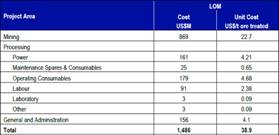
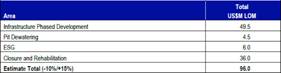
La Debo
Section 1 Sampling Techniques and Data
CRITERIA | JORC CODE EXPLANATION | COMMENTARY |
Sampling tech-niques |
· Nature and quality of sampling (e.g. cut channels, random chips, or specific specialised industry standard measure-ment tools appropriate to the minerals under investigation, such as down hole gamma sondes, or handheld XRF instru-ments, etc.). These examples should not be taken as limiting the broad meaning of sampling. · Include reference to measures taken to ensure sample rep-resentivity and the appropriate calibration of any measure-ment tools or systems used. · Aspects of the determination of mineralisation that are Mate-rial to the Public Report. · In cases where 'industry standard' work has been done this would be relatively simple (e.g. 'reverse circulation drilling was used to obtain 1 m samples from which 3 kg was pul-verised to produce a 30 g charge for fire assay'). In other cases more explanation may be required, such as where there is coarse gold that has inherent sampling problems. Unusual commodities or mineralisation types (e.g. submarine nodules) may warrant disclosure of detailed information. |
Sampling has been by diamond drill coring and reverse circula-tion chip. Diamond core has been geologically logged and sampled to geo-logical contacts with nominal sample lengths between 0.3m and 4.5m (most commonly 1m). Core selected for assay is systemati-cally cut lengthwise into half core by diamond blade rock saw, numbered and bagged before dispatch to the laboratory for anal-ysis. All core is photographed, wet and dry. Reverse circulation chips are geologically logged and sampled on regular lengths of 1m. Chip material selected for assay is sys-tematically divided to a 1/8 proportion using a rotary splitter at-tached to the cyclone sample recovery system, numbered and bagged before dispatch to the laboratory for analysis. |
Drilling techniques |
· Drill type (e.g. core, reverse circulation, open-hole hammer, rotary air blast, auger, Bangka, sonic, etc.) and details (e.g. core diameter, triple or standard tube, depth of diamond tails, face-sampling bit or other type, whether core is oriented and if so, by what method, etc.). |
Diamond core drilling with standard inner tubes. HQ diameter to target depth where possible with some smaller NQ intervals as tails. Core is marked and oriented. Reverse Circulation drilling with 4" or 4.5" hammer and 4" rod string to target depth. |
Drill sample recov-ery |
· Method of recording and assessing core and chip sample re-coveries and results assessed. · Measures taken to maximise sample recovery and ensure representative nature of the samples. · Whether a relationship exists between sample recovery and grade and whether sample bias may have occurred due to preferential loss/gain of fine/coarse material. |
Diamond core recoveries are measured in the core trays and recorded as recovered metres and recovered % as part of the geological logging process. RC recoveries are monitored by chip sample weight recording. Sample weights have been analysed for cyclicity with no relation-ship between sample weight and depth noted. |
Logging |
· Whether core and chip samples have been geologically and geotechnically logged to a level of detail to support appropri-ate Mineral Resource estimation, mining studies and metal-lurgical studies. · Whether logging is qualitative or quantitative in nature. Core (or costean, channel, etc.) photography. · The total length and percentage of the relevant intersections logged. |
Diamond core has been geologically and geotechnically logged to a level of detail to support appropriate classification and re-porting of a Mineral Resource. Reverse circulation chip samples have been geologically logged to a level of detail to support appropriate classification and re-porting of a Mineral Resource. Total length of DD logged is 6,804m. Total length of RC logged is 9,849m. |
Sub-sampling techniques and sample prepara-tion |
· If core, whether cut or sawn and whether quarter, half or all core taken. · If non-core, whether riffled, tube sampled, rotary split, etc. and whether sampled wet or dry. · For all sample types, the nature, quality and appropriateness of the sample preparation technique. · Quality control procedures adopted for all sub-sampling stages to maximise representivity of samples. · Measures taken to ensure that the sampling is representa-tive of the in situ material collected, including for instance re-sults for field duplicate/second-half sampling. · Whether sample sizes are appropriate to the grain size of the material being sampled. |
Historic core has been systematically cut lengthwise into half core with a diamond saw. RC samples representing a 1/8 split are taken directly from the rig mounted cyclone by rotary splitter, sample weight is recorded, sample is bagged in pre numbered plastic and sample tickets are inserted and bag is sealed for transport to preparation facility. Generally, one of each of the two control samples (blank or CRM standard) is inserted into the sample stream every tenth sample. An industry standard, documented process of sample mark-up, core splitting, bagging and ticketing and recording is in place at the LaDebo site. All samples were submitted to external certified analytical labora- tory, MSALAB in Yamoussoukro. The 3kg sample were consid-ered appropriate samples size for Photon Assays analysis. MSA prepares the samples by weighing, drying, and crushing the entire samples to >70% passing 2mm, then prepared for PhotonAssay |
Quality of assay data and labora-tory tests |
· The nature, quality and appropriateness of the assaying and laboratory procedures used and whether the technique is considered partial or total. · For geophysical tools, spectrometers, handheld XRF instru-ments, etc., the parameters used in determining the analysis including instrument make and model, reading times, cali-brations factors applied and their derivation, etc. · Nature of quality control procedures adopted (e.g. stand-ards, blanks, duplicates, external laboratory checks) and whether acceptable levels of accuracy (i.e. lack of bias) and precision have been established. |
Au assays are determined by Chrysos Photon assay at MSA labs in Yamoussoukro. Laboratory and assay procedures are ap-propriate for Mineral Resource estimation. QAQC consisted of standards, blanks and laboratory duplicates (both coarse and pulp). The QAQC sample results showed ac-ceptable levels of accuracy and precision. The assay data is considered to be suitable for Mineral Resource estimation. |
Verification of sampling and as-saying |
· The verification of significant intersections by either inde-pendent or alternative company personnel. · The use of twinned holes. · Documentation of primary data, data entry procedures, data verification, data storage (physical and electronic) protocols. · Discuss any adjustment to assay data. |
All aspects of the core sampling, assay procedures and QA/QC program have been reviewed and were judged to be suitable for use in the estimation of Mineral Resources. Drill hole assay result data has been checked against the original hardcopy laboratory assay reports for a representative number of holes. Below detection limit values (negatives) have been replaced by background values. Un-sampled intervals have been retained as un-sampled (null or blank). All of these intervals occur within the waste domain and have no material impact on the estimate. |
Location of data points |
· Accuracy and quality of surveys used to locate drill holes (collar and down-hole surveys), trenches, mine workings and other locations used in Mineral Resource estimation. · Specification of the grid system used. · Quality and adequacy of topographic control. |
Drill holes have been surveyed by contractor, SEMS Exploration staff using a DGPS. Downhole surveys were undertaken by the drilling contractor us-ing a ReflexSprintIQ tool with a reading taken every 30m down-hole. Grid system is based on the UTM29N grid on the WGS84 (north-ern hemisphere) projection. A topographic surface has been generated from the satellite im-ages of the area. |
Data spacing and distribution |
· Data spacing for reporting of Exploration Results. · Whether the data spacing and distribution is sufficient to es-tablish the degree of geological and grade continuity appro-priate for the Mineral Resource and Ore Reserve estimation procedure(s) and classifications applied. · Whether sample compositing has been applied. |
Data spacing is Generally 50x50m. This spacing is adequate to determine the geological and grade continuity for reporting of a Mineral Resources. Drill samples were composited to 1m for use in the estimate. |
Orientation of data in relation to geological struc-ture |
· Whether the orientation of sampling achieves unbiased sam-pling of possible structures and the extent to which this is known, considering the deposit type. · If the relationship between the drilling orientation and the ori-entation of key mineralised structures is considered to have introduced a sampling bias, this should be assessed and re-ported if material. |
Geological structures are interpreted to be steeply-dipping to the south-southeast. Drilling intersects structures from the north and south sides, generally dipping -60? below horizontal, with azi-muths at approximately 315?. Drill orientation was designed perpendicular to the modelled min-eralisation dipped at about 60? to the south-southeast. The drilling orientation is adequate for a non-biased assessment of the orebody with respect to interpreted structures and inter-preted controls on mineralisation. |
Sample security |
· The measures taken to ensure sample security. |
Labelling and submission of samples complies with industry standard. |
Audits or reviews |
· The results of any audits or reviews of sampling techniques and data. |
The competent person audited the Yamoussoukro sample preparation and assay laboratory in September 2025. No material issues were found, with lab processes, hygiene and management standards deemed highly appropriate.. |
Section 2 Reporting of Exploration Results
CRITERIA | JORC CODE EXPLANATION | COMMENTARY |
Mineral tenement and land tenure status |
· Type, reference name/number, location and ownership in-cluding agreements or material issues with third parties such as joint ventures, partnerships, overriding royalties, native ti-tle interests, historical sites, wilderness or national park and environmental settings. · The security of the tenure held at the time of reporting along with any known impediments to obtaining a licence to oper-ate in the area. |
The LaDebo Permit is held by Jofema Mineral Resources. Toro Gold Limited is in a joint Venture with Jofema with Toro being the manager and sole funder of the joint Venture. Toro Gold Limited is a company controlled by resolute Limited. The permit is in good standing. |
Exploration done by other parties |
· Acknowledgment and appraisal of exploration by other par-ties. |
Past exploration has been performed by Jofema with previous partners. Jofema had undertaken soil geochemistry, surface mapping, on the entire Research Permit. Pitting, Trenching, re-gional Auger drilling and RAB drilling have identified gold anomalism which Jofema followed up with Diamond and Re-verse Circulation drilling |
Geology |
· Deposit type, geological setting and style of mineralisation. |
Mineralisation is currently interpreted to be a standard Birimian oro-genic gold deposit style. Gold is related to shears within meta-sedi-ments and volcanics. Intensity of gold mineralisation appears to cor-relate with the intensity quartz-tourmaline-pyrite veins or dissemi-nated pyrite and veinlets within a shear. Geometry of the gold mineralisation is generally NNE to NE striking and steeply south-easterly dipping. The zones vary between 3m and 20m wide. |
Drill hole Infor-mation |
· A summary of all information material to the understanding of the exploration results including a tabulation of the follow-ing information for all Material drill holes: o easting and northing of the drill hole collar o elevation or RL (Reduced Level - elevation above sea level in metres) of the drill hole collar o dip and azimuth of the hole o down hole length and interception depth o Whole length. · If the exclusion of this information is justified on the basis that the information is not Material and this exclusion does not detract from the understanding of the report, the Compe-tent Person should clearly explain why this is the case. |
Easting, Northing and RL of the drill hole collars are based on the UTM29N grid on the WGS84 (northern hemisphere) projection. The MRE has used drill hole collar RL derived from the topographical surface. Dip is the inclination of the hole from the horizontal. For example, a vertically down drilled hole from the surface is -90°. Azimuth is re-ported in degrees as the grid direction toward which the hole is drilled. Down hole length of the hole is the distance from the surface to the end of the hole, as measured along the drill trace. Intersection depth is the distance down the hole as measured along the drill trace. Inter-section width is the downhole distance of an intersection as meas-ured along the drill trace. Drill hole length is the distance from the surface to the end of the hole, as measured along the drill trace. |
Data aggregation methods |
· In reporting Exploration Results, weighting averaging tech-niques, maximum and/or minimum grade truncations (e.g. cutting of high grades) and cut-off grades are usually Mate-rial and should be stated. · Where aggregate intercepts incorporate short lengths of high grade results and longer lengths of low grade results, the procedure used for such aggregation should be stated and some typical examples of such aggregations should be shown in detail. · The assumptions used for any reporting of metal equivalent values should be clearly stated. |
Samples intervals in this document are all 1m and are not com-posited in the drill intersections. Cut-off grade for reporting is >= 0.5g/t Au with maximum 3m con-secutive interval dilution. Top-cuts have not been used in the drill intersections. The assay intervals are reported as down hole length as the true width variable is not known. Gold assays are rounded to two decimal places. No metal equivalent reporting is used or applied. |
Relationship be-tween mineralisa-tion widths and intercept lengths |
· These relationships are particularly important in the report-ing of Exploration Results. · If the geometry of the mineralisation with respect to the drill hole angle is known, its nature should be reported. |
The intersection width is measured down the hole trace and may not be the true width. All drill results are downhole intervals only due to the variable ori-entation of the mineralisation. |
· If it is not known and only the down hole lengths are re- ported, there should be a clear statement to this effect (e.g. 'down hole length, true width not known'). | ||
Diagrams |
· Appropriate maps and sections (with scales) and tabulations of intercepts should be included for any significant discovery being reported These should include, but not be limited to a plan view of drill hole collar locations and appropriate sec-tional views. |
A plan view is contained within this document. New cross-sec-tional interpretations are included. |
Balanced report-ing |
· Where comprehensive reporting of all Exploration Results is not practicable, representative reporting of both low and high grades and/or widths should be practiced to avoid mislead-ing reporting of Exploration Results. |
All significant assay results from Resolute work are provided in this report. The report is considered balanced and provided in context. |
Other substan-tive exploration data |
· Other exploration data, if meaningful and material, should be reported including (but not limited to): geological observa-tions; geophysical survey results; geochemical survey re-sults; bulk samples - size and method of treatment; metal-lurgical test results; bulk density, groundwater, geotechnical and rock characteristics; potential deleterious or contaminat-ing substances. |
No other exploration data is considered meaningful and material to this document. |
Further work |
· The nature and scale of planned further work (e.g. tests for lateral extensions or depth extensions or large-scale step-out drilling). · Diagrams clearly highlighting the areas of possible exten-sions, including the main geological interpretations and fu-ture drilling areas, provided this information is not commer-cially sensitive. |
Further regional exploration work including Auger drilling and ge-ological mapping is underway over the rest of the permit to iden-tified additional RC and DD drill targets for additional resources. Geophysical exploration will be planned as part of the future ex-ploration of the permit. |
Section 3 Estimation and Reporting of Mineral Resources
CRITERIA | JORC CODE EXPLANATION | COMMENTARY |
Database integrity |
· Measures taken to ensure that data has not been corrupted by, for example, transcription or keying errors, between its ini-tial collection and its use for Mineral Resource estimation pur-poses. · Data validation procedures used. |
Data has been compiled into a relational SQL database which includes validation protocols which preclude the loading of erroneous data. The data is managed using the DataShed© (MaxGeo) drill hole management software. Validation checks are conducted using SQL and DataShed© relational database standards. Data has also been checked against original hard copies for 100% of the data, and where possible, loaded from original data sources. Resolute completed the following basic validation checks on the data supplied prior to resource estimation: · Drill holes with overlapping sample intervals. · Sample intervals with no assay data or duplicate records. · Assay grade ranges. · Collar coordinate ranges. · Valid hole orientation data.
No significant issues were identified in the data. |
Site visits |
· Comment on any site visits undertaken by the Competent Per-son and the outcome of those visits. · If no site visits have been undertaken indicate why this is the case. |
Mr. James Woodward, a full-time employee of Resolute Mining Limited and a Member of the AUSIMM, consents to act as the Competent Person (CP) for this release. The CP visited the project site in September 2025. This included company offices, core processing and sample storage facilities and several drill hole sites. An audit of the 3rd party lab facility was also made. In the opinion of the CP, all processes are well managed and executed to a good standard. No site related factors were identified that might materially reduce the validity of the input data to the Mineral Resource Estimate. |
Geological interpretation |
· Confidence in (or conversely, the uncertainty of) the geological interpretation of the mineral deposit. · Nature of the data used and of any assumptions made. · The effect, if any, of alternative interpretations on Mineral Re-source estimation. · The use of geology in guiding and controlling Mineral Re-source estimation. · The factors affecting continuity both of grade and geology. |
The geological logging data for key features coincident with mineralisation were used to validate the mineralisation model. Overall, the geology and mineralisation data correlate as expected according to the prevailing geological interpretation. The mineralised volume has been constructed a lower cut-off of 0.2 g/t Au. For G3N and the southern domain of G3S, the mineralised domains were modelled using an Indicator Interpolant method in Leapfrog software, guided by a sectional interpretation of the trend of mineralisation. The northern domain of G3S was modelled using the Vein Modelling workflow in Leapfrog. Visual checks of the mineralisation model against assay data saw iterative adjustments to avoid overstating volume in areas of lower sample support. There is a moderate level of confidence in the interpretation of the mineralised zones. The factors affecting continuity of both grade and geology are likely to be associated with local complexity related to the understanding of fluid pathways in the host rock. Knowledge of these is somewhat limited with the current spacing of information. |
Dimensions |
· The extent and variability of the Mineral Resource expressed as length (along strike or otherwise), plan width, and depth be-low surface to the upper and lower limits of the Mineral Re-source. |
Gold mineralisation has been estimated across two separate zones, locally called G3N and G3S. G3N shows an unbroken mineralised zone of approximately 1.5km striking at 030°. The mineralised zone dips at approximately 60° to the ESE and shows a relatively tabular |
zone which anastomoses into two zones at the southern extent. Thickness varies from approximately 10 to 20m per zone along the strike length, measured across the zones from hangingwall to footwall. Mineralisation is defined to approximately 240m vertical depth from the topography and is encountered from surface. The mineralisation is apparently open to depth. G3S shows a similar mineralised strike length of approximately 1.5km, striking at 040°, albeit broken into northern and southern domains, separated by a 200m zone of minor anomalism not yet included in a coherent mineralised domain. The northern domain consists of two stacked tabular zones, dipping at approximately 65° to the SE, with a combined thickness of up to 30m measured across the zones from hangingwall to footwall. The southern domain is modelled as a single mostly tabular zone, also dipping approximately 65° to the SE, with a thickness up to 30m measured across the zone. Mineralisation is defined to approximately 220m vertical depth from the topography and is encountered from surface. The mineralisation is apparently open to depth. | ||
Estimation and modelling techniques |
· The nature and appropriateness of the estimation technique(s) applied and key assumptions, including treatment of extreme grade values, domaining, interpolation parameters and maxi-mum distance of extrapolation from data points. If a computer assisted estimation method was chosen include a description of computer software and parameters used. · The availability of check estimates, previous estimates and/or mine production records and whether the Mineral Resource estimate takes appropriate account of such data. · The assumptions made regarding recovery of by- products. · Estimation of deleterious elements or other non-grade varia-bles of economic significance (e.g. sulphur for acid mine drain-age characterization). · In the case of block model interpolation, the block size in rela-tion to the average sample spacing and the search employed. · In the case of block model interpolation, the block size in rela-tion to the average sample spacing and the search employed. · Any assumptions behind modelling of selective mining units. · Any assumptions about correlation between variables. · Description of how the geological interpretation was used to control the resource estimates. · Discussion of basis for using or not using grade cutting or cap-ping. · The process of validation, the checking process used, the comparison of model data to drill hole data, and use of recon-ciliation data if available. |
Estimation of gold grade used an Ordinary Kriging (OK) workflow. Mineralisation was constrained using wireframes constructed in Leapfrog Geo at a lower cut-off grade of 0.2g/t. These wireframes defined domain codes for estimation. Drillholes were flagged with the domain code and composited using the domain code to segregate the data. Domain boundary analysis identified hard boundaries were appropriate for all domains. Drillholes were composited to 1m intervals using Leapfrog Geo 2025.1 with residual lengths distributed evenly across all composites within the domain. The influence of extreme gold assays was limited by top-cutting assays across all domains. Top-cuts were determined using a combination of log probability, log histogram, and mean variance plots for each estimated domain and applied to the composites on a domain-by-domain basis. Variography was undertaken on a domain-by-domain basis in Gaussian space, using Supervisor software, v9. Back transformed variograms are applied to the estimate. Drillhole data spacing averages 50m x 50m, with consistent spatial coverage across the prospects. The block model parent block size is 25m (X) by 25m (Y) by 10m (Z) with up to 16 sub-blocks per parent block in the X, Y and Z directions. The estimate was performed at the parent block scale, and sub-blocks assigned the grade of the relevant parent block. The parent block size is considered appropriate for the drillhole spacing throughout the deposit, and the sub-blocking results in >99% of the domain volume replicated. The estimate is not localised to an assumed SMU scale. Grade estimation used the following parameters: G3N: Ø Pass 1 estimation has been undertaken using a mini-mum of 6 and maximum of 20 sample composites, using a search ellipsoid of 33m x 24m x 13m (equal to vario-gram range) with the major direction aligned down-dip. Max samples per drill hole = 2 Ø Pass 2: estimation required a minimum of 6 samples and a larger search of 45m x 35m x 15m. Max samples per drill hole = 2 |
Ø Pass 3: estimation required a minimum of 4 samples and a larger search of 100m x 100m x 30m. No max samples per drill hole. G3S: Ø Northern domain; Pass 1 used a minimum of 8 and max-imum of 20 samples within an ellipse at 42m x 36m x 11 (60% of the variogram range). A second pass used a minimum of 6 samples, maximum of 20 and search 64m x 54m x 16m (equal to variogram ranges). A 3rd pass used a broader search of 95m x 80m x 25m. Ø Southern domain; Pass 1 used a minimum of 10 and maximum of 20 samples within an ellipse of 60m x 40m x 6m. A second Pass used a minimum of 6 samples, 6 and search of 60m x 40m x 6m. Pass 3 used minimum of 4 and maximum of 12 samples and a broader search of 90m x 60m x 15m. The mineral resource estimate has been validated using visual validation tools, mean grade comparisons between the block model and declustered composite grade means, and swath plots comparing the input composite grades and the estimated block model grades by Northing, Easting, and RL. The estimate is considered an appropriate representation of the volume and grade distribution of the gold mineralisation. Leapfrog Geo 2025.1and Datamine Supervisor v9 software were used for the geostatistical analysis, estimation and validation processes. No by-product recoveries were considered, and gold grade was the only estimated variable. | ||
Moisture |
· Whether the tonnages are estimated on a dry basis or with natural moisture, and the method of determination of the mois-ture content. |
Tonnages are estimated as dry tonnes. |
Cut-off parameters |
· The basis of the adopted cut-off grade(s) or quality parameters applied. |
A nominal lower cut-off grade of 0.2g/t Au was used to define the mineralised domains to encompass the complete mineralised distribution and produce a model that reduces the risk of conditional bias that could be introduced where the constraining interpretation and data selection is based on a significantly higher grade than the natural geological grade cut-off. The cut-off grade for reporting (above 0.5g/t Au) is assumed to be the likely cut-off grade for mining a deposit of similar grade, dimensions and proximity to surface, as compared to other prospects and projects in the Resolute portfolio. A more detailed economic analysis may alter the appropriate cut-off parameters as the MRE is refined. |
Mining factors or assumptions |
· Assumptions made regarding possible mining methods, mini-mum mining dimensions and internal (or, if applicable, exter-nal) mining dilution.
It is always necessary as part of the process of determining reasonable prospects for eventual economic extraction to con-sider potential mining methods, but the assumptions made re-garding mining methods and parameters when estimating Min-eral Resources may not always be rigorous. Where this is the case, this should be reported with an explanation of the basis of the mining assumptions made. |
The shallow occurrence of the mineralisation and average grade profile suggest that eventual extraction of the resources by open pit mining methods is a reasonable assumption. At this stage, no detailed open pit optimisation work has been completed.
The domaining approach incorporates an amount of edge dilution into the blocks of the model. No further steps to account of mining loss / dilution have yet been included.
|
Metallurgical factors or assumptions |
· The basis for assumptions or predictions regarding metallurgical amenability. It is always necessary as part of the process |
The assumption is made that the Mineral Resource displays metallurgical properties amenable to eventual economic extraction |
Related Shares:
Resolute Mining